
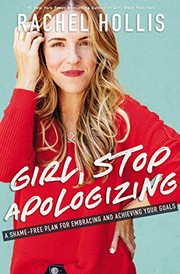
Girl, Stop Apologizing
2,694-word summary 12 min read 240 pages in the book
- First published
- 2019
- Publisher
- HarperCollins Leadership
- Pages
- 240
- ISBN
- 9781400209606
Reading options
What's inside (8 sections)
I picked this one up on the recommendation of a friend who said it had finally pushed her to sign up for the thing she had been talking about for years. I came to it skeptical. The self-help shelf is crowded with books that shout at you and then leave you holding a to-do list you will never finish, and the title alone made me brace for another one. Rachel Hollis published this book in 2019 through HarperCollins Leadership, and the hardcover runs 240 pages. It is loud in its own way, but it is also packed with small, specific stories that made me set it down and think about my own habits. By the end I had underlined more than I expected, and I had also wanted to argue with her about half of it. Both reactions felt worth having.
What the book actually argues is simple enough to state in a sentence: women talk themselves out of their dreams, and they do it so automatically that they mistake the habit for good sense. Hollis wants to break that habit. She organizes the whole project as a three-part plan, which is why the subtitle calls it a shame-free plan for embracing and achieving your goals. The three parts are excuses to let go of, behaviors to adopt, and skills to acquire. There is a fourth, short closing chapter called Believe in Your Dang Self. It is a tidy structure, maybe too tidy in places, but it does give the book a clear walk forward. She starts with the stories we tell ourselves, moves to what we do every day, and finishes with what we can actually learn.
The excuses we hand ourselves
The first section runs through nine excuses, and the one that opened the book hit closest to home for me. It is called That's Not What Other Women Do. Hollis describes an awkward childhood in which she felt out of place and tried hard to fit in, and she connects that to a grown-up habit of shrinking herself. For years she lived what she calls a double life. She was a successful entrepreneur behind the scenes, but in public she presented herself only as a lifestyle blogger and a mother. When she faced harsh online criticism for having a nanny, she hid her work life even more carefully, and the hiding turned into shame. The turn came at a conference, where she realized that her ambition was not something to apologize for but a core part of who she was. She describes it as a gift from God, and she decides she has to stop playing small to keep the peace.
That story sets the tone for everything after it. The excuse I'm Not a Goal-Oriented Person gets dismissed as a matter of habit rather than personality. Hollis insists that setting and chasing goals is something you practice, and she draws a distinction I found genuinely useful. A dream is a hope, she writes, while a goal is a dream with its work boots on. That line is the kind of plain, memorable phrasing the book does well. It is also the kind of line that can float free of the argument and start to sound like a slogan, which is a risk this book runs more than once.
On I Don't Have Time, she argues that you make time for what matters rather than finding it, and she backs it with her own early years. She built a first business by giving up nights and weekends to intern for free, trading comfort for experience. I can respect the work ethic here while noticing that not everyone has the same freedom to trade away evenings, a point the book does not linger on. The excuse I'm Not Enough to Succeed gets her story about lacking a college degree and fearing that she could not read her own company's financials. Her first attempt to fix this was a Harvard online course, which failed because it did not match how she learns. She had better luck teaching herself through books and conferences, and she draws the conclusion that personal growth has to be personal. That is a fair observation, though it sits a little awkwardly beside a book that assumes one plan fits most readers.
She then takes on the cluster of excuses that have the most to do with family and judgment. I Can't Pursue My Dream and Still Be a Good Mom, Daughter, Employee meets her rejection of work-life balance as a myth. She prefers the word centered, and she is blunt about what she calls mommy guilt, calling it a destructive idea taught to women rather than a signal from God that they have done something wrong. I'm Terrified of Failure brings back the story of her previous book, Girl, Wash Your Face. She publicly announced that it would become a New York Times bestseller, and when it initially failed to make the list, she had to decide what the failure meant. It is one of the more honest passages in the book because she admits the sting instead of glossing it.
Why "Good girls don't hustle" stuck with me
The last three excuses are the ones I kept returning to. It's Been Done Before is treated as fear wearing the costume of comparison, and her advice is to avoid comparing your beginning to somebody else's middle. What Will They Think? gets a similar answer: judgmental people will judge no matter what you do, so you might as well go after the thing you want. Neither argument is new, but both are delivered with a directness that lands.
The ninth excuse, Good Girls Don't Hustle, is where Hollis shows the most fire. She reclaims the word hustle rather than apologizing for it, and she reaches back to a childhood vow she made to become wealthy and independent. She talks openly about wanting to build a media empire, and she mentions that she has the word mogul tattooed on her wrist. I found that detail unexpectedly revealing. A tattoo is a private marker made public, and it tells you how badly she wanted to claim an identity that other people told her was not becoming. This is the book at its most convincing, because the ambition is not an abstraction. It has a date and a place on her body.
The section is not without its problems. Nine excuses is a lot of chapters, and a few of them circle the same point about caring too much what other people think. By the seventh or eighth I felt I had heard the message. There is also a recurring habit of treating structure as proof. Because she has named something and given it a number, it starts to feel explained, when sometimes naming is all that happened. Still, the cumulative effect works. Reading the excuses in a row makes it harder to dismiss your own as reasonable, which I suspect is exactly the point.
Stop asking permission and choose one dream
Part two moves from the stories to the daily choices. The first behavior, Stop Asking Permission, opens with an admission I did not expect. Hollis describes a stretch of codependency in which she would ask her husband for permission to do ordinary things, including something as small as going to the grocery store. That concrete example does more work than a chapter of theory would. The point is not that every decision needs a declaration of independence. It is that a person can practice making small choices without running them past someone else, and that practice changes the larger ones.
Choose One Dream and Go All In introduces what she calls the 10, 10, 1 method. You picture your life ten years out, you list ten dreams that would move you toward that picture, and then you pick one goal to focus on right now. The narrowing matters to her. She thinks spreading effort across too many dreams is a way of avoiding the discomfort of committing to one. I tried the exercise while reading and found it clarifying, mostly because it forced me to notice how many of my own dreams were really just moods I was indulging.
Embrace Your Ambition defends ambition as a trait worth celebrating in women rather than quietly correcting, and she takes aim at terms like girl boss for the way they qualify a woman's success with something cute. Her complaint is that we add a diminutive before we allow the achievement to count. Ask for Help follows a similar line by tearing down the myth of the woman who does it all. Hollis is candid about her own support system, which includes nannies and a housekeeper, and she treats asking for help as a requirement rather than a weakness. This honesty cuts both ways, since the help she describes is help many readers cannot afford, but at least she is not pretending she did it alone.
Two behaviors in this section are more practical and less rhetorical. Stop Allowing Them to Talk You Out of It acknowledges that pursuing a goal can genuinely inconvenience the people close to you, then insists that you cannot hand them the power to stop you. Learn to Say No is grounded in her decision to quit volunteering at her kids' school. She uses it to argue for defining your priorities first and then declining what does not fit them. The school example is small and specific, and it is the kind of scene that makes the advice stick.
Building foundations, then building a plan
Build Foundations for Success is the longest of the behaviors and the one with the most moving parts. Hollis uses the image of a vase that has to be full before it can overflow to others, and she breaks the foundation work into several pieces. Get Healthy lists five practices: drinking water, waking up earlier, giving up one category of food for thirty days, moving every day, and practicing gratitude. She also talks about getting your personal space in order, building a strong community, developing habits, and establishing a morning routine. There is a lot here, and some of it will be familiar to anyone who has read a productivity book before.
What ties it together is her insistence that the boring physical stuff comes first. Sleep, water, movement, a tidy room, a small circle of people who want good things for you. None of this is original, and the book does not pretend it is. The value is in the order she puts it in. She wants the foundation stable before the ambitious goal goes on top, which is a more patient message than the title suggests.
Part three turns to skills, and Planning comes first. Her road-mapping method starts at the finish line with a specific goal, then identifies the starting point in terms of the resources and habits you actually have. From there you mark the major guideposts and the smaller mile markers between them. It is essentially backward design with friendlier language, and it works better than a vague list of resolutions because it forces you to be honest about where you are starting.
Effectiveness is the companion skill. Hollis suggests replacing to-do lists with results lists that name a specific outcome, and she spends time on identifying and cutting distractions. I liked the results-list idea, since a to-do list can become a way of feeling busy without finishing anything. The distraction advice is less distinctive, but it is hard to argue with the basic point that attention is the resource being spent.
Confidence, persistence and the Sundance catering job
The confidence chapter argues that confidence can be learned, and it offers three ways to build it: like how you look, act confident even when you do not feel it, and spend time around people who are confident. The middle one is the one she dramatizes. She tells the story of landing a catering job for the Sundance Film Festival at a point when she was not fully qualified for it, but was certain she could figure the work out. The job was real, the stakes were real, and her certainty was partly performed. That is a much more useful account of confidence than the usual advice to believe in yourself, because it shows the gap between the feeling and the action.
Persistence gets a similar treatment through the story of her appearance on the Today Show. She says it took eight years of consistent effort to get there, and she uses the stretch to argue that a goal is a permanent change in how you live rather than a temporary project with an end date. This is one of the more sober chapters. It quietly admits that the timeline is long and that most people quit during the unglamorous middle. It also sits in some tension with the quicker promises elsewhere in the book, and I did not mind that tension. It made the whole thing feel more honest.
Positivity draws on her experience of a fifty-two-hour labor, describing how she chose to shift her mindset to get through the pain. From there she argues that attitude is a choice and that you have to manage your own internal self-talk. I have mixed feelings about this one. There is real value in noticing the story you tell yourself in a hard moment, and her labor story is a legitimate example of it. But the broader claim that attitude is always a choice can slide into blaming people for circumstances they did not create, and this book rarely pauses to draw that line.
Leading, and where the book overreaches
The final skill is called Lead-Her-Ship, and Hollis uses it to argue that every woman is a leader whether or not she has a title. Her stated goal is to build a community of leaders rather than an audience of fans, and she challenges readers to be inclusive and to make room for other women rather than treating success as a scarce resource. The phrase itself is a bit forced, and the chapter has the feel of a closing rally, but the underlying point about making room for others is a decent note to end on. The book finishes with Believe in Your Dang Self, which is about the length and weight you would expect.
The criticisms are worth stating plainly. The book repeats itself, especially across the excuse chapters and the later material on confidence and positivity. Its central claim that everyone has the same hours and can simply choose differently is comforting and not entirely true, since time and freedom are not distributed evenly. Hollis writes from a place of real advantage, and the nannies, the housekeeper, and the freedom to intern for free are part of the story whether she frames them that way or not. Readers whose weeks are already stretched thin may find the demand to hustle harder tone deaf. There is also a triumphal quality to the writing that can get tiring, a sense that every setback was secretly a setup for a larger win.
For all that, I would not hand this book to someone looking for a careful study of how people change. I would hand it to someone who has been quietly talked out of something they want and needs a firm, slightly annoying push. The specific stories are the reason it works. The vague commands are the reason it will annoy. Hollis is at her best when she is telling you exactly what she did, down to the nanny criticism, the grocery store permission, the Harvard course that failed, and the tattoo on her wrist. She is at her weakest when she turns those stories into rules. Read it for the stories, take the two or three ideas that actually fit your life, and feel free to ignore the rest. That is, in the end, a pretty good way to read any book about taking back your own choices.
FAQ
What is the structure of Girl, Stop Apologizing?
It has three main sections: nine excuses to let go of, seven behaviors to adopt, and six skills to acquire, followed by a short closing chapter called Believe in Your Dang Self.
Is Girl, Stop Apologizing a sequel to Girl, Wash Your Face?
It is a follow-up in theme rather than a plotted sequel. Hollis looks back at her first book and its failed bid to become a New York Times bestseller, but this one stands on its own.
Who is this book not for?
Readers after a careful study of how people change may find it repetitive and too sure that everyone can simply hustle harder, since much of it draws on Hollis's own well-supported experience.
Similar books
The 5 AM Club
A struggling entrepreneur and artist are mentored by a billionaire who teaches them to reclaim the first hour of the day.
2,205-word summary · 10 min read
The Miracle Morning
Hal Elrod argues that the first hour of the day sets its tone, and offers six short practices, silence, affirmations, visualization, exercise, reading and…
2,240-word summary · 10 min read
Don't Sweat the Small Stuff ... and It's All Small Stuff: Simple Ways to Keep the Little Things from Taking Over Your Life
Richard Carlson’s 1997 bestseller offers one hundred short chapters on lowering the volume on daily irritations, and it is more pragmatic than its title…
2,502-word summary · 11 min read
The Magic of Thinking Big
Schwartz's 1959 self-help classic argues that success follows from the size of your thinking, supported by sales anecdotes, vocabulary drills and goal setting.
2,579-word summary · 11 min read
How to Stop Worrying and Start Living
Carnegie offers day-tight routines for worry built from interviews and worker stories.
2,505-word summary · 11 min read
The Monk Who Sold His Ferrari
A burned-out lawyer learns seven Sivana virtues in the Himalayas, from mind gardens to purpose, time, and service.
2,881-word summary · 13 min read
You Are a Badass
Broke writer to coach shares money beliefs, rate raises, and daily actions with humor and homework.
2,000-word summary · 9 min read

The Secret
Byrne argues like attracts like and teaches ask, believe, and receive for money, health, and love.
3,228-word summary · 14 min read
Girl, Wash Your Face
Twenty lies, twenty stories, twenty small habits on body, approval, motherhood, faith, and work.
1,995-word summary · 9 min read
The Defining Decade: Why Your Twenties Matter - and How to Make the Most of Them Now
A clinical psychologist argues that the twenties are not a holding pattern and urges readers to build skills, ties, and commitment now.
2,443-word summary · 11 min read
You Can Heal Your Life
Louise Hay's 1984 bestseller argues that thoughts and beliefs shape the body, pairing a mirror-and-affirmation workbook with an A to Z list of ailments and…
3,672-word summary · 16 min read
Rising Strong: The Reckoning. The Rumble. The Revolution.
Brené Brown's 2015 book asks what happens after we fall, and argues that examining the stories we invent about failure and heartbreak is the path to getting…
2,271-word summary · 10 min read

Ikigai: The Japanese Secret to a Long and Happy Life
Two Spanish writers explain the Japanese idea of a reason for being, drawing on Okinawan centenarians, flow, friendship and the acceptance of imperfection.
2,030-word summary · 9 min read
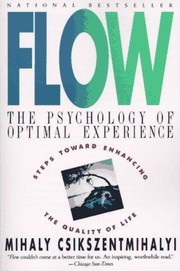
Flow: The Psychology of Optimal Experience
Csikszentmihalyi's 1990 study of optimal experience asks when people feel most alive and finds the answer in a balance of challenge and skill. Drawing on…
3,073-word summary · 14 min read
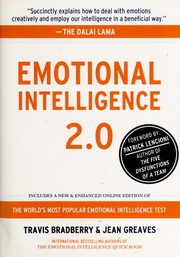
Emotional Intelligence 2.0
Bradberry and Greaves turn emotional intelligence into four learnable skills, a self-assessment and dozens of strategies, while their headline numbers rest on…
3,276-word summary · 15 min read
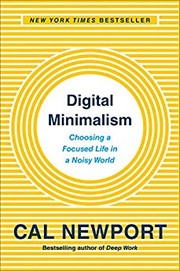
Digital Minimalism: Choosing a Focused Life in a Noisy World
Cal Newport argues that willpower cannot beat an attention economy designed against you, and offers a thirty day reset to rebuild your digital habits around…
2,701-word summary · 12 min read
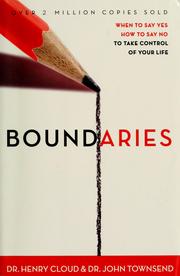
Boundaries: When to Say Yes, How to Say No to Take Control of Your Life
A Christian self-help book that treats a boundary as a personal property line and applies the idea to family, friendship, marriage, work and the self.
2,047-word summary · 9 min read
The Obstacle Is the Way: The Timeless Art of Turning Trials into Triumph
A 2014 Stoic self-help book arguing that perception, action and will can turn setbacks into fuel, told through historical anecdotes.
2,669-word summary · 12 min read
The Light We Carry: Overcoming in Uncertain Times
Michelle Obama's follow-up to Becoming offers ten practical habits for meeting fear, self-doubt and uncertainty, told through stories of her family,…
2,327-word summary · 10 min read
Extreme Ownership: How U.S. Navy SEALs Lead and Win
Two retired Navy SEALs turn their Ramadi combat experience into a blunt leadership creed: the leader owns everything, and the team follows when the why is…
2,368-word summary · 11 min read
Everything is F*cked: A Book About Hope
Manson argues that hope, built on control, values, and community, keeps despair at bay, then takes apart the stories and diversions we use to sustain it.
2,789-word summary · 12 min read

As a Man Thinketh: A book that will help you to help yourself
In seven short chapters, James Allen argues that character and circumstance grow from thought, and that changing how you think is the practical route to…
2,673-word summary · 12 min read

The Courage to Be Disliked: The Japanese Phenomenon That Shows You How to Change Your Life and Achieve Real Happiness
A philosopher and an angry young man argue over five nights about Adlerian psychology, trauma, approval, and the freedom to be disliked.
2,054-word summary · 9 min read

Four Thousand Weeks: Time Management for Mortals
Oliver Burkeman turns the whole productivity project on its head, arguing that a human lifespan of roughly four thousand weeks is not a problem to optimize…
2,447-word summary · 11 min read

Dear Girls: Intimate Tales, Untold Secrets & Advice for Living Your Best Life
Ali Wong's debut collects fourteen letters to her daughters, covering sex, money, work, marriage, Vietnam, and being a working Asian American mother.
2,266-word summary · 10 min read
All About Love: New Visions
bell hooks borrows a definition of love as an action rather than a feeling, then spends thirteen chapters showing how hard it is to practice.
2,385-word summary · 11 min read
The War of Art
Pressfield names Resistance and urges daily professional work.
2,565-word summary · 11 min read
Essentialism
McKeown argues for less but better: discern the vital few, refuse the trivial many, and use buffers, small wins, and steady routines so key work gets done well…
2,421-word summary · 11 min read
Braving the Wilderness: The quest for true belonging and the courage to stand alone
Belonging to yourself first lets you stand alone and still stay close to others.
2,004-word summary · 9 min read
The Power of Positive Thinking
Peale's 1952 guide to faith, affirmations, picturing success, prayer, and worry control, retold chapter by chapter with stories, limits, and small daily habits…
2,742-word summary · 12 min read