

Girl A
2,152-word summary 10 min read 336 pages in the book
- First published
- 2021
- Publisher
- HarperCollins
- Pages
- 336
- ISBN
- 9780008389055
Reading options
What's inside (9 sections)
- The will and the house on Moor Woods Road
- How the children were kept, and how Lex escaped
- Ethan, and the brother who stayed close to the memory
- Delilah, Gabriel, Noah, and the life Lex made elsewhere
- A name for the building, and a figure in the dark
- What the reveal costs, and what it earns
- The wedding in Greece and the woman at the cove
- Key takeaways
- FAQ
I picked this up because a friend warned me it was the kind of thriller that leaves you checking the locks. That turned out to be only half right. Girl A is a 2021 novel by Abigail Dean, published in Britain by HarperCollins in January, and it is less a story about a house of horrors than a story about what a person carries out of one. The horror is real enough, but Dean has said she wanted to write about the effects of trauma and the glare of publicity, not about the suffering that caused them. That choice shapes the whole book.
The woman at the centre is Lex Gracie, known to the public as Girl A. She is a corporate lawyer in New York, and she has spent most of her adult life making sure nobody asks her about the place she grew up. There were seven children in that house at 11 Moor Woods Road in the small English town of Hollowfield. Their parents, Charles and Deborah Gracie, kept them there. Lex was the eldest sister, and the one who got out. When the book opens she is about to be pulled back.
The will and the house on Moor Woods Road
The trigger is a death. Deborah Gracie dies of cancer in prison, where she has spent the rest of her life. Her children are not asked to grieve so much as to deal with paperwork. A solicitor named Bill lays out the terms of the will. Lex is named executor, and the estate comes down to three things: a few personal possessions, roughly twenty thousand pounds, and the house itself.
Lex takes the belongings and declines to claim the body. That small refusal tells you a great deal about her. She is not interested in ceremony. What she cannot avoid is the building, and she calls her sister Evie to talk about what to do with it. The plan they settle on is to turn it into a community centre, something happy that would have infuriated their father. It is a neat idea, and it gives the novel its engine: before the house can be converted, Lex needs the agreement of every surviving sibling.
That is the present-day structure, and it is deliberately flat. Most of the actual living in the book happens in the past, which arrives in layers whenever a name or a place prompts it.
How the children were kept, and how Lex escaped
Dean does not start with the worst of it. She builds the captivity in stages. In the early years there were the Binding Days, when the children were tied up at night with soft materials. Later came the Chaining, when their father used metal handcuffs. The shift is gradual, and that is what makes it disturbing. Each step is small enough to be explained away until it is not.
The escape is the scene readers usually know about before they open the book, and Dean writes it plainly. On the last morning Lex tore the skin from her right hand to free herself. She smashed the bedroom window with a wooden stake and dropped to the frozen ground, shattering her leg. Her mother appeared at the kitchen door and did not stop her. Lex ran into the path of a car, and the driver called the police.
What follows is almost worse in its way. Their father killed himself by taking poison soon after Lex fled, and their mother was found holding his body. The children were separated and adopted by different families. Lex was taken in by a detective superintendent named Greg Jameson and his wife Alice, on the advice of Dr. Kay, the psychologist who worked with her in hospital. Dr. K, as Lex calls her, becomes one of the few steady presences in the book.
I found this section hard to read, and I mean that as a compliment to the writing. The physical detail is specific without becoming lurid, and the emphasis stays on Lex's resourcefulness rather than on her victimhood.
Ethan, and the brother who stayed close to the memory
Once Lex starts collecting signatures, the siblings come one at a time. The first is Ethan, her older brother, now a headmaster in Oxford. He wants the new centre to carry the Gracie name. Lex refuses, and he eventually agrees, on condition that she handle the whole thing alone. There is an unease in him that his fiancee, Ana Islip, puts into words when she tells Lex that he sometimes becomes a frightening stranger.
Late one night, drunk, Ethan grabs Lex by the throat and warns her not to tell certain stories. Lex calls him Father's son. It is the sharpest line in the book, because it names the fear that runs through all the siblings: that the old house is still inside them.
A flashback shows Dr. K asking Lex whether Ethan had ever hurt her. He was unchained and had been seen outside the house, and the psychologist wanted to know. Lex said no, protecting him. That habit of protection turns out to matter more than Lex realises.
Dean also fills in how the family got here. Deborah grew up in a village, failed her grammar school entrance exam, and fell in with the Countryside Christian Church, where she met Charles. He started a church called the Lifehouse in Hollowfield that drew almost no congregation. When his ambitions collapsed he withdrew the children from school, sealed the windows with cardboard, and tightened his grip. He found a book of Greek myths hidden under Lex's mattress and beat her with a wooden stake from the Lifehouse cross. Evie tried to distract him to shield her sister. Reading these pages, you can see the machinery of a family closing in, one small surrender at a time.
Delilah, Gabriel, Noah, and the life Lex made elsewhere
The remaining signatures take Lex to different corners of her family. Delilah, known as Girl B, is now devoutly religious and married to an heir to a pizza chain. She signs the form and tells Lex that their brother Gabriel is in a psychiatric hospital.
Gabriel, or Boy B, is frail, medicated, and nearly bald when Lex visits. The background is painful: an agent and lover named Oliver Alvin got him hooked on cocaine and alcohol, talked him into selling childhood belongings from Moor Woods Road on a memorabilia website, then disappeared with the packaged artifacts. Gabriel wrecked his flat and hurt himself. Now Oliver is back, and Lex suspects he wants a share of the inheritance. She confronts him and threatens legal action, then returns to promise Gabriel that the centre will include addiction support. He tells her he has already signed.
Noah, the youngest survivor, was adopted by a family Lex never knew. Her adoptive father once let slip that they lived in a town called Cragforth, and Lex tracked down a junior cricket listing with a vice-captain named Noah Kirby. She drives there, watches him play, follows one of his mothers home, and gets the signature. She promises never to come back.
Running through these chapters is Lex's relationship with Jean Paul, or JP, the great love of her life. She told him about her adoption and her escape but held back the full truth. When he wanted a family, she said she would not have children, and they split. In the present he tells her his new girlfriend is pregnant. This thread is quieter than the thriller plot, and it is the part I found most affecting, because it shows a woman who has decided that some doors stay shut.
A name for the building, and a figure in the dark
With the signatures gathered, Evie flies to England to help Lex present the plan to the Hollowfield council. Evie falls ill, so Lex goes alone. She walks the councillors through a library, a hall, coding classes, and a garden. Asked what the centre will be called, she decides on the spot: the Lifehouse, the name of her father's failed church.
Bill drives her to the house, which is now a ruin of broken windows and graffiti. Lex feels nothing. That flatness is the point. She has spent the book bracing for a surge of feeling that never comes.
That night she wakes to find Evie gone. She walks to Moor Woods Road in the dark, goes inside, and climbs the rotting stairs to the old bedroom. In the corner where Evie's bed used to be is a small huddled figure.
"Do you really think I ever left this room?" it says.
Lex is found disoriented near the house and taken to hospital.
Dr. K comes to see her and presses her to say what happened to Evie. Here the book gives up its secret. Evie was ten years old and still chained in that bedroom when the police came in after Lex's escape. She never regained consciousness and died a day later. A baby named Daniel, born premature and sickly during the captivity, was also found dead, his body hidden in a kitchen cupboard for months. The clues were there: Evie whispering that Daniel had not cried for three days, and her asking, during a ceremony in which their father renewed his wedding vows, where Daniel was.
Dr. K explains that she told Lex early on that Evie had been placed with a new family. She believed Lex would accept the truth in time. Every time she tried to correct the lie, Lex's mind refused it. The calls with Evie, the plans they made, the sister who flew in to help: all of it was a story Lex built to keep going.
What the reveal costs, and what it earns
I want to be fair about this. The reveal is prepared, and it is emotionally right for Lex, but it also has the feel of a machine built to deliver one last shock. Readers who distrust late twists will see the seams. The structure helps and hurts: dividing the book among the siblings gives each one a clean chapter, yet it also makes the present-day paperwork sections feel slow next to the flashbacks. If you came for the escape and the family breakdown, some of the signature-gathering may drag.
There is also a question of tone. Dean is writing about children who were starved, bound, and beaten, and she keeps the lens on adult consequences rather than on the acts themselves. That is a defensible choice, and it is the one the author has described in interviews, but it can leave the book feeling cooler than its subject suggests. The media glare angle is handled better. Lex's public name is a label she never chose, and the novel is steady on the way a label can both protect a person and pin her down.
Still, the deception at the centre is more than a trick. It explains why Lex is a lawyer who avoids her family, why she cannot claim her mother's body, and why she is so insistent on making the house useful. The book is at its strongest when it treats evasion as a form of survival rather than as a puzzle to be solved.
The wedding in Greece and the woman at the cove
Lex recovers at her parents' cottage in Sussex and resumes sessions with Dr. K. An email from Bill confirms that the council will fund the centre. She flies to Greece with her best friend Olivia for Ethan's wedding.
At the reception Delilah sets straight a night Lex has remembered wrongly for years. Lex thought she heard a failed escape attempt coming from the room shared by Gabriel and Delilah. In fact Delilah had declared it her birthday, and Gabriel crept downstairs unchained to steal lemon cake. He tripped on the stairs, and Ethan held him down while their father beat him. The chaining began the next day. Lex says goodbye to Ethan at the church doors and tells him not to ruin things.
On her last afternoon, alone in the villa, she walks down to the cove and sees a figure at the water's edge, a woman who looks the way she always imagined Evie would. Lex calls her sister's name. The figure turns and lifts an arm, beckoning or waving, and the book ends without saying which.
That ambiguity is the right note to finish on. Girl A is a novel about a woman who escaped a house and then spent years learning that leaving is not the same as being free. It is a thriller in its pacing and a family novel in its concerns, and it is most memorable when it lets the smaller harm, the phone calls that never happened and the sister who never grew up, do the work that a shock ending cannot.
FAQ
Is Girl A based on a true story?
No. Girl A is a work of fiction by Abigail Dean, published in 2021, though Dean drew on real cases of childhood captivity and on her own interest in how trauma and media attention shape a survivor's life.
What does the title Girl A mean?
It is the label attached to Lex Gracie as the eldest sister who escaped the family home. The book explores how a name given by the public can both shield a person and pin her to an identity she never chose.
Does Girl A have a twist ending?
Yes. The final chapters reveal the truth about what happened to Lex's sister Evie on the night of the escape, a secret that Dr. K had helped Lex keep at bay for years.
Similar books
When She Returned
Eleven years after vanishing from a California parking lot, Kate Bennett reappears in Montana with an infant, and her family learns that coming home may not…
2,338-word summary · 10 min read

Strange Sally Diamond
Sally Diamond takes her dying father's joke literally and burns his body, then learns her whole childhood was built on a kidnapping and a lie.
2,411-word summary · 11 min read

The Obsession
After a childhood in the shadow of her serial killer father, photographer Naomi Carson puts down roots in a coastal town, only to face a copycat killer…
2,230-word summary · 10 min read

Pretty Things
A grifter and an heiress collide at a decaying Lake Tahoe mansion in Janelle Brown's sharp novel about social media, deception and the stories people tell to…
2,725-word summary · 12 min read
The Last House on Needless Street
A lonely man, a cat and a mysterious neighbor pull you into a house full of buried trauma.
2,627-word summary · 12 min read

You Are Not Alone
A lonely New Yorker witnesses a subway suicide and falls in with the dead woman's friends, where a makeover and a framed murder hide a hidden mastermind.
2,588-word summary · 12 min read

We Live Here Now
After a near-fatal fall, a woman moves with her husband to a remote Dartmoor house where strange events happen only when she is alone, and a raven watches from…
2,016-word summary · 9 min read

The Summons
A law professor is summoned home to find his judge father dead and more than three million dollars hidden in the house.
2,265-word summary · 10 min read

The Maid's Diary
A cleaner who snoops through her wealthy clients' lives finds a secret that could destroy them, while a detective investigates a bloody waterfront house with…
3,459-word summary · 15 min read
The Love of My Life
Emma loves her husband Leo and their little girl. Then Leo, an obituary writer, starts filing the facts of her life, and the woman he thinks he married begins…
2,803-word summary · 12 min read

The Lies I Tell
A con artist returns to Los Angeles to ruin the man who took her family's home, while a journalist who has hunted her for ten years closes in.
2,201-word summary · 10 min read

The Cellar
Abducted in her small English town, sixteen-year-old Summer is locked in a cellar with three other girls. Their captor calls himself Clover and wants a perfect…
2,551-word summary · 11 min read
Hidden Bodies
Joe Goldberg flees to Los Angeles chasing the woman who robbed him, falls for a wealthy grocery heir, and finds the bodies he buried in New York resurfacing in…
2,247-word summary · 10 min read

Eight Perfect Murders
A Boston bookseller's old blog post listing eight perfect fictional murders becomes the blueprint for a real killer, and the narrator knows more than he admits.
2,292-word summary · 10 min read

Blood Orange
A criminal barrister with a drinking problem takes on her first murder case and finds the defendant's story mirroring her own crumbling marriage in this sharp…
2,469-word summary · 11 min read

The Tenant
A marketing VP loses his job and rents out a room, and his Manhattan brownstone becomes a trap built from planted evidence, old identities and staged…
2,264-word summary · 10 min read

The Flight Attendant
A flight attendant wakes in a Dubai hotel beside a dead man she may have killed, and spends the rest of the novel lying to everyone who could help her.
2,496-word summary · 11 min read

The Divorce
A Long Island mother is evicted by her hedge-fund husband on their anniversary, and a twisty custody fight hides an older secret about her son.
2,227-word summary · 10 min read
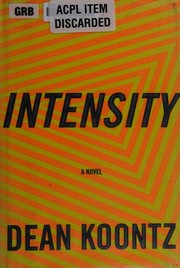
Intensity
A college student survives a brutal home invasion, then follows a killer's motor home in a bid to save the teenage girl he holds captive.
2,290-word summary · 10 min read

What She Knew
Rachel lets her eight-year-old son run ahead in a Bristol park, and the nine-day search turns her into a suspect in the public eye.
2,952-word summary · 13 min read

The Beach House
A young valet is beaten to death at a Hamptons party, and his law-student brother spends a year building a case against the family that covered it up.
2,049-word summary · 9 min read
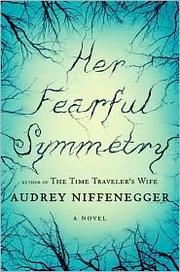
Her Fearful Symmetry
Twins Julia and Valentina inherit a London flat above Highgate Cemetery from an aunt they never met, then find a ghost in it and a family secret.
2,057-word summary · 9 min read
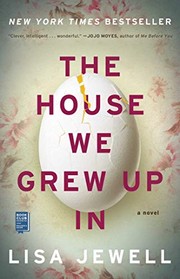
The House We Grew Up In
The Bird family of the Cotswolds breaks apart after a suicide and spends twenty years not talking about what happened.
2,198-word summary · 10 min read

Still Missing
A realtor is abducted at a Vancouver Island open house and held for more than a year. Told through therapy sessions, the novel follows her escape and the hunt…
2,466-word summary · 11 min read

Saving Noah
A seventeen-year-old swimmer confesses to molesting two girls he coached, and his mother must decide what unconditional love is worth.
2,976-word summary · 13 min read

The Ex
Cassie thinks her new boyfriend's ex is the woman harassing her, but Freida McFadden's thriller keeps rearranging who the ex actually is.
2,103-word summary · 9 min read

The End of Her
A sleep-deprived mother of twins faces a stranger's accusation that her husband murdered his first wife in Shari Lapena's domestic suspense novel.
2,383-word summary · 11 min read
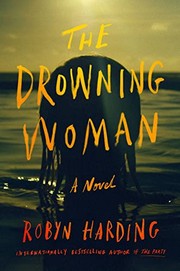
The Drowning Woman
Living in her car in Seattle, Lee saves a wealthy stranger from drowning. The friendship that follows draws her into abuse, murder, and a plan to disappear.
2,578-word summary · 11 min read
The Younger Wife
A Melbourne surgeon announces he is divorcing his wife, who has Alzheimer's, to marry a woman his daughters' age, and the family's buried violence surfaces.
2,127-word summary · 9 min read

The Woods
Twenty years after two teenagers were murdered and two vanished at summer camp, prosecutor Paul Copeland identifies a fresh corpse as one of the missing.
2,490-word summary · 11 min read