
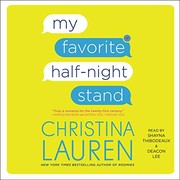
My Favorite Half-Night Stand
2,362-word summary 10 min read 384 pages in the book
- First published
- 2018
- Publisher
- Gallery Books
- Pages
- 384
- ISBN
- 9781501197406
Reading options
What's inside (8 sections)
I picked this up because a friend called it the catfish rom-com and refused to say anything else. Christina Lauren, the pen name of Christina Hobbs and Lauren Billings, published it through Gallery Books in December 2018, and the trade paperback runs 384 pages with ISBN 9781501197406. The premise is a mess of Millie Morris's own making: she is a criminology professor at UC Santa Barbara, she spends nearly all her time with four male professors, and when the university announces a black-tie Deans' Banquet with a keynote by Barack Obama, the group makes a pact to find dates online. Millie turns out to be excellent at writing profiles for other people and terrible at writing one for herself, so she builds a second, secret profile under her middle name, Catherine, and then matches with Reid Campbell, her best friend in the group. Everything that follows is her fault, and the book is honest about that.
The pact, the party, and the half-night stand
Millie's four friends are all academics at the same university. Reid is an associate professor in neuroscience and the steady center of the group. Ed D'Onofrio is a postdoc in Reid's lab and the source of most of the chaos. Chris Hill teaches chemistry, and Alex Ramirez teaches biochemistry. They are all single, which is the raw material for the pact that Chris pitches at Reid's tenure party like a bad startup idea. The five of them eat lunch together, text through a group chat that reads like a sitcom writers' room, and translate each other's moods the way siblings do. You understand within twenty pages why Millie has never bothered building a life outside this circle.
The pact starts as a joke and becomes a deadline. The banquet is weeks away. Every one of them is supposed to join a dating service, and the fact that Millie ends up writing all four men's profiles tells you everything about the balance of labor in her friendships. She can explain Ed's goofy charm and Chris's sincerity and Reid's quiet steadiness in three sentences each. Asked to do the same for herself, she freezes. Her profile is so vague that it could describe a piece of furniture, and she knows it.
Then comes the title event. After the party, tipsy and off balance, Millie notices Reid in a way she has spent years not noticing him. He drives her home, they talk about how badly both of them are doing at dating, and she invites him inside. They agree on two rules before anything happens. This is a one-time thing, and their friends never find out. Reid leaves in the middle of the night, which is how Ed later coins the term half-night stand: hooking up and bailing before the sheets cool. The next morning Millie shows up at Reid's office with a cupcake, they laugh it off, and the two of them promise to proceed with the original plan of finding other dates. It is a very adult resolution, and neither of them means a word of it.
Catherine M. enters the chat
The dating site they join is called IRL, In Real Life, premium because it offers more privacy for women. It does not protect Millie from an inbox full of disaster. She gets lewd pictures, men who are married, men who open with insults, and a match with Dustin, an ex she would rather forget. There is a genuinely funny stretch where she reads messages out loud to the group like a war correspondent. The joke curdles into something sad by degrees, because the reason her first profile failed is the same reason she struggles to let anyone close. Around the same time, at a group lunch, she runs into Avery Henderson, a friend of her older sister, who asks about her father and hints at trouble waiting at home. Millie deflects so smoothly that it takes a beat to notice she has said nothing at all. That reflex is the whole problem in miniature.
So she makes a second profile. She uses her middle name, Catherine, and a photo where her face is mostly obscured. The distance lets her say true things. She writes about her mother's death, about the way grief made her allergic to being known, about wanting something real without knowing how to ask for it. None of it feels like a trick to her while she is typing it. That is the trap at the center of the book. Catherine is not a lie about who Millie is. Catherine is Millie with the armor off. The app shows their compatibility score before either of them has written a word, which is the kind of detail the novel uses to make the machine feel both magical and menacing.
Reid, meanwhile, matches with two women. One is Daisy D., who is conventionally beautiful and exactly his type on paper. The other is Catherine, whose profile photo shows almost nothing, and the app flags them at 98 percent compatibility. At a group lunch, the guys dismiss Catherine because of her obscured picture, and Millie, who was a moment ago making fun of the whole enterprise, gets unaccountably defensive about personality over looks. Driven by something she will not name, she helps Reid write replies to both women and quietly makes the response to Catherine the better one. What follows is a correspondence Reid thinks is with a stranger. He tells Millie, in person, over lunches, how easy Catherine is to talk to, how he has never opened up to anyone like this. She sits there and takes it, part proud and part sick.
Hiding in plain sight
The lie survives longer than it has any right to. Reid's date with Daisy is a disaster with no chemistry, and he goes straight to Millie's apartment afterward. They sleep together a second time, and this round is different, at least to him. When he tries to talk about what they are becoming, she deflects, makes jokes, and mentions an errand at her office. He leaves hurt and hides it, which is his signature move. The book is careful with this scene. Millie is not cruel here. She is scared in the specific way the rest of the novel explains, and fear looks like rudeness from the outside.
The secret finally starts cracking at Reid's parents' vineyard, where the group gathers for his birthday weekend. Ed hears Millie and Reid through a wall, which is bad. Worse, Ed later spots Millie on the app as Catherine, and he pieces it together. By the time Alex knows too, Millie is managing a conspiracy, which is a strange position for a person who teaches people to spot deception for a living. Her professional expertise is mostly flavor in this novel, but this is the one place it stings: she is committing the exact fraud she would flag from a podium.
Then Reid asks Catherine to meet in person. He writes her a long message about how the connection feels too important to leave in an app, and how he wants to see if it is real. Millie panics. She goes to Ed, finds Alex there as well, and the two of them tell her the only survivable exit is for Catherine to vanish. So she writes the breakup message as Catherine, claiming she has reconnected with someone from her past. Reid reads it and it lands like a real breakup, because as far as he knows it is one. Millie watches her best friend mourn a woman who was sitting across from him the whole time.
The scar, the typo, and the wreckage
The reveal is deservedly brutal. Reid arrives at Millie's house to talk, pulls her into a hug, and notices a crescent-shaped scar on her shoulder. He has seen it before, in Catherine's profile photo. Add a typo Millie makes where she types tit instead of it, a verbal tic he has seen from Catherine, and the shared details of her stories, and he knows. Here is what makes the scene work: he does not confront her immediately. He sits with her, gives her openings, asks her questions that are almost confessions, and she misses every one because she is still protecting herself. He leaves knowing, and she lets him.
He confronts the group next and learns that Ed and Alex knew. That doubles the betrayal, so he cuts contact with all of them. Millie shows up at his house the next day and tells him everything, and he tells her he already knew, and then he ends it, explaining that he cannot build a relationship on a lie. The friend group fractures for three weeks. Chris, who apparently knew nothing, is collateral damage in a war he did not enlist for.
What I like about the aftermath is that it takes Millie's problem seriously. She does not fix this with a grand gesture or a rain-soaked apology speech. She updates her original IRL profile under her real name, with her real face, and she starts sending Reid one message a day. The messages are where the book finally lets her speak without a mask: about her mother, about her fear, about him. He reads every one and answers none. She also starts therapy, which a lot of romances treat as a cameo, and this book treats as a load-bearing wall. The three weeks of silence are the strongest writing in the novel, because the book trusts the reader to sit in the consequences instead of rushing past them. The message that finally moves him is not romantic. She tells him her father has Parkinson's disease, that she is going to Seattle for the summer to help him through surgery, and that she is terrified. Reid shows up. They reunite in tears, and the reconciliation is as much about her learning to be honest about needs as it is about him forgiving her.
The epilogue is set in Seattle, where her father is recovering and where her relationship with him and with her sister Elly has begun to heal. Reid is there with her. The other guys visit, and the book ends with a game of Monopoly, which is a small, goofy, perfect image for what the whole group has been chasing. Nobody makes a speech about how love changes you. They just play a board game badly and argue about rent.
What drags and who should skip it
Fair warning first. Millie's deception runs for a long stretch of the middle, and if catfishing a nice man is a dealbreaker for you, no amount of character growth will make this book fun. The mechanics are a little convenient too. Reid never video chats and never pushes hard to meet Catherine sooner, which the plot needs and the character mostly earns, since he is a polite man who respects a woman's boundaries. Mostly. There are moments where you want to shake her, and moments where you want Reid to ask one more question. You will also notice that the plot needs Reid to be a little incurious, and a couple of obstacles dissolve only because he decides not to look closely. The novel mostly gets away with it, since restraint is in character for him, but I felt the seams in two places.
The supporting cast gets resolved too cheaply. Ed and Alex help her cover the lie and then are forgiven in roughly a page of dialogue once Reid cools down. The group is fun enough that you want their ruptures to cost more. Millie's serial killer expertise, which the marketing leans on, stays decorative for long stretches. And the academic lifestyle is pure fiction, with professors who have time for daily karaoke and lunch that runs to two hours. Several readers I know flag this, and they are right, though the book never pretends to be a documentary.
What works outweighs the snags. The grief portrait is real. Millie's avoidance of intimacy is connected to her mother's death in a way that never becomes an excuse, only an explanation. Reid's hurt is written straight, without turning him into a punishing caricature. The text-message and dating-app exchanges are genuinely funny and genuinely sad, sometimes in the same screen. The banter among the five friends carries the first half, and the last act has the patience to let the characters be unromantic and scared for a while before it lets them be happy. Therapy is treated as ongoing repair rather than a cure, and the final chapters resist the idea that a relationship fixes a person. Reid forgives her, but the honesty came first, and she would have needed that work even if he had never come back.
It is also worth saying who this is not for. If you need instant sparks, this builds on years of friendship, so the heat creeps in around the edges of inside jokes. If you want a romance where nobody does anything ethically dire, this is not that book. And if you like your rom-coms with the doors firmly shut, know that the sex here is on the page, though the emphasis stays on the feelings. The story earns its ending through awkwardness, therapy, and one person deciding to be known.
The morning-after cupcake
Two images keep the book together for me. One is the half-night stand itself, which is a great title because it is also the plot: a relationship that happens halfway and then retreats, over and over, until someone insists on the whole night. The other is the cupcake Millie brings to Reid's office the morning after, a joke that doubles as an apology and a promise. The whole book runs on that switch between humor and exposure. I finished it on a Sunday and handed it to my friend with two instructions. Read it when you can tolerate a protagonist making one enormous mistake, and text me when you get to the scene with the scar. She did, three days later, which is the real review.
FAQ
Is My Favorite Half-Night Stand part of a series?
No. It is a standalone. Christina Lauren's other books, including The Unhoneymooners and The Soulmate Equation, are separate stories.
What is a half-night stand?
It is Ed's term for hooking up with someone and leaving right after the sex, which is what Reid does after he and Millie sleep together. The title comes from that moment.
Who are Millie and Reid?
Millie Morris is a criminology professor at UC Santa Barbara, and Reid Campbell is her best friend and a neuroscience professor at the same university. They are part of a five-person friend group that also includes Ed, Chris, and Alex.
Similar books
The Ex Talk
Two rival public radio producers pretend to be exes for a dating show, then fall for each other while the lie grows.
2,389-word summary · 11 min read
Take a Hint, Dani Brown
A viral rescue video turns a PhD student and a grumpy security guard into internet couple goals, and the fake relationship they build to keep the attention…
2,005-word summary · 9 min read
Mr. Wrong Number
After a fire and a wrong-number text, Olivia falls for a stranger who is closer than she thinks in this funny Omaha rom com.
2,248-word summary · 10 min read
The Cheat Sheet
Best friends Bree and NFL star Nathan fake date for three weeks after her drunken confession goes viral.
2,401-word summary · 11 min read
Josh and Hazel's Guide to Not Dating
Quirky teacher Hazel and steady Josh set each other up on awful double dates in Portland while insisting they are just friends.
2,854-word summary · 13 min read

Austenland
A New York graphic designer obsessed with Mr. Darcy inherits a trip to a Jane Austen theme park, where the fantasy of Regency romance collides with the men…
2,030-word summary · 9 min read
Bet Me
A sharp actuary agrees to dinner with a charming serial bettor, then spends the next month pretending the wager does not matter.
2,710-word summary · 12 min read

Act Your Age, Eve Brown
Eve Brown crashes into a Lake District bed and breakfast, breaks the owner's arm, and talks her way into his kitchen. A grumpy-sunshine romance about work,…
2,474-word summary · 11 min read
This Time Next Year
Two women give birth minutes apart on New Year's Day 1990, and one takes the other's lucky name. Thirty years on, their children meet again.
2,194-word summary · 10 min read

2 States: The Story of My Marriage
A Punjabi boy from Delhi and a Tamil Brahmin girl from Chennai meet at IIM Ahmedabad, and turn a love marriage into a campaign to convince two families.
2,634-word summary · 12 min read
Wait for It
A twenty-nine-year-old hairstylist raising her two nephews meets her new neighbor, a former Navy man mid-divorce, in Zapata's slow-burn romance about trust and…
2,154-word summary · 10 min read
The Road Trip
Two exes squeeze into one small car for the drive to a Scottish wedding, with four years of history and one photograph between them.
2,418-word summary · 11 min read
The Marriage Bargain
A bookstore owner marries a billionaire friend's brother for a year to save home and company.
2,092-word summary · 9 min read

Lovelight Farms
Stella fakes dating Luka to save her Christmas tree farm.
2,584-word summary · 11 min read
The Roommate
Uptight Clara shares a flat with porn star Josh and teams up to build ethical adult films for women.
2,362-word summary · 10 min read
The Proposal
Nik says no to a stadium proposal and rebounds with Carlos in flirty LA romance.
2,044-word summary · 9 min read
Secretly Yours
A bubbly Napa gardener sends anonymous love letters to her grumpy professor neighbor in this steamy small-town rom-com.
2,504-word summary · 11 min read
My Killer Vacation
A teacher and a bounty hunter share a Cape Cod rental with a corpse and a growing attraction.
2,625-word summary · 12 min read
Boyfriend Material
A tabloid-haunted charity worker fakes a romance with a straitlaced barrister in this funny 2020 London rom-com.
2,325-word summary · 10 min read
Hopeless
Fake engaged to town hero Beau Eaton, outcast bartender Bailey Jansen finds pretend and real blurring in Chestnut Springs.
2,491-word summary · 11 min read
A Not So Meet Cute
A broke woman poses as a billionaire's pregnant fiancee and falls for him.
2,888-word summary · 13 min read
Beautiful Stranger
After a betrayal, Sara Dillon moves to New York and starts a no-strings affair with a British stranger, only to find that control and intimacy are harder to…
2,015-word summary · 9 min read
The Exception to the Rule
A typoed Valentine's email turns into yearly notes between two strangers who wonder if they should meet.
2,226-word summary · 10 min read
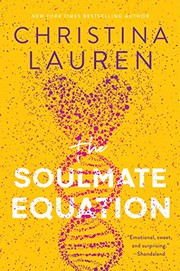
The Soulmate Equation
Statistician Jess matches a genetics grump at top score ever, then tests dating by data.
2,006-word summary · 9 min read

Size 12 Is Not Fat
Former teen pop star Heather Wells investigates two dorm elevator deaths while juggling her ex, her crush, and a size-12 wardrobe.
2,805-word summary · 12 min read
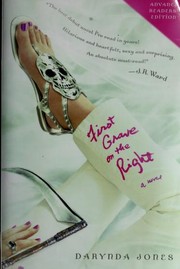
First Grave on the Right
Charley Davidson is a private investigator in Albuquerque and the grim reaper. When three murdered lawyers come back as ghosts, her two jobs collide.
2,770-word summary · 12 min read
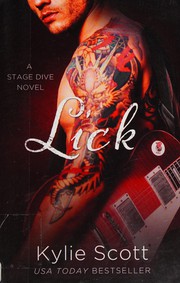
Lick
Evelyn wakes up married to the lead guitarist of Stage Dive after a Las Vegas birthday she cannot remember, and the annulment gets complicated.
1,989-word summary · 9 min read

The Bookshop on the Corner
A Birmingham librarian loses her job, buys a van, and moves to the Scottish Highlands to run a mobile bookshop. Warm and bookish, with uneven pacing.
2,557-word summary · 11 min read
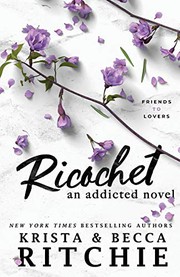
Ricochet
Lily Calloway tries to stay celibate for ninety days while Loren is in rehab, leaning on Rose, Connor, and Ryke as therapy forces her to face her childhood.
2,575-word summary · 11 min read
My Dark Romeo
A debutante ball kiss traps Dallas Townsend in a marriage to Romeo Costa, a man who wants her as leverage in a war against his father and her fiance.
2,530-word summary · 11 min read