
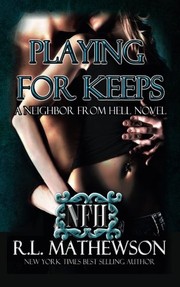
Playing for Keeps
2,571-word summary 11 min read 330 pages in the book
- First published
- 2011
- Publisher
- Rerum Publishing House
- Pages
- 330
- ISBN
- 9780983212546
- Series
- Neighbor from Hell (#1)
Reading options
What's inside (8 sections)
I started this one because two friends who read a lot of romantic comedy kept pushing the Neighbor from Hell books at me, and they both said to start here even though the later Bradford brothers get wilder. I wanted something funny and fast after a run of heavier novels, and a neighbor war romance sounded perfect for that mood. I did not expect to get so pulled into the family side of it, or to finish with strong opinions about both main characters.
My copy lines up with the 2011 Rerum Publishing House edition, 330 pages, listed as Neighbor from Hell #1. That matters because this is very much a series opener. It sets up Jason Bradford, his parents, his brothers, and the whole loud Bradford household that carries through later books. It is a contemporary romance with new adult characters, a lot of comedy, some open door scenes, and language that fits adult romance readers rather than younger teens.
The basic setup is simple. Haley has moved back into her parents house and finds herself stuck next door to Jason Bradford, the same guy who made her childhood miserable with pranks and teasing. Jason is now grown, good looking in that annoying way people keep pointing out, working as a general contractor with his family, and still completely unable to leave Haley alone. She wants quiet and a fresh start. He wants a reaction. Within a few chapters they fall back into fighting, and the rest of the book grows out of that tension.
Haley and the neighbors she cannot escape
Haley is not the wide eyed newcomer here, and that is part of the fun. She grew up on this street. She knows which houses gossip, which neighbor watches from the window, and how fast a fight on the lawn becomes street news. Moving back into her parents place as an adult feels like failure to her, even though she frames it as temporary and practical. She tells herself she will keep her head down, avoid Jason, and get her life sorted.
That plan falls apart because proximity makes avoidance impossible. Their driveways are close. Their windows face the right way for spying. Their parents know each other and chat. Haley tries to come and go without being seen, and Jason seems to have a radar for exactly when she is carrying groceries or trying to sneak out early for work. I laughed at first at how quickly her resolve cracks, then I started to feel for her. Anyone who has lived next to someone irritating knows that low level stress of hearing their car pull in.
What I appreciated is that Haley has a life outside the feud. She works, she worries about money and direction, she has friends who call her out when she acts stubborn. She is not waiting around to be rescued. Her problem is temper. She fires back fast, holds grudges, and sometimes cuts off her nose to spite her face just to avoid giving Jason the satisfaction of an apology. That stubborn streak drives half the plot.
One fair complaint: Haley can be exhausting in the middle stretch. She insists she hates Jason while doing things that keep her tied to him, like agreeing to schemes, showing up at family events, and engaging with every provocation. At some point I wanted to shake her and say, just ignore him for one full day and see what happens. But I also get that this is the point. If she could ignore him, there would be no book. Her inability to walk away is both a flaw and the engine.
Jason Bradford and the war of pranks
Jason is introduced as that specific kind of small town menace who never really grew out of torturing one girl. As kids he terrorized Haley with worms, scares, name calling, and property sabotage. As adults the pranks get more elaborate and more expensive. Think ruined laundry, messed up cars, nasty surprises in mailboxes, and house related revenge that only a contractor could pull off. He has tools, access, brothers willing to help, and zero shame.
I found Jason funny in small doses and kind of a lot in large ones. He is charming when he wants to be, quick with comebacks, protective of his family, good at his job. He also pushes too far. There were two or three prank sequences where I stopped laughing and thought, this would cost real money to fix, and a normal person would call the police. The book plays it as comedy, and the tone mostly carries it, but if neighbor revenge stories bother you in real life, you will need to accept the genre rules here.
What saves him is that Mathewson gives him clear motives beyond meanness. Jason is restless. He likes getting a rise out of Haley because she actually reacts, unlike women who just flatter him. He is also used to being the screw up Bradford in some ways, the one who jokes instead of settling down, and needling Haley lets him avoid thinking about what he wants next. Once you see that pattern, the pranks read less as random cruelty and more as attention seeking from someone who never learned another way to keep a girl close.
His work as a contractor matters to the prank war too. He knows houses. He can take something apart and put it back wrong. He can make noise at 7 a.m. with a plausible excuse. Haley, living with her parents, has no such cover. She has to be sneakier, and her revenge tends to be more personal and cutting with words. That imbalance keeps things lopsided in a way I liked. She wins arguments. He wins physical chaos.
A fake relationship with real rules
The turn that moves the book from feud to romance is the fake dating setup. Haley needs a buffer against an ex and against pitying questions about her love life. Jason needs a shield against his mother and other well meaning women trying to set him up or tie him down. They agree, with a lot of bickering, to pretend to be together for specific events and to sell the story to neighbors and family.
On paper the rules sound simple. Show up together. Act affectionate. Back up each others stories. No real feelings involved. In practice it is a mess from the first outing. They overdo the touching to prove a point, then get flustered when it feels good. They argue in the car on the way there, then lock arms and smile at the door. Friends and family buy it faster than expected, which panics both of them.
I thought these scenes were the strongest in the book. Mathewson is good at public performance awkwardness. A backyard barbecue where Haley has to laugh at Jason jokes. A family dinner where Jason puts his arm around her chair and she has to decide whether to lean in or freeze. A run in with the ex where Jason goes a little too far with the possessive act and Haley has to play along while furious. The comedy comes from them trying to look like a natural couple while still keeping score.
The problem, which the book admits, is that fake dating only works if both people are honest about boundaries, and these two are terrible at that. Haley tells herself it is purely useful. Jason tells himself it is funny and convenient. Neither says out loud that jealousy is creeping in, or that they like how the other smells up close, or that they sleep better after spending an evening pretending. So small moments pile up. A hand held a second too long. A joke that sounds like fondness instead of mockery. A look from across a room that lasts.
If you have read a lot of fake relationship romances, you will recognize the beats. What felt fresh here was how neighbor specific it is. They cannot go home and take a break from the act because home is next door. Haley sees Jason truck in the driveway and replays the evening. Jason sees her kitchen light on and wonders if she is thinking about him too. The fake leaks into real life because there is no distance.
Bradford family chaos at full volume
No summary of this book works without the Bradfords, because they take over every scene they enter. Jason comes from a big, loud, nosy, loving family in the Boston area. His parents have been together a long time and still tease each other. His brothers are each annoying in a distinct way, and they all think tormenting Jason about Haley is hilarious. Cousins, friends, and hangers on drift through cookouts and job sites. The house is never quiet.
I loved these parts even when they slowed the central romance. There is a particular energy to a family that shows love by insulting each other, stealing food off plates, wrestling in the living room, and interrogating guests within five minutes of arrival. Haley walks into that as an outsider who has known them for years but never as a girlfriend, real or fake. Suddenly everyone wants to know her intentions, her job plans, her opinion of Jason, and whether she can handle them. It is overwhelming and warm at once.
The Bradford parents especially change the tone. Jason mother is determined to see her sons settled and happy, which makes her both meddling and perceptive. She pushes, but she also notices when Jason looks at Haley differently. His father is quieter, handy, amused, the kind of dad who fixes things while listening. Watching Haley earn their respect by standing up to their son, helping in the kitchen, or refusing to be bullied at the table gave her more depth than the prank scenes alone.
The chaos does have a cost. Around the middle of the 330 pages, the plot stalls a bit under the weight of family vignettes. A cookout runs long. A job site argument goes in circles. A brother subplot pops up and then fades. I did not mind much because the dialogue is snappy, but readers who want the couple alone on every page might get restless. This is book one of a long series, so some of that sprawl is setup for later brothers. Trevor, who gets his own book next, already stands out here as more than background.
When pretending stops working
About two thirds in, the act breaks down in the way it has to. Jealousy stops being funny. Jason does not like seeing Haley talk to other men, even when he has no claim. Haley does not like seeing women throw themselves at Jason, even when she tells friends she does not care. A fight that starts as teasing turns sharp. Old wounds about childhood humiliations come up. Haley says things about trust that sound less like banter and more like hurt she carried for years.
This is where the book got better for me. Early on, the pranks are almost cartoonish. Here, Mathewson lets consequences land. Haley remembers what it felt like to be the girl everyone laughed at because Jason targeted her. Jason has to face that his idea of fun left marks. He tries to apologize in his own clumsy way, with actions more than speeches, by fixing something he broke or showing up when it counts. Sometimes it works. Sometimes Haley shuts the door, literally and emotionally, and he has to wait.
The physical side ramps up in this section too. For readers who track heat levels, this is explicit contemporary romance with several open door scenes. I thought the chemistry was believable because it grows out of fighting. These two are tactile people. They shove, grab wrists, crowd doorways, end up too close during arguments. When that tips into desire, it does not feel random. What did feel uneven was how fast they swing from anger to tenderness. One chapter ends with Haley swearing she is done. The next opens with her melting because Jason did something thoughtful with his hands or his tools. Your tolerance for that whiplash will shape how you feel about the middle.
There is also a solid stretch about reputation and pride. Haley does not want to be the joke again, the girl who fell for Bradford charm and got burned. Jason does not want to admit he needs anyone, especially not the neighbor he spent years insisting he could not stand. Both would rather pretend they are still faking than say they are scared. I recognized that avoidance. It reminded me of couples I have known who fight about dishes when they are really fighting about fear.
Commitment without the games
The last part pushes both of them to drop the games and choose. For Jason, that means stopping the pranks as communication and using words, even when words make him feel exposed. He has to tell Haley what he wants beyond teasing, and tell his family to back off enough for Haley to breathe. For Haley, it means deciding whether she can trust a man who knows exactly how to humiliate her, and whether moving forward means forgiving childhood stuff she minimized for years.
I will not spoil the exact final gestures, but they fit the characters. There are no grand trips abroad or sudden wealth reveals. The big moves are local and practical. Showing up. Fixing damage. Standing up to an ex in plain language. Letting families witness something real instead of a performance. In a 2011 indie romance, that grounded ending felt right. It keeps the stakes at driveway level, where the whole book lives.
Does commitment solve everything? No, and I liked that Mathewson does not pretend it does. Jason is still impulsive. Haley is still quick to assume the worst. The Bradfords are still going to barge in uninvited. The difference is that the couple starts to fight as a team instead of against each other. A late scene at a family gathering shows this well. Instead of trading insults for an audience, they cover for each other, trade a private look, and leave early to talk alone. Small shift, big meaning for these two.
My main criticism of the ending is pacing. After a long, chatty middle, the resolution comes fast. A couple of important conversations happen off page or get compressed into internal monologue. I wanted one longer, uncomfortable talk where Haley lays out exactly which pranks still sting and Jason actually listens without joking. We get pieces of that, but not the full sit down I was hoping for. Still, the emotional logic holds. He proves change through consistency. She risks belief despite history. For a series launcher, it closes enough while leaving room for weddings, babies, and brother stories later.
If you are deciding whether to pick it up, know what you are getting. This is a 2011 Rerum Publishing House romantic comedy, 330 pages, first in Neighbor from Hell, built on bickering, pranks, fake dating, and big family energy. The editing has some rough edges typical of early indie publishing. The humor is broad, the sex is explicit, the conflict relies on stubbornness that can frustrate. But if you like enemies to lovers where the enemies really were enemies, this delivers and sets up a fun long series.
FAQ
When was Playing for Keeps published?
R.L. Mathewson first published it in 2011 with Rerum Publishing House. The edition cited here runs 330 pages with ISBN 9780983212546.
Is Playing for Keeps part of a series?
Yes. It is book 1 in the Neighbor from Hell series, introducing Jason Bradford and his family before the later brothers get their own books.
Is Playing for Keeps suitable for younger teens?
No. It is an adult contemporary romance with open door sex scenes, strong language, and prank and family conflict aimed at grown readers.
Similar books
More from Neighbor from Hell first, then related titles.

Tangled
Told by a cocky businessman, a bet to win the new associate who rejects him turns into real pursuit, strict rules, a painful reveal and a wedding-level happy…
2,868-word summary · 13 min read

Wallbanger
Caroline battles thin walls and a charming playboy neighbor in San Francisco, then falls for him.
1,947-word summary · 9 min read

Shopaholic and Sister
Becky Brandon returns from a ten-month honeymoon to meet the half-sister she always wanted, then discovers that Jess is thrifty, prickly, and nothing like the…
2,591-word summary · 12 min read

One to Watch
A plus-size fashion blogger takes the lead role on a reality dating show to prove she belongs on television, and finds she might want what the cameras offer.
2,478-word summary · 11 min read

Collided
Sophie bets she can resist playboy Liam, then pit walls fall.
2,219-word summary · 10 min read

Bridget Jones: The Edge of Reason
Bridget doubts Mark, takes a job with Daniel, and lands in trouble in Thailand.
2,198-word summary · 10 min read
To Love Jason Thorn
Childhood friends Olive and Jason reunite when the Hollywood star returns home, fake a romance for the cameras, and face old family wounds before trust turns…
2,506-word summary · 11 min read

This Man
Ava O Shea meets Jesse Ward while designing The Manor House, and their obsessive affair tests her work and limits.
2,209-word summary · 10 min read
The Coincidence of Callie & Kayden
Callie saved Kayden in an alley and meets him again in college, where both must face assault and abuse to learn trust.
2,578-word summary · 11 min read
Hello Stranger
Portrait artist Sadie loses face recognition after brain surgery and must finish a contest piece while falling for two men.
2,210-word summary · 10 min read
Gabriel's Rapture
A professor faces a hearing while Julia fights for her own name in Florence, testing love through distance and work.
2,480-word summary · 11 min read

Effortless
Kiera and Kellan try to build trust after choosing each other, tested by tour life, jealous fans, and Denny's lingering presence.
2,568-word summary · 11 min read
The Takeover
An arrogant CEO and the sharp employee forced to staff his deal trade insults, trips and late nights across a long push-pull, until pride and jealousy force…
2,580-word summary · 11 min read
The Heart Principle
Violinist Anna Sun plans one night with Quan Diep, then faces autistic burnout and family duty after her father's stroke in Hoang's 352-page 2021 Berkley…
2,793-word summary · 12 min read
Pushing the Limits
Scarred Echo and foster kid Noah take on tutoring, family secrets, and a custody fight in this 2012 debut about trust after harm.
2,831-word summary · 13 min read

Never Too Far
Blaire flees Rosemary Beach after Rush's lies, then must decide if his pursuit and Nan's exposed schemes earn trust again.
2,626-word summary · 12 min read
Captivated by You
Eva and Gideon hide a secret Caribbean marriage while planning a Monterey wedding as Gideon arrest, press threats, and Corinne strain test them in Crossfire…
3,016-word summary · 13 min read
Before We Were Strangers
Matt waits fifteen years to ask Grace why she left after one college night that shaped them both.
2,386-word summary · 11 min read
Thoughtless
Kiera follows her boyfriend to Seattle and falls for her roommate, rock singer Kellan Kyle, in a messy love triangle about loyalty and desire.
2,997-word summary · 13 min read
The Rosie Effect
Married in New York, Don Tillman turns Rosie's pregnancy into research and nearly loses her, until a crisis forces him to listen.
2,869-word summary · 13 min read

The Re-Do List
After a public breakup, Willow Lewis redoes her romantic firsts with her brother's best friend while dog-sitting in Des Moines.
2,390-word summary · 11 min read
Catch Her If You Can
Yankees catcher Madden proposes a secret marriage of convenience to burlesque club owner Eve when two kids land on her doorstep.
2,187-word summary · 10 min read
Addicted to You
Lily hides sex addiction and Lo hides drinking while faking love to fool their rich families.
2,064-word summary · 9 min read
Wait for You
Avery flees Texas for college to bury her past, but patient Cam Hamilton refuses to stay a stranger.
2,866-word summary · 13 min read

Magnolia Parks
London socialite Magnolia Parks and BJ Ballentine keep hurting each other while trying to move on.
2,459-word summary · 11 min read
Josh and Hazel's Guide to Not Dating
Quirky teacher Hazel and steady Josh set each other up on awful double dates in Portland while insisting they are just friends.
2,854-word summary · 13 min read
On Dublin Street
A guarded young woman in Edinburgh agrees to a no-strings fling with her roommate's brother, and finds the past she fled catching up with her.
2,491-word summary · 11 min read
Throttled
F1 driver Noah hates his teammate son Maya, then hires her to fix his image and falls for her.
1,942-word summary · 9 min read

Easy
A college freshman rebuilding after a breakup finds an unexpected bond with a tattooed classmate while facing a stalker.
2,364-word summary · 11 min read