
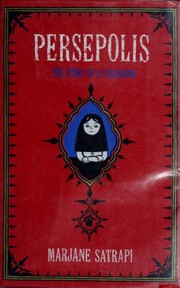
Persepolis
2,984-word summary 13 min read 160 pages in the book
- First published
- 2000
- Publisher
- Pantheon Books
- Pages
- 160
- ISBN
- 9780375422300
- Series
- Persepolis (#1)
Reading options
What's inside (8 sections)
I picked up Persepolis because a friend kept describing it as the rare comic that made her cry on an airplane, and I wanted to see how a book drawn in such plain black and white could carry that much weight. The edition I read is the Pantheon Books English volume from 2003, about 160 pages, which collects the first part of a story first published in French by L'Association from 2000. It follows Marjane Satrapi herself, called Marji for most of the book, from age ten in Tehran to age fourteen, when her parents put her on a plane alone to Vienna. Streets fill with marches, then with mourners, then with recruitment posters. A living room that once held open talk turns into a place where curtains stay closed during parties. A schoolgirl who once argued with God in her head learns to argue with a principal instead, and the stakes keep rising.
What stayed with me is how Satrapi tells large events through small rooms. She shows what her family ate, what they hid, who stopped coming over, who disappeared. Her parents are educated, left leaning, and outspoken. Her grandmother is blunt and warm and unwilling to be impressed by power. Around them move uncles, neighbors, the maid, classmates, and guardians of the new order. Revolution, republic, and war arrive the way such things arrive for a child, as fragments overheard at dinner, as a new rule at school, as a face missing from a photo, as a sound at night that her parents explain in low voices.
A ten year old in Tehran
Marji starts as a fierce ten year old in Tehran, the only child of comfortable and political parents. She goes to a French secular school, reads widely, and holds strong opinions about everything. In the early pages she wants to be a prophet. She pictures herself as someone who will fix hunger and suffering, and she holds long imagined talks with God, who looks in her drawings like a calm old man. At the same time she admires revolutionaries, especially her Uncle Anoosh, and keeps posters of fighters on her wall. She also loves pop music and dramatic poses. That mix feels true. One minute she thinks about justice in grand terms, the next she sulks because her parents will not let her join a march.
Her family shapes what she sees. Her parents oppose the Shah. They join marches and discuss Marx and imperialism at home. Her father takes photos during protests, which later becomes dangerous. Her mother insults the king in the street. Her grandmother remembers poverty and speaks with contempt about kings who steal. The family maid Mehri, whose romance with a neighbor boy is blocked by class, shows Marji how money and reputation rule even love in Tehran. When Marji tries to help the couple, her father has to explain why the match will fail. That small story tells you about fear and rank before the book ever names a law.
Satrapi draws all this in thick lines and flat blacks. Faces are round or lined, bodies are simple, backgrounds are often a wall, a car, or a crowd suggested by repeated heads and fists. She does not aim for likeness. She aims for clarity. When Marji is angry, her mouth is a slash. When she is proud, she stands very straight in an oversized jacket. When God appears, he floats in a white gap above her bed. The simplicity lets her move fast between home, street, school, and memory. It also keeps terrible things readable. A prison, a beating, a body in the street can be shown without close detail, and the restraint makes them harder to shake off.
Revolution enters the house
The fall of the Shah in 1979 arrives first as joy, then confusion. Marji remembers demonstrations where religious and secular people, students and workers, shouted together. Her parents are hopeful. Political prisoners are released. Her beloved Uncle Anoosh comes home after years in prison and exile. He tells Marji stories about his life, about comrades lost, about time in jail. She adores him. He gives her a bread swan he made in prison, a small object she keeps. Then the new power hardens, and Anoosh is arrested again. He is accused of spying, tried, and executed. Satrapi shows Marji visiting him once before the end, then shows the family hearing the news. The revolution stops being a parade outside the window. It becomes an empty chair.
Other changes come quickly. Schools close for a time, then reopen with new rules. Bilingual schools are shut. Boys and girls are separated. Girls must wear the veil, even very young girls who do not grasp why. Marji and her friends hate it. They pull at the fabric and get scolded. Her mother also hates it and says so in public, which frightens Marji because she knows her mother could be punished. The university is closed in what is called a cultural revolution. Books are purged. Parties with alcohol and music go underground. Satrapi shows her parents and friends drinking homemade wine behind closed shutters while a patrol passes outside. Inside, talk and laughter. Outside, slogans on walls and committees watching dress and behavior.
The American Embassy hostage crisis forms a background that further narrows life. Groups that had seemed marginal gain ground by presenting themselves as true defenders of the revolution. Leftist groups who marched against the Shah are hunted. Friends of the family are arrested. People start to leave Iran. Those who stay learn new habits. Marji learns to lie at school about what happens at home. She learns that her father owns forbidden books. She learns that saying the wrong thing about the veil or prayer can bring a visit. At home she still argues loudly. At school she practices silence, and the gap between the two selves makes her furious.
This section gains trust because Satrapi refuses to make her family into saints. Her parents are brave but also tired and sometimes careless. Her father admits fear. Her mother loses her temper. Her grandmother tells stories polished by age, and Satrapi lets that stand. When Marji acts cruelly, for example when she gets a classmate in trouble for selfish reasons, Satrapi does not excuse it. She shows a child testing power in a city where power has turned ugly, and she shows the shame afterward. Those moments keep the memoir from reading like propaganda for one side. They read like memory, where the narrator was sometimes wrong.
War from the windows and the basement
In September 1980 Iraq invades Iran, and the book shifts into a long wartime middle. Tehran is bombed. Sirens sound. Families tape windows, stock food, and sleep in basements. Satrapi shows nights when Marji and her family rush downstairs with neighbors, waiting for the all clear, listening for blasts. One strike destroys a building where people Marji knows live, and she draws the search in rubble and the finding of a small bracelet that proves who was there. The scene is brief and plain. No close view of injury. The horror sits in the empty stairwell and the parents who keep digging.
Daily life during the war is both boring and tense. Schools hold drills. Students hear stories about martyrs. Boys are urged to volunteer for the front with promises about paradise and plastic keys said to open heaven. Marji watches classmates divide between true believers, doubters, and kids who just want to get through the day. She belongs with the doubters. She and her friends buy forbidden tapes on the black market and sew images inside jackets. They hold secret parties where boys and girls dance together. Patrols stop cars and search bags. Women are checked for loose hair, makeup, or a coat deemed too short. Satrapi shows these stops as sudden and humiliating, with teenage girls talking back and then going quiet when a baton appears.
At home, rationing presses in. Her father waits in lines. Her mother worries about work and relatives at the front. News comes in letters and calls. Uncle Taher, a relative who needs surgery, cannot leave because borders are closed and hospitals are full of war wounded, and his story shows how ordinary illness turns fatal in wartime. Another relative shelters dissidents and helps arrange passports, which introduces Marji to the hidden economy of escape. Niloufar, a young communist woman the family knows, is arrested and executed after hiding for a time, and Marji learns that even private rooms are not safe. Each loss is drawn the same way, with a few panels of faces, a door, a car, a prison wall. Satrapi never lingers on gore. She lingers on absence.
Marji ages fast here, from about eleven to thirteen. She wears punk styles when she can, wide jackets, sneakers, denim, a headscarf pushed far back to show hair. She argues with teachers who quiz students about prayer and politics. She is expelled after confronting a teacher over claims about prisoners, then sent to another school. Her parents are called in. They are proud and scared at once. They know a sharp tongue can get a girl whipped or worse. They also know she is right to be angry. That bind, pride mixed with fear, runs through the war pages. Satrapi does not present herself as a hero. She presents herself as lucky, protected by parents who could pay fines and move her to a new school. Many classmates had no such cushion.
Rebels, punk jackets, and guardians on the street
What makes the middle so readable is its attention to teenage tactics under surveillance. Marji and her friends develop a system for seeming obedient while living otherwise. They wear the required long coat and scarf outside, then adjust everything the moment they turn a corner. They carry approved schoolbooks on top and hide comics or music magazines beneath. They learn which streets hold patrols at which hours. They learn what to say when stopped. Deny, smile, look young, cry if needed. Satrapi draws these encounters with a comic rhythm that never hides the threat. A guardian points. A girl answers back. A mother intervenes. A fine or a warning ends it, this time.
Music matters more than it might seem. In a house where politics is constant, Western pop and rock become a private country. Marji loves Iron Maiden and Michael Jackson and others traded on copied tapes. She and her friends stitch English words onto jackets. They practice dance steps in bedrooms with the volume low. Her parents defend her taste while warning her not to get caught. Her father finds things on the black market when he can. Her mother alters clothes to look modest enough for the street and cool enough for a party. These details sound small. In context they are survival skills.
School becomes a second front. Teachers divide students into the faithful and the suspect. Marji, who prays in her own way and questions in class, keeps getting marked as trouble. She challenges a teacher who claims there are no political prisoners, because her family knows this is false. She challenges another who says the veil protects women, because she has seen it used to control them. She is clever with words and quick to anger, a bad mix in that setting. Each clash ends with a summons or a transfer. Satrapi shows her own stubbornness without glamour. She was brave, but she also liked being right, and in Tehran in those years being right in public could endanger a whole family.
Religion itself is treated with care rather than mockery. Marji believed in God as a child and spoke to him often. As she grows, she pulls away, then returns in moments of fear, then pulls away again. She respects faith in others, especially her grandmother, whose idea of God is tied to bread, work, and dignity. What she rejects is the use of faith as a stick. When a teacher or guardian claims God wants a certain hem length or slogan, Marji hears politics, not prayer. Satrapi keeps that distinction clear. The book criticizes a state that claims divine approval for arrests and dress codes. It does not sneer at belief.
The airport corridor to Vienna
By 1984 Marji is fourteen and Tehran has become too tight to hold her. Bombings continue. Arrests continue. Her school record is poor. Her parents fear she will be taken after a street argument or reported by an informer. They choose to send her alone to Austria, where a family friend can take her in. The departure scenes are among the most controlled in the book. Her mother stays composed until the gate, then breaks down. Her father tries to stay steady. Her grandmother gives plain advice about staying honest and remembering where she comes from. Marji walks through the airport corridor past portraits of leaders, carrying bags that feel too heavy, looking back at parents she cannot touch again past the barrier.
Satrapi draws the airport with almost no words. Long panels of tile, glass, uniforms, and the small figure of a girl with a suitcase. The spareness works because the book has trained you to read faces. You know what her mother looks like when she is trying not to cry. You know what her father looks like when he is pretending a plan is solid. The plane takes off. The city shrinks. The war that filled half the book becomes a map below. This is clearly a hinge, not an end. It lands as both rescue and loss. She is safe for now. She is also alone at fourteen in a country whose language she barely speaks.
The Vienna years and the later return to Iran belong mostly to the second volume, Persepolis 2, but this first book sets up why exile will wound her. She leaves as someone formed by a loud house, by street talk, by jokes at dinner, by a grandmother who calls with blunt comfort. In Vienna she will face a hostel and shifting hosts, struggles with language, snow, food, school rules, and the cold stare given to a foreign girl. Satrapi sketches that future only briefly here, through fear rather than events. Marji worries she will forget Persian words and become a guest forever. Her parents worry they have saved her body and risked her spirit. The book does not pretend emigration fixes anything. It presents it as a gamble made under fire. Her eventual return to Iran as a young woman, and her second departure when she finds she cannot breathe under renewed controls, give this childhood volume its ache. When you watch ten year old Marji declare she will be a prophet, you sense the adult who will have to leave twice. Satrapi lets the airport walkway do that work.
What the black and white leaves out
It helps to name what this book does not do, because its power can tempt readers to treat it as a full history. It is a memoir from a particular perch. Marji grows up in a Westernized, educated, leftist household with money for books, tutors, and later a plane ticket. Most Iranians lacked those buffers. Workers, peasants, religious families who backed the new order, and poor conscripts appear at the edges but rarely speak at length. Satrapi keeps her focus tight on what she saw, which is honest, but a reader who wants to grasp why millions supported the Islamic Republic will need other books too. This book explains why her family felt betrayed. It does not fully explain why their neighbors felt victorious.
The compression is both a virtue and a cost. Eight years of revolution and war fit into about 160 pages in the Pantheon edition, so events arrive fast. Fights among leftists, nationalists, and Islamists shrink to a few arguments at dinner. The hostage crisis, the closing of universities, the purges, the front: each gets a handful of panels and a short caption. For a newcomer that pace is a gift. You never drown. But you can finish feeling you grasped more than you did. I slowed down over captions about dates and groups, and I still wanted a timeline nearby. Used as memory, the book is superb. Used as a sole source, it would mislead by omission.
The art invites a similar caution. Black and white shapes suit memory. They turn crowds into patterns, fear into shadow, love into a hand on a shoulder. They also smooth texture. Tehran looks stark even when the text describes crowding. Faces repeat. Rooms repeat. After a while every guardian looks like every guardian, which suits a child's view of authority but flattens real differences among enforcers. Transitions can be abrupt. A friend is alive on one page and mourned on the next. A rule changes between panels. That abruptness mirrors how change felt, yet it can confuse anyone new to the sequence.
None of this undid the book for me. The limits made me trust the narrator more, because she does not pretend to be neutral. She loves her Uncle Anoosh and says so. She adores her grandmother and says so. She admits when she bullied a classmate or endangered her parents by talking big. She shows her parents arguing about whether to stay or go, rather than presenting emigration as a noble plan from the start. Read it for the rooms and the faces, for the jokes and the fear, for the way a smart child learns to read a street. Then, if you want the wider frame, read histories of the revolution and the Iran Iraq war next, and come back to Marji. She will still be waiting at the breakfast table, tugging at a veil she refuses to accept, certain that the world should be fairer than it is.
FAQ
Is Persepolis only about the Iranian Revolution?
No. The revolution opens the story, but much of this volume covers the Iran Iraq war years, school life under new rules, and Marji's family debates before she leaves for Vienna in 1984.
Do I need to read French to start with this volume?
No. The French original appeared with L'Association from 2000, and the Pantheon 2003 English edition collects the first part of the story in translation.
Is Persepolis suitable for teen readers?
Many schools assign it to teens because the narrator is a child and the art is plain, though it includes arrests, executions, bombing, and death discussed in direct terms.
Similar books
More from Persepolis first, then related titles.
The Complete Persepolis
Satrapi's full black and white memoir in one volume, from revolution era Tehran through Vienna exile and back home again.
2,498-word summary · 11 min read

Lone Survivor: The Eyewitness Account of Operation Redwing and the Lost Heroes of SEAL Team 10
Marcus Luttrell's account of the 2005 SEAL mission in Afghanistan that killed three of his team and left him alone.
2,144-word summary · 10 min read

American Sniper: The Autobiography of the Most Lethal Sniper in U.S. Military History
Navy SEAL sniper Chris Kyle recounts Texas roots, SEAL training, four Iraq tours, and the strain combat placed on his marriage and health.
2,011-word summary · 9 min read
A Long Way Gone: Memoirs of a Boy Soldier
A Sierra Leone boy flees rebels, becomes a child soldier at thirteen, and fights his way back through rehab.
2,434-word summary · 11 min read

The Zookeeper's Wife: A War Story
The directors of the Warsaw Zoo hid roughly three hundred Jews in empty cages and outbuildings after the German invasion, while Jan worked for the resistance.
2,065-word summary · 9 min read

Long Walk to Freedom
Mandela's account of a Thembu childhood, a law practice, a banned movement, twenty-seven years in prison, and the negotiation that ended apartheid.
2,454-word summary · 11 min read
Brown Girl Dreaming
Jacqueline Woodson retells her childhood in verse, moving from Ohio to South Carolina to Brooklyn while the civil rights movement reshapes the world around her.
2,727-word summary · 12 min read

Down and Out in Paris and London
Orwell's account of washing dishes in Paris hotels and tramping through London does not ask for pity, only for a clear look at how poverty actually works.
2,282-word summary · 10 min read

Bury My Heart at Wounded Knee: An Indian History of the American West
Dee Brown's 1970 retelling of the American West from the point of view of the people it destroyed.
2,233-word summary · 10 min read

The Letters of Vincent van Gogh
Vincent van Gogh's letters to his brother Theo, in a Penguin Classics selection edited by Ronald de Leeuw, trace a decade of work, faith, and obsession.
2,611-word summary · 12 min read
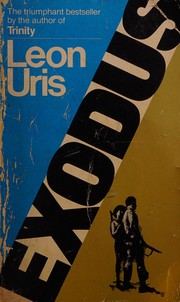
Exodus
Leon Uris's sweeping 1958 novel follows Jewish refugees, Haganah fighters, and Holocaust survivors from Cyprus to the founding of Israel and the 1948 war.
2,529-word summary · 11 min read

Killing Lincoln
Booth plots as Lincoln pushes war end and reunion in 1865.
2,486-word summary · 11 min read

Ham on Rye
Henry Chinaski grows up rough in Depression Los Angeles and finds writing.
2,244-word summary · 10 min read

Edge of Eternity
Five families cross civil rights, Cold War and Berlin Wall to the eighties.
2,489-word summary · 11 min read

Wild Swans
Three generations of women survive warlords, revolution, and the Cultural Revolution in Jung Chang's family memoir.
2,356-word summary · 10 min read

Twelve Years a Slave
Free violinist Solomon Northup tells how Brown and Hamilton lured him south into twelve years of Louisiana bondage until Bass letters brought rescue in January…
2,931-word summary · 13 min read

Fire & Blood
Archmaester Gyldayn chronicles Aegon the Conqueror through the Dance of the Dragons, with Doug Wheatley art across 752 pages.
3,268-word summary · 15 min read
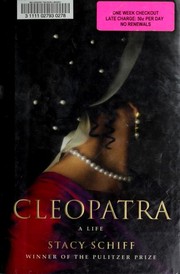
Cleopatra: A Life
Pulitzer winner Schiff restores Cleopatra as a capable ruler, from Ptolemy debts and Caesar to Antony, Actium, and her death in 30 BC, built from coins and…
3,586-word summary · 16 min read

Blankets
Craig Thompson recalls sharing a bed with brother Phil, falling for Raina at church camp, losing his faith, and keeping art through Michigan winters.
2,586-word summary · 11 min read

The Splendid and the Vile
Larson follows Churchill circle through Blitz year with diaries and bombing nights.
2,038-word summary · 9 min read

Narrative of the Life of Frederick Douglass
Douglass names names from Maryland slavery to his 1838 escape, showing how literacy, wages, and faith were policed, then answers with defiance.
2,630-word summary · 12 min read
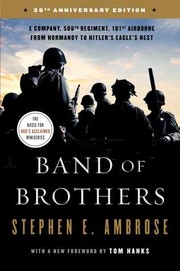
Band of Brothers
Easy Company, 506th Airborne, from Toccoa training through D-Day, Holland, Bastogne, and Hitler's Eagle's Nest.
2,685-word summary · 12 min read

The Story of My Life
Deafblind Keller learns water at pump through Sullivan finger spelling.
2,149-word summary · 10 min read
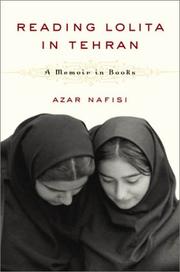
Reading Lolita in Tehran: A Memoir in Books
Seven women meet in secret in Tehran to read Lolita, Gatsby, and Austen while revolution presses in.
2,916-word summary · 13 min read
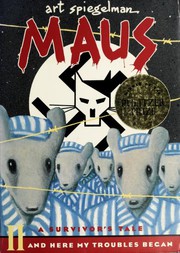
Maus II: A Survivor's Tale: And Here My Troubles Began
Vladek survives Auschwitz and the death march while Art struggles with success, guilt, and his father's aging stubbornness.
2,111-word summary · 9 min read

Dead Wake
Larson tracks Lusitania, U-20, and Room 40 toward May 1915 sinking.
2,471-word summary · 11 min read
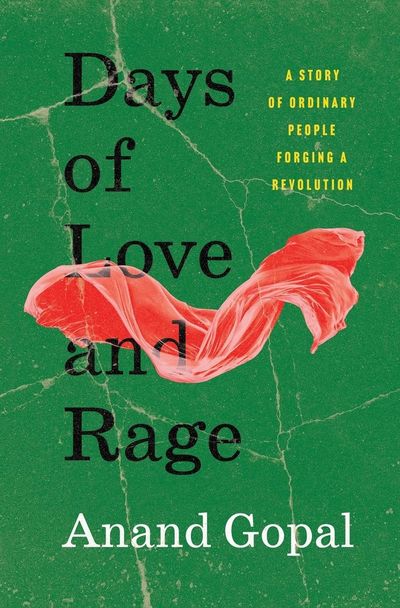
Days of Love and Rage
Six Syrians build a short democracy in Manbij, then watch inequality and ISIS undo it.
2,022-word summary · 9 min read
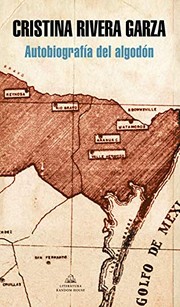
Autobiography of Cotton
A Pulitzer winner traces her cotton-worker grandparents and a 1934 border strike through archives, memory, and damaged land.
2,213-word summary · 10 min read

Fun Home: A Family Tragicomic
Alison Bechdel's graphic memoir about her father, their shared secrets, and the funeral home they called Fun Home in rural Pennsylvania.
2,755-word summary · 12 min read

A Separate Peace
Two roommates at a New England boarding school test friendship as war drafts close in.
2,065-word summary · 9 min read