
Reading options
What's inside (9 sections)
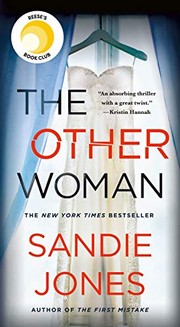
I started The Other Woman late on a weeknight because a friend said it would make me text her at midnight, and she was right. Sandie Jones published it in 2018 with Minotaur Books, and my reading follows the 306 page hardcover. Emily Falls, a young woman in London who works hard and loves harder, thinks she has finally found steady ground with Adam Banks, a handsome, attentive man who cooks and remembers birthdays and calls when he says he will. The problem is his mother. Pammie is charming to everyone else and cold to Emily in ways that are hard to prove. I have sat at tables like that, where the smile never reaches the eyes and you leave wondering if you imagined it. This book lives in that doubt for most of its length, then flips it.
Emily is our narrator, and she wants this to work. She is in her late twenties, renting, working, trying to build an adult life after a past that left marks. Adam seems like a reset. He is recently out of a long relationship, successful enough to be comfortable, close to his mother after losing his father years earlier. He dotes on Emily in the early chapters. He plans weekends. He introduces her to friends. He says he loves her. For a while theiffness is only around Pammie, who hugs a second too briefly and asks questions that sound like tests. Where did you grow up. What do your parents do. How long was your last relationship. Emily answers politely and feels graded.
The perfect boyfriend with one catch
Adam Banks reads on the page as the man many thrillers use as bait. He is kind in public, confident at work, easy with waiters and taxi drivers. He remembers how Emily takes her tea. He buys her a scarf in the exact green she once admired in a shop window. Those details matter because they make Emily trust him fast. She tells herself she is not rushing. She tells her best friend she is being careful. But the book shows her moving in emotional terms very quickly, picturing holidays and flats and a future with his name in it.
What I found convincing is how Jones writes new love as relief. Emily has been waiting for someone uncomplicated. Adam offers that story. He texts back. He shows up. When he talks about his mother, his voice softens. My mum has been through a lot, he says. Emily nods because she wants to be the kind of girlfriend who gets along with family. She buys Pammie flowers. She offers to cook.
The catch is small at first. Pammie forgets to include Emily in a dinner invitation. Pammie calls Adam during their weekend away and keeps him on the phone for an hour. Pammie drops by Adam's flat with food Emily cannot eat and fusses over stains Emily did not leave. Each incident alone means nothing. Together they form a pattern Emily cannot name without sounding jealous. Jones is good at that accumulation. A late reply here. A changed plan there. A comment about Emily's dress that could be praise or a cut depending on tone. Emily replays tone the way Isla in a romance might replay texts, but here the stakes are domestic and sharp.
Pammie, the mother who knows best
Pammie is the center of the book even when she is off page. Widowed, stylish, devoted to Adam, used to running his life down to curtains and dentists. She hosts Sunday lunches that feel like interviews. She keeps Adam's childhood room intact. She speaks of his late father with a loyalty that makes any new woman feel like an intruder. In company she is warm. She pours wine, asks after Emily's work, compliments her shoes. Alone with Emily, the warmth drops a few degrees. A look held too long. A question repeated after Emily already answered.
Jones gives Pammie tactics that stay close to what feels plausible, which is why the middle of the book crawls under your skin. She undermines rather than attacks. She offers to help with wedding dress shopping and then steers Emily toward choices that feel wrong for her. She offers advice about the flat Emily and Adam hope to share, then finds faults no one else sees. Damp. Noise. A landlord to avoid. She tells stories about Adam's ex that make Emily feel second place without Pammie ever saying so directly. She was such a help to me after his father died. She knew just what to do. Emily smiles and feels sick.
I believed these scenes because I have seen versions of them. The mother who means well but cannot release her son. The girlfriend who tells herself she is overreacting. Jones lets Emily keep a mental list and then hate herself for keeping it. Is she competing with a widow. Is she inventing rivalry where there is only grief. Adam does not help at this stage, though not from cruelty. He shrugs. Mum is just like that. She will come around. He kisses Emily's forehead and takes his mother's call in the next room. That divided attention is the engine of the first half. Emily wants Adam to choose. Adam wants both women to get along without him having to act.
Small cuts that start to bleed
As Emily and Adam get more serious, the incidents sharpen. A dress Emily loves is mocked lightly and then disappears from the conversation as if it never mattered. Plans for the flat shift after Pammie visits. A dinner Emily cooks with care is picked apart with smiles. You used cream in this. Adam is watching his cholesterol. Emily, who prides herself on being easygoing, starts to snap. She cries after Pammie leaves. She checks Adam's phone when he is in the shower and hates herself for it. She asks friends if she is losing perspective. Her friend tells her to trust her gut. Her gut says Pammie wants her gone.
Jones paces these chapters as a slow squeeze. Emily tries strategies. She confronts Pammie gently and is met with hurt surprise. I only want what is best for Adam. She confronts Adam and is met with loyalty to his mother. Emily tries to win Pammie over with gifts and favors. Sometimes it seems to work. Then comes another cut, private and deniable.
What raises the tension is that Emily is not a fully reliable narrator, and Jones lets you feel it. Emily drinks more than she plans when stressed. She misremembers times. She arrives unannounced at places and then explains it away. She tells small lies to Adam about where she has been. Those slips do not make her the villain, but they make you wonder how much of Pammie's malice is proven and how much is fear. I kept turning pages not because I wanted Pammie punished but because I wanted to know which woman was misreading the other. That question carries the middle even when the plot moves slowly.
Emily's past walks back in
About halfway through, Jones widens the frame. Emily has a past she has not fully shared with Adam, centered on a best friend and a loss that still wakes her at night. The book keeps the specifics soft, which suits the theme. What matters is guilt. Emily believes she failed someone she loved. She carries that failure into every new bond and works overtime to be good, to be liked, to be chosen. When Pammie senses that soft spot, whether by instinct or by snooping, she presses it. Comments about loyalty. Comments about girls who leave when things get hard. Emily hears accusation even when the words are mild.
This is where mutual suspicion takes over. Emily starts to investigate Pammie. She asks around about Adam's ex. She looks for patterns in what Pammie says to different people. She follows up on small inconsistencies, like who was invited where and when. At the same time, Pammie seems to be investigating Emily, asking pointed questions about her childhood, her jobs, her old address. Both women collect files on each other while smiling over roast chicken. Adam, caught between, starts to fray. He works late. He drinks more. He tells Emily she is obsessed. He tells his mother to back off and then apologizes for his tone.
I liked this section even as it frustrated me, because it shows how two intelligent people can make each other worse. Emily, who started warm and open, becomes watchful and tight. Pammie, who started controlled, becomes bolder in her digs. A birthday lunch becomes a battlefield with napkins folded neatly. A weekend trip becomes a test of allegiance. Who sits where in the car. Who Adam checks on first when someone is quiet. Love, in this house, is measured in small loyalties. Jones writes those measurements with a steady hand. No single scene screams. The volume rises because the scenes repeat.
Adam in the middle, losing ground
Adam is the weakest link by design, and Jones does not let him off easy. He loves Emily. He loves his mother. He tells himself those loves do not conflict. When Emily says your mother moved my things, he says you must have misplaced them. When Pammie says Emily was rude, he says she is just stressed. He plays translator and edits both sides to keep peace. For a while it works. The women tolerate each other for his sake. Then the edits fail because the stories diverge too far to reconcile.
There is a strong scene where Adam finally sees one of Pammie's cuts clearly. I will not spoil the exact setup, but it involves a plan Emily made with care that Pammie quietly ruins and then mourns loudly. Adam watches his mother's face and catches something he cannot explain away. That flicker costs him. He goes quiet in the car home. He does not defend Pammie that night. Emily feels a rush of victory followed fast by shame. She wanted to be believed, but not like this, not at the price of Adam looking younger and more lost than she has ever seen him.
From there Adam tries to set rules. No drop ins without calling. No comments about Emily's cooking or clothes. Sunday lunch stays but with limits. Pammie agrees with tears that may or may not be real. For a chapter or two, peace holds. They have a pleasant meal. Pammie asks Emily about work and listens to the answer. Adam relaxes enough to laugh. I relaxed too, which is the trick of domestic suspense. Calm is just the space between incidents. Jones uses that calm to make you lower your guard before the next turn.
Confrontation and the turn that reframes everything
The climax comes as a direct confrontation between Pammie and Emily, with Adam forced to choose in the room rather than later on the phone. Secrets that both women held back are spoken. Emily names the sabotage as she sees it, incident by incident, dress and flat and messages and stories. Pammie denies, deflects, weeps, then sharpens. She says Emily is not stable enough for Adam. She says she has seen girls like Emily before. She says a mother knows. Adam stands between them, literally and morally, asked to declare who he trusts.
Jones stages this well because she lets everyone sound partly right. Emily does sound frantic when she lists grievances. Anyone would. Pammie does sound like a worried mother when she cites Emily's past. Anyone might. Adam does sound like a man out of his depth when he begs them to stop. He is. The scene ends not with a clean win but with a rupture. Someone leaves. Someone slams a door. Someone says a sentence that cannot be unsaid. I finished the chapter with my shoulders up near my ears.
Then comes the final twist, which I will describe only in general terms to leave room for new readers. The ending reframes Pammie. What looked like simple jealousy is shown to have another root, tied to Adam more than to Emily, and to choices Pammie made long before Emily arrived. At the same time, Emily's own role in events is recast. Things she presented as reactions look, in hindsight, more active. The last pages ask you to revisit earlier scenes with new eyes. That dress shop moment. That phone call. That lunch. Jones plants enough detail that a reread pays off, though some plants are so quiet you may feel tricked rather than guided.
I admired the ambition of that turn even where I questioned it. The book wants to say that in families, the person labeled difficult is not always the person driving harm. It wants to say that love can make witnesses unreliable, including the narrator you trusted for 250 pages. Those are meaty aims for a first novel, and Jones commits. The final image, domestic and chilled, stayed with me longer than any single scare. A kitchen tidy. A phone face down. Two people smiling for a photo while a third watches from the doorway.
What grips and what grates
What grips is pace in the first and last thirds and psychological texture throughout. Jones writes jealousy, gaslighting, and people pleasing with close attention. Emily's voice is immediate and chatty, easy to read fast. Pammie's dialogue is a master class in deniable cuts. Adam's evasions feel true to conflict avoidant partners. At 306 pages in the 2018 Minotaur hardcover, the book is built for one or two sittings, with short chapters that end on hooks. I read the last hundred pages standing in my kitchen because I did not want to break momentum to sit down.
What grates needs honesty. First, Pammie leans into stereotype for long stretches. The monstrous mother in law who ruins dresses and flats and Sunday roasts is a familiar figure, and Jones uses her without much variation until late. Readers who live with difficult mothers in law may find it cathartic. Others may tire of watching Emily lose the same round in different rooms. The middle sags because the pattern repeats. Another lunch. Another dig. Another denial. The book needs that repetition to make its point about slow harm, but fifty pages in the center could have been tighter.
Second, Adam is thin as a character apart from his function. He is handsome, kind, torn. We learn little about his work, his friends, his grief for his father beyond what Pammie and Emily say about him. When he must finally act, his choice feels driven by plot need rather than growth. I wanted one scene early where Adam stands up to someone who is not Emily, to prove he can, so his failure with Pammie would sting more.
Third, the final twist stretches. Without spoiling specifics, it asks you to accept that several characters withheld obvious information for months and that professionals and friends noticed nothing. The reframe of Pammie is clever and emotional, but it depends on silence that feels convenient on a second look. Some readers will love the audacity. Others will feel the ground shift a bit too far. I landed in between. I bought the feelings even when I doubted the mechanics.
Still, as a domestic thriller about love, loyalty, and the stories families tell to protect themselves, The Other Woman earns its reputation. It is best for readers who like slow burn suspense with sharp dialogue rather than chases, for book clubs that enjoy arguing about who was worse, and for anyone who has ever left a family meal replaying one sentence all the way home. Pair it with a lighter palate cleanser after, because the last turn will make you want to talk. Just check that your phone is face up and your kitchen is your own.
FAQ
When was The Other Woman published?
Sandie Jones published it in 2018 with Minotaur Books. The hardcover runs 306 pages and the ISBN is 9781250303394.
Is it part of a series?
No. It stands alone with Emily, Adam, and Pammie, and the ending closes their story.
Who are Emily, Adam, and Pammie?
Emily is the girlfriend narrator, Adam Banks is her torn boyfriend, and Pammie is his widowed mother who undermines Emily.
Similar books
The Other Mrs.
A Chicago family inherits a house on a Maine island, then a neighbor is found murdered. Kubica's 2020 thriller builds to a final reframe.
2,267-word summary · 10 min read
The Golden Couple
A cheating wife, a watchful husband, and a rule-breaking therapist collide in a marriage repair that hides stalking, a vanished woman, and a murder plot.
2,677-word summary · 12 min read
The Wife Between Us
A jealous ex-wife stalks her replacement, but nothing in this marriage is what it seems.
2,756-word summary · 12 min read
Local Woman Missing
Two women vanish from one street. Eleven years later, a missing girl returns with no memory.
2,581-word summary · 11 min read
The Housemaid's Secret
Millie takes a job for the Garricks and hears strange crying behind doors.
3,260-word summary · 14 min read
The Housemaid
The Housemaid retold: Millie cleans for the Winchesters, locked doors, twists in Long Island.
2,000-word summary · 9 min read

What She Knew
Rachel lets her eight-year-old son run ahead in a Bristol park, and the nine-day search turns her into a suspect in the public eye.
2,952-word summary · 13 min read

The Beach House
A young valet is beaten to death at a Hamptons party, and his law-student brother spends a year building a case against the family that covered it up.
2,049-word summary · 9 min read

Six Years
A professor who promised to forget the woman he loved sees her husband's obituary and discovers that the wedding, the marriage, and the woman herself may never…
2,076-word summary · 9 min read

Rules of Prey
Minneapolis detective Lucas Davenport hunts a killer who leaves a new rule at every scene and treats murder as a game of wits.
1,914-word summary · 9 min read

4th of July
Lindsay Boxer shoots two armed teenagers in self-defense, faces a wrongful-death trial, and spends her leave chasing a string of throat-slashing murders in…
2,192-word summary · 10 min read

61 Hours
A bus crash strands Jack Reacher in a snowbound South Dakota town where a drug gang, a corrupt police force, and a single witness are on a collision course.
2,227-word summary · 10 min read

Still Missing
A realtor is abducted at a Vancouver Island open house and held for more than a year. Told through therapy sessions, the novel follows her escape and the hunt…
2,466-word summary · 11 min read

Bad Luck and Trouble
A deposit of $1,030 summons Jack Reacher back to his old army unit, which is being picked off one name at a time.
2,366-word summary · 11 min read

3rd Degree
The third Women's Murder Club novel follows a San Francisco terror cell and a three-day killing schedule, and it costs the club a member.
2,685-word summary · 12 min read

Worth Dying For
Reacher stops for one night in rural Nebraska and finds a family that runs the county, a missing girl and a shipment worth killing for.
2,021-word summary · 9 min read

Tinker, Tailor, Soldier, Spy
Retired spymaster George Smiley is brought back to find a Soviet mole inside British intelligence, and the trail leads through old friends, old betrayals, and…
2,092-word summary · 9 min read

The Best of Friends
Three lifelong friends discover their teenage sons were hiding more than anyone knew after a night that leaves one dead, one in a coma and one silent.
2,040-word summary · 9 min read

Say You're Sorry
A widowed prosecutor defends the teenager accused of killing her babysitter, uncovering a small town's secrets and a killer hiding in plain sight.
2,116-word summary · 9 min read

Echo Burning
Reacher hitches a ride with a Texas woman who wants her abusive husband killed, then has to prove she did not murder him when he comes home.
2,209-word summary · 10 min read
The End of Her
A sleep-deprived mother of twins faces a stranger's accusation that her husband murdered his first wife in Shari Lapena's domestic suspense novel.
2,383-word summary · 11 min read

Girl, Forgotten
A rookie US marshal guards a judge with a stalker and ends up reopening the 1982 prom-night murder of the judge's pregnant daughter.
2,111-word summary · 9 min read
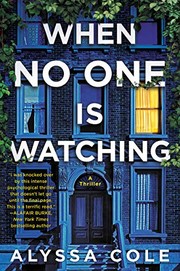
When No One Is Watching
Sydney Green watches her Brooklyn block's Black residents vanish one by one in Cole's Edgar-winning thriller about gentrification as a crime scene.
2,165-word summary · 10 min read

The Woods
Twenty years after two teenagers were murdered and two vanished at summer camp, prosecutor Paul Copeland identifies a fresh corpse as one of the missing.
2,490-word summary · 11 min read

The Boy from the Woods
Wilde, found feral in a New Jersey forest in 1986, hunts for a missing teenager while a senator's secrets tear a wealthy town apart.
2,270-word summary · 10 min read
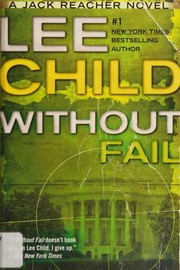
Without Fail
Reacher is asked to test vice presidential security by planning to kill.
2,084-word summary · 9 min read
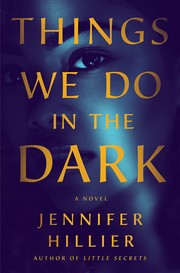
Things We Do in the Dark
A comedian kills her husband, then a podcaster digs up her teen murder past.
2,427-word summary · 11 min read

The Widow
A widow of a suspected criminal faces reporters and police while hiding what her marriage really cost.
2,599-word summary · 12 min read
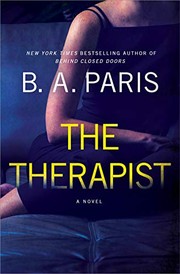
The Therapist
A couple moves to a gated street where the previous therapist was murdered in their house.
2,437-word summary · 11 min read
The Reappearance of Rachel Price
Bel films a doc when her missing mother walks back after years.
2,254-word summary · 10 min read