

Reading options
What's inside (8 sections)
I picked up The Golden Couple because The Wife Between Us had played fair with me once and fooled me once, and I wanted to see what the same pair would do with a therapist in the room. The edition I am summarizing is the St. Martin's Press hardcover from 2022, listed at 336 pages, a standalone domestic thriller co written by Greer Hendricks and Sarah Pekkanen. I read it across three nights, mostly after dinner, with a pencil stuck in the pages for marking every place where someone failed to answer a direct question. There are a lot of those marks.
The setup sounds like a marriage repair story. Marissa and Mathew Bishop live in a comfortable suburb outside Washington with their eight year old son. They have the house and the school routine and the couple friends who say things like you two make it look easy. Then Marissa cheats while Mathew is out of town. She says she wants to fix the marriage because she loves her husband and because she does not want their son to grow up inside a split home. A friend forwards her an article about Avery Chambers, a former therapist who now works as a kind of consultant. If Avery thinks she can help you in ten sessions, she takes you. If not, she turns you away. Marissa talks Mathew into going. From here the book splits its telling. Avery speaks in first person, blunt and watchful. Marissa is told in third person, closer to her shame and her second thoughts. Spoilers from here on. You cannot judge this book without talking about what it hides.
A marriage that looks perfect from the driveway
On the page the Bishops read as people who have practiced being fine. Marissa keeps the calendar full with school pickups and dinners for neighbors. Mathew works long hours and travels at times and comes home with the tired ease of a man who expects warmth waiting for him. Their son senses tension before either parent names it. He asks if they are mad. He listens at doors. One early scene that stayed with me has Marissa making lunches while Mathew reads mail, both polite, both careful, with the radio on a little too loud to cover quiet. It felt true to how couples fight without raising voices.
The cheating has already happened when we meet them. Marissa frames it at first as a stupid lapse with a man she barely knew from the gym. She says it meant nothing and that the shame has been eating her since. She cries in Avery's office and says she would take it back if she could. Mathew sits beside her with his jaw set. He says he loves her. He says he wants to try for their family. He also asks sharp questions about timing and about whether she has cut contact, and his calm has an edge that Avery clocks right away. I believed Marissa's guilt in these pages. I did not fully believe Mathew's calm, and the book does not want you to settle into it either.
Money shapes their fights without becoming the whole subject. They can pay for help. They can take time off. They worry about reputation at school and among friends. Marissa fears telling her parents. Mathew fears looking like a fool. Those pressures make them good clients for someone like Avery, who charges for speed and privacy and who tells couples she will drop them if they lie to her. The Bishops agree fast, a little too fast, which should tell you something about how much each of them wants a referee in the room.
The therapist who does not play by the rules
Avery Chambers lost her professional license before this book opens. The book gives the shape of it rather than a case file. She pushed past office walls with clients. She showed up where she was not supposed to show up. She used methods her board called reckless even when they seemed to help. Now she rents her own space, sets her own terms, and calls the work consulting to stay on the right side of a line she already crossed once. Ten sessions. Full honesty. Homework you must do. No secret phones at the table. Break a rule and you are out.
What makes her fun to read about is that she does not only talk. She checks. She drives past houses. She asks neighbors casual questions. She looks at call logs when clients leave them open. She meets each partner alone and then together and compares what shifts between versions. Her late husband died before these events, and grief sits under her drive to fix people fast. She lives alone, works late, and fills silence with case notes. I found her grief more moving than the book's back cover suggests, though the book sometimes uses it as a shortcut to explain why she risks so much for strangers.
Her style creates the engine for the middle of the novel. A normal therapist would wait for disclosure. Avery pokes. When Marissa gives thin answers about the affair, Avery assigns writing tasks and separate check ins meant to force detail. When Mathew performs patience, Avery tests it with small delays and pointed questions about control of money and schedules. Some of this strains belief if you have sat in real therapy. No licensed clinician would tail a spouse. Avery is explicit that she is no longer that clinician, which gives the authors room, but it still asks you to accept a helper who acts part counselor and part investigator. I went along with it for pace, then started asking questions near the end that the book never fully answers about who would hire her again after what happens here.
What Marissa does not say at first
The affair story changes, and that change is the first real turn. For a stretch Marissa holds to the gym stranger version. She says she met a man, talked twice, made a bad choice one night, and never saw him again. Avery senses gaps. Dates blur. Marissa looks away when asked where it happened. Then the reader learns what Avery does not yet know. The man was not a stranger. He was a close family friend the Bishops have known since their teen years, a man their circle trusts. The night happened in the Bishop home while Mathew was away and their son slept upstairs. That detail reframes everything about Marissa's panic. It is not only guilt about sex. It is fear that she brought risk inside the house and near her child.
I thought this section was strong because it shows how partial honesty can look like progress. Marissa does homework. She writes timelines. She answers questions about her marriage with care. She still edits the one fact that matters most. Mathew, for his part, edits too. He says he has forgiven the outline while pressing for details that keep Marissa off balance. He wants names and places and proof of no contact, and each answer seems to settle him for a day before a new doubt surfaces. Avery tries to slow this cycle by making them speak about needs rather than evidence, about sleep and touch and who apologizes first. It helps for a session or two. Then a new message or a strange car outside resets the fear.
A fair criticism belongs here. The therapy scenes repeat a pattern where each round brings new homework, then a fresh reveal that sparks a fight. Two or three cycles could have been cut without losing the point that both Bishops withhold. I started skimming the exercises and waiting for the fieldwork chapters where Avery leaves the office. Readers who enjoy talk driven repair may like the slow squeeze. I wanted fewer worksheets and more of the outside world that was clearly pressing in.
Being watched and a woman who vanished
Halfway through, the book adds a second plot that first looks like fallout and then takes over. Marissa feels followed. A car idles too long near school pickup. Flowers arrive without a card. Notes show up with wording that could be romantic or threatening depending on who you think sent them. Her first thought is that her former lover will not let go. Mathew feeds that reading by saying the man has always been intense and by offering to handle it himself. He puts on the protector role in a way that plays well in front of Avery.
Avery does not accept the simple version. She starts asking around the edges of the Bishops' social set. She learns about a woman from Mathew's past named Tina who disappeared and whose fate stayed cloudy for a long time. Friends speak of her in careful tones. One remembers Mathew's temper. Another remembers him rewriting small facts until they sounded better. The book keeps this thread smudged on purpose for many pages. No clear police file is laid out. No single document proves a claim. What builds instead is a sense that Mathew has told different stories to different people and kept the seams hidden by charm and by money.
At the same time Avery finds that her own life is tangled with the case in a way she did not expect. The lover, a man called Skip in the later chapters, had once been asked to date her and report back by an older man tied to lobbying work in Washington. That older man turns out to be Mathew's father, a figure used to getting answers through pressure. A firm that had clashed with Avery over a staff leak adds noise in the background and makes her doubt who sent Skip into her orbit and why. I will be honest that this knot tested my patience. The chance that Marissa would pick the one consultant connected by two removes to her own affair felt arranged rather than found. The authors tie it off with motive and timing, and the pages move fast enough that I kept going, but I had to grant them a coincidence I did not fully buy.
What kept me reading through the tangle was how the stalking beats are staged. A porch light stays on past midnight while a side gate stands ajar, and later a text arrives that uses a pet name only an insider would know. The book is good at making ordinary home details feel unsafe without turning every chapter into a chase. Marissa double checks locks. She keeps her son close without scaring him. She sleeps badly and then performs normal at drop off. Those small behaviors rang true to me, more than the larger machinery around them.
When forgiveness turns into a trap
The last third drops the idea that Mathew is trying to forgive. He has been acting. While sitting in sessions and speaking about healing, he has been building a file meant to paint Skip as obsessive and unstable. He saves messages out of context. He sends gifts and notes himself to create a paper trail that points at another man. His aim, as Avery pieces together too late and Marissa feels in her body before she can prove it, is to kill Marissa and wound himself in a staged attack that leaves Skip to take the blame. The marriage work was cover. The calm was timing.
This is also where Tina's story locks in. Mathew admits in a closed room confrontation that he killed her years earlier and buried the truth under influence and careful lies. The scene is not long on gore. It is long on control. He speaks softly. He corrects Marissa's memory. He says no one will believe her over him because of who he is and who his family knows. That line chilled me because the book has shown it working all along with friends and with Avery herself in early sessions. Power here is not shouting. It is paperwork and a calm voice in the right office.
The climax moves to a house at night with too few exits. Mathew brings a gun and a story he plans to tell police. Marissa tries to stall by agreeing with small things while looking for a phone or a door. Skip, who has come to grasp how he was used, reaches the scene with Avery close behind after she finally connects the flower orders and the message times to Mathew rather than to Skip. Avery fires to stop Mathew from shooting Marissa. He dies. Police arrive to a mess that does not fit any clean self defense box. A husband is dead and a former lover has his own lies to answer for. A consultant who already lost her license once has now fired a weapon. The book does not pretend this ends neatly. Lawyers will circle. Friends will pick sides. Their son will need care that no ten session plan can supply.
I admired that the authors let Marissa act in this stretch instead of waiting to be saved. She uses what Avery taught her about naming facts out loud. She states where she is and what he holds and what he said about Tina while trying to keep him talking. She puts her body between danger and her child in the one choice that matters. Skip helps by showing up and by telling the truth late rather than never, though his earlier spying for pay leaves a stain the book does not wash off. Avery pays for her methods too. Saving a life does not restore a license or erase the rules she broke to get to that hallway.
What holds and what strains
What holds for me is structure. Three parts close with turns that force you to reread, starting with the affair story and widening to the repair story and then to Avery herself, who was inside the web before she knew it. Short chapters and alternating voices keep pages turning. Marissa's third person sections carry domestic fear well. Avery's first person sections carry momentum and dry humor about rich people who think candor can be bought. At 336 pages in the edition I read, the book rarely stalls for long outside that mid therapy loop.
What strains is credibility in the final setup. Mathew's plan needs many quiet steps to go right. Orders must not be traced too soon. Messages must be read a certain way. Police must accept his first account. One neighbor looking out a window at the wrong time would break it, and the book waves past that luck by keeping side characters incurious until Avery knocks. The father and firm thread adds able helpers and ready cash to both sides in ways that feel sized to plot need. I also wanted more interior life for Mathew before he turns fully cold. We get control and image care and family pressure, but little that explains why Tina's death did not slow him. He reads as a function in the last fifty pages, smooth and lethal, rather than as a man whose past still leaks into present choice.
Who should read it. If you enjoy domestic suspense where talk therapy slides into detective work, and you do not mind granting one large coincidence about how the helper meets the couple, this will likely grip you. Readers who want realistic counseling or police method may bristle at Avery trailing people and at how late hard proof arrives. The book is open about being machinery. Session work slides toward search work, and that search then sets a trap which forces confession. I finished more impressed by construction than by character, yet one small image stayed with me past the gun and the sirens. A mother reheating milk while checking the lock twice, trying to keep morning normal for a boy who knows it is not.
I closed it thinking about how easily charm can pass for safety until someone writes down the dates.
FAQ
When was The Golden Couple published?
It was first published in 2022 by St. Martin's Press. The standard hardcover runs 336 pages.
Is The Golden Couple part of a series?
No, it is a standalone domestic thriller co-written by Greer Hendricks and Sarah Pekkanen, not part of a series.
Does Avery Chambers still hold a therapy license?
No. She lost her license over boundary crossing methods and now takes clients as a consultant with a ten session rule.
Similar books
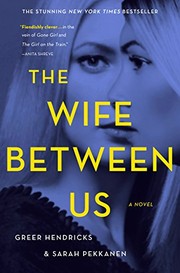
The Wife Between Us
A jealous ex-wife stalks her replacement, but nothing in this marriage is what it seems.
2,756-word summary · 12 min read

The Widow
A widow of a suspected criminal faces reporters and police while hiding what her marriage really cost.
2,599-word summary · 12 min read

The Silent Wife
A Chicago psychologist watches her twenty-year partnership collapse when Todd leaves for Natasha, then plans murder.
2,591-word summary · 12 min read

The Other Woman
In London, Emily falls for devoted Adam but faces his cold mother Pammie, whose quiet sabotage of dresses, flats, and plans hides a twist that reframes both…
2,647-word summary · 12 min read

Every Last Secret
A wealthy wife tracks a possible affair, but dinners, therapy, and a sudden death expose buried secrets across two polished suburban marriages and force her to…
2,687-word summary · 12 min read
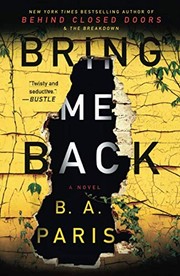
Bring Me Back
Finn lost Layla at a French rest stop twelve years ago. Now engaged to her sister Ellen, he faces sightings, emails and Russian dolls that reopen everything.
2,912-word summary · 13 min read

The Other Mrs.
A Chicago family inherits a house on a Maine island, then a neighbor is found murdered. Kubica's 2020 thriller builds to a final reframe.
2,267-word summary · 10 min read

The Wives
A woman who sees her husband only on Thursdays tracks down his other wives and learns her marriage is not what she believed.
2,454-word summary · 11 min read
Something in the Water
Honeymoon divers find a bag of cash and diamonds at sea, then lie until lies cost more.
1,943-word summary · 9 min read

Sometimes I Lie
Radio host Amber wakes in a coma, able to hear but not move. Her husband may not love her, and three timelines close in.
2,399-word summary · 11 min read

The Wife Upstairs
A struggling dog walker falls for a wealthy widower in Alabama, but his missing wife may still be alive upstairs.
3,255-word summary · 14 min read

The Last Mrs. Parrish
A con artist targets a rich wife, then the marriage game turns with a hidden past.
2,018-word summary · 9 min read

Rock Paper Scissors
Amelia and Adam spend a locked anniversary weekend at Blackwater Chapel, trading letters that hide who wrote what.
3,135-word summary · 14 min read
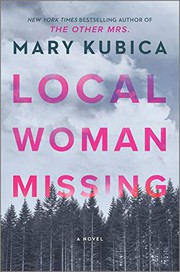
Local Woman Missing
Two women vanish from one street. Eleven years later, a missing girl returns with no memory.
2,581-word summary · 11 min read
The Perfect Marriage
A defense lawyer defends her husband accused of killing his mistress.
2,084-word summary · 9 min read

The Couple Next Door
After a dinner next door, Anne and Marco find baby Cora gone and every neighbor has a motive.
2,053-word summary · 9 min read

The Housemaid's Secret
Millie takes a job for the Garricks and hears strange crying behind doors.
3,260-word summary · 14 min read

Never Lie
Newlyweds snowed in at a missing psychiatrist's house find tapes of patients.
3,849-word summary · 17 min read
The Housemaid
The Housemaid retold: Millie cleans for the Winchesters, locked doors, twists in Long Island.
2,000-word summary · 9 min read

What She Knew
Rachel lets her eight-year-old son run ahead in a Bristol park, and the nine-day search turns her into a suspect in the public eye.
2,952-word summary · 13 min read

The Beach House
A young valet is beaten to death at a Hamptons party, and his law-student brother spends a year building a case against the family that covered it up.
2,049-word summary · 9 min read

Six Years
A professor who promised to forget the woman he loved sees her husband's obituary and discovers that the wedding, the marriage, and the woman herself may never…
2,076-word summary · 9 min read

Rules of Prey
Minneapolis detective Lucas Davenport hunts a killer who leaves a new rule at every scene and treats murder as a game of wits.
1,914-word summary · 9 min read

4th of July
Lindsay Boxer shoots two armed teenagers in self-defense, faces a wrongful-death trial, and spends her leave chasing a string of throat-slashing murders in…
2,192-word summary · 10 min read

61 Hours
A bus crash strands Jack Reacher in a snowbound South Dakota town where a drug gang, a corrupt police force, and a single witness are on a collision course.
2,227-word summary · 10 min read

Still Missing
A realtor is abducted at a Vancouver Island open house and held for more than a year. Told through therapy sessions, the novel follows her escape and the hunt…
2,466-word summary · 11 min read

Bad Luck and Trouble
A deposit of $1,030 summons Jack Reacher back to his old army unit, which is being picked off one name at a time.
2,366-word summary · 11 min read

3rd Degree
The third Women's Murder Club novel follows a San Francisco terror cell and a three-day killing schedule, and it costs the club a member.
2,685-word summary · 12 min read

Worth Dying For
Reacher stops for one night in rural Nebraska and finds a family that runs the county, a missing girl and a shipment worth killing for.
2,021-word summary · 9 min read

Tinker, Tailor, Soldier, Spy
Retired spymaster George Smiley is brought back to find a Soviet mole inside British intelligence, and the trail leads through old friends, old betrayals, and…
2,092-word summary · 9 min read