
Reading options
What's inside (8 sections)
I picked up House of Leaves because a friend kept describing it as the scariest book she had ever read, and then refused to tell me a single thing about the plot. That silence turned out to be the right sales pitch. The book arrived as a brick, more than seven hundred pages in the Pantheon edition from 2000, and it sat on my shelf for weeks while I worked up the nerve. I had heard it was a horror novel. I had heard it was a puzzle. Nobody told me it would ask me to turn the book sideways and read with a finger marking three different page numbers at once.
What I found inside was stranger than any single label. At its heart there is a simple haunted house story. Around that story there are layers of footnotes and commentary and personal collapse, stacked until you stop being sure which layer to trust. I read it slowly across about a month, sometimes racing and sometimes stalling for days. By the end I felt wrung out and oddly fond of it, the way you feel about a hard hike that rained on you half the time.
If you are curious about it, know this going in. This is not a book you skim. It rewards patience and punishes multitasking. It also frustrates on purpose, and some of that frustration is fair to hold against it.
Why I finally picked up the big scary one
My copy came from a used bookstore, thick and slightly warped, with somebody else's train ticket still tucked near page four hundred. I like that detail because this is a book that collects marks. It wants to feel like an object with a history.
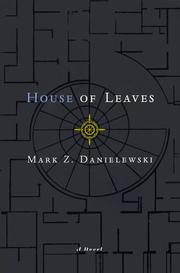
The basic facts first. House of Leaves is the debut novel by Mark Z. Danielewski, published by Pantheon Books in 2000, running 709 pages in the standard edition. It became a cult object fast, passed between readers who wanted to watch each other's faces during certain chapters. That reputation is what pulled me in. I wanted to know what could possibly need that many pages to scare someone.
The first surprise was how plain the setup is. A photographer named Will Navidson moves with his partner Karen Green and their two children into a house on Ash Tree Lane. He plans to film the move as a family project, a way to settle down after years of dangerous assignments. Then he notices something wrong with the measurements. The inside of the house is larger than the outside. Not by much at first. A fraction of an inch, then inches, then a whole impossible space.
I found that opening genuinely creepy in a quiet way. There is no ghost rattling chains. There is a tape measure disagreeing with itself, and two adults trying to explain it away. I kept thinking about my own apartment while reading, eyeing door frames with suspicion. The book does that to you early. It turns domestic space into a question.
The second surprise was the packaging. Before I even reached the house, I met the people describing the house, and the person describing those people. The novel never lets you forget that you are reading an account of an account. Some readers bounce off that distance right away. I leaned into it, though I understand the complaint.
A house that is bigger on the inside
The Navidson story, the innermost layer, plays out largely as a documentary film that may not exist. Navidson is a respected photojournalist, famous for stark images from conflict zones, and he approaches the house the way a professional would. He films everything. He brings in his brother Tom to help. He calls in friends with technical skills. Karen, a former fashion model, holds the family side together while the project grows teeth.
The discovery unfolds in stages, and the book earns its length here. A door appears where no door should be. Behind it sits a cold hallway that was not there before. The hallway leads to rooms and stairs and spaces that keep going. Early explorations are short and careful, marked with string and glow sticks. Later ones go deeper and come back wrong, with people missing or changed.
I will keep some specifics loose on purpose, because half the pleasure is the slow reveal, but the shape of it is this. Navidson assembles teams to map the dark. The space resists mapping. Corridors stretch or shorten. A vast spiral staircase descends further than any structure could contain. Something large moves in the dark below while the explorers argue about whether it is real or a product of fear and bad acoustics. The suggestion of a minotaur, half buried in crossed-out scholarly chatter, hangs over these chapters without ever resolving into a monster you can point at.
What scared me most was not the growling. It was the domestic fallout. Karen watches her partner pour their savings and safety into the dark. The children wander too close to the impossible door. The marriage frays in scenes that feel painfully ordinary against the extraordinary backdrop. Arguments about money and attention land while a hallway grows behind the wall. That contrast, normal life pressed against an abnormal space, is where the horror lives for me.
The exploration chapters also introduce other people who enter the story through the film. A seasoned explorer leads one descent. Various experts comment on the footage. I lost track of some names on purpose, letting them blur into roles, because the book itself treats them that way. The camera sees. People react. Some do not come back. The footage, as described, gets stranger and more fragmented the deeper it goes, until whole expeditions exist only as disputed transcripts.
One warning for new readers. These middle chapters demand stamina. The tension builds through repetition, supplies lists, failed attempts, partial maps. If you want fast scares, you will squirm. I found the slowness worked on me like cold water, but I also set the book down for two days in this stretch and read something light before returning.
Zampano and the footnotes that take over
Wrapped around the Navidson film is a manuscript by a man named Zampano. He is an elderly blind man, reclusive in life and dead when the book opens. He spent years writing an academic study of the Navidson material, built from footnotes and citations, with interviews and appendices supporting the frame. His manuscript is the thing Johnny Truant finds, and it makes up most of what you actually read.
Zampano writes like a real scholar and a total obsessive at once. He cites film critics and architects and psychologists. He compares the hallway to myths and poems and buildings across history. He footnotes his footnotes. He argues with sources that may not exist. Sometimes a footnote runs for pages and becomes its own small essay, and you surface wondering what the main text was even saying.
Here is where I have to be honest about my limits. A lot of Zampano's references sailed past me. I recognized some names and none of the obscure journals. It did not matter as much as I feared. The effect is cumulative rather than precise. You absorb the feeling of a mind trying to pin down something unpinnable with catalogs and comparisons. The scholarship becomes a kind of incantation, and the dread leaks through the gaps where the citations fail.
The famous typographic games mostly live in this layer or in the house chapters Zampano describes. The word house appears in blue throughout the book, every single time, which sounds like a gimmick until you notice how it trains your eye. You start scanning for it. Passages about the labyrinth shrink into tight boxes of text or scatter across the page. One stretch forces you to rotate the book to follow characters climbing or descending. Footnotes point to appendices that point back to chapters you read a hundred pages earlier.
I alternated between delight and irritation here. When a cramped block of text made me feel the walls closing in, I admired the trick. When a long list of architectural terms ate an evening, I resented it. Both reactions feel intended. Zampano is not writing for your comfort. He is writing because he cannot stop, and the form shows the compulsion.
There is also real sadness in his sections. Between the citations you catch glimpses of a lonely old man, marked by something in his past, living among piles of paper. The book never hands you his full biography. It lets the erudition crack just enough to show the person underneath. Those cracks moved me more than any scare.
Johnny Truant, the messenger who falls apart
The outermost layer belongs to Johnny Truant, and he is the reason many readers either love this book or want to throw it. Johnny is a young guy working in a Los Angeles tattoo parlor, drifting through casual relationships and late nights, when a friend points him toward Zampano's empty apartment. He takes the manuscript. He starts reading. Then he starts adding his own footnotes, and his footnotes slowly swallow the project.
At first Johnny is useful. He explains how he found the papers. He describes Zampano's rooms, the strange organization of the pages, the smell and clutter. He admits what he does not understand. But as the months pass, his notes grow longer and stranger. He stops sleeping. He sees things at the edges of his vision. He writes about relationships and drugs, fights and panic attacks, in blunt passages that clash hard with Zampano's dry academic tone.
I will say plainly that Johnny annoyed me for a long stretch. He is self absorbed in the way of young men who mistake intensity for insight. His romantic episodes repeat. His voice, all slang and swagger and sudden poetry, can feel like an interruption when you want to get back to the house. I skimmed a few of his longer digressions and felt guilty about it, then stopped feeling guilty, because the book gives you so much of him that some skimming barely dents the total.
And yet, and this matters, his decline mirrors the house in ways that won me over by the end. The deeper Navidson goes into the dark, the deeper Johnny goes into his own damage. The manuscript infects him, or it gives shape to troubles already there. Scenes from his childhood surface in fragments. His relationship with his mother, told partly through letters included near the back of the book, reframes everything you thought about his swagger. The letters attributed to Pelafina, writing from an institution, are heartbreaking and unreliable at once, full of wordplay and pain. I read them in one sitting and sat quiet for a while after.
Whether Johnny is a trustworthy guide is the wrong question, I decided. He is a case study. The book shows a mind coming apart under the weight of someone else's obsession, and it refuses to tidy that up. If you need narrators you can admire, he will test you. If you can tolerate an abrasive companion for the sake of the larger design, his sections pay off in retrospect.
Holding the puzzle in your hands
Somewhere past the midpoint I stopped reading House of Leaves like a normal novel and started handling it like a puzzle box. That shift is the famous part, so let me describe what it actually feels like day to day.
You learn to keep multiple bookmarks. One holds your place in the main text. One holds a footnote that ran long. One holds an appendix exhibit you were told to consult. You flip back and forth, and the flipping becomes part of the meaning. The book is about disorientation, and it disorients your hands.
The visual tricks keep coming. Some pages hold a single line. Some hold dense grids that mimic documents or film logs. Text runs vertically or upside down to match movement through the house. Color appears sparingly but deliberately, with that blue word standing out on every page it touches. I found myself reading slower without deciding to, which is rare for me. My normal pace is fast and sloppy. This book would not allow it.
There are also outright puzzles for readers who want them. Acrostics hide in certain passages. Struck-through text hints at a buried thread about the labyrinth and its supposed occupant. The appendices include photographs and sketches, collages and letters that may clarify or deepen the confusion depending on your mood. I chased a few of these threads and ignored others, and the book survived both choices. That flexibility pleased me. It never locks its main story behind a code you must crack.
What surprised me was how physical my memories of reading are. I remember where I was sitting during the staircase chapters. I remember holding the book at arm's length to track a spread of scattered words. Few novels leave that kind of bodily memory. Whatever you think of the story, the design makes the experience stick.
A practical note. Get a physical copy if you can. An ebook flattens effects that depend on page layout and thickness. I read print, and I cannot imagine the upside-down spreads or the thin-pages-with-one-line working the same way on a screen. The book is an argument for paper, made at the exact moment everyone started predicting paper's death.
What frustrated me and what stayed with me
Let me be fair about the criticisms, because they are real and you should weigh them before committing a month of evenings.
The book is exhausting, sometimes by design and sometimes past the point where design excuses it. Zampano's fake scholarship includes long stretches that read like a prank on academics, funny for ten pages and wearying at forty. Johnny's sections repeat his worst habits. Whole appendices feel skippable, and the book knows it, which does not make them shorter. At 709 pages, there is fat here. A sterner edit would have cost some cult magic but saved some readers.
The gender politics deserve a mention too. Karen gets more interior life than I expected, and her video diaries and choices drive key turns, but she is still filtered through men's cameras and commentaries for much of the book. Johnny's romantic life treats women as scenery more often than people. You can read this as characterization, men looking at women and missing plenty, and I think that reading is partly intended. It still makes for uncomfortable stretches, and readers sensitive to that pattern should know it dominates the outer layer.
So why did I close the last page feeling moved rather than annoyed. Partly the ending, which I will not spoil beyond saying it returns to family and grief rather than monsters. The final movement reframes the labyrinth as something closer to depression or guilt or the aftermath of loss, without pinning it to one tidy meaning. I found that restraint affecting. A lesser book would have explained the house. This one lets it stand.
Partly it is the ambition. Whatever fails here fails while reaching for something few novels attempt, a horror story told as textual archaeology, where fear comes from structure as much as scene. I disagreed with some choices and admired the nerve behind all of them. The passages that worked, the measurement scene, the first descent, the blue word accumulating weight, the mother's letters, still surface in my thoughts months later.
Would I recommend it. Yes, with conditions. Read it if you like horror that unsettles rather than shocks, if footnotes sound fun rather than punishing, if you enjoy books as physical objects. Skip it for now if you want likable narrators or tight pacing or clear answers. There are no clear answers here. There is a house, a film about the house, a study of the film, and a young man falling apart while carrying the study. Somewhere in that stack, if you meet it halfway, you may find rooms of your own.
FAQ
Who wrote House of Leaves and when was it published?
Mark Z. Danielewski's novel was published by Pantheon Books in 2000, running 709 pages in the standard edition.
Is the Navidson Record a real documentary film?
No real film exists. The Navidson Record is fictional, and the book's tension comes from treating it as a genuine object of study.
Do I need to read every footnote to follow the story?
No. Many readers follow the Navidson story first and return to the footnotes later, since the academic apparatus is part of the atmosphere rather than a test.
Similar books
What Moves the Dead
Alex Easton arrives at the Usher house to find Madeline dying, the tarn full of fungus, and the local hares refusing to stay dead.
2,586-word summary · 11 min read
Authority
The new director of the Southern Reach takes over an agency that is hiding the truth about Area X, and the building starts to change around him.
2,029-word summary · 9 min read
Night Film
A disgraced journalist investigates the death of a reclusive horror director's daughter, following a red coat through hospitals, secret clubs, and a family…
2,690-word summary · 12 min read
Circus of the Damned
A rogue master vampire arrives in St. Louis and Anita Blake is caught in an undead turf war, with a science teacher in the crossfire.
2,757-word summary · 12 min read
Locke & Key, Vol. 1: Welcome to Lovecraft
After their father is murdered, the Locke children move into a haunted family estate where keys unlock doors to ghosts, other places, and dangerous secrets.
2,019-word summary · 9 min read
Killers of a Certain Age
Four sixty-year-old assassins discover their retirement cruise is a trap and turn their skills on the agency that trained them.
2,014-word summary · 9 min read
House of Salt and Sorrows
Annaleigh Thaumas investigates her sister's death in a cursed island manor where the balls are illusions and the sea god is always listening.
2,025-word summary · 9 min read
The Wasp Factory
Iain Banks's 1984 debut follows Frank Cauldhame, an isolated sixteen-year-old on a Scottish island, as his brother's escape and a family secret unravel his…
2,248-word summary · 10 min read
Everything's Eventual: 14 Dark Tales
Fourteen Stephen King stories shuffled by the deal of a card deck, from the haunted room of 1408 to quiet tales of grief that sting as much as the monsters.
2,000-word summary · 9 min read
Vanishing Acts
A search-and-rescue worker's perfect life cracks when her past and her father catch up.
2,799-word summary · 12 min read
The Last House on Needless Street
A lonely man, a cat and a mysterious neighbor pull you into a house full of buried trauma.
2,627-word summary · 12 min read
The Chalk Man
Childhood chalk codes lead to a murder that follows friends thirty years later.
2,350-word summary · 10 min read
Relic
A museum beast kills during an exhibition while an agent investigates.
2,066-word summary · 9 min read
Haunted
Writers lock in for three months and trade worse stories as food runs out.
2,576-word summary · 11 min read
The Broken Girls
A journalist revisits her sister's murder while a restored boarding school gives up a girl missing since 1950.
2,579-word summary · 11 min read
Later
Boy Jamie Conklin sees dead people who must answer truthfully, pulling him into NYPD cases and a drug crew's greed.
2,009-word summary · 9 min read
Nowhere Burning
Siblings flee to a burnt ranch commune in the Rockies where old fires still smolder.
2,232-word summary · 10 min read
Guilty Pleasures
Animator Anita hunts a vampire killer while Jean-Claude pulls her close.
2,136-word summary · 9 min read
The Turn of the Screw
A governess sees Quint and Jessel at Bly, or projects them; James never settles which, and Miles dies.
2,080-word summary · 9 min read
The Tommyknockers
A Maine town digs up a ship and gets brilliant, toothless and cruel.
1,977-word summary · 9 min read
The Sun Down Motel
In 1982 Viv vanishes from a Fell motel desk; in 2017 niece Carly takes the same shift to find her.
2,150-word summary · 10 min read
Stalking Jack the Ripper
Lord's daughter Audrey Rose studies corpses in secret while the Ripper works Whitechapel beside Thomas.
2,030-word summary · 9 min read
I'm Thinking of Ending Things
A woman drives out to meet her boyfriend's parents while planning to leave him, and the night turns quietly wrong.
2,754-word summary · 12 min read
Plain Truth
An Amish teenager denies a hidden pregnancy after a newborn is found dead, and a city lawyer moves to the farm to defend her.
2,669-word summary · 12 min read
Leaving Time
Thirteen-year-old Jenna searches for her mother who vanished from an elephant sanctuary ten years earlier.
3,001-word summary · 13 min read
Where the Forest Meets the Stars
A grieving bird researcher hosts a strange child who claims to be alien in an Illinois cabin.
1,910-word summary · 8 min read
Final Girls
A survivor of a cabin massacre tries to live normally until another Final Girl dies and a second one shows up at her door.
2,176-word summary · 10 min read
Different Seasons
Four novellas: prison hope, a boy and an old Nazi, kids chasing a body, and a club that grants wishes with teeth.
1,974-word summary · 9 min read
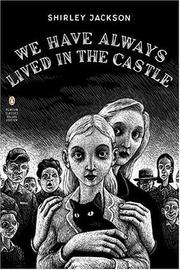
We Have Always Lived in the Castle
Merricat guards sister Constance after arsenic deaths, until cousin Charles invades and fire frees them.
3,011-word summary · 13 min read
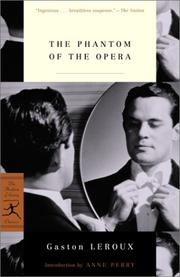
The Phantom of the Opera
A masked Erik haunts the Paris Opera, coaching Christine Daae while rivaling Raoul for her. Chandelier crash, cellar lake, and unmasking follow.
2,307-word summary · 10 min read