
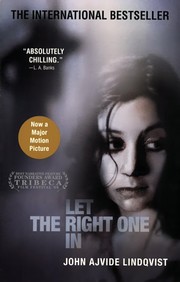
Reading options
What's inside (8 sections)
I picked this one up because I wanted something cold for October, and a Swedish vampire novel set in a concrete suburb sounded right. I expected a few scares and a strange kid. What I found was slower and sadder than that. A winter story about lonely people in apartment blocks, with a vampire at the middle who is as lost as everyone else. It took me fifty pages to settle into the pace. After that I did not want to leave, even when parts were hard to read.
The edition I read runs 472 pages, first published in Swedish in 2004 as Låt den rätte komma in, with the American edition from St. Martin's Griffin. This is not a tight little horror story. There is room for Oskar, for Eli, for the drunks downstairs, for mothers and fathers and policemen. Sometimes that room feels generous. Sometimes it feels a little too wide.
Blackeberg in the winter of 1981
Blackeberg sits west of Stockholm, built in the 1950s with plain blocks around open courtyards. In the book it is late 1981 into 1982. Snow stays on the ground for months. Buses run late. Laundry rooms have booking boards. Basement storage rooms hold bikes and skis. Walls are thin enough to hear the neighbor television. Kids gather on the jungle gym after dark because there is nowhere else to go.
The period shapes everything. No mobile phones. Police wait days for lab results. News comes from evening papers. Adults are distracted or tired, so kids solve problems alone. Oskar mother works long hours. His father lives out in the country and drinks. Downstairs, a group of regulars spend every evening in the local Chinese restaurant. Everyone knows each other by sight. Few people actually watch out for each other.
When someone goes missing, it takes time for anyone to connect it.
What I liked here was how physical the cold feels. Damp boots. Fogged windows. Breath showing in the courtyard. Warm flats with weak radiators against woods that stay dark by four. Lindqvist keeps pairing warm bodies with cold air. It builds dread. You start to notice who is warm and who is not.
Oskar and the bullies who rule his days
Oskar Eriksson is twelve and lives with his mother Yvonne. His father loves him in a vague way but cannot stay sober long enough to help. Oskar is pale, soft, bright, and alone at school. He clips newspaper stories about murders and keeps them in a scrapbook. He owns a knife. At night he goes to a tree stump in the woods, stabs the wood, and whispers threats to no one. It is painful to read. He is rehearsing. He wants to feel dangerous because all day he feels small.
The bullying is not one fight. It is routine. Jonny leads, with Tomas and Micke beside him. They follow Oskar in corridors. They hit him in the ribs where teachers will not see. They force him to make animal noises. They threaten worse if he tells. At swim practice they hold him under. Teachers catch half of it. His mother senses something but does not push.
Honestly these school scenes upset me more than the vampire scenes. There is no monster to blame. Just boys who learned they can get away with it, and tired adults who look the other way.
Oskar is not a saint either, which helps. He steals small things from shops. He lies about money. He pictures hurting Jonny back and then feels sick about his own thoughts. When a man is found dead in nearby Vallingby, drained of blood, Oskar cuts out the article and carries it in his pocket. He does not link it to his own block yet. To him it only proves what school already taught him. The world hurts people.
A fair warning. Lindqvist spends a lot of time inside Oskar head. School corridors. A Rubik cube. Morse code from a library book. Sit ups with phone books for weights. I found it slow at first. Most of it pays off. The code becomes how he talks to Eli through the wall. The knife becomes a test.
Eli moves in next door
Then two new tenants arrive in the flat next door. A thin girl who says her name is Eli, and an older man. Eli looks twelve, with short dark hair and pale skin. She only comes out at night. She does not seem cold, even barefoot in snow. She refuses the candy Oskar offers. She says they cannot be friends. Then she keeps meeting him on the jungle gym anyway.
Those early courtyard scenes are my favorites. Oskar doing his night routine with the knife. Eli watching from the frame. She is blunt and odd about money and school. She solves part of his cube fast and loses interest. He talks too much because he has no practice, then kicks himself after. Anyone who was a lonely kid will know that pattern. Reach out, pull back, test, return.
Lindqvist keeps the vampire rules plain. Eli must be invited before she can enter a home. If she walks in uninvited, she starts bleeding and shaking and must leave. Sunlight harms her. She needs fresh human blood. Stored blood and animal blood do not keep her well for long. By day she sleeps in a bathtub behind closed blinds. When she must, she is enormously strong, able to climb a wall or cross a distance fast, though it leaves her spent. After feeding she looks younger. Starved, she looks old and thin.
There is nothing glamorous about her. She smells sour when hungry. Her clothes are stolen and do not fit. She counts coins slowly because prices confuse her. She is not wise. She is a child who has been stuck a very long time and has learned to move on before questions start, and to let others do the worst work.
The book reveals, in short flashes, that Eli was born centuries ago as a boy called Elias, taken by men who harmed him and cut his body so he would live outside boy or girl. Lindqvist does not dwell on the act. He shows the result. A child hurt by adults, then turned into something that must hurt others to live. Eli asks Oskar to stop sorting by boy or girl and just see who is there. Oskar struggles, less from cruelty than from confusion at twelve about his own body. Their bond holds. That, more than any scare, is the center of the novel.
Håkan and the terrible things he does
The man with Eli is called Hakan. Middle aged, tired, a former teacher who lost his job and his place in ordinary life. He drinks. He loves Eli in a possessive and unhappy way. Eli keeps him around because he will fetch blood so she does not have to hunt openly. Neither is happy. It is need tied to longing.
This part needs care, and the book gives it. Hakan is drawn to children. He knows it is wrong. He left teaching to avoid acting on it. He attached himself to Eli because Eli looks like a child but is centuries old. The novel does not excuse him. Eli uses his attachment and returns very little. Hakan accepts scraps because he has nothing else. The key plot point is simple. He is shaky, squeamish, often drunk, and getting worse at the one job Eli needs done.
His attempts drive the police story. He chooses lonely victims. He tries to catch blood with a funnel and a canister. He gets interrupted. He panics. One attack in the woods fails and starts a search. Another killing points attention toward Blackeberg. After a failed attempt on a teenage boy, Hakan pours acid on his own face to hide his identity and ends up in hospital under guard, bandaged beyond recognition.
Then Eli visits him. She cannot enter freely. She needs help getting inside. She lets him drink from her wrist, then feeds from him in turn. Hakan dies as a man and returns as something else, driven by hunger and attachment, able to keep moving when badly hurt. He haunts the basement and courtyard, drawn to Eli and to Oskar, barely able to speak. Lindqvist writes this as pitiable rather than powerful. Not a villain upgrade. More like devotion rotted into instinct.
My main criticism sits here. The Hakan chapters dragged for me. Long stretches of drinking, brooding, failing, drinking again. I see why they exist. Without them Eli might read as a cute outsider. With them you see the price of having a helper. Still, the middle of the book sags when the view keeps cutting between Oskar and Eli, the police, the restaurant group, and Hakan. Readers wanting a fast hunt should know this is not that book.
Blood, neighbors, and getting closer
While the two kids grow closer, the adults try to explain the deaths. Lacke loses his best friend Jocke early. He drinks more, fights with his girlfriend Virginia, leans on Gosta upstairs, the quiet bird watcher who sees things from his balcony and does nothing. Tommy, the teenage stepson of Staffan the policeman, steals, sniffs glue, plays music too loud. These restaurant scenes run long. At first I resented them for taking time from Oskar and Eli. Later I saw the purpose. This is a block where adults failed their kids and now fail each other too.
Virginia stayed with me most. After she is bitten she does not change at once. She sickens. Light hurts her eyes. Food tastes wrong. In hospital she tries to explain and cannot make anyone understand. There is a quiet scene where she grasps what is coming and asks to be left with daylight coming through the blinds. Lindqvist writes it like an illness, not a monster turn. Her choice is about control.
Lacke tries to fix it with a knife. Convinced Eli is behind everything, he breaks into her flat by day and finds her asleep in the bathtub, covered from light. Gosta lets him in. Tommy hides nearby. What follows is not triumphant. Eli wakes starving and defends herself. No one learns anything. Someone dies who did not need to die. The book refuses to make it satisfying. A drunk man against a starving centuries old child. Only waste.
Oskar and Eli keep building their small code. Taps through the bedroom wall in Morse. Notes passed in the courtyard. She tells him to fight back at school, to make noise, to refuse to be quiet when Jonny starts. He treats her like a person. He lends her his cube. He invites her in properly, which matters because of the rule. One night she comes to his room clearly weak from hunger. He offers his neck without fully grasping it. She takes a little and stops. That restraint says more than any speech.
The novel is honest that this love is not healthy in a normal sense. Oskar has no one else. Eli has done terrible things to stay alive. They lie to adults together and plan to run. Oskar starts picturing himself as her new helper, better and cleaner than Hakan, more loyal. Lindqvist leaves that thought sitting there. Rescue or recruitment. I kept turning it over after I finished. He shows a boy who finally feels chosen and a vampire who finally feels seen, and lets you worry about the cost.
The pool climax and leaving town
It ends at the swimming pool. After Oskar fights back at school and cuts Jonny ear with a stick, Jonny wants payback. His older brother Jimmy, who lifts weights and enjoys scaring younger kids, agrees to teach Oskar a lesson. They catch him at evening training when the hall is nearly empty. Teacher gone. Lights bright. Water smelling of chlorine. Jimmy holds a knife to Oskar cheek and tells him to stay under while they count, with a threat to cut him if he surfaces early. Tomas holds him down. The count goes on long enough to feel unbearable. Echo off tile. Lungs burning.
Then the lights change. Glass breaks high up. Something enters fast. What happens to Jimmy and the others is described briefly and left there. Screams. Water turning red. Jimmy, untouchable a minute before, has no time to grasp it. Oskar stays under, blind and deaf, sure he will drown, until a small hand pulls him up and tells him to breathe. Eli came for him.
I am keeping detail light on purpose. The book does too. Rescue and feeding happen together. Love and appetite in the same act. That mix is why the scene works and why it does not feel heroic. No speeches. Fast, wet, confused. Survivors remember pieces. Oskar remembers towels around his shoulders and sudden quiet. Police piece the rest together later. For Oskar the fact is simple and too large. The bullying is over because the bullies are dead. Relief and horror together. That felt true to me.
The closing movement is quiet. Oskar helps Eli leave town. She cannot travel by day, so she rides in a trunk on the train, taped and blanketed, with air holes. It sounds absurd and reads perfectly because the logistics were set up chapters earlier. Oskar taps the lid in code to say he is there. She taps back. He stole money for tickets. He left a note for his mother that explains nothing and everything. He is twelve and he is gone.
Is that happy. Not really. He cut ties with his mother, his father, his school. He is now the new helper, younger and more devoted than Hakan, without the same tainted desire but inside the same structure. One feeds, one helps. Lindqvist leaves that parallel hanging. I admired it even as it unsettled me. A lesser book would cure the vampire or tidy the punishment. This one lets love fix one problem and start another.
Two smaller complaints. The translation by Ebba Segerberg is mostly smooth, but drunk banter in the restaurant sometimes reads stiff. The cast is large, so figures like Oskar father and Staffan appear just enough to seem important, then fade. Readers coming for steady horror may also find the scares thin. Only a few set pieces are outright frightening. Most dread comes from waiting.
Still, I closed the 472 pages feeling the length was earned. Few vampire novels take class and place this seriously. Concrete yards, weak schools, tired parents, cheap beer, long dark evenings. A child vampire makes terrible sense here because so many children are already overlooked. Hungry, cold, needing permission to enter. That image stayed with me. Oskar finally says yes to someone. Eli is finally allowed inside. Everything after follows from that yes, for better and for worse.
If you read it, read it in winter if you can. Go slow through the dull evenings and the code taps. Notice who gets invited where. When you reach the pool, notice how little triumph you feel. That absence is the point. Lindqvist wrote a love story and a horror story on the same pages without letting either excuse the other.
FAQ
When was Let the Right One In published and how long is it?
It was first published in Swedish in 2004 as Låt den rätte komma in. The American edition from St. Martin's Griffin runs 472 pages.
Is this mainly a vampire horror novel?
Yes, in the sense that it centers a vampire, but most of the book is about bullying, lonely adults, and winter in Blackeberg. Expect dread and sadness more than frequent scares.
Is it part of a series?
It is a standalone novel with no series. You can start here, though Lindqvist later revisited the characters in short fiction.
Similar books
NOS4A2
Vic McQueen's bike finds lost things through a bridge, pitting her against Manx's Rolls-Royce ride to Christmasland.
2,060-word summary · 9 min read
The Tale of the Body Thief
Lestat trades bodies with a psychic thief for one day of mortality and ends up trapped, sick, and hunting his own vampire body.
2,069-word summary · 9 min read

Night Film
A disgraced journalist investigates the death of a reclusive horror director's daughter, following a red coat through hospitals, secret clubs, and a family…
2,690-word summary · 12 min read
The Troop
A Boy Scout troop on a Canadian island takes in a stranger who cannot stop eating, and the worm inside him turns a camping trip into a war.
2,457-word summary · 11 min read
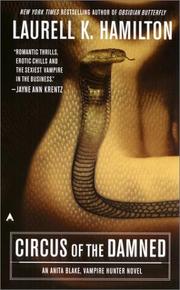
Circus of the Damned
A rogue master vampire arrives in St. Louis and Anita Blake is caught in an undead turf war, with a science teacher in the crossfire.
2,757-word summary · 12 min read

The Wasp Factory
Iain Banks's 1984 debut follows Frank Cauldhame, an isolated sixteen-year-old on a Scottish island, as his brother's escape and a family secret unravel his…
2,248-word summary · 10 min read
Lullaby
A reporter discovers that a poem in a children's book kills anyone who hears it, and his attempt to destroy every copy turns into a road trip through grief,…
2,147-word summary · 10 min read
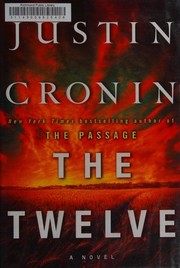
The Twelve
The middle volume of the Passage trilogy braids the year America died, a picnic massacre decades earlier, and the survivors' war against the twelve master…
2,089-word summary · 9 min read
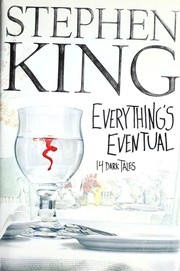
Everything's Eventual: 14 Dark Tales
Fourteen Stephen King stories shuffled by the deal of a card deck, from the haunted room of 1408 to quiet tales of grief that sting as much as the monsters.
2,000-word summary · 9 min read
This Present Darkness
A pastor and reporter face demons over Ashton while angels answer prayer.
2,384-word summary · 11 min read
The Last House on Needless Street
A lonely man, a cat and a mysterious neighbor pull you into a house full of buried trauma.
2,627-word summary · 12 min read
The Chalk Man
Childhood chalk codes lead to a murder that follows friends thirty years later.
2,350-word summary · 10 min read
Relic
A museum beast kills during an exhibition while an agent investigates.
2,066-word summary · 9 min read

If It Bleeds
Holly Gibney faces an outsider plus three more tales of dread.
2,219-word summary · 10 min read
Hannibal
Lecter hides in Florence while Starling and Verger close in from both sides.
2,590-word summary · 12 min read

Full Dark, No Stars
Four novellas about revenge where ordinary people do terrible things and live with it.
2,646-word summary · 12 min read
Four Past Midnight
Four novellas about a plane lost in time, a writer haunted, and horrors small and large.
2,584-word summary · 11 min read
The Broken Girls
A journalist revisits her sister's murder while a restored boarding school gives up a girl missing since 1950.
2,579-word summary · 11 min read

Rose Madder
After fourteen years of abuse, Rosie Daniels flees her cop husband and finds a painting that opens into a dangerous mythic world.
2,349-word summary · 10 min read
Horns
Accused of killing Merrin Williams, Ig Perrish wakes with horns that force strangers to confess their darkest sins.
2,264-word summary · 10 min read
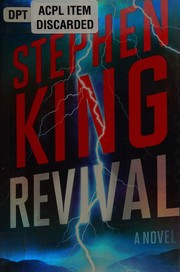
Revival
Jamie Morton shadows preacher Jacobs from boyhood healings to electric cures that open a door best left shut.
2,037-word summary · 9 min read
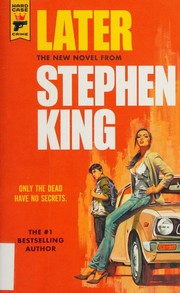
Later
Boy Jamie Conklin sees dead people who must answer truthfully, pulling him into NYPD cases and a drug crew's greed.
2,009-word summary · 9 min read
Carmilla
Lonely Laura in Styria befriends beautiful Carmilla, whose night visits bring dreams, bites, and ancestral dread.
2,158-word summary · 10 min read
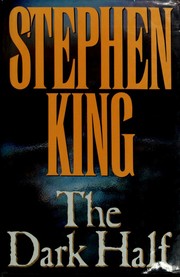
The Dark Half
A Maine novelist buries his violent pen name George Stark, then faces murders that carry his own fingerprints.
2,956-word summary · 13 min read
Rosemary's Baby
A young couple's dream apartment in the Bramford turns dark when helpful neighbors and a trusted doctor take over Rosemary's pregnancy.
2,665-word summary · 12 min read
Nowhere Burning
Siblings flee to a burnt ranch commune in the Rockies where old fires still smolder.
2,232-word summary · 10 min read
I Am Legend
Robert Neville holds one fortified house in empty Los Angeles by day, and faces what the plague left behind by night.
2,840-word summary · 13 min read
Guilty Pleasures
Animator Anita hunts a vampire killer while Jean-Claude pulls her close.
2,136-word summary · 9 min read
Abraham Lincoln: Vampire Hunter
Lincoln keeps a secret diary as a vampire hunter, tying his mother's death and the Civil War to a hidden war with the undead.
2,620-word summary · 12 min read
The Sun Down Motel
In 1982 Viv vanishes from a Fell motel desk; in 2017 niece Carly takes the same shift to find her.
2,150-word summary · 10 min read