
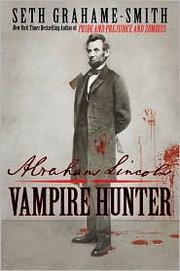
Abraham Lincoln: Vampire Hunter
2,620-word summary 12 min read 336 pages in the book
- First published
- 2010
- Publisher
- Grand Central Publishing
- Pages
- 336
- ISBN
- 9780446563086
- Series
- Abraham Lincoln: Vampire Hunter (#1)
Reading options
What's inside (7 sections)
I picked this one up because a friend left it on my kitchen table after a party and said, you have to read the Lincoln one, it is weirder than it sounds. I expected a joke book. I thought it would be Pride and Prejudice and Zombies again, same trick with taller hats. The book came out in 2010 from Grand Central Publishing, and the first hardcover runs 336 pages. What I found was stranger and sadder than a joke, a full secret life pasted over the biography I half remembered from school, with an axe where the rail splitter story used to be.
The setup is simple and Grahame-Smith commits to it fast. The novel pretends to be built from lost journals. A vampire named Henry Sturges hands over Lincoln's hidden diaries to the author. Those diaries were supposedly found years later in a five-and-dime in Rhinebeck, New York. From there we get Lincoln in his own voice, or close enough, starting as a boy in Indiana and ending long after Ford's Theatre. I liked this framing more than I thought I would. It gives him permission to skip years, to sound young and then tired, and to leave gaps where a real diary would leave gaps.
You should know going in that this is a bloody book about a real man who suffered a lot. It treats slavery as the center of the story, not window dressing. It also treats vampires as a ruling class that feeds on the powerless. Sometimes that parallel clicks. Sometimes it thuds. I will get to the thuds.
A boy in Indiana learns the truth
Lincoln is eleven when his father Thomas tells him vampires are real. Thomas is drunk and ashamed when he says it. He says his own father, Lincoln's grandfather, was killed by one back in 1786. Then he says the harder thing. Nancy Lincoln did not die of milk sickness the way the neighbors said. She died because Thomas owed money to a local moneylender named Jack Barts, who was a vampire, and Barts punished him by giving Nancy a fool's dose of vampire blood. A small dose sickens. A large dose kills or turns. Nancy got enough to die slow.
That scene stuck with me because Thomas is not a villain in the usual sense. He is weak and broke and full of excuses. Young Abe listens and decides something cold for a child. He will kill every vampire he can find.
A year later he does it. He lures Barts to the family farm and kills him with a homemade stake. It is clumsy and frantic, not heroic. He is twelve and shaking. He writes about it later with a mix of pride and nausea that felt right. He got his revenge and it did not fix anything. His mother was still gone. His father still drank. The farm still needed work.
I liked how Indiana is drawn here. The mud, the chores, the close cabin, the grief that has nowhere to go. Lincoln is tall early, strong from labor, good with an axe because he has to be. Grahame-Smith keeps dropping small true details, the move from Kentucky to Indiana, the reading by firelight, the hunger to learn, and then he tilts them. The axe skill becomes combat training. The hunger to learn becomes hunger for names and locations. The boy who memorized books starts memorizing weaknesses. Throat, heart, sunlight, holy ground not working the way stories claim.
Almost dying on the Ohio River
In 1825 Lincoln hears about attacks along the Ohio River and goes to look. He is young and confident and completely outmatched. The vampire he finds nearly kills him. He would have died there if Henry Sturges had not stepped in.
Henry is the best invention in the book. He is a vampire himself, turned centuries earlier by the same creature blamed for wiping out Roanoke in 1587. He does not sparkle and he does not brood in a castle. He lives quietly, dresses plainly, and hates what his own kind do in America. He tells Lincoln the rules as he sees them. Some vampires live restrained lives. Many do not. The worst ones came to America because slavery gave them a perfect cover. Buy people, feed on them, blame fever or flight when they vanish.
Henry nurses Lincoln back to health and then trains him through a summer. This part reads like a boxing movie set in the woods. Running, watching, listening, learning to fight more than one attacker, learning to use an axe at close range, learning to aim for the neck and the heart and to keep moving. Lincoln sharpens his senses until he can hear breathing through walls. He also learns that Henry will not do the killing for him. Henry will send letters with names and towns. Lincoln has to finish it.
So Lincoln does. For years he lives a double life. Clerk and boatman by day, hunter by night. He tracks loners in river towns, landlords who bleed tenants, doctors who take too much blood and call it treatment. The letters arrive without explanation. He goes. He writes short entries after, often shaken. I tore through these chapters. They are episodic, but the pattern builds something. Each kill costs him sleep. Each letter pulls him back in when he tries to stop.
My complaint starts here too, and it stays for much of the book. The hunts blur together after a while. One river town looks like the next. One cruel landlord sounds like the last. Grahame-Smith tries to vary them with weapons and weather and near misses, and some of those scenes land hard. But after the fourth or fifth, I started skimming the setup to get to the kill. Fear needs variety to survive. When every fight follows lure, struggle, axe, silence, the shock fades.
New Orleans and the slave market
The trip down the Mississippi changes the book from revenge story to something larger. Lincoln and a friend take a flatboat south to sell goods in New Orleans. On the way he meets a young Edgar Allan Poe, who already knows about vampires and talks about them the way other men talk about weather or debt. Poe is jumpy, brilliant, drunk, grieving in advance for himself. I enjoyed him on the page even when his speeches ran long.
New Orleans is hot and rich and rotten in this telling. Lincoln watches a slave auction and follows a buyer back to a plantation. What he finds is not a labor camp. It is a larder. The slaves are food. The buyer and his friends feed at night and let the plantation story cover the graves.
This is the turn that makes the whole premise worth trying. Lincoln realizes hunters can kill single vampires forever and lose. As long as people can be bought and sold openly, vampires will have a safe food supply in the South. Kill one buyer and another takes his place. To end the feeding, he has to help end slavery itself. So he becomes an abolitionist not only from conscience, though conscience is there, but from strategy. Starve them out.
Back home in New Salem he tries to live both lives at once. He opens a store, studies law, courts friends, tells jokes, runs for office, and keeps answering Henry's letters after dark. He falls in love with Ann Rutledge. She is kind and sharp and engaged to another man named John McNamar, who has left town. When McNamar returns, he is different. He is a vampire now, living under a new life in New York, and he kills Ann out of spite and hunger. Lincoln is wrecked. With Henry's help he tracks McNamar down and kills him. Then he quits hunting. He says he is done. He marries Mary Todd, has children, builds a law practice, wins a seat in the House of Representatives. He wants a normal life with books and arguments and babies crying in the next room.
I believed his exhaustion. The Ann Rutledge chapters are among the few where the prose slows down and lets grief sit. He does not turn her death into a lesson. He just misses her. He writes less in the journal for a stretch, then writes too much, then apologizes to himself on the page. That felt human to me, more than the axe fights did.
Washington, Poe, and the Southern plan
Poe finds him again in Washington and lays out the history as Henry's circle understands it. Vampires thrived in Europe until the crimes tied to Elizabeth Bathory turned public anger against them in the 1600s. Many fled. Some helped push American independence because a new country with slavery offered fresh hunting. Now the Southern vampires want more than quiet feeding. They want a war that breaks the country and leaves the South free to expand slavery, which would mean endless food and open power.
Poe warns that if they win, no one will be safe, Black or white. The plan is not only to keep slaves enslaved. It is to enslave poor whites too, in time, and to build a nation run by the undead through human allies. Then Poe is found dead in Baltimore, broken and raving, and Lincoln understands it was murder. The book does not linger on Poe's last days, which frustrated me. He deserved a fuller goodbye after carrying so much plot. Instead he vanishes and the story rushes on.
In 1857 Henry calls Lincoln to New York. There Lincoln meets William Seward, who hunts as well, and a group of friendly vampires who call themselves the Union. They tell him the Southern vampires mean to force secession and war. They also tell him Lincoln himself has a part to play in politics. He runs for the Senate against Stephen A. Douglas. Douglas in this version has made deals with Southern vampires and uses their money and muscle. The debates are famous in real history for their arguments about slavery. Here they carry a second meaning. Lincoln is speaking to voters in the hall and to hidden enemies at the same time.
He loses that Senate race but gains a national name. That fame helps him win the Republican nomination and then the presidency in 1860, with quiet help from Henry's Union friends moving pieces behind the curtain. I rolled my eyes a little at how much scheming gets credited to vampires. It shrinks Lincoln's achievement to make his rise depend on undead managers. At the same time, I saw what Grahame-Smith was after. If vampires are threaded through money and newspapers and party rooms, then politics itself is another hunting ground, slower and colder than a riverbank at night.
Douglas, to his credit, breaks with his backers during the secession crisis and stands by Lincoln. He pays for it. He is murdered for turning. It is a brief scene and a good one. A compromised man trying to claw back honor and getting killed before he can finish.
A war to starve them
The election triggers secession. War comes. Early Union defeats hit harder here because Confederate vampires fight at night and tear through camps. The First Battle of Bull Run becomes a slaughter with fangs in the dark. Lincoln sits in Washington reading casualty lists and understanding that muskets alone will not beat an enemy that heals fast and sees in the dark.
His answer is the Emancipation Proclamation. In real history it freed enslaved people in rebellious states and changed the moral shape of the war. Here it is also a siege tactic. Free the slaves, encourage them to flee or fight, burn the food supply, force vampires to hunger and expose themselves. Slaves fight back in several vivid passages, using axes and fire, and the tide starts to turn. I found these chapters stirring and uncomfortable in equal measure. Stirring because Black soldiers finally get page time as fighters, not victims. Uncomfortable because the book still centers Lincoln's clever move rather than their courage. They read as helpers in his plan more than men freeing themselves. That choice weakens the very point the book wants to make.
The personal cost lands in 1862. A vampire slips onto the White House lawn and kills eleven year old Willie Lincoln. It is sudden and cruel. Henry offers to turn Willie, to let him live on in another form. Lincoln refuses in a rage. He attacks Henry, drives him off, bans all vampires from the White House, and says he will not see another while he lives. I thought this was the strongest emotional turn in the novel. Grief makes him break his most useful alliance. He chooses to bury his son rather than damn him. For once there is no clever strategy, only a father saying no.
The war grinds to its end. The Confederacy falls. Reports say Southern vampires are fleeing to Asia and South America where slavery or peonage might still shelter them. Lincoln is happy for the first time in years. He goes to Ford's Theatre with Mary. John Wilkes Booth, revealed as a vampire, shoots him. Booth expects to be hailed as a hero of the South. Instead he finds closed doors and terror. He hides in a Virginia barn. Union troops surround it. Henry gets there first and kills Booth inside, face to face. The funeral train carries Lincoln home to Springfield. Henry stands guard at the grave.
Then Grahame-Smith adds a last twist that split me. In 1963 Henry and Lincoln watch Martin Luther King Jr. speak at the March on Washington. Lincoln has been turned. Henry did it after the assassination, believing some men are too interesting to die. Lincoln writes about staying at the White House as John F. Kennedy's guest and about staring up at his own memorial with discomfort. I laughed out loud, then felt cheated, then laughed again. It saves the hero by breaking the rules of death the book spent 300 pages enforcing. It is fun and cheap at once. If you love sequels, it opens the door. If you wanted the tragedy to stand, it softens the blow.
So who should pick this up. If you liked Pride and Prejudice and Zombies and want the same author working on a bigger canvas, this is it. If you enjoy horror that borrows real history and runs with it, the early hunting years will please you. The axe work is specific. The letters from Henry create momentum. The New Orleans section gives the killing a purpose beyond revenge. If you need careful history or quiet sentences, look elsewhere. The prose is plain and fast. It rarely pauses for beauty. It wants the next scene.
I will remember the Indiana boy and the grieving father more than the battles. When Grahame-Smith stays close to Lincoln's voice, tired, wry, guilty, stubborn, the trick works. When he pulls back to move armies or explain vampire councils, the air goes out. The diary form helps most when it sounds tired rather than grand. A short entry after a kill says more than a long speech about freedom. That unevenness is why I kept reading and also why I argued with the book in the margins. It reaches for a serious claim about slavery and power, then settles for a clever one. Still, on a late night with rain on the windows, clever with an axe was enough to keep me turning pages, and the last image of Henry watching over a grave stayed with me longer than I expected.
FAQ
When was Abraham Lincoln: Vampire Hunter published?
Grand Central Publishing published it on March 2, 2010. The first hardcover runs 336 pages with ISBN 9780446563086.
Is it part of a series?
Yes. It is the first book in the Abraham Lincoln: Vampire Hunter series, followed by The Last American Vampire, which follows Henry Sturges.
Who will enjoy this book most?
Readers who like horror mixed with history and do not mind gore with their politics. Readers who want strict biography or spare prose should skip it.
Similar books
More from Abraham Lincoln: Vampire Hunter first, then related titles.
The Historian
A daughter traces her father's search for Dracula through letters and archives across Europe.
3,237-word summary · 14 min read
The Tale of the Body Thief
Lestat trades bodies with a psychic thief for one day of mortality and ends up trapped, sick, and hunting his own vampire body.
2,069-word summary · 9 min read
Origins
Stefan's diary of 1864 and 1888: how he and Damon fell for Katherine, became vampires, and went looking for a killer in London.
2,056-word summary · 9 min read
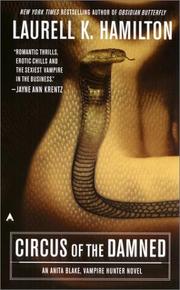
Circus of the Damned
A rogue master vampire arrives in St. Louis and Anita Blake is caught in an undead turf war, with a science teacher in the crossfire.
2,757-word summary · 12 min read
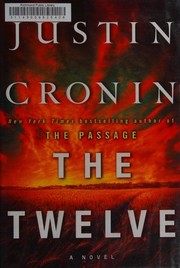
The Twelve
The middle volume of the Passage trilogy braids the year America died, a picnic massacre decades earlier, and the survivors' war against the twelve master…
2,089-word summary · 9 min read
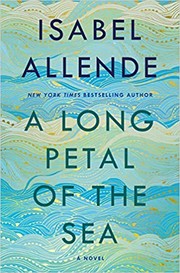
A Long Petal of the Sea
A pregnant widow and her brother-in-law marry for passage on a ship of Spanish exiles bound for Chile, then spend decades building and losing homes together.
2,016-word summary · 9 min read
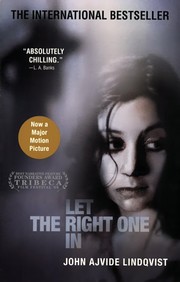
Let the Right One In
A bullied boy in 1981 Blackeberg befriends the strange child next door, where love and hunger grow side by side.
2,546-word summary · 11 min read
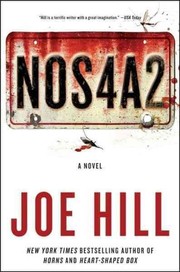
NOS4A2
Vic McQueen's bike finds lost things through a bridge, pitting her against Manx's Rolls-Royce ride to Christmasland.
2,060-word summary · 9 min read
Carmilla
Lonely Laura in Styria befriends beautiful Carmilla, whose night visits bring dreams, bites, and ancestral dread.
2,158-word summary · 10 min read
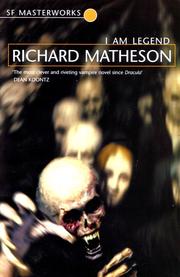
I Am Legend
Robert Neville holds one fortified house in empty Los Angeles by day, and faces what the plague left behind by night.
2,840-word summary · 13 min read
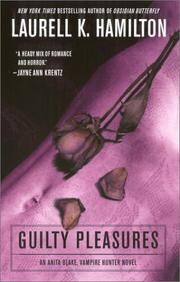
Guilty Pleasures
Animator Anita hunts a vampire killer while Jean-Claude pulls her close.
2,136-word summary · 9 min read
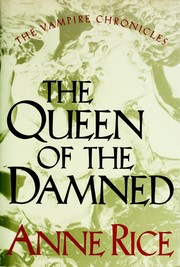
The Queen of the Damned
Rock star Lestat wakes Akasha, mother of vampires, who plans to cull men.
2,100-word summary · 9 min read
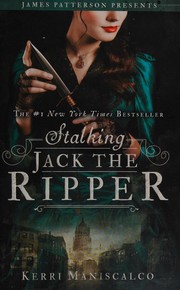
Stalking Jack the Ripper
Lord's daughter Audrey Rose studies corpses in secret while the Ripper works Whitechapel beside Thomas.
2,030-word summary · 9 min read
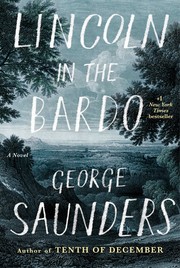
Lincoln in the Bardo
Willie Lincoln dies in 1862 and lingers while 166 cemetery voices squabble his father toward release.
2,032-word summary · 9 min read
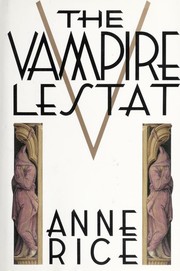
The Vampire Lestat
Lestat tells his own tale from French village to rock star, waking ancient ones who hate questions.
1,916-word summary · 9 min read
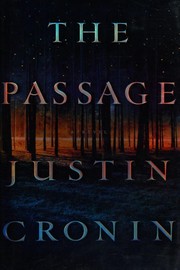
The Passage
A failed Army experiment makes blood-hungry virals, and a quiet girl named Amy may hold the answer a century later.
2,755-word summary · 12 min read
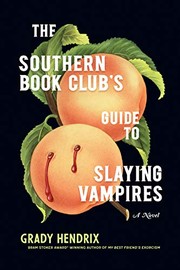
The Southern Book Club's Guide to Slaying Vampires
In 1990s Charleston, book club mom Patricia Campbell suspects charming newcomer James Harris is a vampire preying on neighborhood children.
2,398-word summary · 11 min read
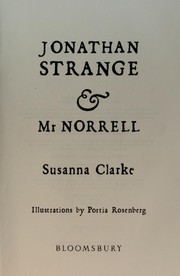
Jonathan Strange and Mr Norrell
Two magicians bring magic back to Napoleonic England, one by books and one by daring.
2,067-word summary · 9 min read
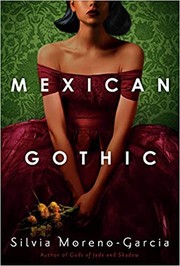
Mexican Gothic
In 1950 Mexico, glamorous Noemi Taboada leaves Mexico City for High Place after a desperate letter, to rescue cousin Catalina from the chilling Doyles and…
2,523-word summary · 11 min read
The Underground Railroad
Cora escapes Georgia on a literal railroad through states of terror and hope.
2,936-word summary · 13 min read
Perfume: The Story of a Murderer
Born with a perfect nose in 1738 Paris, Grenouille masters perfume craft then murders young women in Grasse to bottle the ultimate scent.
2,561-word summary · 11 min read
11/22/63
A Maine teacher steps through a diner portal to 1958 to stop the Kennedy assassination, and learns the past resists change while a new life pulls him in.
2,799-word summary · 12 min read
'Salem's Lot
A writer returns to Jerusalem's Lot as an old house fills with vampires.
2,046-word summary · 9 min read
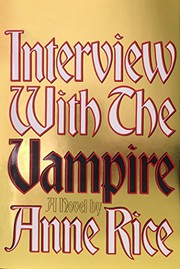
Interview with the Vampire
Louis tells a reporter how Lestat made him and how Claudia doomed them all in New Orleans and Paris.
2,195-word summary · 10 min read
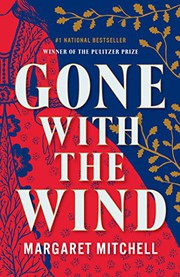
Gone with the Wind
Scarlett O'Hara schemes through the Civil War and Reconstruction, from Tara to burning Atlanta, chasing Ashley while Rhett waits and watches.
2,049-word summary · 9 min read
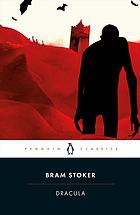
Dracula
Count Dracula sails for England in letters and diaries, and Van Helsing leads the hunt to stop him.
2,860-word summary · 13 min read
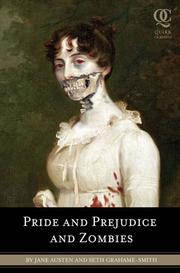
Pride and Prejudice and Zombies
Austen's courtship plot survives intact while Elizabeth and Darcy battle zombies, from the Netherfield ball to a duel with Lady Catherine.
2,526-word summary · 11 min read
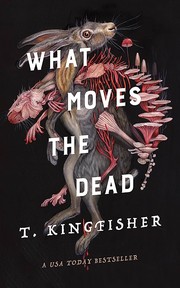
What Moves the Dead
Alex Easton arrives at the Usher house to find Madeline dying, the tarn full of fungus, and the local hares refusing to stay dead.
2,586-word summary · 11 min read
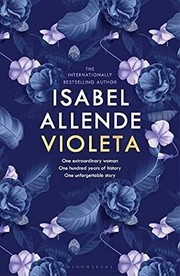
Violeta
A woman born in 1920 writes her life story to her grandson, from one pandemic to another, through wealth, ruin, passion, and dictatorship in South America.
2,555-word summary · 11 min read
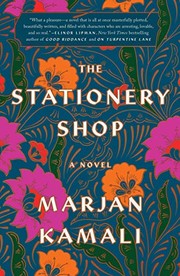
The Stationery Shop
Two teenagers fall in love in a Tehran stationery shop in 1953, are separated by the coup and a family deception, and meet again sixty years later.
2,024-word summary · 9 min read