
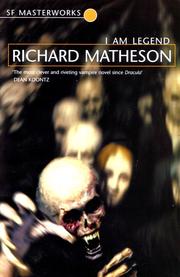
I Am Legend
2,840-word summary 13 min read 160 pages in the book
- First published
- 1954
- Publisher
- Gold Medal Books
- Pages
- 160
- ISBN
- 9781857988093
Reading options
What's inside (8 sections)
I came to this one sideways, through the Will Smith movie like a lot of people my age. I expected a long action story about a man and a dog in an empty New York. The actual book surprised me. It is short, mean, lonely, and set in Los Angeles. It was published in 1954 by Gold Medal Books and the first edition runs only about 160 pages. You can read it in two sittings, but parts of it sit with you longer than books three times its size.
What hooked me was not the vampires. It was the routine. Richard Matheson spends a huge amount of time on what one man does all day when everyone else is gone. That focus makes the horror feel practical instead of theatrical. You are not watching the end of the world. You are watching a guy try to keep his house standing through one more night.
A quiet street with one light on
Robert Neville lives alone in a house on Cimarron Street in Gardena, a neighborhood in the Los Angeles sprawl. The date near the start is January 1976. The plague that killed almost everyone took hold the year before. By now the power grid is dead, the stores are empty, and the streets belong to the sick and the dead.
Neville has turned his house into a kind of fort. He boards the windows. He hangs garlic around the frames. He keeps a generator in the garage for lights and music and his freezer. During the day he drives out for supplies, siphons gas, boards up other houses to burn, and hunts down vampires where they sleep. At night he locks himself in, drinks whiskey, puts records on, and listens to them howl outside.
The noise has a leader. Ben Cortman used to live nearby. Now he comes most nights with a crowd behind him and yells for Neville to come out. Matheson never lets you forget that voice. It shows up again and again, sometimes drunk sounding, sometimes almost playful. Neville answers back from behind the door. He insults Cortman. He plays music louder. It reads less like a siege and more like a bad marriage with shouting through walls.
Days have their own rhythm. Neville drives slowly through empty intersections. He checks houses. He drags bodies to a burning pit out in Inglewood. He repairs the garlic strings and the mirrors. He eats canned food. He tries not to drink before noon and often fails. The repetition is the point. Matheson wants you to feel how small a life gets when there is nobody to share it with.
One detail stayed with me. Neville still shaves and keeps the house fairly clean. Not because anyone will see him. Because letting go completely would mean admitting he has already lost. That small stubbornness tells you more about him than any speech could.
If you want a fast monster book, this opening stretch may test your patience. Very little happens in a plot sense for a while. A man fixes his house. A man drives. A man drinks. I thought that was the strength of it, though. By the time something changes, you understand exactly what Neville stands to lose.
How the world emptied out
Matheson feeds the backstory in pieces, the way memory actually returns. Neville remembers dust storms and public warnings. He remembers mosquitoes and talk about germs in the air. He remembers the army spraying and the quarantines that did not hold. Nobody in the book fully understands the plague at first, which felt honest for a story written in the early nineteen fifties.
His personal losses come back in flashes. His daughter Kathy died first. Then his wife Virginia got sick. He remembers the confusion around funerals, the rules about burial and burning, the fear that the dead were not staying dead. There is a passage about him carrying Virginia from the house that is hard to read, not because it is gory but because it is procedural. He is trying to follow instructions while his life is ending. That flat tone makes it worse.
The city fell apart in stages. Work stopped and hospitals filled past any hope of coping, while fires burned in places like Compton without anyone left to fight them. Looting started and then stopped because there was nobody left to use what was stolen. Neville kept working at a plant for a while, or tried to, until it became clear there was no plant to go back to. I liked that Matheson does not give this a big cinematic collapse. It just thins out. One day the phones stop. One day the papers stop. One day you stop expecting them.
Neville is not presented as a hero in these memories. He was a plant worker with a temper and a drinking habit. He loved his family in an ordinary distracted way. He was not ready for any of this. When Virginia was dying he argued with doctors and neighbors because he did not know what else to do. That ordinariness matters later. He survives partly by luck. He thinks he might be immune because of a bat bite years earlier, or a spider bite, something that left him with a strange blood condition. He never knows for sure. The book lets that stay uncertain.
A fair criticism here is that the women in these flashbacks exist mostly to motivate Neville. Virginia gets a few sharp moments, especially when she is frightened and angry at the same time, but Kathy is mostly a symbol of lost innocence. That was common for pulp fiction of the period, and it still reads as thin now. If you need fully drawn family drama, you will not find it here. The book is locked tight inside Neville's head.
Garlic, mirrors and microscope slides
About a third of the way in, Neville decides routine is not enough. He needs to understand. This is where the novel turns from a siege diary into something closer to a detective story.
He sets up a lab in his house with a microscope and old medical texts scavenged from libraries. He takes blood samples from vampires he kills and from ones he traps. He looks at slides for hours. He reads about bacteria and blood chemistry. Slowly he builds a theory that a germ, a kind of bacillus, causes the condition. It feeds on blood, it changes the body, it dies in sunlight, it reacts badly to garlic.
Matheson walks through each folk defense and tries to give it a physical cause. Garlic has a strong smell and strong oils, so maybe the germ hates it. Mirrors frighten vampires because they force a confrontation with a changed face, a psychological effect rather than a magical one. Sunlight kills the germ. A stake kills because it lets air in and destroys the anaerobic environment the germ needs. Some of this holds together better than other parts. The garlic explanation is hand waving if you press it. The mirror idea is clever and sad at the same time.
The cross gave me pause in a good way. Neville tries a cross on one vampire and it works. He tries it on another and it does nothing. He realizes the second man was Jewish in life and feels no dread about a Christian symbol. So the cross works through belief and fear, not through holiness built into the wood. For 1954, in a cheap paperback, that is a sharp move. It says the monster is partly made by the mind of the person who becomes one.
This middle section is also where some readers will stall. There are pages of Neville peering at slides, making lists, failing, trying again, drinking, sleeping late, going back to the microscope. The prose stays plain. No big fights. No new characters for a long stretch. I found the patience of it convincing. A lonely man teaching himself microbiology from old books would be slow and repetitive. But if you came for chases, you may skim here. The book trusts you to care about method.
One more gripe worth naming. Neville can be cruel during his daytime hunts. He jokes while staking bodies. He treats sleeping vampires as trash to be cleared. At the time I read it as toughness. Later the book asks you to rethink those scenes. That rereading is intentional, and it works, but it means spending a lot of pages with a narrator who can sound cold. Matheson does not soften him for you.
The dog
Then, without much warning, the book breaks your heart.
Neville spots a stray dog in daylight. It is thin and scared and clearly sick. He tries to coax it closer with food and water. The dog runs. He comes back the next day. Same result. This goes on for weeks. Neville, who kills without much hesitation at this point, becomes gentle and patient in a way he is with nothing else.
He starts leaving meat out and talking softly from the porch, slowly learning the shape of the dog's fear. When the dog finally lets him touch it, then follows him onto the porch, then into the house, the relief is enormous. For the first time in years Neville has another living heartbeat in the rooms with him. He builds a bed from old blankets, shares his food, and starts thinking in terms of we instead of I.
I will not spoil the exact mechanics of what happens next, except to say it fits the logic of the plague. What matters is how Neville responds. He falls apart. The man who could burn bodies all afternoon without flinching cannot handle this one loss. Matheson does not overwrite it. He gives you a few short paragraphs and lets the empty house do the rest.
This chapter is why people remember the book as being about loneliness rather than vampires. The dog does not advance the science plot. It does not reveal lore. It shows you what isolation has cost Neville. He can theorize about germs all day, but he cannot talk himself out of needing company. After the dog, his drinking gets worse. His sleep gets worse. His daytime jokes sound thinner.
Short note on the movies here. Each film version does its own thing with the dog, and all of them use it for tears. The book version is quieter and, to me, crueler. There is no score telling you how to feel. Just a man who had one good week and then lost it.
If the novel has a center, it is here, not in the lab. Everything before explains how Neville lives. Everything after tests whether he should keep living that way.
Ruth and the other side of the story
Just when Neville has settled back into despair, he sees a woman in daylight.
Her name is Ruth. She looks healthy. She is frightened of him at first, which makes sense. From her point of view he is a wild armed man who drags bodies and burns them. He convinces her to come to the house. He is awkward and intense by turns. He has not spoken to a living person in years, and it shows. He wants her to stay. He also suspects her immediately, because in his world a healthy person walking around is almost impossible.
Neville runs a blood test while she sleeps. The result confirms she carries the infection. When he confronts her, she admits part of the truth. There are others like her. They are alive, they can function in daylight, and they have learned to control the worst effects with medication. They have started building a new society in the ruins. They sent her to watch him.
This flips the last hundred pages on their head. Neville thought he was killing mindless monsters by day and holding off demons by night. Ruth tells him many of those sleeping bodies were people like her, sick but conscious, drugged into rest during the day. He was not cleaning up. He was murdering patients while they slept. He thought Cortman was a freak leading a mob. From the other side, Cortman looks like a sick man crying out, and Neville looks like a daytime boogeyman who cannot be reasoned with.
Their scenes together are tense and sad. Ruth is not a love interest in the usual sense, though Neville tries to make her one. She is a scout who starts to pity him. She warns him that her people plan to kill him because of what he has done. She also tells him she cannot save him unless he runs. He refuses to run. Pride plays a part, and so does exhaustion after years of sleeping with one ear open.
Criticism belongs here too. Ruth gets little interior life. We learn her function before we learn her personhood. Her change of heart toward Neville happens fast, and Matheson asks you to accept it on thin evidence. A modern novel would give her chapters of her own. This one keeps her at arm's length because Neville keeps her there. I found that frustrating and thematically fitting at the same time. You see the limit of a story told only through him.
What Ruth does give the book is a moral problem that most vampire stories skip. If the infected can think and organize and dose themselves, at what point do they count as people? Neville spent years asking how the germ works. He never asked what the germ leaves intact. That blind spot is about to cost him everything.
Becoming the monster
The end moves quickly after so much slow buildup. Ruth's people come in force. They are not the shambling night crowd Neville knows. They move in daylight with guns, wearing clothes that mark them as a group trying to be a society again. Neville holds them off for a while from his fortified house, and there is a brief ugly firefight that leaves no doubt this is no longer man against vampire. It is one faction against another.
He is wounded and captured. They put him in a cell to await execution. Ruth visits him there. She has risked a lot to bring him a way out. She gives him pills that will let him die quickly and without pain, before they can make a spectacle of him. She tells him about the new world they are trying to build. She does not excuse what he did, but she does not hate him either. That mix felt right to me. Hate would be simpler than what the book wants.
Neville spends his last hours watching his executioners through a barred window. They stare at him with fear and disgust. Children are kept back. Mothers pull them close when he moves. He understands, all at once, what he has become to them. He is the thing that walks by day and kills while you sleep. He is the story they will tell to frighten each other. He is the legend.
The final pages land because Matheson does not plead for Neville. He lets the reversal stand. Neville takes the pills. He thinks about Ruth and the dog, and about Virginia and Kathy, not in long speeches but in passing images. He accepts that his idea of normal died with the old world. A new normal has started without him, built by people he called monsters. His death will help them feel safe. That is a bleak kind of usefulness, and the book does not dress it up.
Read now, the ending still feels bold for a 1954 paperback original. Most horror of that era restored order at the end, with the scientist winning and the monster burning. Here order is restored by removing the hero. The future belongs to the infected. Neville's science was partly right and morally late. He solved the germ and missed the people.
Who should skip this? If you need lush prose or large casts, look elsewhere. The writing here is spare to the point of flatness in places. If you need clear heroes, Neville will annoy you by the middle and disturb you by the end. If you are sensitive about animal suffering, the dog chapters will be rough, though they are not graphic in a modern sense. If you want the Will Smith film, know the film keeps the scaffolding and changes the soul. The book is smaller, stranger, and less interested in redemption.
I closed it thinking about houses. Neville spends the whole novel reinforcing his: boards, garlic, locks, mirrors, generator hum. He thinks safety is a stronger wall. The book argues safety was a shared story, and once enough people share a different story, your wall just marks you as the outsider. That is why the title works. It is not about being heroic. It is about being the last believer in a world that has stopped believing with you.
FAQ
When was I Am Legend published?
It was first published in 1954 by Gold Medal Books. The first edition runs 160 pages and the post cites the verifiable Millennium edition ISBN 9781857988093.
Is I Am Legend part of a series?
No. It stands alone. Matheson wrote no sequel, though the novel inspired three films and a comic adaptation.
Do I need to have seen the movies first?
No. The book is shorter and stranger than any film version, with its Los Angeles setting and long laboratory chapters intact.
Similar books
The Twelve
The middle volume of the Passage trilogy braids the year America died, a picnic massacre decades earlier, and the survivors' war against the twelve master…
2,089-word summary · 9 min read
The Day of the Triffids
Blinded survivors flee carnivorous plants after a meteor shower.
2,171-word summary · 10 min read
A Canticle for Leibowitz
After nuclear war, monks save books across centuries while the world rebuilds and falls again.
2,381-word summary · 11 min read
The Island of Doctor Moreau
Shipwrecked Prendick finds Doctor Moreau shaping beasts into men by pain on lost island.
2,137-word summary · 9 min read
Carmilla
Lonely Laura in Styria befriends beautiful Carmilla, whose night visits bring dreams, bites, and ancestral dread.
2,158-word summary · 10 min read
The Invisible Man
A scientist makes himself invisible and learns the price: no one can live outside the world. Wells turns a clever trick into a chase across Sussex.
2,564-word summary · 11 min read
The Passage
A failed Army experiment makes blood-hungry virals, and a quiet girl named Amy may hold the answer a century later.
2,755-word summary · 12 min read
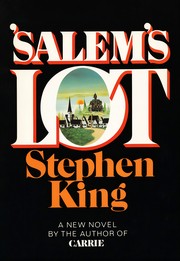
'Salem's Lot
A writer returns to Jerusalem's Lot as an old house fills with vampires.
2,046-word summary · 9 min read

Interview with the Vampire
Louis tells a reporter how Lestat made him and how Claudia doomed them all in New Orleans and Paris.
2,195-word summary · 10 min read
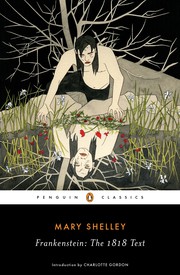
Frankenstein
Frankenstein retold: Victor builds, the creature wakes, Arctic letters, demand and refusal.
1,901-word summary · 8 min read
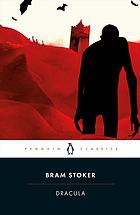
Dracula
Count Dracula sails for England in letters and diaries, and Van Helsing leads the hunt to stop him.
2,860-word summary · 13 min read
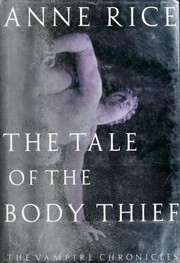
The Tale of the Body Thief
Lestat trades bodies with a psychic thief for one day of mortality and ends up trapped, sick, and hunting his own vampire body.
2,069-word summary · 9 min read

Authority
The new director of the Southern Reach takes over an agency that is hiding the truth about Area X, and the building starts to change around him.
2,029-word summary · 9 min read

Wilder Girls
At a quarantined boarding school off Maine, three girls with strange mutations search for a missing friend and learn what the adults have hidden.
2,594-word summary · 12 min read
The Lottery
In Jackson's 1948 story, a village draws lots to keep the corn heavy, and the chosen person is stoned by her neighbors.
3,080-word summary · 14 min read
Her Body and Other Parties: Stories
Eight stories where bodies, medicine and old fairy tales get taken apart, with a green ribbon running through the whole book.
2,997-word summary · 13 min read
Circus of the Damned
A rogue master vampire arrives in St. Louis and Anita Blake is caught in an undead turf war, with a science teacher in the crossfire.
2,757-word summary · 12 min read
Out of the Silent Planet
A Cambridge philologist is kidnapped and taken to Mars, where the natives are civilized and the humans are the dangerous invaders.
2,612-word summary · 12 min read
We
In a city of glass ruled by the Benefactor, a state engineer building a spaceship falls for a woman who wants to tear the One State down.
2,247-word summary · 10 min read
The Illustrated Man
A tattooed drifter's moving pictures retell eighteen Bradbury stories of children, rockets, Mars and the last night of the world.
2,791-word summary · 12 min read
The Caves of Steel
Detective Elijah Baley must solve a Spacer's murder in a domed New York, partnered with R. Daneel Olivaw, a humaniform robot built in the victim's image.
2,445-word summary · 11 min read
A Connecticut Yankee in King Arthur's Court
Hank Morgan, a Connecticut factory man, wakes in King Arthur's England, rises to chief adviser, and rebuilds the kingdom until his own inventions turn on him.
2,193-word summary · 10 min read
The Call of Cthulhu and Other Weird Stories
Seventeen tales from Dagon to Innsmouth, led by Cthulhu, the Colour, and the Whisperer, in S. T. Joshi careful Penguin edition with notes and corrected texts.
2,593-word summary · 12 min read
The Call of Cthulhu
A professor's papers link a sculptor's dreams, a Louisiana cult raid, and a sailor's voyage to a sleeping god under the sea.
2,530-word summary · 11 min read

Solaris
Kelvin reaches a silent station above Solaris and finds grief made solid when the ocean returns his dead wife Rheya, testing memory, science, and the limits of…
2,548-word summary · 11 min read
Let the Right One In
A bullied boy in 1981 Blackeberg befriends the strange child next door, where love and hunger grow side by side.
2,546-word summary · 11 min read
The Dispossessed: An Ambiguous Utopia
Physicist Shevek leaves anarchist Anarres for capitalist Urras to share time theory, finding walls both places.
2,288-word summary · 10 min read
NOS4A2
Vic McQueen's bike finds lost things through a bridge, pitting her against Manx's Rolls-Royce ride to Christmasland.
2,060-word summary · 9 min read