
Through the Looking-Glass
2,610-word summary 12 min read 224 pages in the book
- First published
- 1871
- Publisher
- Macmillan
- Pages
- 224
- ISBN
- 9780486408781
- Series
- Alice's Adventures in Wonderland (#2)
Reading options
What's inside (7 sections)
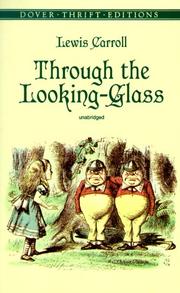
I came back to this one because Alice's Adventures in Wonderland left me with a question. What does Alice do when she is a little older and a little surer of herself. Through the Looking-Glass gives an answer. It was first published in December 1871 by Macmillan in London, 224 pages in the first edition with drawings by John Tenniel. It is the second Alice book after the 1865 Wonderland story. The reading copy I used for the cover check is the Dover Thrift paperback with ISBN 9780486408781. Alice is seven and a half here. She steps through a mirror over the fireplace and finds a house that looks the same until you try to read anything.
That opening sold me again. On our side of the glass, Alice scolds her black kitten Kitty for tangling wool and plays chess badly with no one really guiding her. She holds the white kitten Snowdrop and talks to Dinah the cat as if cats keep house rules. Then she climbs onto the mantel and pushes through glass that melts like mist. Cold and bright on the other side. The pictures are wrong in small ways. The books have text she can only read by holding them up to a mirror. The chess pieces complain and walk around. The Red King sleeps and snores. Alice wonders if he dreams her. That thought returns at the end and gives the book its only real chill.
Carroll lays out the trick early and sticks to it. The country beyond the mirror is a giant chessboard. Alice starts as a pawn for the White side. If she walks forward square by square to the far side without getting taken, she will become a queen. A printed diagram at the front lists the moves. Most readers skip it. I kept it open on my lap. It helps. Every strange meeting lines up with a move. When Alice feels lost, she is really just crossing one square. That frame makes this book calmer than Wonderland. Less falling. More walking.
You notice the age shift at once. In Wonderland Alice cries and apologizes to everyone. Here she corrects people. She tells flowers they should not talk all at once. She tells the Red Queen she does not want to argue. She is still polite in a Victorian child way, curtseying and saying sir and ma'am, but she pushes back faster. I liked that change in small doses. At other times she sounds like a schoolroom monitor. That bossy edge is part of the fun and part of the drag, depending on the chapter.
The house behind the glass and the garden that talks
The mirror house chapter works because it stays domestic before it turns odd. Alice finds a book of mirror writing with the poem Jabberwocky inside. She reads the first verse aloud. Twas brillig and the slithy toves. She says it fills her head with ideas even if she does not know what half the words mean. That is the whole book in one reaction. Sound first, sense later if ever.
Then she goes downstairs and out into a garden where the flowers speak. The Tiger-lily can talk clearly. The Rose thinks Alice looks odd. The daisies shout together until Alice threatens to pick them. The flowers judge Alice the way adults judge children at a party. Are you a flower or a weed. Why is your color wrong. Why do your petals droop. Alice answers back about not being clever enough to explain herself. It is funny until you hear the sting. Victorian visiting manners turned into botany.
The Red Queen arrives in that garden and changes the pace. She is strict about manners and directions. Speak only when spoken to. Curtsey while thinking of something else. She runs with Alice uphill in a famous passage where they run hard and stay in the same place. To move at all here, the Queen says, you have to run twice as fast. People quote that line about office life and I see why. In context it is also a mother figure telling a child that rules differ by place. Alice learns the local rule by doing it wrong first.
From there Alice takes a train that jumps and coughs. The guard looks at her ticket and calls her voyage. Passengers include a goat, a beetle, a horse, and voices that sing about value in thousands of pounds. The train leaps a brook and Alice lands under a tree with a shawl tied round her by the Queen. Small physical jokes carry these pages. Shawls, tickets, luggage. Travel as a child knows it, where adults handle papers and you hold on.
The wood, Tweedledum and the Walrus
Then comes the wood where things have no names. Alice hugs a fawn that does not know she is a girl and she does not know it is a fawn. They walk together until they leave the wood and memory snaps back. The fawn bolts. Alice almost cries and then laughs at herself for almost forgetting her own name. It is a short scene and my favorite in the book. No pun saves it. It just shows how much we lean on labels. Take names away and fear drops for a minute, then returns with the labels.
Tweedledum and Tweedledee march in right after and swing the book toward pure language play. Two fat boys in school uniforms, holding hands, reciting a quarrel about a rattle. They dance to poetry. They act out the Walrus and the Carpenter for Alice while she sits like a theater audience of one. The Walrus with his handkerchief and the Carpenter with his paper hat talk the young oysters out for a walk and eat every one. Alice likes the Walrus best because he cries a little while he eats. Then she switches and prefers the Carpenter because he eats fewer. Then she admits both were horrid. That flip is honest child criticism. Pick a favorite, count the plates, change your mind.
The twins also show Carroll the logic teacher. They argue about contratariwise and whether Alice can see anything with her eyes shut. They insist on saying goodbye in a long ceremony with handshakes and hats. They fight over the rattle until a crow frightens them off. Alice hides in the wood and thinks about how quickly brave talk ends when noise comes. I read those pages slowly because the jokes stack fast. If you skim, the twins feel like filler. If you read aloud, their rhythm carries.
A shop appears next in a strange cut. More on that in a bit, because it breaks the twins section oddly. First Alice meets the White Queen in the wood, a kind and scattered woman who cannot remember who she is and pays Alice in jam tomorrow and jam yesterday but never jam today. The White Queen practices believing impossible things before breakfast. That line gets quoted a lot. In place it reads sadder. An older woman trying to keep rules straight while her shawl keeps coming undone. Alice pins it for her and feels grown for a minute. Then the Queen turns into a sheep behind a counter.
Wool and water and Humpty on his wall
The shop chapter is the one I warn friends about. Alice follows the White Queen into a little shop run by a Sheep. The shelves hold strange goods. Eggs, balls of wool, crabs with mouths, loaves piled like shelves. Every time Alice looks straight at a shelf it goes empty. She tries to buy an egg and the Sheep sets her to knitting with many needles that turn into oars. Suddenly they row in a boat with no water except wool. Feathers turn to rushes. Alice catches a scented rush that melts like snow. Then they are back in the shop and Alice buys the egg after all. The egg turns out to be Humpty Dumpty.
On paper that sounds rich. On the page it drags for me. The jokes about retail, about asking for what you want and getting rowing instead, repeat without building. The Sheep sneezes and bleats at set times. Alice gets cross. I got cross with her. A friend who loves puzzles adored this part because meaning slides every paragraph. I wanted one solid shelf to hold. Still, the melting rush is a fine image for wanting something too hard. Hold tight and it falls apart. That lands without needing a footnote.
Humpty Dumpty pays off the wait. He sits cross legged on a narrow wall, shaking hands with one finger, explaining names and birthday presents. He tells Alice an unbirthday present matters more because there are 364 unbirthdays in a year. People now throw unbirthday parties because of that throwaway joke. He explains Jabberwocky word by word. Mimsy means flimsy and miserable. Mome means grave. A portmanteau packs two meanings into one word, like slithy from lithe and slimy. He says this with total confidence, as if dictionaries obey him. Alice asks plain questions and he answers with grand theory.
I love Humpty and I also see why teachers groan. He states that words mean what he chooses them to mean. Alice counters that words have work to do. That clash still fuels arguments about reading. Who decides meaning. The writer or the reader or the loudest egg on the wall. Carroll lets Humpty win the scene and lose the day, since Humpty falls soon after in noise and smoke with kings men rushing in. Alice moves on while the crash happens off stage. Meaning as power, then a fall. Neat without preaching.
His songs and riddles slow the middle too. He recites about fishes and buttons. Alice tries to keep up. If you love word lists, you will stay happy. If you came for plot, you will check the chess diagram and urge Alice forward. I split the difference. I read Humpty in two sittings and liked him more the second time.
Lion and Unicorn, the Knight who falls off
The Lion and the Unicorn bring noise back. They fight for the crown in the town square while the White King watches with his enormous helmet and his pencil book. The crowd shouts. Hatta, the messenger with his hat stuck through with cards, fetches bread already cut. Haigha, the other messenger with his hands tied by his feet, brings hay. Alice holds the plate for plum cake that gets passed around and cut in unfair shares. Nobody gets much. Everybody argues about shares.
This is Carroll on politics and parties. Two heraldic beasts pummel each other while kings take notes and food runs out. Children hear drums and cake. Adults hear Parliament and budgets. Alice acts as the only practical person, holding dishes and asking who gets what. She gets dusted with cake crumbs and scolded for cutting wrong. I laughed at the bread already cut as a time saver that saves no time. Anyone who has planned a school event will know that exact helper.
Then the White Knight arrives and the tone softens. He keeps falling off his horse on all sides. He wears a helmet shaped like a sugar loaf, anklets, a box for candles and mousetraps, a beehive on his back. He invented a pudding to eat meat with, a way to grow whiskers green with a brush, a mousetrap to keep sharks away. Alice rides with him through the last brook and listens to his song about an old man sitting on a gate. The song is very long. It tells of cheese, seals, soup, and hopes that never quite pay. The Knight sings badly and means well and falls again while waving goodbye.
People call the Knight Carroll himself saying goodbye to Alice Liddell, the real girl who inspired Alice. Scholars argue about that. On the page he reads as the one adult who does not lecture Alice. He asks permission. He steadies her. He does not test her with riddles for sport. After so many clever bullies, his clumsiness feels kind. Yes, the song tests patience. I skimmed a verse on first read and went back later. The goodbye still worked. A slow wave, a horse stumbling, a girl walking on alone toward her crown.
Criticism belongs here plainly. The chess frame forces detours. Shop, twins song, Knight song, Lion parade. Each has fans. Together they stall Alice between pawn moves six and seven. Wonderland never stalls because Alice falls from scene to scene. Here she walks, and walking shows the seams. A child reader may fidget in the Wool and Water pages and the Knight song. An adult reader may enjoy those seams as parody of shops and ballads. Both can be true. The book is less wild and more built. That is its charm and its cost.
Queen Alice and which dreamed it
Alice crosses the final brook with her hands full and her head full of noise. She wakes as Queen Alice with a crown that fits badly and two proud queens to examine her. The Red Queen asks if she can do addition and division. Can you do fives. Can you answer useful questions. The White Queen asks about jam and wool and storms. Alice passes with temper intact. She corrects their manners. She refuses to be quizzed like a schoolgirl forever. That spine matters. She earned the crown by walking straight while everyone talked sideways.
The feast scene that follows is chaos done right. The table fills with legs of mutton, tureens, queens, kings, frogs, fowls. The Red Queen introduces food to Alice and Alice to food as if both need names. Dishes argue. Bottles refuse to be cut. Alice pulls the tablecloth and everything crashes. She seizes the Red Queen and shakes her into a kitten. That shake is the boldest move Alice makes in either book. No courtroom speech about cards. Just hands on the bully shaking her down to size.
She wakes on the rug holding Kitty. Snowdrop sleeps. Dinah washes. The chess pieces lie scattered. Alice asks Kitty who dreamed it. Was it Alice or the Red King who slept through the whole story. She asks her mother, her nurse, Dinah. The book ends with a question, not a moral. Which dreamed it. That open close irritated me at twelve. At thirty it feels right. A child checks with cats because adults give flat answers. The dream keeps value even if no one signs it.
Reading tips from my pass through it. Keep Tenniel nearby. His Red Queen with pointed chin, his White Knight sliding off left, his Humpty with long neck and blank stare, his Lion and Unicorn dusty from battle, fix the tone better than any modern cartoon. Read Jabberwocky aloud before Humpty explains it. Let the noise hit first. Then enjoy the fake dictionary after. With kids, act the garden scene with funny voices and let them scold the flowers back. They will love telling a Rose she is impertinent. With the Knight song, agree in advance to read half and save half. No shame in that. The book invites skipping in the way long ballads do.
Facts held while I read. First published December 1871 by Macmillan in London, 224 pages in the first edition, author Lewis Carroll, pictures by John Tenniel. Sequel to Alice's Adventures in Wonderland from 1865. Alice moves as a White pawn to queen across twelve chapters that match chess squares. Those points line up with the metadata for this post and the Dover reading copy cited for the cover.
FAQ
When was Through the Looking-Glass published?
It was first published in December 1871 by Macmillan in London. The first edition runs 224 pages with pictures by John Tenniel.
Is it part of a series?
Yes. It is book 2 after Alice's Adventures in Wonderland from 1865. Alice is older here and the story follows chess moves toward becoming a queen.
Should I read Alice's Adventures in Wonderland first?
Start with Alice's Adventures in Wonderland, then read this one. The chess plan and the mirror logic land better when you know Wonderland first.
Similar books
More from Alice's Adventures in Wonderland first, then related titles.
Alice's Adventures in Wonderland
Alice follows the White Rabbit, grows and shrinks through tea, croquet and trial.
2,055-word summary · 9 min read
The Borrowers
A family of tiny people live under the floorboards of an English house, borrowing what they need until a lonely boy and a suspicious housekeeper change…
2,164-word summary · 10 min read
The Complete Fairy Tales
Mermaids, snow queens and tin soldiers in the full Andersen collection.
2,414-word summary · 11 min read
Charlie and the Great Glass Elevator
Charlie and Wonka overshoot Earth in the glass elevator, meet alien Knids, then risk age pills and Minusland.
2,514-word summary · 11 min read
Mary Poppins
A stern, vain nanny blows in on the East Wind to 17 Cherry Tree Lane and leads Jane and Michael through a year of small, strange magic.
2,729-word summary · 12 min read
The Neverending Story
Bastian steals a book about Fantastica dying and learns he must name and wish to save it.
1,941-word summary · 9 min read
Tuck Everlasting
Winnie Foster meets the immortal Tuck family in the woods and must decide whether to drink from their spring.
2,750-word summary · 12 min read
The Silver Chair
Eustace and Jill retold: four signs, a lost prince, Puddleglum the Marsh-wiggle, giants at Harfang, and the Lady below.
2,940-word summary · 13 min read
The Phantom Tollbooth
A bored boy drives a toy car through a magic tollbooth into the Kingdom of Wisdom and learns to care about words, numbers and time.
2,765-word summary · 12 min read
The Last Battle
Lewis ends Narnia: Shift ape false Aslan, King Tirian last stand, Jill and Eustace at Stable Hill, and a morning beyond the world.
3,037-word summary · 13 min read
The Horse and His Boy
Shasta and Bree flee Calormen to Narnia with Aravis and Hwin.
2,594-word summary · 12 min read
Peter Pan
Wendy, John and Michael fly to Neverland with Peter, face Hook, and learn what growing up costs.
2,502-word summary · 11 min read
The Witches
A boy and his grandmother face the Grand High Witch's plan to turn England's children into mice.
2,738-word summary · 12 min read
The Wonderful Wizard of Oz
Dorothy is carried to Oz by a cyclone and walks the yellow brick road with Scarecrow, Tin Woodman, and Lion.
3,297-word summary · 15 min read
The Voyage of the Dawn Treader
Lewis sends Lucy, Edmund and Eustace aboard Caspian's Dawn Treader to find seven lost lords, past dragon gold, dark dreams and the world's edge.
2,330-word summary · 10 min read
The BFG
Orphan Sophie is taken by the Big Friendly Giant, who blows happy dreams and eats vile snozzcumbers, and helps her stop nine man eating giants.
2,812-word summary · 12 min read
Prince Caspian
The Pevensies return to ruins at Cair Paravel and help Caspian take back Narnia from Miraz.
2,304-word summary · 10 min read
James and the Giant Peach
Lonely James escapes two cruel aunts inside a giant peach with huge insect friends, rolling to the sea and floating on gulls to New York City.
2,384-word summary · 11 min read
The Magician's Nephew
C. S. Lewis's Narnia origin story retold: Digory and Polly, the Wood between the Worlds, the waking of Jadis in Charn, Aslan's singing creation, and the apple…
2,528-word summary · 11 min read
Bridge to Terabithia
Katherine Paterson's Bridge to Terabithia retold: Jess Aarons and Leslie Burke build an imagined kingdom and face sudden loss.
2,673-word summary · 12 min read
Charlie and the Chocolate Factory
Poor Charlie Bucket finds a golden ticket to tour Wonka's factory with four spoiled kids.
3,574-word summary · 16 min read
The Little Prince
Saint-Exupery's The Little Prince retold: a pilot, a rose, the fox, and what matters is invisible.
2,492-word summary · 11 min read
The Lion, the Witch and the Wardrobe
C. S. Lewis's Narnia opener retold: four Pevensies, the White Witch's winter, Aslan's sacrifice, and the crowning at Cair Paravel.
2,502-word summary · 11 min read
Make Way for Ducklings
A pair of mallards raise eight ducklings on the Charles River and lead them across Boston to the Public Garden, with a little help from a friendly policeman.
2,044-word summary · 9 min read

The Field Guide
Three siblings move into a creepy Maine estate, anger a brownie, and find a forbidden guide to the fairy world in the first Spiderwick book.
2,033-word summary · 9 min read

Little Town on the Prairie
In the spring after the Long Winter, fifteen-year-old Laura sews shirts, studies for a teaching certificate, and helps send her blind sister Mary to college.
2,071-word summary · 9 min read
Amelia Bedelia
A literal-minded housekeeper follows her employer's list to disastrous and funny effect in the 1963 picture book that made wordplay a children's staple.
2,038-word summary · 9 min read
The Mitten
Jan Brett retells a Ukrainian folktale about a boy, a lost white mitten, and the woodland animals that crowd inside until a bear sneezes.
2,609-word summary · 12 min read
Clifford the Big Red Dog
Emily Elizabeth picks the smallest puppy in the litter, loves him as hard as she can, and wakes up to a dog the size of a house.
2,092-word summary · 9 min read
The Story of Ferdinand
A gentle Spanish bull would rather smell flowers than fight, and when he is taken to the bullring he simply sits down among the flowers in the ladies' hats.
2,135-word summary · 9 min read