
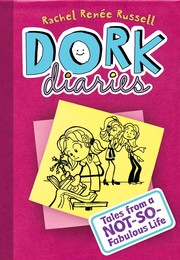
Tales from a Not-So-Fabulous Life
2,587-word summary 11 min read 282 pages in the book
- First published
- 2009
- Publisher
- Simon and Schuster
- Pages
- 282
- ISBN
- 9781416980063
- Series
- Dork Diaries (#1)
Reading options
What's inside (10 sections)
- The locker next to MacKenzie Hollister
- Chloe Garcia and Zoey Franklin
- Art competition fear and library shelving
- Temporary tattoos turn into a book drive
- Brianna, Miss Penelope, and the extermination van
- Crushed painting, Bug Girl, and the Student Body
- What charms and what creaks
- Who should read it
- Key takeaways
- FAQ
I picked up Tales from a Not-So-Fabulous Life because I wanted to see why middle grade readers pass this series around like contraband. Rachel Renee Russell published it in 2009 with Simon and Schuster, and my reading follows the 282 page edition. It is Dork Diaries book 1, told as the diary of fourteen year old Nikki Maxwell during her first month at Westchester Country Day. Nikki starts eighth grade at a private school on a scholarship tied to her dad's bug extermination contract. She has no phone, no designer clothes, and a locker right next to the most popular girl in school. She writes it all down with doodles in the margins.
The setup lands fast. Nikki's mom gives her a diary as a back to school gift for communicating thoughts and feelings. Nikki wanted a cell phone. She gets paper instead and complains for exactly one page before filling it. That pivot tells you the whole appeal. She claims she is not the kind of girl who keeps a diary, then proves she is exactly the kind of observer who should. She notices who sits where at lunch, who gets invited where, and how much a van with a giant bug on top can ruin a pickup line.
Westchester Country Day runs on money and confidence. Most kids arrive with both. Nikki arrives with art skills, a sharp eye, and a dad who sprays for roaches in the same hallways she walks. She ranks herself near the bottom of her own popularity chart, below the mascot and the lunch staff. It is funny because she means it, and sad for the same reason. The diary lets her be blunt about wanting to belong while pretending she does not care.
The locker next to MacKenzie Hollister
MacKenzie Hollister is the school's glossy center, pretty and cruel in the practiced way of eighth grade royalty. She is Nikki's locker neighbor, which means Nikki sees the full performance daily. Hair flips. Gloss application. Giggling with her friends Jessica and others in the CCP group, the Cool Cute and Popular crowd. MacKenzie decides early that Nikki is a dork and says so with enough volume that it sticks.
Their clashes are small and constant. MacKenzie mocks Nikki's clothes and her dad's job. She guards her status as art star and party host. When Nikki shows interest in the annual art competition with its cash prize, MacKenzie's entry hangs over the decision like a threat. Nikki signs up for library shelving instead, partly to avoid a head to head loss. It feels like a retreat, and Nikki knows it.
The lunchroom spill becomes the early low point. Jessica trips Nikki or bumps her at MacKenzie's direction, depending how you read the chaos, and food lands all over Nikki's outfit. Brandon Roberts, a cute ninth grade adjacent boy with a camera, helps her up and hands her a napkin. Nikki flees to the bathroom while MacKenzie's table laughs about whether she had an accident. Brandon keeps the napkin moment kind rather than creepy, which matters. He does not make a show of rescuing her. He just helps. Nikki saves the napkin anyway and overthinks it for days.
What Russell gets right here is how public embarrassment works at thirteen and fourteen. It is not one big villain speech. It is a series of tiny corrections about where to stand and what to wear. Nikki starts hiding in bathrooms and timing locker visits to avoid MacKenzie. Anyone who has mapped a school hallway to avoid someone will recognize the strategy.
Chloe Garcia and Zoey Franklin
Chloe and Zoey enter through gym class and library duty, which is perfect because both places reveal character quickly. On the court, Nikki blames them for a lost volleyball game. In the library, she learns they are funny on purpose. Chloe comes from a family that runs a software company and owns close to a thousand books. She reads romance for research for high school, years early. Zoey lives between strong adult women, mom and grandmother and stepmom, and loves advice books. She quotes them with total sincerity.
At first Nikki finds them a bit much. Chloe is dramatic. Zoey is earnest. Then lunch happens. The three sit together and discover a shared dislike of MacKenzie that quickly turns into real talk about families and fears. Nikki admits her dad's van shame. Chloe admits social climbing anxiety. Zoey admits she wants to be taken seriously as a reader and thinker. They laugh hard enough that Nikki forgets to perform cool. That lunch is the turn from classmates to friends.
They meet in the janitor's closet to talk privately, which becomes their clubhouse. It smells bad and feels safe. Nikki, who wanted popular friends on day one, ends up loyal to two girls the CCP crowd dismisses. The book does not present this as settling. Chloe and Zoey notice things MacKenzie never would. They ask about Nikki's drawings. They remember Brianna stories. They show up.
I liked that their friendship has friction built in. Chloe pushes for bold moves. Zoey pushes for rules and plans. Nikki mediates by drawing. When they disagree about tattoo prices or party plans later, it reads as three distinct people, not one blob called friends.
Art competition fear and library shelving
The art competition drives the plot because it ties money and pride together. First prize is cash that Nikki wants for art camp the next summer. She has real skill, honed in sketchbooks and margins. She also has stage fright about being judged next to MacKenzie, who paints fashion figures with confidence and gets praised for polish. Nikki tells herself she will lose and make her outsider status official.
So she chickens out and signs up as a Library Shelving Assistant. Mrs. Peach the librarian runs the program with genuine warmth. Shelving sounds boring until Chloe and Zoey turn it into a mission. They want to earn a trip to New York Public Library for National Library Week in the spring. Only dedicated helpers get chosen. Suddenly dust jackets matter.
Nikki's avoidance does not hold. Brandon sees her doodles in biology while she dissects a frog and says she could win. Chloe and Zoey echo him louder. Peer belief does what self talk cannot. Nikki decides to enter after all, choosing a personal painting she made for her parents' anniversary. It shows her family with affection rather than polish. Entering feels like agreeing to be seen.
The book handles this without turning art into magic. Nikki does not become confident. She becomes willing. That distinction suits middle school, where courage often means doing the thing while convinced you will fail.
Temporary tattoos turn into a book drive
The tattoo detour is the funniest and most stressful subplot, and it shows how fast middle school fame curdles. Chloe suggests the trio get reading inspired tattoos to prove dedication for the library trip. Zoey loves the idea. Their parents say no immediately. Nikki, trying to keep her friends from running away to live in library tunnels, a plan they discuss with alarming seriousness, offers to draw temporary tattoos instead.
Her designs are good. Skulls with books. Hearts with pencils. Small dragons curled around titles. Chloe and Zoey wear them proudly. Other kids notice. Soon popular boys and CCP girls want their own. The trio invents a swap. One donated book per tattoo. Then Chloe raises the price to two books, then three, drunk on demand. The closet becomes a studio. Nikki draws during every free minute.
At first Nikki loves being needed. Then she drowns. Twenty four tattoos and forty three books in, she has no lunch break and no patience. She feels used, especially when Chloe and Zoey get invited to MacKenzie's rescheduled birthday party and drift toward the popular table. Nikki quits the operation and tells everyone off, including Brandon. It is an ugly fight because it is honest. She wanted art to bring friends closer, not turn her into a vending machine.
What I appreciated is that Russell lets Nikki be wrong here too. Chloe and Zoey get swept up, but they also do the organizing and hauling while Nikki draws. The split is not villains versus victim. It is three tired kids mishandling success. That messy stretch, with feelings hurt on all sides, sets up the ending payoff.
Brianna, Miss Penelope, and the extermination van
Home life provides the other half of the comedy and much of the heart. Brianna Maxwell, Nikki's little sister, is six going on chaos agent. She creates a hand puppet called Miss Penelope who bosses everyone. She watches Princess Sugar Plum movies on repeat. She fears the Tooth Fairy and makes Nikki walk her to the bathroom at night. She draws murals where murals should not go. She is annoying in the exact way only a younger sibling can be, and Nikki loves her under the complaints.
Their parents are tired and affectionate. Dad runs the extermination business that pays for Nikki's scholarship. Mom tries chore charts and family dinners that collapse into bickering. Money is tight enough that ten dollars to take Brianna to a movie matters. Nikki haggles like a lawyer and regrets not asking for fifty once she is trapped in a theater full of singing unicorns.
The van is a running humiliation. Dad drops Nikki off in a vehicle advertising bugs to a school where image is currency. Nikki ducks, lies about dentist appointments, and prays MacKenzie never connects the dots. MacKenzie eventually does see, and uses Bug Girl as a locker tag. It stings because Nikki predicted it for weeks. Russell plays these scenes broadly but with enough domestic detail to keep them grounded. The kitchen table art project that ends in a ruined anniversary dinner feels lived in, with flour and good intentions everywhere.
The Hollister house visit caps this thread. Nikki and Dad go to spray, Brianna needs a bathroom, the only available one is upstairs, Nikki panics about being caught, tells Brianna that MacKenzie is the Tooth Fairy as a joke, Brianna attacks MacKenzie, and they flee. It is farce stacked on farce. It also shows Nikki using humor to deflect shame about class, which works until it explodes.
Crushed painting, Bug Girl, and the Student Body
The last week spirals fast and Russell paces it well. Nikki oversleeps on turn in day, catches a ride with Dad, leaves her framed painting on the curb while grabbing her bag, and watches Dad run it over pulling away. The glass cracks. The paper buckles. MacKenzie witnesses the van reveal and the disaster together. Nikki sits on the curb feeling erased.
Brandon finds her and talks her off the ledge without promising fixes. Then Nikki finds her locker tagged with Bug Girl in lipstick. She assumes Brandon helped MacKenzie mock her and decides to leave Westchester for good. Her parents agree to come in for transfer paperwork. She packs her locker with the hollow efficiency of someone who has rehearsed quitting.
Curiosity pulls her to the art display before she goes. MacKenzie's fashion piece has no first place ribbon. Instead the ribbon sits beside a photo collage titled The Student Body, credited to Nikki Maxwell. Chloe, Zoey, and Brandon spent days photographing her temporary tattoos on real students and entering the collection as her entry. The note they leave in the closet explains everything. They did not steal her work. They curated it.
Nikki finds them in the janitor's closet and the fight dissolves into hugs and happy shouting. She tells the office to tear up the transfer forms. She stays. MacKenzie loses gracefully, which is to say not at all, and insists she had nothing to do with the graffiti. Nikki does not believe her for a second and decides she does not need MacKenzie to confess to move on.
The final pages reset the board without erasing history. Nikki reopens a limited tattoo exchange to reach two hundred books for the library trip. She saves prize money for art camp. She gets interviewed for the school paper. She labels herself champion in ink and gives Brandon a bug camera design that callbacks their jokes. She still dreads hallways, but she walks them with people now.
What charms and what creaks
What charms is voice and structure. Diary entries move in short bursts with doodle descriptions that break up text for reluctant readers. Dates and headings give rhythm. Nikki's asides about lip gloss, frog dissection, zombie ballet to Thriller in gym, and Roller Coaster Syndrome around Brandon feel true to eighth grade without talking down. Chloe and Zoey have distinct speech and interests. Brianna steals every home scene. The art contest gives the wandering middle a spine, and the photo collage reveal earns its sentiment because the tattoo labor was shown page by page.
Friendship carries the theme without speeches. Nikki learns that being seen by two loyal friends beats being watched by fifty admirers. Brandon works as a crush because he is kind in low stakes ways, carrying supplies and asking about drawings, rather than grand gestures. The library trip goal gives the friends a shared project beyond surviving MacKenzie, which keeps the book from becoming only a bully log.
What creaks is repetition and thinness in the villain lane. MacKenzie is vivid but static, vain and scheming in every scene with little home life or motive beyond status. Jessica functions as her hands more than a person. The CCP label gets repeated until it dulls. Some jokes recycle, especially van shame and locker dread, which middle grade readers may enjoy more than adults. The parents tilt toward sitcom at times, especially around Miss Penelope and the mural punishment that never quite lands.
The diary format also lets Nikki withhold in ways that strain belief. She does not tell Chloe and Zoey key facts for chapters, then resents them for not knowing. The transferred school plan resolves fast once the win lands. Readers who want consequences for MacKenzie will be disappointed. She faces no real penalty for graffiti or bullying. The victory is internal to Nikki, which is healthier but less cathartic.
Length at 282 pages fits the audience. Short entries invite one more page before lights out. Illustrations pad the count without padding the story. A few gym and tattoo loops could trim, but they build the daily grind that makes the win feel deserved. The book respects its readers' stamina and attention.
Who should read it
Give Tales from a Not-So-Fabulous Life to readers age eight to thirteen navigating new schools, to Diary of a Wimpy Kid fans ready for a girl centered counterpart, to art kids who doodle through class, to parents seeking a bridge book with short chapters. It suits backpacks and bedtime. Do not give it to readers seeking complex villains or high stakes adventure. Pair it with the second Dork Diaries book for the Halloween dance fallout, or with kind school stories about loyalty for contrast.
At 282 pages I read it in two sittings, flagging tattoo and Brianna pages. Nikki starts begging for a phone and ends saving prize money for art camp. She starts hiding in closets and ends meeting friends there by choice. That shift, from hiding to gathering, is why book 1 launched a long series. The drama stays small and the feelings stay big, which is exactly how eighth grade feels.
FAQ
When was Tales from a Not-So-Fabulous Life published?
Simon and Schuster published it in 2009. The edition cited here runs 282 pages and the ISBN is 9781416980063.
Is it part of a series?
Yes. It is Dork Diaries book 1, the start of Nikki Maxwell's story at Westchester Country Day.
Who are the main characters?
Nikki Maxwell, friends Chloe Garcia and Zoey Franklin, crush Brandon Roberts, rival MacKenzie Hollister, and little sister Brianna.
Similar books
More from Dork Diaries first, then related titles.
The Third Wheel
Greg tries to find a date for the Valentine's dance, ends up the third wheel in his own plan, and watches Rowley get the girl.
2,019-word summary · 9 min read
Hard Luck
Rowley has a girlfriend, so Greg turns to a Magic 8 Ball, a family Easter hunt and the school yearbook for answers.
2,586-word summary · 11 min read
Frindle
Nick Allen calls a pen frindle, defies Mrs. Granger and a school ban, and watches the joke grow into news, trademarks, and a dictionary entry.
2,405-word summary · 11 min read
The Last Straw
Frank wants Greg toughened through sports while Greg dodges everything and military school looms.
2,020-word summary · 9 min read
Sideways Stories from Wayside School
Thirty stories, one class per floor, and a teacher who turns students into apples: Louis Sachar's absurd school classic.
2,045-word summary · 9 min read
Harriet the Spy
Eleven year old Harriet Welsch fills notebooks with honest, often cruel observations about her neighbors, until her classmates read one and turn her spy route…
2,510-word summary · 11 min read
Beezus and Ramona
Nine year old Beezus tries to be a good older sister while four year old Ramona turns every ordinary day into a disaster, until a tenth birthday forces honesty.
2,062-word summary · 9 min read
The Penultimate Peril
Baudelaires as concierges in a hotel sort friends from foes before the end.
2,234-word summary · 10 min read
The End
Baudelaires wash on an island where others decide what safe means.
2,320-word summary · 10 min read
Miss Nelson Is Missing!
Room 207 gets kind Miss Nelson, then terrible Viola Swamp instead.
2,597-word summary · 12 min read
Hoot
Roy tracks a shoeless boy to save burrowing owls from a pancake house.
2,290-word summary · 10 min read
Bud, Not Buddy
A ten year old orphan in the Depression walks to find a jazzman he thinks is his father.
2,568-word summary · 11 min read
Flipped
Juli Baker and Bryce Loski retell second grade to eighth grade from opposite sides, through a sycamore sit, trashed eggs, a yard fix-up, and one tense family…
2,689-word summary · 12 min read
The Carnivorous Carnival
Baudelaires hide as carnival freaks to find V.F.D. clues, facing lions, Olaf, and a fateful cliff split.
2,027-word summary · 9 min read
Tales of a Fourth Grade Nothing
Nine-year-old Peter Hatcher tries to get through fourth grade while his toddler brother Fudge steals every scene.
2,469-word summary · 11 min read
The Austere Academy
The Baudelaires endure Prufrock Prep, meet the Quagmires, and face Olaf as Coach Genghis in book five.
2,175-word summary · 10 min read
Rodrick Rules
Greg Heffley starts a new school year hiding a summer secret with Rodrick, whose party, photos, and talent show chaos threaten to expose everything.
2,971-word summary · 13 min read
Matilda
Brilliant Matilda Wormwood teaches herself to read, faces her crooked parents and the fearsome Miss Trunchbull, and finds Miss Honey.
2,296-word summary · 10 min read
Bone, Vol. 1: Out from Boneville
Three cartoon cousins are run out of Boneville, separated by locusts, and dropped into a valley where rat creatures and an old grudge are waiting.
2,155-word summary · 10 min read
The Field Guide
Three siblings move into a creepy Maine estate, anger a brownie, and find a forbidden guide to the fairy world in the first Spiderwick book.
2,033-word summary · 9 min read
Amelia Bedelia
A literal-minded housekeeper follows her employer's list to disastrous and funny effect in the 1963 picture book that made wordplay a children's staple.
2,038-word summary · 9 min read
Click, Clack, Moo: Cows That Type
Cows learn to type, demand electric blankets, and go on strike in a deadpan picture book about negotiation and withheld labor.
2,617-word summary · 12 min read
Caps for Sale
A peddler balances his caps on his head, naps under a tree, and wakes to find monkeys wearing his stock in this 1940 picture book.
2,787-word summary · 12 min read
George's Marvellous Medicine
George stirs a brew of dozens of household chemicals and gives it to his grumpy grandmother, and the medicine works far better than anyone planned.
2,014-word summary · 9 min read
The Stinky Cheese Man and Other Fairly Stupid Tales
Scieszka and Lane Smith take nine fairy tales apart, joke by joke, while Jack, the narrator, keeps losing the pages.
2,206-word summary · 10 min read
The Thief Lord
Orphaned brothers join a gang of Venice street kids and a masked Thief Lord, chasing a magic merry-go-round that can change a person's age.
2,040-word summary · 9 min read
Don't Let the Pigeon Drive the Bus!
A bus driver leaves the reader in charge with one rule, and a very persuasive pigeon spends the rest of the book trying to break it.
2,084-word summary · 9 min read
The War That Saved My Life
Ten-year-old Ada has never left her London flat, hidden away because of her clubfoot. Wartime evacuation sends her to Kent, where a reluctant guardian and a…
2,252-word summary · 10 min read
The Stonekeeper
After their father's death, Emily and Navin chase a monster into a hidden world to save their mother, and Emily's great-grandfather's amulet offers power at a…
2,753-word summary · 12 min read
When You Reach Me
A sixth grader in 1970s New York gets strange notes that seem to predict the future.
2,456-word summary · 11 min read