
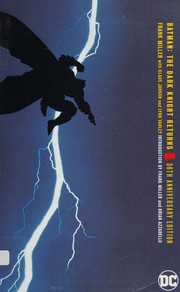
Batman: The Dark Knight Returns
2,249-word summary 10 min read 224 pages in the book
- First published
- 1986
- Publisher
- DC Comics
- Pages
- 224
- ISBN
- 9781401263119
Reading options
What's inside (8 sections)
I came to this one late, after years of hearing it named as the comic that made Batman grim again. I expected a tough guy power fantasy. What I found was stranger and sadder: a story about a 55-year-old man who cannot live with quitting. It first appeared as a four-issue miniseries from February to June 1986 from DC Comics, written and drawn by Frank Miller, with inks by Klaus Janson and color by Lynn Varley. The collected edition most shops carry now, the 30th Anniversary book, runs 224 pages and is tied to ISBN 9781401263119. That is the version I read, and the page count below refers to it.
The setup is simple. Bruce Wayne retired ten years ago. Gotham kept decaying without him. A gang called the Mutants owns the streets. The police are outmatched. Commissioner Gordon, old now, is about to retire. Harvey Dent, the former Two-Face, has supposedly been cured and released. Then Dent disappears back into crime, the Mutants escalate, and Bruce puts the suit on again. He is slower. He aches. He does it anyway.
What makes the book last is not the plot mechanics. It is the anger underneath, and the way Miller draws a whole society talking past itself while one tired man punches through it. Television screens chatter on nearly every page. Pundits debate Batman. Politicians posture. The American president, drawn as a folksy Reagan-like figure, manages superheroes like assets. Superman works for Washington now. Gotham freezes and sweats through a heat wave. Everything feels overheated, which suits a Gotham that has forgotten what order looked like.
Gotham after ten quiet years
The opening finds Bruce Wayne racing cars to feel something and failing. He is rich, famous, and hollow. A rescue early on, when Mutants threaten a family, pulls him back. He is rusty and nearly gets himself killed. That matters. Miller lets him be bad at it again, winded and bleeding, before the old instincts return.
Gordon anchors these chapters. He is months from retirement and honest in a way that has cost him. His replacement is already chosen: Captain Ellen Yindel, younger, skeptical of Batman, openly calling the bat a menace. The handoff between Gordon and Yindel is one of the book's quiet engines. Gordon believes Gotham needs the bat, even if the law cannot admit it. Yindel believes the bat is the problem. Both have a point, and the book lets that tension sit.
Harvey Dent's thread opens the return. Released after reconstructive work on his face, Dent is presented as healed. He is not. His crimes resume, now with a colder method, and Batman has to face the idea that the system that "fixed" Dent only filed the edges down. It is a short arc and it works as a warmup: Gotham declaring victory over its sickness while the sickness relocates.
The Mutants are the real street threat. They wear shades and leather, talk in clipped slang, and gather in mobs that the police cannot break. Miller draws them as a youth cult as much as a gang, bored and cruel and hungry for a leader. Their leader is huge and direct. Batman challenges him to single combat in the city dump and loses the first round badly, nearly drowning in mud. He wins the rematch later, in front of the gang, by fighting meaner and smarter. Half the Mutants then rename themselves the Sons of Batman and follow him. It is a disturbing turn and Miller knows it. The hero recruits a small army of former thugs. Order improves. The ethics get cloudy.
Carrie Kelley
The best decision in the book is Carrie Kelley, thirteen, who becomes Robin on her own initiative. She buys a costume, inserts herself into a rescue, and saves Batman's life when he needs it. He accepts her, trains her roughly, and grows protective in a way that feels paternal rather than sentimental.
Carrie changes the temperature of every scene she enters. Batman alone in this book is a grinding monologue of pain and will. Carrie brings motion, jokes that fall flat, fear she pushes through. Her parents are checked-out liberals glued to screens, which the book mocks a little too easily, but Carrie herself is written with respect. She is competent. She improvises. When Batman is broken later, she keeps him alive.
There is a fair question about how Miller uses a child soldier to prove a point about toughness. The book never fully answers it. Batman puts a kid in lethal danger repeatedly and the story treats it as necessary. I accepted it while reading because Carrie reads as a volunteer with agency, not a victim, but the unease is real and worth sitting with. Later Batman stories would imitate the kid sidekick without earning the bond. Here the bond is earned page by page, in small moments of instruction and trust.
Her presence also sharpens the theme of succession. Bruce is old. His body keeps a ledger of every injury. Carrie is the future he is building without admitting it, a Robin who might outlast the mission. The final chapters pay this off when she leads others, not just follows.
The Joker's last show
While Batman fights gangs, the Joker wakes up. He has sat nearly catatonic in Arkham for a decade. Batman's return brings him back to life. That is the Joker's logic here: he exists as an answer, and without the question he goes dormant.
What follows is the ugliest section and the hardest to shake. The Joker manipulates a television appearance into mass murder, poisoning a studio audience while cameras roll. The satire of talk shows is broad and very much of its moment, with hosts and experts performing concern while the killer performs for them. Some of it plays as dated now. The core point holds: attention is the Joker's oxygen, and Gotham keeps supplying it.
Batman tracks him to a county fairground, all lights and crowds and cotton candy. The sequence is drawn as a nightmare of bright colors over black intent. The Joker kills his way through the midway. Parents run with children. Batman moves through it grimly, taking damage, shedding the last of his restraint.
Their final fight happens in a tunnel, away from the crowds. It is close and personal. Batman wins the physical fight but loses the moral one, because the Joker forces him into a position where mercy looks like cruelty and finishing it looks like murder. The Joker dies by his own hand in the end, twisting his own broken neck to frame Batman for the kill. It is a repulsive, clever exit, and it leaves Batman hunted. The book does not let the hero walk away clean, which is why this chapter outlasts its shock tactics.
Hunted
With the Joker dead and blamed on Batman, Gotham turns. Yindel, now commissioner, authorizes a police hunt. The bat is declared an outlaw. This middle stretch is where the book's politics get loudest and, for some readers, most grating.
Miller fills pages with television pundits arguing about Batman: therapists, priests, politicians, ordinary people on the street. The technique is borrowed from the news cycle of the eighties, when cable chatter started filling every silence. On first read it feels electric, a whole city thinking aloud. On reread some of the voices blur together into straw positions. The left talks therapy. The right talks order. The center changes the channel. There is truth in the collage but not much patience for any view except Gordon's and, eventually, the Sons'.
The Sons of Batman complicate the hunt. They patrol in bat-marked jackets, breaking up muggings with excessive force. Crime drops. So does restraint. Yindel's case against Batman writes itself: even if the man means well, the symbol licenses violence he cannot control. Miller, to his credit, does not dismiss this. Batman's alliance with the Sons is presented as effective and troubling at once.
Alfred gets strong material here, holding Wayne Manor together and covering for Bruce with dry loyalty. Selina Kyle appears too, older, running an escort service, caught between affection for Bruce and exhaustion with masks. Her scenes are brief and a little thin, which is a pattern: women in this book are often sharper in concept than in page time, with Carrie and Yindel as the exceptions. That is a fair criticism and it keeps the book from the top shelf of character work even as its ideas stay provocative.
Superman
The last movement goes big. While Gotham hunts Batman, the world tilts toward war over a fictional island crisis that stands in for every Cold War proxy fight. The president sends Superman to keep order and, quieter, to rein in Batman. Superman is the establishment hero here: decent, obedient, compromised. He does Washington's work and tells himself the alternative is worse.
The island sequence shows Superman absorbing the worst of a nuclear exchange meant to break him, then crawling back through cold and dark to sunlight. It is the most superheroic passage in the book and deliberately the least interesting to Miller. Superman survives the bomb. He cannot survive what it means. He arrives in Gotham depleted and under orders, asking his old friend to stand down.
Batman refuses. He has spent the whole book building toward this: a powered suit, a plan, allies, a chosen battlefield in Crime Alley where his parents died. Oliver Queen, the former Green Arrow, now one-armed and furious at the government, helps with a single well-placed shot. The fight itself is brutal and one-sided in the ways that matter. Superman holds back. Batman does not. The bat wins the night by stopping Superman's heart temporarily, then collapsing into what looks like death. Doctors, cameras, and enemies all witness it.
Then the reveal: the death is staged. Batman flatlined and revived himself with help, slipping away to lead his followers underground. Alfred, meanwhile, destroys Wayne Manor rather than let it be taken, and suffers the cost. The final pages go quiet and strange, with Bruce training the Sons in caves, talking about a long war for the city's soul. It reads as triumph and as self-deception at once. He has beaten Superman and the police by becoming something the law cannot touch. Whether that is victory or a deeper fall is left for the reader.
How it looks and what creaks
The art is the argument. Miller pencils blocky, heavy figures that seem carved rather than drawn. Janson's inks keep the edges rough. Varley's colors run hot: sickly greens, sodium yellows, dried-blood reds. Gotham looks polluted even in daylight. Rain, when it comes, feels like relief.
The layouts do a lot of the storytelling. Miller uses tight grids, sometimes sixteen small panels to a page, to compress time during fights and chases. Then he breaks the grid for impact: a full figure looming, a splash of the Batmobile tearing through streets, the famous silhouette against lightning. The contrast between cramped panels and sudden scale gives the action a rhythm that many later comics copied without understanding. The small panels build pressure. The big ones release it.
The television screens deserve their own mention. Miller cuts between action and commentary constantly, sometimes mid-punch. It was fresh in 1986 and now reads as prophecy about how events get processed into content in real time. The downside is clutter. Pages get noisy. Narration boxes stack up. Batman's internal monologue can turn purple, all short declarations about will and fear. Some readers love the hammering cadence. I found it powerful in fights and wearing in quiet scenes, where a little silence would have served better.
The Reagan-era politics are the shakiest part. The president is a caricature, the Soviets are props, and the media figures are types. If you lived through the eighties, the satire may feel pointed. If not, it can read as noise around a story that works best at street level. Superman as a government man is a strong idea handled thinly; he gets little interior life beyond duty and regret. That thinness serves Miller's thesis but shortchanges the character.
And yet the book's influence is hard to overstate. Without it, the wave of darker superhero stories that followed looks different, from the Burton films to the animated series to the modern films that borrow its older Bruce and its armored suit. Some of that influence curdled into imitation, with writers copying the grit and missing the grief underneath. Read on its own terms, the grief is the point. This is a man who retired because the mission took a young partner from him, hinted at but never shown, and who returns knowing it will take more. The final underground scenes are often read as heroic. I read them as a man who cannot stop, building a family he can lead because he cannot bear to be alone with the mission. That ambiguity is why the book survives its dated edges.
Who should pick it up? Readers curious about where modern Batman comes from, or anyone who likes comics about institutions failing. It is violent, cynical about television and politics, and occasionally cruel in its humor. It also has Carrie Kelley, one of the great sidekick introductions, and a final act that swings for the fences. Give it patience through the noisy middle. The tunnel and Crime Alley sequences repay it.
FAQ
When was The Dark Knight Returns published?
As a four-issue miniseries from February to June 1986 by DC Comics. The 30th Anniversary collected edition runs 224 pages.
Is it part of a series?
No. It is a standalone graphic novel in its own continuity, followed years later by separate sequels.
Do I need to read Batman: Year One first?
No. Year One shows the start of the career and this shows one possible end. Either order works.
Similar books
Batman: Year One
Honest cop Gordon and returning Bruce Wayne start at the bottom of rotten Gotham in endless rain.
1,993-word summary · 9 min read
Batman: The Killing Joke
The Joker shoots Barbara Gordon and tortures Jim Gordon to prove madness is one bad day away from anyone.
2,016-word summary · 9 min read
Ms. Marvel, Vol. 1: No Normal
Kamala Khan, a Jersey City teenager and Carol Danvers fan, gains shapeshifting powers and has to decide what kind of hero she wants to be.
2,579-word summary · 11 min read
Batman: The Long Halloween
Batman, Jim Gordon, and Harvey Dent hunt a serial killer who strikes on holidays, from Halloween to Halloween, in the noir epic that carries Harvey Dent toward…
2,041-word summary · 9 min read
Y: The Last Man, Vol. 1: Unmanned
Yorick Brown and his monkey Ampersand survive a plague that kills every Y-chromosome mammal and cross a collapsed America.
2,525-word summary · 11 min read
Adulthood Is a Myth
Andersen's debut Sarah's Scribbles collection jokes about staying in, bad bras, awkward dating, and the strange comfort of pajamas.
2,424-word summary · 11 min read
Fables, Vol. 1: Legends in Exile
Exiled fairy tales hide in New York, and sheriff Bigby Wolf must solve Rose Red's bloody disappearance.
2,984-word summary · 13 min read
V for Vendetta
A masked rebel stalks fascist London while lost girl Evey finds her nerve, in Alan Moore and David Lloyd's 1988 DC graphic novel.
2,991-word summary · 13 min read
Watchmen
A full retelling of Alan Moore's Watchmen: a retired hero's death in 1985 America sparks a sprawling plot with an exiled god and a shocking bid for peace, from…
2,762-word summary · 12 min read
Bone, Vol. 1: Out from Boneville
Three cartoon cousins are run out of Boneville, separated by locusts, and dropped into a valley where rat creatures and an old grudge are waiting.
2,155-word summary · 10 min read

The Hunger Games Tribute Guide
The official 2012 companion to the first Hunger Games film profiles all twenty-four tributes and walks through the reaping, training, and interviews.
2,092-word summary · 9 min read
Year One
A plague released in Scotland kills most of humanity, and the survivors discover magic, build a town, and wait for a child who may save them.
2,029-word summary · 9 min read

Iron Widow
Wu Zetian enlists to avenge her sister, kills her pilot, and becomes an Iron Widow in a mecha Huaxia where the machines are built to kill women.
2,444-word summary · 11 min read
Chainsaw Man, Vol. 1: Dog and Chainsaw
A broke teenage devil hunter and his chainsaw dog get a second life, a government leash, and a fight that stops mid-swing in Fujimoto's horror comedy.
2,584-word summary · 11 min read

The House of the Scorpion
A clone raised in a drug lord's poppy fields learns what he was made for and chooses what to do with the life he was given.
2,527-word summary · 11 min read

The Age of Miracles
A California girl grows up while the Earth's rotation slows, and ordinary adolescence continues alongside slow catastrophe.
2,417-word summary · 11 min read
Divergent: Official Illustrated Movie Companion
An oversize behind-the-scenes guide to the 2014 Divergent film, with casting stories, costume and set design, and scores of photos.
2,524-word summary · 11 min read
Saga, Volume 3
Marko, Alana, and Hazel hide on the planet Quietus with the reclusive author who inspired their romance, while assassins and a prince close in.
1,989-word summary · 9 min read
Reveal Me
A Shatter Me novella told by Kenji, set between Defy Me and Imagine Me, as the rebels learn Anderson has taken hostages and Juliette faces Emmaline.
2,098-word summary · 9 min read
Locke & Key, Vol. 1: Welcome to Lovecraft
After their father is murdered, the Locke children move into a haunted family estate where keys unlock doors to ghosts, other places, and dangerous secrets.
2,019-word summary · 9 min read
I Who Have Never Known Men
Forty women in a cage, one child who remembers nothing, and a nearly empty world above the bunker. Harpman's quiet, unexplained dystopia.
2,025-word summary · 9 min read
American Born Chinese
Three stories, a monkey king, a Chinese-American boy and a sitcom cousin, converge in a graphic novel about shame, assimilation and learning to accept yourself.
2,107-word summary · 9 min read

Wither
In a future where women die at twenty, sixteen-year-old Rhine is sold as a bride to a wealthy stranger and plots an escape from a beautiful prison.
2,395-word summary · 11 min read
We
In a city of glass ruled by the Benefactor, a state engineer building a spaceship falls for a woman who wants to tear the One State down.
2,247-word summary · 10 min read

The Memory Police
On an unnamed island, ordinary things keep vanishing from memory, and a novelist hides her editor from the police who make sure the vanished stay forgotten.
2,440-word summary · 11 min read
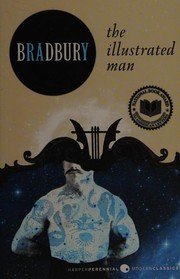
The Illustrated Man
A tattooed drifter's moving pictures retell eighteen Bradbury stories of children, rockets, Mars and the last night of the world.
2,791-word summary · 12 min read

Never Fade
Ruby, now a leader in the Children's League, must track down the boy whose memories she erased, because he holds the only proof of what caused the disease that…
2,188-word summary · 10 min read
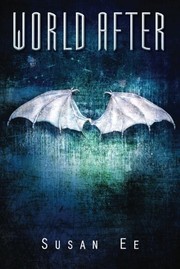
World After
Penryn wakes from near-death to find her altered sister Paige hunted as a monster, and follows her into the angels' scorpion factory and Uriel's coup.
2,213-word summary · 10 min read
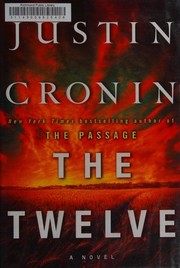
The Twelve
The middle volume of the Passage trilogy braids the year America died, a picnic massacre decades earlier, and the survivors' war against the twelve master…
2,089-word summary · 9 min read
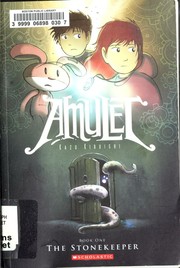
The Stonekeeper
After their father's death, Emily and Navin chase a monster into a hidden world to save their mother, and Emily's great-grandfather's amulet offers power at a…
2,753-word summary · 12 min read