
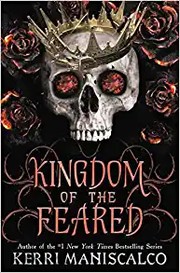
Kingdom of the Feared
2,938-word summary 13 min read 464 pages in the book
- First published
- 2022
- Publisher
- Little, Brown Books for Young Readers
- Pages
- 464
- ISBN
- 9780316341882
- Series
- Kingdom of the Wicked (#3)
Reading options
What's inside (8 sections)
I picked up Kingdom of the Feared because I had stayed with Emilia and Wrath through two full books and I wanted to see how Kerri Maniscalco would close their story. The first book, Kingdom of the Wicked, gave us a witch twin hunting her sister's killer in Sicily and finding the Princes of Hell instead. The second, Kingdom of the Cursed, pushed Emilia into the Underworld, into bargains and slow burn tension with Wrath, and into a much larger war between witches, demons, and goddesses. This third book was published in 2022 by Little, Brown Books for Young Readers, runs 464 pages, and is billed as the finale. I went in expecting answers about Vittoria, about Emilia's strange power, and about what her marriage to Wrath would actually cost.
What I found was a book that tries to do three jobs at once. It wants to be a memory loss mystery, a married couple romance with very high steam, and a court politics finale with goddess lore. Some of that works. Emilia finally stops being the girl who reacts and starts making choices that shape Hell itself. Wrath finally shows more than cold control. The last act has real weight. But the middle sags under repeated arguments, long meals in different courts, and explanations that slow the plot to a crawl. If you loved the banter and the spice of book two, you will get more of both here. If you wanted a tight plot, you may feel impatient.
This retelling walks through the whole book in order, with spoilers, because that is what these summaries are for. I will recap the first two books briefly, then cover Emilia waking with missing memories, the strain in her marriage to Wrath, the rounds of Underworld courts and trials, the growth of her own power, the truth about Vittoria, and the final choice about balance.
Catching Up on Books One and Two
Kingdom of the Wicked opens in Sicily with Emilia Di Carlo and her twin sister Vittoria, witches who run a family restaurant with their parents and their grandmother Nonna. Emilia is the careful one, devout in her own way, bound to rules about magic. Vittoria is bolder, curious about the dark, always pushing past limits. When Vittoria is found murdered, her heart torn out, Emilia breaks family rules to find the killer. She suspects the Wicked, the seven demon Princes of Hell who correspond to the seven sins. She summons them by accident and on purpose, and she draws the attention of Wrath, the Prince of the House of Wrath, a tall, controlled warrior with a temper he keeps chained.
Through book one Emilia learns that witches in her line carry more than kitchen spells. The Malvagi, as her grandmother calls them, are real. The Princes walk the mortal world in human seeming. Pride, Lust, Greed, Gluttony, Envy, Sloth, and Wrath each rule a court below with its own customs and appetites. Emilia makes uneasy truces, above all with Wrath, who claims he wants to find Vittoria's killer too. The book ends with a brutal turn. Vittoria is not simply dead. Emilia's grief is tangled with betrayal, and the line between sister and enemy starts to blur. Emilia also learns that her blood, her magic, and her choices mark her as more than an ordinary witch.
Kingdom of the Cursed moves almost entirely below. Emilia sells her soul in stages, binds herself to Wrath through bargains, and travels through the courts to gather knowledge and protection. She visits the Houses of Lust and Greed and others, each with its own prince and price. Lust tests her with desire. Greed tests her with hunger for answers. Pride watches from a distance, cold and amused. Through it all Wrath guards her, trains her, feeds her, and fights with her about every risk she takes. Their bond deepens from distrust to need to something neither wants to name. By the end Emilia has accepted a marriage bond with Wrath, taken in power she does not fully grasp, and lost pieces of her memory through curses and bargains meant to protect her or control her.
That is where Kingdom of the Feared begins. Emilia is Wrath's wife in the eyes of Hell. She has power that frightens demons. She has enemies among witches and demons alike. And she cannot trust her own recall of how she agreed to any of it.
Waking Beside Wrath With Her Memory Gone
The book opens with Emilia waking in the Underworld beside Wrath, married, mated in magic if not yet settled in trust, and aware that hours or days are missing from her mind. She remembers Sicily. She remembers her sister. She remembers choosing Wrath in some form. But the details slide when she reaches for them. Names blur. Conversations feel half heard. She finds marks on her body, gifts in her rooms, and looks from servants that suggest things happened she cannot place. Maniscalco writes this confusion well in the early chapters. Emilia is not helpless, but she is off balance, and she hates that feeling.
Wrath is tender and infuriating by turns. He calls her wife. He watches her eat, sleep, and train with a focus that feels like guarding and caging at once. He tells her he acted to save her, that the curse on her memories was the price of keeping her alive when other powers moved against her. He promises to return what was taken when it is safe. But he withholds the full account. He decides what she is ready to hear. For a reader, this is familiar marriage tension pushed into fantasy shape. One partner says trust me. The other says I cannot trust you until you tell me everything. They circle the same fight in different rooms.
Emilia pushes back by testing her own limits. She tries to summon her witch magic and finds something older and colder under it. Light and shadow answer her together. Objects move. Flames bend. Demons step back from her without knowing why. She has flashes of a woman's voice, of wings, of a scale tipping between dark and light. Nonna's old warnings come back to her in pieces. Her family spoke of goddesses as well as demons, of Furies and of balance, of a first witch who was more than witch. Emilia starts to suspect her memory loss is not only a curse laid on her from outside. Part of her may have agreed to forget, to lock away power until she could bear it.
Marriage Strain in the Houses of Sin
Much of the middle of the book moves Emilia and Wrath through the courts of his brothers and sister. Each House has its own seat, its own prince, and its own test. The House of Lust is all silk and heat, ruled by a prince who reads want the way others read faces. The banquets there stretch for hours, with wine that loosens tongues and magic that loosens more. The House of Pride gleams, cold and perfect, where every compliment hides a hook. The Houses of Greed, Envy, Gluttony, and Sloth each get their turn or their mention, with feasts, bargains, and veiled threats. Emilia must dress for each court, speak carefully in each hall, and learn which brother lies with a smile and which lies with silence.
The politics are simple on the surface and tangled underneath. Wrath's brothers do not all accept his marriage. Some see Emilia as a weak witch raised above her place. Some see her as a weapon Wrath forged for himself. Some see her as prey. They probe her with gifts and insults. A necklace that listens. A dance that binds. A toast that is also a vow if she drinks without care. Wrath answers with open possession. He seats her beside him, marks her before them, and warns his kin that harm to her means war with him. That protection thrills Emilia and chafes her in the same hour. She wants a husband, not a warden.
Their fights follow a pattern. Emilia learns something Wrath kept from her, a bargain term, a talk with Pride, a plan to chain her power. She confronts him. He says he did it to keep her alive. She says she has a right to risk herself. He says Hell does not forgive mistakes. She storms off to a balcony or a training yard. He follows, or sends a guard, and they end up in bed or close to it. The steam here is explicit and frequent, more so than in the first two books. Maniscalco writes long scenes of touch and talk where power trades back and forth. Readers who came for spice will find plenty. Readers who came for plot may find these scenes crowd out the mystery. I felt both ways. A few of the scenes show trust rebuilding through the body when words fail. Too many feel placed to fill space between court visits.
Trials and Bargains in the Underworld
Around the midpoint the plot tightens into trials and debts. Emilia owes and is owed across Hell. Souls, favors, and secrets change hands in formal bargains that Hell magic enforces. She must pay for knowledge about her memories. She must answer for magic she used without leave. She must stand before powers who claim she stole what belongs to them. Wrath stands as her counsel and her surety, which puts his own seat at risk. His brothers enjoy that. A Prince brought low by love is sport for them.
One strong sequence has Emilia called to account for using power that shook a court hall. She is led into a circle of princes and asked to explain herself. She cannot fully explain because she cannot fully recall. She tells the truth about that gap, which is risky in a place that prizes control. Lust mocks her. Pride picks at her story for holes. Greed names a price for aid. Wrath holds his temper with visible effort. Emilia steadies herself by reaching for the cold power under her witch magic and letting the circle feel it. It is a bluff and not a bluff. She does not know what she is, but she knows she is not small. The scene lands because Emilia stops apologizing for taking up space.
Other trials are more physical. She spars with demons who pull no blows, learns to shield her mind against princes who slip into thoughts, and bargains for answers at sharp prices. A drop of blood. A true name of a fear. A promise not to ask twice. Maniscalco is good at prices. Hell always collects.
The history lessons arrive thick in this stretch. Long talks explain the first witches, the goddesses who came before demons, and the curse that split light from dark. Some reveals hit hard, above all the hint that balance is a living office someone must hold or all magic tilts toward ruin. But too much arrives as speeches in dining halls. I wanted more scenes where Emilia earns answers by doing, not by sitting through lectures over wine.
Powers Waking and Vittoria Returning
As her memories crack open, Emilia's power stops whispering and starts speaking plainly. She is not only a witch of the Di Carlo line. She carries the mark and might of a goddess tied to balance, to fury rightly aimed, to punishment and mercy held together. Her magic shows it. Where witch spells need herbs and words, her goddess power answers thought and need. She can still a room. She can read guilt on a demon's face. She can tip a scale no one else sees. Light gathers to her left hand, shadow to her right, and both obey when she stops flinching from them.
This waking frightens her. Emilia was raised to see demons as evil and witches as good, with clear rules for each. Now she learns both tales were cut to fit. Witches bound demons with cruel rites. Demons broke faith with witches for gain. Goddesses set the first laws and then vanished or were bound, leaving their offices empty. Emilia's own hands have done harm she cannot undo. Her grief for Vittoria mixed with rage and led her to choices that fed the dark. Her love for Wrath mixed with need and led her to vows she barely grasped. Power that answers feeling is perilous for someone who feels so much.
Then Vittoria returns in full, not as a ghost or a memory but as herself, alive in a way that demands explanation. The reunion scenes carry the book's strongest emotion. Emilia has mourned this sister, hated her, missed her with a physical ache. Vittoria is still quick, still sure, still able to light a room by walking in. But she is changed. She speaks of death as a door she walked through with eyes open. She speaks of bargains Emilia cannot see. She claims she acted for them both, for witches, for freedom from old chains. She asks Emilia to stand with her now, sister to sister, against princes and goddesses alike.
Maniscalco plays this well for a stretch. Vittoria is not a simple villain. She loves Emilia in her own fierce way. She saved Emilia more than once, or so she says, and some of her claims check out. She names times and places Emilia half recalls. She produces tokens from their childhood that should have been lost. But her love comes with a demand. She wants Emilia's power joined to hers, twin to twin, to break the old order and set a new one with themselves at its heart. Where Wrath asks Emilia to trust him and wait, Vittoria asks Emilia to trust her and strike. Emilia is torn between husband and sister, between a bond she chose in fire and a bond she was born into. That tear feels true. Anyone who has loved two people who hate each other will know the ache.
The sisters talk late and fight about their parents, about Nonna's lies, about Sicily. Vittoria sees chains where Emilia sees people. Slowly Emilia grasps that Vittoria's plan needs her goddess power but does not honor its purpose. Vittoria wants vengeance dressed as freedom.
Balance, Choice, and Where the Finale Stumbles
The last act forces Emilia to choose what balance means and who will pay for it. The Underworld courts gather. Old curses surface. The memory curse on Emilia breaks in full, and with it comes the whole weight of what she agreed to, what Wrath hid, and what Vittoria did while Emilia grieved. I will not map every twist here because the pleasure of a finale is watching pieces click. But the shape is this. Emilia must stand between wrath and mercy in her own marriage and in Hell's law. She must judge claims from demons, witches, and her own blood without letting love blind her or grief hardened her into cruelty.
The final confrontations use her dual power well. Emilia calls light to reveal lies spoken in court. She calls shadow to bind those who would flee judgment. She speaks as a witch who knows human cost and as a goddess who must weigh more than one life. Wrath fights beside her, not before her, which matters after so many chapters of him stepping in front. Vittoria forces the hardest moment. Emilia cannot save her sister by pretending Vittoria's harms were small. She cannot condemn her sister without condemning part of herself. The choice Emilia makes about Vittoria is painful and, to me, the most honest beat in the book. Love does not erase wrong. Mercy does not mean no cost.
After the battles, Maniscalco gives the couple a warm close. Vows are respoken with clear minds. Promises are made without hidden terms. The courts settle into a new order that feels less cruel, though Hell stays Hell. Emilia claims her seat and her self together, witch and goddess, wife and judge. Readers who stayed for the romance will likely close the book satisfied. The marriage feels earned by the end, not only declared.
A fair account should also name where the book stumbles, because it stumbles in ways that will bother many readers. The spice often pushes plot aside. Long love scenes arrive just as mysteries sharpen, and tension leaks away. Emilia and Wrath repeat the same fight about secrets with little change for hundreds of pages. Tell me, do not tell me, forgive me, I cannot yet. That loop could have been cut by a third. The lore arrives in large blocks Emilia should have been shown finding. Some princes blur together. Lust and Pride stand out. Greed, Envy, Gluttony, and Sloth get less distinct space, though the premise promises seven full courts. Readers new to the series should not start here. Without books one and two, the memory loss has no sting and the sister twist has no weight.
I still cared at the end, which counts for a finale. Emilia's path from rule bound witch to a woman who can hold light and dark without lying about either feels complete. Wrath's shift from jailer to partner is not perfect, but it moves far enough to believe. Vittoria's arc hurts in the right way. As it stands, Kingdom of the Feared is a lush, steamy, crowded finale that pays off its central loves while testing patience getting there. Readers who prize feeling over pace will forgive it. Readers who prize pace may skim the middle and still catch the strong start and the moving close.
FAQ
Do I need to read the first two books before Kingdom of the Feared?
Yes. This is book three and it opens with memory gaps that only make sense if you know the bargains and twists of books one and two.
Who is Wrath to Emilia in this book?
Wrath is the demon Prince of the House of Wrath and Emilia's husband by bargain and vow. He guards her closely, hides hard truths to spare her, and must learn to stand beside her rather than before her.
Is Kingdom of the Feared spicy?
Yes, it is the steamiest entry in the trilogy, with frequent explicit scenes. The romance often pauses the mystery, which suits spice readers more than plot driven readers.
Similar books
More from Kingdom of the Wicked first, then related titles.
Kingdom of the Wicked
Twin witch Emilia summons demon prince Wrath to hunt her sister's killer in 19th century Sicily.
2,633-word summary · 12 min read
Kingdom of the Cursed
Emilia follows Wrath into Hell to break his curse and learn what Vittoria really chose.
2,564-word summary · 11 min read
Demonglass
Sophie Mercer spends the summer at the Council's English estate, where two new demons, a suspicious host, and Archer's return complicate her plan to remove her…
2,771-word summary · 12 min read

The Indigo Spell
Sydney Sage hunts an aging witch, learns forbidden magic, and finally admits she loves Adrian, while the Alchemist tattoo on her cheek may be controlling her.
2,604-word summary · 12 min read

Hex Hall
A witch who ruins prom with a love spell is sent to Hex Hall, where a vampire roommate and old family secrets wait.
2,991-word summary · 13 min read

Magic Burns
A magic flare hits Atlanta, and mercenary Kate Daniels must recover stolen maps, find a missing witch, and keep a teenage girl alive while Celtic gods try to…
2,021-word summary · 9 min read

Blood Bonds
Oleander is chained in a Resistance camp, and her five Bonds have to find her before Silas Davies finishes what he started in this third Bonds that Tie book.
2,018-word summary · 9 min read

Born at Midnight
Kylie Galen is sent to a camp for troubled teens and discovers it is a haven for vampires, werewolves, and witches, and that she may be something stranger…
2,310-word summary · 10 min read
Cemetery Boys
A trans brujo in East Los Angeles summons the ghost of a boy who refuses to move on, and together they uncover a murder hidden beneath Día de los Muertos.
1,997-word summary · 9 min read
Switched
A Minnesota teenager who can make people obey her discovers she is a changeling troll princess, and the hidden kingdom she came from wants her back.
2,131-word summary · 9 min read
Savage Bonds
Oli's deadly gift is out in the open, her Bond runs the show, and the Resistance is closer than ever in the second Bonds that Tie novel.
2,431-word summary · 11 min read
Dreamfever
With the walls between worlds down and Mac broken by the Fae, Dreamfever is the darkest volume of the Fever series, and the one that changes everything.
2,007-word summary · 9 min read

Bitten
Elena Michaels is the world's only female werewolf, and keeping that world away from her human life in Toronto works fine until the Pack calls in a favor.
2,039-word summary · 9 min read
This Savage Song
Monster hunter Kate meets August, a monster who plays violin.
2,574-word summary · 11 min read
Soulless
A soulless spinster in Victorian London nullifies supernaturals and solves disappearances.
2,362-word summary · 10 min read
Silver Borne
Mercy hides a Fae book while Samuel slips and the fae close in.
2,571-word summary · 11 min read
Shadowfever
Mac Lane hunts the Sinsar Dubh in Dublin as Fae walls fail and Barrons secrets surface.
3,016-word summary · 13 min read
One Foot in the Grave
Cat hunts vampires with Bones while her Sire plots from the grave.
2,200-word summary · 10 min read
Half-Blood
Half-blood Alex trains at the Covenant while gods stir and rules close in.
2,601-word summary · 12 min read
Dreams of Gods & Monsters
Karou and Akiva unite chimera and seraphim against empires invading Earth.
2,179-word summary · 10 min read
Cry Wolf
Omega Anna joins Charles to hunt a rogue werewolf in Montana.
2,463-word summary · 11 min read
Bloodfever
Mac hunts the Sinsar Dubh in Dublin while Barrons tests her.
2,124-word summary · 9 min read
Lover Mine
Mute fighter John Matthew loves scarred Xhex as Lash and the war close in on Caldwell.
2,516-word summary · 11 min read
Lover Avenged
Half symphath Rehvenge hides behind ZeroSum and drugs while nurse Ehlena pulls him toward truth.
2,421-word summary · 11 min read
Broken Bonds
Oleander returns after five years on the run to face the five men she is bonded to, in J. Bree's 2021 opener of resentment, training, and slow trust.
2,582-word summary · 11 min read
A Light in the Flame
Held by Nyktos in the Shadowlands, Sera faces trials, Kolis and the Rot while broken trust is tested.
2,577-word summary · 11 min read
The Witching Hour
A San Francisco surgeon inherits a haunted New Orleans house where a spirit has courted her witches for centuries, until a Christmas Eve birth gives it living…
2,953-word summary · 13 min read

The Golden Lily
Sydney Sage guards Jill at Amberwood Prep in Palm Springs, studies forbidden magic, favors Adrian over Brayden, and faces Alchemist custody in this second…
2,988-word summary · 13 min read