
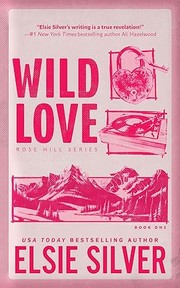
Wild Love
3,067-word summary 14 min read 464 pages in the book
- First published
- 2024
- Publisher
- Sourcebooks
- Pages
- 464
- ISBN
- 9781464220814
- Series
- Rose Hill (#1)
Reading options
What's inside (8 sections)
I came to this one sideways. I had never read Elsie Silver before, but a coworker talked about her Chestnut Springs books the way people talk about a favorite television show, with strong opinions about which couple was best and a long pitch for why the small town setting worked. When I heard she was starting a new series in a new town, I figured that was my opening. No catch-up required. No homework. Just a first volume, a fresh cast, and a chance to see what the fuss was about. I bought it on a Friday and read half of it that night with dinner going cold beside me.
The facts first, since romance series get confusing fast. Wild Love was published in 2024 by Sourcebooks. It is the first book in the Rose Hill series, which follows Silver's Chestnut Springs books with a new town and new people. You do not need to have read the earlier series. I had not, and I never felt lost. The heroine is a woman named Rosie who has come back to Rose Hill, the small town she once left. The hero is Ford Grant, a wealthy, guarded man who lives uncomfortably close. Circumstances keep them sharing space, rubbing against each other in all the wrong ways, until the friction turns into something neither of them planned.
How I found Rose Hill
I should say what kind of book this is, because it matters for whether you will enjoy it. This is an adult contemporary romance, written for grown readers, with mature content along the way. The focus here is on the relationship and the town around it rather than on anything explicit, and I will keep it that way in this summary. If you prefer your romance closed door, this is not that. If you are fine with heat as part of the story, you will be fine here.
Rose Hill itself is doing a lot of work from the first pages. Silver writes small towns the way some writers write workplaces, as a web of overlapping ties where everyone knows everyone and privacy is a rumor. Rosie grew up here. People remember her as she was, not as she is, and that gap between memory and reality follows her down every street. Shopkeepers ask questions. Old friends have opinions. Family carries old grievances into new conversations. Coming home, in this kind of place, means renegotiating every relationship you ever had, in public, while buying groceries.
What pulled me in early was how lived-in the town felt without a lot of throat clearing. Silver does not stop the story to give you a guided tour. You learn Rose Hill through Rosie moving through it: the places she avoids, the houses that hold memories, the spots that have changed while she was gone and the spots that have not changed at all. There is a whole supporting cast gathering at the edges from the start, friends and relatives and locals with their own opinions about Rosie and about Ford, and the book clearly intends them as the bench for future volumes. I liked that. A first-in-series book should make you curious about the town, not just the couple, and this one does.
The other thing worth saying up front is the length. At 464 pages, this is a big romance. It reads like an author settling into a new world and in no hurry to leave. Sometimes that patience pays off beautifully. Sometimes you check how many pages are left. Both things happened to me here, and I will get to that honestly later on.
Rosie comes home
Rosie arrives back in Rose Hill carrying more than luggage. The book is careful about her past without turning her into a case file, and I will be careful too, since part of the pleasure is watching her history surface in its own time. The shape of it is familiar and true: a woman who left a small town young, built a life elsewhere that did not hold together the way she hoped, and has now returned to the place she swore she was done with. She is prickly about it. She jokes when she does not want to answer questions. She has rehearsed the story of why she is back and delivers it a little too smoothly.
I liked Rosie quickly, though not in the simple way. She is warm with people she trusts and sharp with everyone else, and the sharpness is clearly armor. Underneath it is someone tired of being talked about, tired of being a story in other people's mouths. Small towns do that to returners. Everyone watched her grow up, everyone thinks they know her, and nobody asks who she became while she was gone. Silver writes that particular loneliness well. Rosie can be surrounded by people who love her and still feel entirely alone in a room, because the version of her they love is five or ten years out of date.
Her return stirs up the expected trouble. Family dynamics she thought she had outgrown turn out to be waiting exactly where she left them. Old friendships need repair. The life she imagined for herself elsewhere keeps intruding in the form of calls and consequences she cannot outrun by changing ZIP codes. And through all of it, Rosie is trying to do something genuinely hard: start over in a place where starting over is technically impossible, because everyone remembers every version of you.
One choice I appreciated is that the book lets Rosie be competent. She is not a mess waiting for a man to organize her. She handles her business. She makes plans. When she falls apart, which she does, it reads as a capable person hitting a wall, not as helplessness. Her growth across the book is not from chaos to order. It is from guardedness to honesty, from managing everyone's perception of her to telling the truth about what she wants. That is a slower arc and a better one.
There is also grief in her story, old and new, and Silver handles it without turning the book into a tragedy. People Rosie loved are gone or changed. The town holds reminders. Certain rooms, certain songs, certain times of day hit her sideways. These moments are brief and well placed, and they explain her better than any speech could. A woman who has lost things holds tighter to what remains. That grip is the whole problem and the whole point.
Ford Grant, the man next door
And then there is Ford. Every small town romance needs its grump, and Ford Grant fills the role with unusual commitment. He is wealthy, private, and allergic to other people's feelings. He lives close enough to Rosie that avoidance would require real planning, and he attempts it anyway. His early scenes are a catalog of clipped answers, closed doors, and exits timed to escape conversation. If Rosie is armor made of jokes, Ford is armor made of silence.
It would be easy for a character like this to feel like a type rather than a person, and for a stretch I worried that was happening. The billionaire who is rude until the right woman melts him is one of the most worn grooves in romance. Silver knows it, I think, because she works steadily to give Ford texture beyond the scowl. He has routines that suggest a man holding himself together by force of habit. He has responsibilities he does not talk about. He is careful with certain people in ways that leak through the gruffness, especially people who cannot do anything for him. Watch how he treats older neighbors, or anyone vulnerable, and you see the outline of the man he might be if he ever relaxed.
His wealth is present without dominating the story. This is not a book about private jets or shopping sprees. Money functions here the way it does in real small towns when one person has a lot of it: as distance. Ford can solve problems with checks. He can buy privacy. He can leave whenever he wants, which means his staying means something. The book is smart about the way his resources set him apart from a community built on borrowing cups of sugar and showing up for each other. He is in Rose Hill without quite being of it, and Rosie, returning outsider that she is, clocks that immediately. They recognize each other as fellow people-apart, which irritates them both.
The banter between them is the engine of the first third. Rosie needles. Ford stonewalls. Rosie needles harder. Some of it is genuinely funny. There is a scene involving a shared boundary, I will leave the specifics for you, where their attempts to freeze each other out collapse into farce, and I laughed out loud on my couch. Silver has a good ear for the rhythm of two people who enjoy fighting a little too much. The insults are affectionate before either of them admits it. You can see the turn coming from a long way off, the moment the barbs start sounding like flirting, and honestly that predictability is part of the comfort. You are not reading for surprise here. You are reading for the satisfaction of watching two guarded people run out of places to hide.
Under the comedy, though, Ford is carrying his own damage, and the book parcels it out slowly. He has reasons for the walls that go beyond temperament. Without spoiling the specifics, his past includes loss and betrayal in proportions that would make anyone cautious, plus the particular distortion of being rich in a world that assumes money fixes everything. People want things from him. They have always wanted things from him. His grumpiness reads, by the middle of the book, less like arrogance and more like exhaustion. Saying no to everyone is tiring. Rosie is exhausting in a different way, the kind that turns out to be restful, because she wants his company rather than his help.
Forced proximity and the slow burn
The setup keeps them in each other's space. I will stay general about the mechanics, since discovering the particulars is half the fun, but the shape is classic forced proximity: living arrangements, shared obligations, and small town logistics that make avoidance impossible. They keep colliding in kitchens and driveways and doorways. Every attempt to establish boundaries produces a new reason to cross them. The book wrings this for both comedy and heat, and the two modes feed each other. A ridiculous daytime standoff becomes a charged evening conversation. A practical favor becomes an excuse to stay a little longer.
Silver writes the slow turn well. The moment when hostility tips into attraction is gradual enough to believe. It happens in small concessions. Ford remembers how Rosie takes her coffee, or shows up when it matters without being asked. Rosie notices the gap between what Ford says and what he does, and starts trusting the doing. They have long conversations that start as arguments and end somewhere honest, the kind of talks where both people surprise themselves by saying true things. The banter never fully stops, but it softens into a private language, teasing as tenderness.
As an adult romance, the book includes mature scenes, and I will describe them only in general terms. They arrive when the emotional groundwork is laid, and they function as part of the arc rather than decoration. What matters for this summary is that physical closeness keeps forcing emotional questions neither character wants to answer. Being vulnerable in one way makes the other walls harder to maintain. Both of them try to set terms that would keep things simple. Neither of them is simple.
The middle of the book is where the relationship gets tested by the outside world rather than by each other, which I found refreshing. Too many romances run on miscommunication, one overheard sentence blowing everything up. There is some of that here, inevitably, but the bigger pressures are external: family needs, town gossip, the consequences of Rosie's past catching up, Ford's obligations pulling him away. Gossip in particular is a real antagonist. In a town this size, a new couple is public property. Everyone watches, everyone speculates, everyone reports back. Dating under those conditions takes a specific kind of courage, and the book respects that.
There are gestures in the back half that romance readers will recognize and, depending on taste, either love or tolerate: the grand show of commitment, the moment of standing up for each other in public, the scenes where secondary characters deliver pointed speeches. Silver executes them with enough feeling that they worked on me even where I saw them coming. One scene involving Ford choosing Rosie over his own comfort in front of witnesses got me right in the chest. It is doing exactly what the genre promises. Sometimes that is enough.
The town around them
One of the rewards of a long first-in-series book is the ensemble, and Rose Hill delivers. Rosie's family is complicated in the way real families are, full of love expressed badly. There are parents or parent figures whose concern lands as control, siblings or sibling equivalents with their own baggage, and the particular friction of adults reverting to childhood roles the moment they share a roof. Silver writes family arguments with a sharp ear. People talk past each other. Old wounds get reopened by new logistics. Someone storms out over something small that is not small at all.
The friend group forming around Rosie is clearly the foundation for coming books. You meet women who will plainly be future heroines, each with a distinct voice and an unfinished story. The book resists the urge to overstuff their setups, mostly. There are hints rather than billboards. A thrown remark about someone's past. A glance that lingers too long. Readers who enjoy spotting future couples will have plenty to work with, and I found myself ranking them by how much I wanted their books.
Ford's orbit is smaller but telling. He has people loyal to him, fewer than Rosie's crowd but fierce. Watching his circle widen slightly across the book, admitting Rosie and then, grudgingly, a few others, is one of the quieter arcs. A man who measured his life in transactions starts accepting things that cannot be repaid. That sounds sentimental, and it is, a little, but the book earns it by showing the cost. Letting people in means letting them see the mess. Ford's mess is considerable.
Small town texture fills the gaps: community events, local businesses, the way news travels faster than cars, the way help arrives unasked when it matters. There is a sequence built around a town gathering, the kind of thing where everyone shows up and everything goes slightly wrong, that captures both the warmth and the claustrophobia of the setting. Rosie is watched and judged and also, unmistakably, loved. Ford is given the benefit of the doubt by people who have decided he belongs even when he has not decided it himself. Belonging, the book suggests, is something a town can offer before you have earned it. Accepting it is the hard part.
What drags and who will enjoy it
Now the honest part. This book is long, and it feels long in places. At 464 pages, there is room for every subplot and side conversation, and Silver uses all of it. The middle sags. There is a stretch where the couple's dynamic settles into a loop, tender scene, outside interruption, retreat, repeat, and I started skimming small talk at gatherings. Readers who like to live inside a world will mind this less. I like momentum, and I felt the drag around the two-thirds mark, where a tighter edit could have cut fifty pages without losing anything that mattered.
The familiarity is the other caveat. If you read a lot of contemporary romance, you will recognize most of the beats: the grumpy wealthy hero, the guarded returner, the forced closeness, the meddling town, the public declaration. Silver executes well, but she does not reinvent. A few scenes play out exactly as you expect, line by line, and the pleasure is execution rather than surprise. I do not count that as a flaw exactly, since comfort is part of what the genre sells, but go in knowing this is a polished version of a beloved pattern, not a new one.
The pacing of revelations bothered me once or twice as well. Both leads hold back key pieces of their pasts past the point where Silence stops feeling protective and starts feeling strategic, and one late conflict leans harder on delayed honesty than I liked. The resolution is satisfying, but the road to it includes a conversation I wished they had held a hundred pages earlier. People who are allergic to that particular frustration should brace themselves.
And yet. I finished the book fond of these people and already curious about the town's next couple. The central relationship earns its ending. Rosie's arc from performance to honesty lands. Ford's thaw feels worked for rather than granted. The final chapters give the reader everything the genre promises: commitment stated plainly, community gathered close, and a sense that Rose Hill will keep humming after the page closes. I closed the book and immediately texted my coworker to argue about it, which is probably the highest compliment a romance can get. A book that makes you want to talk is doing its job.
Who should read it? If you like slow burn small town romance with a big ensemble, banter that curdles into tenderness, and a grumpy hero with a hidden soft center, this will suit you well. If you are new to Silver, as I was, it works as a starting point, and it sent me back to look at the earlier series with fresh interest. If you need lean pacing or surprise twists, the length and the familiar shape may test you. For me, the warmth outweighed the sprawl. Rose Hill feels like a place I will visit again, and Rosie and Ford feel like a couple I will be glad to glimpse in the background of the next book, happy and settled and still, I suspect, bickering over the fence.
FAQ
Is Wild Love part of a series?
Yes. It is Rose Hill book one, published in 2024, and it opens a new small town series following her Chestnut Springs books.
Do I need to read Chestnut Springs first?
No. Wild Love introduces Rose Hill and its cast from scratch, so it works fine as an entry point.
Is Wild Love an adult romance?
Yes. It is written for adult readers and includes mature content, though this summary keeps the focus on plot and character growth.
Similar books
More from Rose Hill first, then related titles.

King of Sloth
Party heir Xavier chases publicist Sloane who refuses to fall in forced job.
2,017-word summary · 9 min read

Reckless
Guarded Winter and charming Theo fake date through wedding season.
2,051-word summary · 9 min read
Powerless
Sloane flees her wedding and hides with best friend Jasper in Chestnut Springs, where eighteen years of friendship turn into something more.
2,195-word summary · 10 min read
Heartless
Gruff single dad Cade Eaton hires bubbly Willa Grant as summer nanny in Chestnut Springs, and two months together wear down his walls.
2,967-word summary · 13 min read
My Dark Romeo
A debutante ball kiss traps Dallas Townsend in a marriage to Romeo Costa, a man who wants her as leverage in a war against his father and her fiance.
2,530-word summary · 11 min read

Juniper Hill
Fleeing New York with her baby, Memphis takes a housekeeping job above Knox Eden's garage, and the grumpy chef becomes the first person she can rely on.
2,021-word summary · 9 min read

The Simple Wild
City Calla flies to Alaska to face dying father and gruff pilot Jonah, learning bush life and love.
2,284-word summary · 10 min read
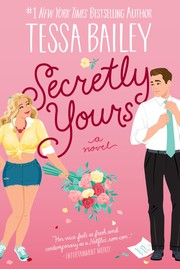
Secretly Yours
A bubbly Napa gardener sends anonymous love letters to her grumpy professor neighbor in this steamy small-town rom-com.
2,504-word summary · 11 min read

Final Offer
Cal Kane must spend the summer at Lake Wisteria to inherit, but his childhood ex Lana, now a mother, says the house belongs to her family.
2,379-word summary · 11 min read
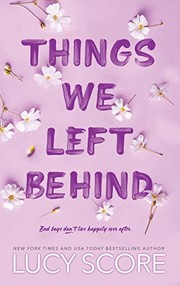
Things We Left Behind
Lucian Rollins returns to Knockemout to bury his father's past and collides with librarian Sloane Walton.
2,777-word summary · 12 min read
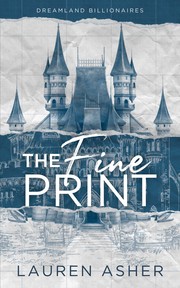
The Fine Print
Grumpy heir Rowan Kane must fix Dreamland to inherit, and clashes with sunny creator Zahra Khan.
2,697-word summary · 12 min read
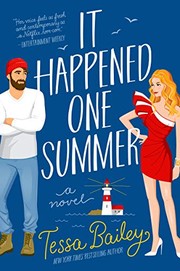
It Happened One Summer
LA It girl Piper is cut off and sent to Westport where gruff captain Brendan challenges her glitter.
2,089-word summary · 9 min read

Twisted Love
Sunshine Ava Chen falls for her brother's cold billionaire best friend Alex Volkov as old fires and revenge surface.
2,495-word summary · 11 min read
Things We Never Got Over
Naomi runs from her wedding to help her twin in Knockemout and clashes with Knox Morgan.
3,358-word summary · 15 min read
Hopeless
Fake engaged to town hero Beau Eaton, outcast bartender Bailey Jansen finds pretend and real blurring in Chestnut Springs.
2,491-word summary · 11 min read
Flawless
Pro bull rider Rhett Eaton is benched by scandal, and his agent's daughter Summer must keep him in line in Chestnut Springs.
2,484-word summary · 11 min read
The Unmaking of June Farrow
A woman in a North Carolina flower-farming family walks through a red door into 1951, where she must solve her mother's disappearance and decide whether to…
2,701-word summary · 12 min read

The Bookshop on the Corner
A Birmingham librarian loses her job, buys a van, and moves to the Scottish Highlands to run a mobile bookshop. Warm and bookish, with uneven pacing.
2,557-word summary · 11 min read

Beneath This Man
Ava returns to Jesse after five days apart and finds his drinking, jealousy, and a hidden deception that changes what she can forgive.
2,341-word summary · 10 min read

Act Your Age, Eve Brown
Eve Brown crashes into a Lake District bed and breakfast, breaks the owner's arm, and talks her way into his kitchen. A grumpy-sunshine romance about work,…
2,474-word summary · 11 min read

The Casanova
Kate Landon's boss is also the pen pal she falls for online, hiding behind fake names, until family secrets and a trip to Paris get in the way.
2,274-word summary · 10 min read

Indigo Ridge
A new police chief in a Montana town meets the founding family's eldest son in a bar, and one night later a body turns up under their cliff.
2,763-word summary · 12 min read

At First Sight
Jeremy and Lexie are married and expecting a baby when anonymous emails tell him the child may not be his.
2,317-word summary · 10 min read
True Believer
Jeremy Marsh, a science journalist who debunks paranormal claims, comes to a small North Carolina town and falls for a librarian who believes in things he…
2,125-word summary · 9 min read

Say You're Sorry
A widowed prosecutor defends the teenager accused of killing her babysitter, uncovering a small town's secrets and a killer hiding in plain sight.
2,116-word summary · 9 min read

Delilah Green Doesn't Care
Delilah returns to Bright Falls to photograph her stepsister's wedding and falls for Claire, a bookstore owner and single mother, while a cruel bet threatens…
2,315-word summary · 10 min read
The Bridges of Madison County
A four-day affair between an Iowa farm wife and a photographer asks what a brief happiness is worth against family duty.
2,487-word summary · 11 min read
The Road Trip
Two exes squeeze into one small car for the drive to a Scottish wedding, with four years of history and one photograph between them.
2,418-word summary · 11 min read

Anne of Windy Poplars
Anne spends three letter-filled years as principal of Summerside High, outlasts the Pringle clan, and warms a lonely vice-principal and a dreaming little girl…
2,599-word summary · 12 min read
The Brothers Hawthorne
Jameson infiltrates an underground London gambling club for the father he never knew while Grayson protects his half-sisters in Phoenix from a dead man's…
2,019-word summary · 9 min read