
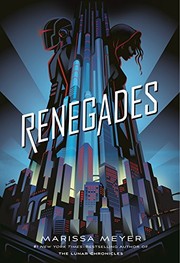
Renegades
2,453-word summary 11 min read 576 pages in the book
- First published
- 2017
- Publisher
- Feiwel & Friends
- Pages
- 576
- ISBN
- 9781250044662
- Series
- Renegades (#1)
Reading options
What's inside (8 sections)
I picked up Renegades because I wanted to see what Marissa Meyer would do outside fairy tales. After the Lunar Chronicles, a superhero book sounded like a natural next step for her big casts and twists. Renegades was first published in 2017 by Feiwel and Friends and runs 576 pages. It opens a new series set in Gatlon City, a place where some people are born with powers and everyone else lives with the results. The tone is young adult adventure with romance, not dark adult like Devil's Night. Fights get bloody and people die, but the focus stays on loyalty, justice, and who gets to define those words.
The setup hooked me fast. Years before the story starts, a villain called Ace Anarchy terrorized Gatlon City with his gang, the Anarchists. A team of heroes called the Renegades rose up, Ace fell, and the Renegades turned into something between a police force and a government. They patrol in uniform, recruit kids with powers, and promise safety. Most citizens love them. Nova Artino does not. She was a child when the fighting killed her family, and she blames the Renegades for failing to save them and for building a peace that only protects some people. Now sixteen, she works with the remaining Anarchists and plans to destroy the Renegades from the inside.
Gatlon City after Ace Anarchy
Meyer spends the early chapters building the city, and Gatlon feels lived in. The Renegades run a gleaming tower with training floors, medical wings, and a museum of old battles. Patrol teams fly set routes. A council makes decisions about which prodigies, as powered people are called, get to join. Outside the tower, neighborhoods still show burn marks and patched walls from the old war. Markets sell Renegade dolls. Kids trade hero cards. Journalists argue about whether the Renegades should answer to elected leaders.
What I appreciated is that neither side gets to be simple. The Renegades genuinely rescue people. You see them stop bridge collapses, carry kids out of fires, stand between gunmen and crowds. Their medics work all night. At the same time they demand obedience. Unregistered prodigies get watched. Critics get labeled as sympathizers. The council keeps secrets about weapons and old cases. The Anarchists, for their part, have real grievances. Their people were rounded up, jailed, or driven out after Ace fell. But their methods are cruel. Bombs in public places. Hostages. Threats against families. Meyer lets both slogans sound good at rallies and then shows the cost when a building actually falls.
The power system stays clear, which matters in a book this long. Everyone's ability has limits and prices. Some people fly but tire fast. Some lift steel but bruise like anyone else. Powers can skip siblings, fade with age, or fail under stress. The city tracks known abilities in files, and kids grow up half hoping for a strong gift and half dreading what it will cost them. That grounded approach kept fights readable for me. When someone wins, it is usually because they thought around a limit, not because they shouted louder.
One small detail I loved. Gatlon kids play a playground game where one child pretends to be Ace and the rest pretend to be Renegades, and the rules change by neighborhood depending on who the parents blame. That single image tells you more about the city than three council speeches.
Nova Artino, the villain undercover
Nova carries the book. She is sixteen, sharp, and tired in the way kids who raised themselves get tired. Her power is sleep. With a touch she can put a person under, and she herself never sleeps, which means she has spent years awake while the world dreams. Night after night she lies awake in the Anarchist hideout, a ruined subway station, listening to others breathe, reading, planning, replaying the night her family died.
Her daytime disguise is careful. She binds her temper, dresses plain, and applies for Renegade service under a false history. Her villain name is Nightmare, earned during a bank attack where she moved through guards like a rumor, and the Renegades keep a file on Nightmare with sketches and witness notes. Walking into their tower means walking past people who hunted her. Meyer writes that fear well. Nova counts cameras. She memorizes which guard checks badges loosely. She practices smiling in mirrors because her real face defaults to a scowl.
Her motives stay personal rather than abstract. She does not want to rule Gatlon. She wants the Renegades broken the way her family was broken, and she wants the Anarchists, who fed her after the funerals, to have a city where they can walk openly. Her uncle figure among the villains pushes her toward harder acts, and she obeys while hating parts of it. A scene where she has to smile through a Renegade classroom lesson about Ace's defeat, taught as a triumph, made my chest ache. She sits still, takes notes, and digs her nails into her palm until they leave marks.
What keeps her likable is curiosity. She watches the Renegades work. She sees a hero stay late to fix a kid's broken toy. She sees medics cry after losing a patient. Those moments do not flip her, but they crack her certainty, and cracks are where the rest of the story grows.
Adrian Everhart, the boy who draws things real
Adrian is the co lead and in many ways the mirror of Nova. He is a Renegade by birth, the adopted son of two famous council heroes, Hugh Everhart and Simon Westwood, and he grew up inside the tower. His power is creation through drawing. What he sketches on his skin in special ink becomes real for a while. Tattoos crawl down his arms like a living sketchbook. The cost is focus and time. A rushed drawing fails. A detailed one takes hours and leaves him shaking.
He also sneaks out at night as a vigilante called the Sentinel, which gives the book its best early action scenes. The Sentinel drops into robberies without council approval, improvises tools from a marker pen, and vanishes before patrols arrive. He tells himself the council moves too slowly. The truer reason is that he wants to help without being watched, graded, and compared to his fathers. Anyone who grew up as someone's son will recognize that hunger.
His romance with Nova builds slowly and sweetly, which balances her harder scenes. They meet during Renegade tryouts, paired off for drills, first aid classes, and team exercises. He notices she never sleeps and covers for her when others tease her about coffee. She notices he draws strangers kindly, giving tired patrolmen stronger jaws and scared kids bigger smiles. They trade barbs. He is open where she is guarded. She is funny in a dry way that surprises him. Neither knows the other's secret at first, and Meyer times the near misses well. A dropped sketch. A mask glimpsed in a locker. A name spoken in sleep that is never supposed to be spoken.
I liked that Adrian questions his own side. He asks why some neighborhoods get fast patrols and others wait, and why old Anarchist prisoners never got trials. His fathers answer with patience that sounds like stonewalling the third time you hear it. His doubt never turns into instant rebellion. He keeps serving and training and loving his parents, while writing questions in his sketchbook margins. That slow doubt felt honest for a good kid raised inside a system.
The trials, the team, and the subway
The middle of the book runs on two tracks. Publicly there are Renegade trials, a formal intake where young prodigies show their powers, take written tests, and get sorted into patrol, medic, or support roles. Meyer writes the trial scenes with bright, specific detail. A girl who bends light. A boy who talks to machines. A kid whose power fails under the lights and who has to walk out past pitying stares. Nova must perform without revealing her touch, so she leans on her aim, her planning, and a stolen gadget or two. Every round risks exposure, and I turned those pages fast.
Privately the Anarchists push their plan forward. Their crew in this book is small and memorable. Leroy, called Cyanide, makes poisons and jokes in equal measure. Honey, called Queen Bee, shifts into swarms and speaks with a performer's ease. Others drift in and out of the tunnels carrying stolen parts. Their target is the Renegade tower, and their tool is information Nova feeds them. Schedules. Door codes. Which heroes tire first. Each delivery puts Nova deeper in debt to people she loves and further from people she is starting to like. A dinner scene where she laughs with her new Renegade team and then goes home to report their habits to the Anarchists is one of the saddest in the book.
The subway sequence is the action peak. A planned Anarchist hit on a public line forces Nova and Adrian onto the same train from opposite sides. Powers flare in a tunnel with no easy exit. Civilians panic. Both leads have to save people while hiding half of what they can do. Meyer choreographs it cleanly. You always know who stands where and what each choice costs. Someone Nova cares about gets hurt. Someone Adrian trusts makes a cold call. Afterward both sides claim the attack proves them right, and both are partly correct, which is why Gatlon feels real.
Between missions there are quieter team chapters I enjoyed. Night patrols with bad snacks. A training room where Nova sleeps for ten minutes against a wall because Adrian stands watch without asking why. A library scene where they argue about whether Ace Anarchy was a monster or a man who lost control. These softer pages carry the romance and the theme. If you only remember the fights, you miss the point. The book asks what safety is worth and who pays for it.
Agent N and the loyalties cracking
The last third turns on Agent N, a substance the Renegades developed that can cancel a prodigy's power. The council presents it as a last resort, kept locked away, used only against killers. Nova learns the truth is messier. Doses have gone missing. Tests happened without consent. A villain she knows may have been neutralized and filed away rather than treated. For Nova this confirms her worst beliefs. The heroes built a weapon that erases what makes prodigies who they are, then lied about it. For Adrian the news lands differently. He sees a tool that could have saved lives in old battles, and he is shaken that his own fathers kept it from him.
This is where the book gets morally interesting. Agent N is not a death ray. In the right hands it stops a burning man from burning a hospital. In the wrong hands it lets a government unmake a minority. Meyer lets characters argue both uses without straw men. A medic defends it. A patrolman fears it. A council member calls it mercy. An Anarchist calls it theft of self. Nova plans to steal it or expose it, and her plan requires using Adrian's trust, which by now is real on both sides. Chapters where she copies his sketches, pockets his ink, and memorizes his patrol lies made me wince. You want her to stop. You understand why she cannot.
The Detonator thread raises the tension further. A bomber with a terrifying gift stalks the edges of the story, and the question of who armed her and who failed her points back at both camps. I will not name the reveal, but it reframes several earlier kindnesses as transactions. People Nova thought were sheltering her were also aiming her. People Adrian thought were protecting him were also editing his past. By the final tower confrontation, neither lead fights for a flag. Nova fights for her dead family and her living crew. Adrian fights for civilians caught between. Their duel, if you can call it that, keeps breaking off into rescues, which tells you who they really are.
The closing chapters land hard. Identities come out. Shots get fired in a place built for safety. A parent figure disappoints. A villain shows tenderness that does not excuse anything. Nova must choose between finishing her mission and saving someone she was sent to hate. Adrian must choose between turning her in and hearing her out. Meyer ends on a turn that changes the board without resolving it, the kind of ending that sends you straight to the next volume. I closed the book annoyed at several adults, worried about two kids, and ready to argue about Agent N with anyone who would listen.
The info dumps and who should read it
At 576 pages, Renegades is long, and the first hundred pages carry too much explaining. Council history. Power categories. Tower floors. Old battle dates. Meyer delivers much of it through classroom lessons and orientation tours, which makes sense for recruits but still reads like a manual in places. I skimmed two orientation chapters and missed nothing. The pace steadies once Nova goes undercover and the trials start, but readers who want instant action should know the runway is slow.
The size of the cast strains things. With trainees, council members, Anarchists, and parents all needing names and gifts, some heroes blur. I kept mixing up two patrol boys. The leads never blur. Nova's insomnia, her thrift with words, her habit of fixing strangers' shoelaces. Adrian's ink stained fingers, his portraits of people braver than they feel. Those specifics hold the center while the edges crowd.
Criticism aside, this is a strong start for superhero fans tired of simple good versus evil. The fights are clear, the romance stays light, and the questions about power and policing feel written for teens without talking down. Readers who love secret identity stories, training school arcs, and betrayals that hurt will have a great time. Readers who want Meyer's fairy tale sparkle may miss it. This is steel and concrete, not ballgowns, though her warmth toward young outcasts is the same.
If you read it, watch for the small theme Meyer plants early. Nova cannot sleep, so she watches others dream. Adrian draws, so he makes passing hopes solid. Both powers are about the gap between the world as it is and the world as wished. Gatlon City lives in that gap too, promising safety it cannot fully give. The best moments in Renegades happen when two kids try to close the gap with their own hands, even while serving causes that would keep it open.
FAQ
Is Renegades part of a series?
Yes. It is Renegades book one and ends on a turn that leads straight into Archenemies, with Nova's cover and Agent N still unresolved.
What is Agent N in Renegades?
It is a Renegade developed substance that cancels a prodigy's powers, defended as a last resort and feared as a way to unmake powered people.
When was Renegades published and how long is it?
It was first published in 2017 by Feiwel and Friends. The hardcover runs 576 pages with ISBN 9781250044662.
Similar books
More from Renegades first, then related titles.

Archenemies
Nova steals for the Anarchists while Adrian hides his Sentinel identity, and a serum that erases prodigy powers puts them both at risk.
2,485-word summary · 11 min read

Stars Above: A Lunar Chronicles Collection
Nine Lunar Chronicles stories fill in the histories of Cinder, Wolf, Thorne, Cress, Winter, and Jacin, and end with a wedding after the war.
2,230-word summary · 10 min read

Iron Widow
Wu Zetian enlists to avenge her sister, kills her pilot, and becomes an Iron Widow in a mecha Huaxia where the machines are built to kill women.
2,444-word summary · 11 min read
Carve the Mark
On a planet divided between conquered and conqueror, the tyrant's sister and a kidnapped oracle's son discover that their gifts make them useful to everyone…
2,340-word summary · 10 min read

Reveal Me
A Shatter Me novella told by Kenji, set between Defy Me and Imagine Me, as the rebels learn Anderson has taken hostages and Juliette faces Emmaline.
2,098-word summary · 9 min read

Wither
In a future where women die at twenty, sixteen-year-old Rhine is sold as a bride to a wealthy stranger and plots an escape from a beautiful prison.
2,395-word summary · 11 min read

Under the Never Sky
Exiled from her Pod, Aria crosses a storm-scarred wilderness with Outsider Perry to find family and the fabled Still Blue.
2,572-word summary · 11 min read

Shadow Me
Kenji Kishimoto narrates for the first time as he joins Nazeera on a quiet mission after Restore Me, carrying painful secrets into Defy Me.
2,512-word summary · 11 min read

Across the Universe
Frozen teen Amy wakes early on ship Godspeed and joins heir Elder to stop cryo murders and expose Eldest's drugged rule in this January 2011 Razorbill series…
2,430-word summary · 11 min read

Requiem
Lena fights in the Wilds while cured Hana marries into Portland power.
2,232-word summary · 10 min read

Illuminae
Exes flee invasion on ships with rogue AI, told in chats and files.
1,959-word summary · 9 min read
Steelheart
In steel-covered Newcago, David Charleston joins the Reckoners to kill the invincible Epic Steelheart, the tyrant who murdered his father.
2,190-word summary · 10 min read

Imagine Me
Juliette remembers who she was and storms the capital to end the Reestablishment for good.
2,090-word summary · 9 min read

Destroy Me
Shot by Juliette, Warner holds his base together while his father arrives with harsher plans for her.
2,556-word summary · 11 min read
Delirium
In a America where love is treated as disease, Lena Haloway counts down to her Cure until she meets Alex in Portland.
2,425-word summary · 11 min read


Shatter Me
Juliette Ferrars, whose touch kills, is locked up by the Reestablishment until Adam and Warner pull her into war.
2,115-word summary · 9 min read
Insurgent
Insurgent retold: Tris guilty after war, Erudite hunts Divergent, Amity talks, Candor serum.
1,951-word summary · 9 min read
Divergent
Veronica Roth's Divergent explained: the five factions, Tris's choice of Dauntless, the aptitude test, and where the trilogy's premise starts to crack under…
2,494-word summary · 11 min read
Fairest
Queen Levana's rise from scarred princess to Lunar ruler fills the gap between Cress and Winter.
2,983-word summary · 13 min read

Heartless
Cath Pinkerton wants a bakery with Mary Ann, not a crown, until secret love for Jest and Jabberwock attacks pull her toward becoming the Queen of Hearts.
2,968-word summary · 13 min read

Winter
Scarred Princess Winter joins Cinder and her crew to stop Queen Levana's forced wedding and war between Luna and Earth.
3,179-word summary · 14 min read
Cress
Imprisoned hacker Cress joins Cinder Scarlet Wolf Thorne to stop Levana's wedding to Kai.
2,534-word summary · 11 min read

Scarlet
Scarlet searches for her grandmother with Wolf while escaped Cinder fights Levana in the Lunar Chronicles sequel.
2,756-word summary · 12 min read