
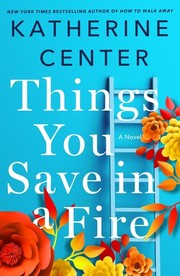
Things You Save in a Fire
2,967-word summary 13 min read 320 pages in the book
- First published
- 2019
- Publisher
- St. Martin's Press
- Pages
- 320
- ISBN
- 9781250047328
Reading options
What's inside (8 sections)
I came to this one sideways. I had read The Bodyguard and liked how Center wrote work as part of love, not background for it, and a friend said if I liked that I should try the firefighter book. I expected a light Texas romance with some hose jokes. What I got was heavier and more Boston than I expected, and more about mothers than I signed up for. Center published it in 2019 with St. Martin's Press. The hardcover runs 320 pages.
Cassie Hanwell is 26 and built for the job she loves. She works in Austin on the B-shift out of Station Eleven. She is a firefighter and a paramedic. She stays calm when other people panic. The papers called her the School Bus Angel after she climbed into a bus that slid into a ravine and pushed kids out a window one by one while water rose. She won her department valor award for it. She was the youngest person to win it and the only woman ever.
That award matters because it shows where she stands in Austin. She is accepted as one of the guys. She trains hard. She picks up extra work as a self-defense instructor. She volunteers with Big Sisters. She runs. She spends weekends helping her dad build an addition to his house. Her calendar is packed on purpose.
She likes it that way. If every hour is accounted for, no one can ask why she never dates or why she keeps everyone at arm's length. Her old captain in Austin gave her a rule she repeats to herself. Never date firefighters. She treats it less like advice and more like a house rule. Work is work. Feelings make you slow. Love makes you soft.
Her partner Hernandez teases her about it at the banquet. In the opening pages he propositions her at the table, half joking and half serious, and tells her she is lonely. She says she is self-sufficient. She means it. Or she wants to mean it.
A firefighter who trusts the job more than people
Cassie is good at other people's emergencies. That line from the jacket copy is accurate. She can read a room in a fire. She knows when to go low. She knows how to talk to a scared kid. She is short, which she uses when she needs to get through a tight space. She is strong from years of training. Men who doubted her in the academy learned to shut up when she outworked them.
What she cannot do is sit still with her own history. When she was 16, two things happened on the same day. Her mother left. She walked out on Cassie and her dad. Hours later, a boy Cassie had a crush on assaulted her. I am keeping this vague because the book keeps it vague at first too. Center lets the facts come out in pieces. Cassie remembers her birthday as the day she learned not to need anyone.
For ten years she lives by that lesson. She lifts. She studies protocols. She memorizes drug doses. She keeps friendships inside the station. Outside the station she keeps things tidy and solo. Her dad is the exception. He stayed. He built things. He showed up. Everyone else has to earn access, and almost no one does.
I found this part convincing, though a little tidy in how quickly Center explains it. The psychology is clear. Hurt girl decides feelings are dangerous and becomes a rescuer. It works because Center grounds it in shift details. The smell of gear. The salad forks at the banquet. The way Hernandez eats chicken while saying something wildly inappropriate. Those small bits felt lived in. I have read enough romances where the heroine's job is a costume. Here the job has weight.
One bad night in Austin
The awards dinner should have been her peak. Instead it blows up her life.
She runs into the boy from high school. He is grown now. He is being celebrated or at least welcomed in a way that makes her skin crawl. Kirkus and other early reviews describe this as coming face to face with the person who wrecked her trust, and that is the safest way to put it. Cassie loses her temper in public. She does not handle it with calm professionalism. She reacts like someone who has waited ten years to say something.
The fallout is fast. Austin becomes impossible. You cannot be the School Bus Angel one weekend and a problem the next without people picking sides. Her command makes it clear she needs to go.
At almost the same time, her mother calls from Massachusetts. Diana is sick. She wants Cassie to come east. She wants help and, more than that, she wants a second chance.
Cassie calls her Diana, not Mom. That tells you everything about where they stand.
Moving means giving up the whole Austin setup. The station that finally respects her. The dad who lives nearby. The routine that holds her together. She takes a job at an old-school firehouse in a small coastal town near Boston. It is the opposite of Austin. Low funding. Old equipment. A building that feels held together with habit. And no women on the crew before her.
Why say yes? Partly because there is nowhere else to go in Texas right now. Partly because Diana is ill and asking, and even angry daughters feel that pull. Partly, I think, because some bruised part of her wants to prove she can make it anywhere, even in a place that does not want her.
The drive east is one of my favorite stretches. Center does not linger on highways. She lingers on what Cassie packs and what she leaves. Turnout gear. Running shoes. A box of commendations she does not look at. She leaves her dad with an unfinished addition and a promise to call that both of them know will be hard to keep.
The rookie and a very cold welcome
The new station does not roll out a banner.
The crew is tight and old in its ways. They haze her. They give her the worst chores. They make jokes about having a lady on the crew. Some of it is framed as tradition. Some of it is plain hostility. The locker situation is bad. The sleeping setup is awkward. The truck needs work the city will not pay for. Morale is low before she walks in, and she becomes an easy place to put it.
Only one guy is kind from the start. Everyone calls him the Rookie. His name is Owen Callaghan, but Cassie does not use it for a long while. He is young, warm, steady, quick to smile. He carries her bag without making a show of it. He asks real questions about calls. He does not laugh when the others test her.
I had mixed feelings here. On one hand, the hazing scenes show how sexism works in a closed crew. It is not always a speech. It is who gets coffee. Who gets the heavy lift alone to see if she fails. Who gets left out of the joke and then blamed for having no humor. On the other hand, Center lays it on thick for a good 100 pages. After the third cold shoulder and the fourth crude crack, I got the point. I wanted more shading for the other men sooner. One or two stay cartoons for too long.
The job pressure makes it worse. The city budget has tightened. There is talk of cuts. Cassie learns she may have to compete for a single permanent spot. Against Owen. Her only friend. That twist drives the middle of the book.
It is a sharp setup. If she helps him, she might lose her place. If she holds back to win, she loses the one person who treats her decently. And dating him would break her captain's rule and give the crew exactly the gossip they want. She tries to solve this by icing him out a little. It does not work. He keeps showing up with food. With patience. With that steady presence that is hard to argue with.
One small gripe that other readers named and I agree with. She calls him Rookie for way too long. I understand nicknames stick in stations. Still, when you are deep into feelings for someone and still thinking of him as the Rookie in your own head, it keeps him at a distance. I did not learn to see Owen as a full person until late. He is sweet. He has his own past hurts. He wants to be good at this work. I wanted his last name sooner and his interior life sooner.
Cassie is short and she uses it. She can get where bigger men cannot. She is also a careful paramedic. Center, whose husband served as a firefighter, writes the medical bits with easy confidence. How to assess breathing. How to keep a patient talking. How to lift without wrecking your back. I trusted those scenes. They never felt pasted from a manual.
Diana on the porch
The mother story runs beside the station story, and for me it is the stronger thread.
Diana lives in a house that feels nothing like Cassie's Austin apartment. There are soft chairs. Tea. Plants that someone actually waters. Diana is breezy where Cassie is tight. She meditates. She cooks simple food. She says things that sound loose until you sit with them.
She is sick with a serious tumor. She refuses an experimental drug because the side effects would wreck what life she has. She says she is fighting in her own way. Through rest. Through attention. Through small joys. I am paraphrasing here, but that stance shapes every scene at home. Cassie wants a plan, a protocol, a treatment schedule. Diana wants mornings on the porch.
They move in together and it chafes. Cassie sleeps badly. Diana talks too much or too little depending on the day. Old anger flares over dishes. Who left. Why she left. Why now. Cassie remembers a mother who chose another man over her kid. Diana remembers a girl she failed and a woman she wants to know before time runs out.
What I liked is how slow Center makes the thaw. It is not one big apology and tears. It is rides to appointments. Grocery lists. Diana showing Cassie, step by step, how she thinks about forgiveness. Not as excusing. As releasing. As deciding not to carry the same hot coal every day.
There is a stretch where Diana talks about how happiness and sorrow arrive together. That pursuing warmth is worth it even if loss follows. Cassie hears this as soft talk. She has built a life on avoiding exactly that trade. Slowly, through caretaking, she starts to hear it differently.
Her dad stays in the background by phone. He is kind. He does not push her to forgive. He just asks if she is eating and sleeping. Those calls broke my heart a little. You can feel how much he gave up to stay steady after Diana left, and how much it costs him to have his daughter far away now.
If I have one complaint about this thread, it is pacing near the end. For a long time the repair feels gradual and believable. Then illness speeds everything up and a few talks that should have taken weeks happen in days. I understood why. Sickness does that. Still, I wanted one more quiet porch scene without stakes, just the two of them being ordinary before everything got urgent.
Smoke that does not add up
Late in the book, the town gets a string of small suspicious fires.
They are not big warehouse blazes from a movie. They are shed fires. Trash fires. A garage that goes up at an odd hour. Enough to put everyone on edge. Enough to stretch a thin crew. Enough to make the city council ask hard questions about response times and staffing right when Cassie and Owen are fighting for a future.
Center uses these calls well. The tones drop at night. The gear is cold. The air smells wrong. Cassie falls back on training. Check the wind. Check exposures. Keep people back. Look for patterns without playing detective beyond her role. Owen backs her up. The crew, which has been chilly for months, starts to work like a crew because fire does not care about hazing.
I am staying general here on purpose about who sets what and why. The book treats the fires as both a practical test and a moral one. A practical test because a short-staffed house has to prove it can protect the town. A moral one because Cassie has to decide what kind of firefighter she wants to be when no one is watching. Does she chase glory. Does she protect her own record. Or does she do the unglamorous work of overhaul and paperwork and checking on neighbors after.
There is a night call in this stretch that finally earns the crew's respect. Not because Cassie does something superhuman. Because she does something careful. She notices a detail others miss. She stays with a scared resident instead of rushing past. She asks for help when she needs it, which for her is harder than running into smoke.
That last point ties into Center's idea of courage. Early on, Cassie thinks courage is control. Hold your breath longer. Carry more. Need less. By the end she starts to see another version. Say you are scared. Let someone hold the ladder. Let Owen be good at his job beside you instead of treating him as a rival. Let Diana make you tea even if you could make it yourself.
Does the fire thread fully cohere? Mostly. A couple of reveals feel rushed after so much buildup. The town's budget politics blur. I lost track of how many weeks passed between calls. But the emotional logic holds. The fires force Cassie to practice the very thing Diana preaches at home. You cannot save everything alone.
What worked, what dragged, who should pick it up
Let me be direct about the flaws because this book gets recommended as pure comfort and it is not quite that.
The first Boston third repeats itself. Hazing scene, cold silence, Owen kindness, Cassie wall, repeat. I got it early. I wanted Center to let one of the older guys surprise me sooner. When warmth finally comes from an unexpected corner of the crew, it lands. I just wish it had arrived 50 pages earlier.
The romance turns fast for a woman this guarded. Cassie spends years insisting she does not fall in love, then her pulse jumps the first time Owen walks into the day room. I believe in attraction at first sight. I had trouble squaring instant pull with her history. Their bond deepens in a sweeter way later, through work and through how Owen treats Diana, but the early spark felt quicker than Cassie's walls allowed. Your mileage may vary. Many readers love that jolt.
The final 80 pages stack a lot. Illness decisions. Job contest results. Past trauma resurfacing. Fire aftermath. A relationship choice that risks her professional identity. Each thread earns its place. Together they crowd each other. I had to flip back to sort what happened in what order. That blurring made some big moments feel smaller than they should have.
So why did I still finish in two sittings and press it on a friend?
Because Cassie changes in ways I could track. She starts by counting what she can carry alone. She ends by letting people carry things with her. She apologizes without making it about herself. She tells Diana hard truths without cruelty. She tells Owen what happened at 16 without using it as a shield or a test. She stays in the room for uncomfortable talks. For someone whose whole identity is motion, learning to stay put feels huge.
Bold moments like that are quiet, which suits Center. She is not writing a procedural. She is writing about how a competent woman learns to be vulnerable without quitting her job or apologizing for strength.
A few practical notes for the right reader. This is more women's fiction with romance than straight romance. The love story matters, but the mother repair and the station politics take up as much space. Content is heavier than the bright cover suggests. Assault in the past. Abandonment. A parent with cancer. Sexist harassment at work. Fire scenes with risk to kids and neighbors. Language is salty in the station in the way closed crews talk. The love scenes stay modest and fade before detail.
If you want nonstop fire action, you may find the middle slow. If you want only banter, the Diana chapters may feel earnest. If you want a heroine who has it figured out from page one, Cassie will frustrate you for a while. She frustrated me. Then she won me over by doing the work.
I closed the book thinking about the title. Things you save in a fire. Photos. Letters. A kid's blanket. The book asks what you grab when you have seconds. Cassie starts with an answer about objects and training. She ends somewhere else. What you save is what you choose to carry forward. Which people. Which stories. Which version of yourself.
I still think about Diana's porch. Tea going cool. A mother and daughter not fixing the past so much as making a livable present. That image stayed with me longer than any blaze.
FAQ
What is Things You Save in a Fire about?
It follows Cassie Hanwell, a Texas firefighter who moves to a small Massachusetts town, joins an old-school firehouse, and lives with her estranged mother Diana while facing workplace hazing and a past assault. It was published in 2019 by St. Martin's Press.
Is Things You Save in a Fire part of a series?
No. It is a standalone contemporary romance and women's fiction novel with its own cast, firehouse, and family story.
Who should read Things You Save in a Fire?
Readers who like slow healing stories with romance, workplace pressure, and parent-child repair may like it. It includes assault, abandonment, illness, and fire scenes, so it is heavier than a light romantic comedy.
Similar books
Between Sisters
Estranged sisters Meghann and Claire reunite in Washington when Claire announces a rushed wedding, then face their mother's desertion and a medical crisis.
2,467-word summary · 11 min read

The Takeover
An arrogant CEO and the sharp employee forced to staff his deal trade insults, trips and late nights across a long push-pull, until pride and jealousy force…
2,580-word summary · 11 min read
Attachments
In 1999 Omaha, a shy night shift IT man reads two coworkers flagged emails and falls for one before ever saying hello.
3,210-word summary · 14 min read

The Language of Flowers
Aged out of foster care, a guarded florist speaks through blooms while pushing away the one man who stays.
2,065-word summary · 9 min read

Beautiful Bastard
Chloe Mills battles her demanding boss Bennett Ryan in Chicago, until office rivalry turns into a secret relationship that tests both careers.
2,800-word summary · 12 min read

Yours Truly
Divorced ER doctor Briana Ortiz fake dates anxious newcomer Jacob Maddox, trading honest letters while her brother waits for a kidney donor.
2,475-word summary · 11 min read
The Hating Game
Two executive assistants share an office, a rivalry, and a promotion neither will concede without a fight.
1,945-word summary · 9 min read
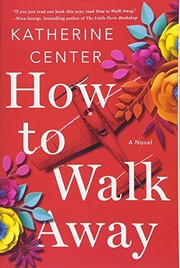
How to Walk Away
Margaret Jacobsen has the job, the fiance, and the future mapped out, until a small-plane crash on Valentine's Day takes almost all of it in one afternoon.
2,012-word summary · 9 min read

Hello Stranger
Portrait artist Sadie loses face recognition after brain surgery and must finish a contest piece while falling for two men.
2,210-word summary · 10 min read

The Bodyguard
Hannah Brooks, an executive protection agent grieving her mother, poses as movie star Jack Stapleton's girlfriend on his Texas family ranch.
3,962-word summary · 18 min read

What Happened to Goodbye
Mclean has reinvented herself in four towns since her parents divorced. In Lakeview she uses her real name, and for the first time staying put becomes a choice.
2,796-word summary · 12 min read

Size 12 Is Not Fat
Former teen pop star Heather Wells investigates two dorm elevator deaths while juggling her ex, her crush, and a size-12 wardrobe.
2,805-word summary · 12 min read

Alone With You in the Ether
Two people in Chicago agree to six conversations, and the experiment becomes a love affair that is also a study of bipolar disorder, obsession, and the shape…
2,713-word summary · 12 min read

Dumplin'
Willowdean Dickson enters her town's beauty pageant as a protest and discovers that confidence is harder to keep once she lets someone close.
1,922-word summary · 9 min read
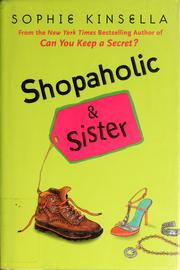
Shopaholic and Sister
Becky Brandon returns from a ten-month honeymoon to meet the half-sister she always wanted, then discovers that Jess is thrifty, prickly, and nothing like the…
2,591-word summary · 12 min read

The Ex Talk
Two rival public radio producers pretend to be exes for a dating show, then fall for each other while the lie grows.
2,389-word summary · 11 min read

Sam's Letters to Jennifer
A grieving journalist reads her grandmother's letters and finds a decades-long love affair that changes how she sees her family.
2,310-word summary · 10 min read

Mr. Maybe
Libby Mason wants a rich husband, but the wealthy man who proposes is dull and the broke writer she cannot forget is not offering forever.
2,322-word summary · 10 min read

I Kissed Shara Wheeler
Shara Wheeler kisses her rival Chloe Green at prom and disappears, leaving a scavenger hunt that forces Chloe to rethink everything she knew about her.
2,083-word summary · 9 min read

Amy & Roger's Epic Detour
Amy Curry has not driven since the crash that killed her father. With Roger at the wheel and a box of maps between them, a cross-country trip becomes a slow…
3,034-word summary · 13 min read

One to Watch
A plus-size fashion blogger takes the lead role on a reality dating show to prove she belongs on television, and finds she might want what the cameras offer.
2,478-word summary · 11 min read

Eligible
Austen's Bennet sisters move to modern Cincinnati, where marriage is a reality show and the house is losing its value.
2,293-word summary · 10 min read

Big Swiss
A transcriptionist for a sex coach falls for one of his clients, the tall Swiss gynecologist she calls Big Swiss, in a funny novel about work and secrets.
2,523-word summary · 11 min read

Wedding Night
Lottie marries an old flame days after a breakup, then flies to a Greek island while her sister quietly works to sabotage the honeymoon. A farce about memory,…
2,213-word summary · 10 min read

See Me
A law student with a violent past falls for a prosecutor whose old case returns as a stalker, in a romance with a thriller at its center.
2,007-word summary · 9 min read

Marriage for One
Rose marries a cold lawyer to save her coffee shop, then discovers the arrangement was never only business.
2,032-word summary · 9 min read

Dash & Lily's Book of Dares
Two lonely New York teenagers trade dares in a red notebook left at the Strand, falling for each other on the page before they meet.
2,228-word summary · 10 min read

Beautiful Stranger
After a betrayal, Sara Dillon moves to New York and starts a no-strings affair with a British stranger, only to find that control and intimacy are harder to…
2,015-word summary · 9 min read

The No-Show
Three women are stood up on Valentine's Day by the same man, but the timeline is not what it seems. O'Leary's warmest book with a knife in it.
2,127-word summary · 9 min read

Every Breath
Two strangers share one week at Sunset Beach in 1990, part for duty, and reunite decades later at the mailbox that started it all.
2,357-word summary · 10 min read