
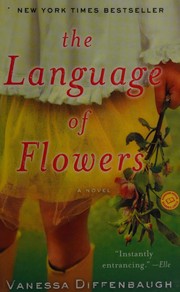
The Language of Flowers
2,065-word summary 9 min read 334 pages in the book
- First published
- 2011
- Publisher
- Ballantine Books
- Pages
- 334
- ISBN
- 9780345525550
Reading options
What's inside (12 sections)
I read The Language of Flowers in a garden, which was either perfect or too on the nose. Vanessa Diffenbaugh published it with Ballantine Books in 2011, a 334 page novel with ISBN 9780345525550. Victoria Jones, eighteen and aged out of foster care, speaks through flowers because people failed her in words. She arranges moss for mother love and thistle for misanthropy, pushes away help, then must learn to stay when a pregnancy forces her to face the woman who once fostered and failed her. It is sentimental in places and sharp in others. The flower dictionary running through it is real Victorian lore, and Diffenbaugh uses it as both code and cage.
Victoria is prickly from page one. Abandoned as an infant, moved through dozens of placements, violent at times, silent at others, she trusts no one over thirty seconds. Her social worker gives her a bus pass and a dictionary of flower meanings on emancipation and wishes her luck. Victoria sleeps in parks, works a florist stall for Renata, a kind employer who mistakes talent for stability, and steals food without apology. She meets Grant, a flower seller who knows the same language, and treats him like a threat because he sees her. Their early scenes are all near misses. He offers a job. She takes it and insults him. He brings her lunch. She eats it and leaves. He keeps showing up with the patience of someone who grew up in the same system and learned slower.
Elizabeth
Elizabeth is the wound. A vineyard owner who fostered ten year old Victoria for almost a year, taught her flowers, and then returned her after a terrible incident the novel reveals slowly. That year was the only time Victoria felt chosen. Elizabeth gave her a room with yellow walls, taught her to cook, and spoke in blooms at the table. Thistle for Victoria anger. Moss for the mother love Elizabeth wanted to offer. Then a fire, a lie, a choice made in panic, and the placement ended. Adult Victoria both craves and hates Elizabeth, sending angry bouquets she knows will be read. When Victoria becomes pregnant, she must decide whether to repeat abandonment or to ask the one mother figure she has for help she does not believe she deserves.
Diffenbaugh braids past and present. Even chapters follow ten year old Victoria learning flowers on the vineyard. Odd chapters follow eighteen year old Victoria navigating San Francisco markets, weddings, and a parkside camp. The structure works because the past explains the present without excusing it. Young Victoria learns that marigold means grief and uses it to test Elizabeth. Adult Victoria uses the same trick on Grant. The parallel is clear but not hammered. Children who are hurt test love by pushing it away. Adults who were those children do the same unless someone names the pattern. Grant names it, gently and too late to prevent damage.
Grant and Renata
Grant is the steady center. Also a foster care graduate, he learned flowers from his own mentor and uses them to run a business and to court Victoria without cornering her. He brings her asters for patience. He accepts her no for weeks. When they finally connect, it is through work side by side rather than dates. Arranging wedding flowers at dawn. Driving to farms. Debating whether red roses are lazy. Their intimacy is physical and awkward in ways that feel true to two people who flinch at touch. Grant wants a family. Victoria wants to disappear. Their conflict is not misunderstanding but incompatible fears. He fears being left. She fears being kept.
Renata, the florist employer, provides comic relief and a different model of care. Blunt, busy, pregnant herself, she hires Victoria for skill and keeps her for stubbornness. She does not ask about past. She asks if the order is ready. That professionalism helps Victoria more than therapy talk. A woman who expects work and pays fairly teaches trust faster than any counselor. Renata wedding business also lets Diffenbaugh show off. Bouquets as messages. A bride who wants peonies for shame. A groom who needs basil for best wishes. Victoria talent for reading clients is uncanny and specific. You believe she can see a marriage in a flower list.
The pregnancy
The pregnancy plot arrives mid book and reorders everything. Victoria, homeless and working, learns she is carrying Grant child after they separate. She considers abandonment in ways the novel treats seriously rather than as villainy. She thinks about leaving the baby at a hospital. She thinks about Elizabeth failure and her own. She keeps the baby partly from inertia and partly from a stubborn hope she will not name. Scenes at clinics, on buses, in a motel room where she counts money for diapers, are plain and affecting. Diffenbaugh, a foster mother herself, writes system gaps without lectures. No crib program answers the phone. No counselor follows up. Victoria survives on Renata couch and Grant distance.
Birth and early motherhood are not glamorized. Victoria struggles to bond, leaves the baby crying while she panics in another room, and fears she inherited damage. What saves them is routine and Elizabeth return. Elizabeth, now older and grieving her own losses, offers to help without demanding forgiveness. She holds the baby while Victoria showers. She cooks. She speaks in flowers again, but now Victoria can answer. Moss. Not for perfect mothers, but for trying ones. That scene in the vineyard kitchen, with a baby asleep and two women arranging blooms in silence, is the book emotional peak. No speech fixes the past. Shared work eases it.
Grant past
Grant history needs more than hints because it explains his patience. Also a foster graduate, he bounced through placements until a flower farmer took him on as labor and taught him meanings as discipline. Memorize this. Tend that. Show up daily. That farmer gave him a trade and a model of manhood built on care rather than control. Grant carries those lessons into his stall. He hires Victoria knowing she will steal and lie at first. He prices her work fairly anyway. He waits outside her door without knocking when she needs space. That restraint was learned from a man who waited for him. When Grant finally tells Victoria about his own abandonment, he does it while arranging, hands busy, eyes down. Shame is easier to speak beside work. Victoria hears him because she knows the grammar. Two fluent speakers finally talking.
The wedding business
The wedding flowers thread is more than pretty jobs. Each commission tests Victoria growth. A bride who demands only roses teaches her to push back kindly for meaning over fashion. A groom who wants weeds for his forest wedding teaches her to listen rather than lecture. A difficult mother of the bride teaches her to absorb criticism without fleeing. Renata watches and promotes her from assistant to designer when she handles a disaster bouquet with calm. That promotion, with a raise and a key to the shop, is the first adult trust Victoria receives from outside family. She frames the key rather than using it to run. Work keys can lock or open. She chooses open. Readers who have been promoted after hard pasts will recognize the disbelief. Am I allowed to keep this. Yes, the book says. Keep showing up and it stays yours.
Victoria relationship with her social worker, glimpsed early and dropped, deserves one more thought. The worker gives Victoria the flower dictionary on emancipation day with a tired smile that says she knows it is not enough. A bus pass. A list of shelters. Paperwork signed in triplicate. That thin envelope is the whole state goodbye. Victoria treasures the dictionary while resenting the system that handed it over with no follow up. Diffenbaugh, who fostered and adopted, knows both sides. Workers carry impossible caseloads. Youths carry the gaps. The dictionary becomes a bridge no case plan provided. Learn the meanings. Use them to ask for what forms cannot give. A bag of moss says stay better than any pamphlet.
What works and what strains
What works is the flower language itself. Diffenbaugh includes a full dictionary at the end, and the meanings she uses in story check out. Thrift for sympathy. Bells for gratitude. Heliotrope for devotion. Learning them alongside Victoria is fun and gives rereads extra texture. The San Francisco market scenes are vivid. Dawn deliveries. Buckets of sweet peas. Hands cut from thorns. You smell the book as much as read it.
The strain is neatness. Late revelations about the fire and about Elizabeth choices tie too cleanly. A violent act by a child is explained in ways that soften accountability. Grant forgiveness arrives fast after a real betrayal. Secondary characters like Victoria social worker vanish when convenient. Readers who want moral mess will find the ending too forgiving. This is a novel that believes people can change if given flowers and time. That belief is beautiful and, in spots, hurried.
Prose is clear and earnest, with occasional overwatered metaphors. Buds opening as hearts open. Roots as trauma. Most land because Diffenbaugh commits. Dialogue is functional rather than sparkling. What carries pages is Victoria voice, blunt and observant, funny about herself once she allows it. I told Renata the wedding looked like a funeral with cake, she reports, and Renata laughed instead of firing her. Lines like that keep a heavy story light enough to finish.
Who it is for
Read it if you like character driven debuts about wounded women, or if you work with foster youth and want a novel that centers their perspective without savior framing. Content notes include child abandonment and foster care abuse, fire injury, self harm ideation, homelessness, pregnancy and parenting stress, and discussion of infant loss. Suitable for older teens and up.
I finished with moss on my mind. Victoria learns to say mother love without flinching, not because Elizabeth earned it perfectly but because the word needs saying to live. Diffenbaugh, who knows this world off page, wrote a book that argues care is a language you can learn late. You start with one bloom. You practice. You stay. For a debut that could have drowned in sweetness, it stays honest about thorns. Keep the dictionary handy. You will use it after.
A note on lore
Victorian flower dictionaries varied by region and publisher. Diffenbaugh standardizes for story, which is standard practice. If you gift bouquets after reading, check a second source for meanings that matter. Moss as mother love holds in most lists. Thistle as misanthropy is hers more than history, but it works on the page. Take the lore as invitation rather than law.
Renata business school
Renata deserves her own section because she teaches Victoria what Elizabeth could not. How to work. Renata runs a wedding business on thin margins. She quotes prices that cover time. She fires a client who abuses staff. She pays Victoria on time and expects the books balanced. Those lessons land harder than any talk about trust because Victoria has never seen a woman hold authority without cruelty. Foster mothers either collapsed or controlled. Social workers managed cases. Renata manages a shop. When Victoria steals from the till once, Renata catches her, docks pay, and keeps her on with clear terms. No speech. Consequences and continuity. That is how Victoria learns that mistakes do not equal abandonment. Work holds when people wobble.
The fire truth
The fire that ended the vineyard placement needs a careful retelling without excusing. Ten year old Victoria, jealous of Elizabeth attention to another foster child and terrified of being sent away first, sets a small fire to force a choice. It spreads. No one dies but trust burns. Elizabeth, who had promised permanence, returns Victoria to the system rather than risk her vineyard and other children. Adult Victoria remembers it as proof she is unlovable. Adult Elizabeth remembers it as proof she was naive to try. Both are partly right. Diffenbaugh refuses to pick a villain. A hurt child did a dangerous thing. A tired adult chose safety over repair. Understanding both does not undo the years between. It lets the baby have a grandmother who will not flinch at crying. That is the only repair on offer, and the novel is honest enough to call it enough.
FAQ
When was The Language of Flowers published?
Ballantine Books published it in 2011. The paperback runs 334 pages and the ISBN is 9780345525550.
Who are the main characters?
Victoria Jones, Grant the flower seller, Elizabeth who fostered her, and Renata her employer.
Is it part of a series?
No. It stands alone.
Similar books
Between Sisters
Estranged sisters Meghann and Claire reunite in Washington when Claire announces a rushed wedding, then face their mother's desertion and a medical crisis.
2,467-word summary · 11 min read
Things You Save in a Fire
A Texas firefighter takes a job at an old Boston-area firehouse and moves in with her estranged mother while facing hazing, old trauma, and love.
2,967-word summary · 13 min read

What Happened to Goodbye
Mclean has reinvented herself in four towns since her parents divorced. In Lakeview she uses her real name, and for the first time staying put becomes a choice.
2,796-word summary · 12 min read

Size 12 Is Not Fat
Former teen pop star Heather Wells investigates two dorm elevator deaths while juggling her ex, her crush, and a size-12 wardrobe.
2,805-word summary · 12 min read
Alone With You in the Ether
Two people in Chicago agree to six conversations, and the experiment becomes a love affair that is also a study of bipolar disorder, obsession, and the shape…
2,713-word summary · 12 min read

Dumplin'
Willowdean Dickson enters her town's beauty pageant as a protest and discovers that confidence is harder to keep once she lets someone close.
1,922-word summary · 9 min read
Shopaholic and Sister
Becky Brandon returns from a ten-month honeymoon to meet the half-sister she always wanted, then discovers that Jess is thrifty, prickly, and nothing like the…
2,591-word summary · 12 min read

Sam's Letters to Jennifer
A grieving journalist reads her grandmother's letters and finds a decades-long love affair that changes how she sees her family.
2,310-word summary · 10 min read

Mr. Maybe
Libby Mason wants a rich husband, but the wealthy man who proposes is dull and the broke writer she cannot forget is not offering forever.
2,322-word summary · 10 min read
I Kissed Shara Wheeler
Shara Wheeler kisses her rival Chloe Green at prom and disappears, leaving a scavenger hunt that forces Chloe to rethink everything she knew about her.
2,083-word summary · 9 min read
Amy & Roger's Epic Detour
Amy Curry has not driven since the crash that killed her father. With Roger at the wheel and a box of maps between them, a cross-country trip becomes a slow…
3,034-word summary · 13 min read
One to Watch
A plus-size fashion blogger takes the lead role on a reality dating show to prove she belongs on television, and finds she might want what the cameras offer.
2,478-word summary · 11 min read
Eligible
Austen's Bennet sisters move to modern Cincinnati, where marriage is a reality show and the house is losing its value.
2,293-word summary · 10 min read

Big Swiss
A transcriptionist for a sex coach falls for one of his clients, the tall Swiss gynecologist she calls Big Swiss, in a funny novel about work and secrets.
2,523-word summary · 11 min read
Wedding Night
Lottie marries an old flame days after a breakup, then flies to a Greek island while her sister quietly works to sabotage the honeymoon. A farce about memory,…
2,213-word summary · 10 min read

See Me
A law student with a violent past falls for a prosecutor whose old case returns as a stalker, in a romance with a thriller at its center.
2,007-word summary · 9 min read

Marriage for One
Rose marries a cold lawyer to save her coffee shop, then discovers the arrangement was never only business.
2,032-word summary · 9 min read

Dash & Lily's Book of Dares
Two lonely New York teenagers trade dares in a red notebook left at the Strand, falling for each other on the page before they meet.
2,228-word summary · 10 min read
The No-Show
Three women are stood up on Valentine's Day by the same man, but the timeline is not what it seems. O'Leary's warmest book with a knife in it.
2,127-word summary · 9 min read
How to Walk Away
Margaret Jacobsen has the job, the fiance, and the future mapped out, until a small-plane crash on Valentine's Day takes almost all of it in one afternoon.
2,012-word summary · 9 min read
Every Breath
Two strangers share one week at Sunset Beach in 1990, part for duty, and reunite decades later at the mailbox that started it all.
2,357-word summary · 10 min read
Dial A for Aunties
A wedding photographer accidentally kills her blind date, and her mother and three aunties help her hide the body during the biggest wedding of their careers.
2,076-word summary · 9 min read
True Colors
Three Grey sisters split over love and duty after their father judges them.
2,596-word summary · 12 min read
The Identicals
Twin sisters swap Nantucket and Martha Vineyard lives for a summer.
2,556-word summary · 11 min read
The Bookish Life of Nina Hill
Bookstore Nina gains a family and pub-quiz love in Los Angeles.
2,399-word summary · 11 min read
Every Last Word
A girl with OCD finds poetry and friends who know her secrets.
2,434-word summary · 11 min read

Collided
Sophie bets she can resist playboy Liam, then pit walls fall.
2,219-word summary · 10 min read

Bridget Jones: The Edge of Reason
Bridget doubts Mark, takes a job with Daniel, and lands in trouble in Thailand.
2,198-word summary · 10 min read
To Love Jason Thorn
Childhood friends Olive and Jason reunite when the Hollywood star returns home, fake a romance for the cameras, and face old family wounds before trust turns…
2,506-word summary · 11 min read

This Man
Ava O Shea meets Jesse Ward while designing The Manor House, and their obsessive affair tests her work and limits.
2,209-word summary · 10 min read