
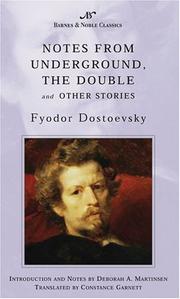
Notes from Underground
3,636-word summary 16 min read 512 pages in the book
- First published
- 1864
- Publisher
- Barnes & Noble Classics
- Pages
- 512
- ISBN
- 9781593080372
- Original title
- Zapiski iz podpolya
Reading options
What's inside (9 sections)
I picked up Notes from Underground on a grey weekend when I wanted something short, and I got something short that felt very long in the best and hardest way. I had heard for years that this 1864 book by Fyodor Dostoevsky was the start of a certain kind of modern voice, the angry lonely narrator talking straight at you. That turned out to be true. What I did not expect was how funny and sad and exhausting it would be to sit with one man for a whole book while he argues with himself, insults you, takes it back, then insults you again. The Russian title is Zapiski iz podpolya, which points to notes from under the floor, notes from a cellar, notes from a place below normal life. That image fits. The man telling the story lives below life and knows it.
A quick note on the edition may help. The facts for this post cite the Barnes and Noble Classics printing from 1864 as the original year, with 512 pages and ISBN 9781593080372. That page count does not mean the story itself runs 512 pages. That cited volume is a collection that also holds The Double and other stories by Dostoevsky. Notes from Underground itself is a short novel. It is split into two parts, a long rant and then a memory of a few painful days. If you buy that thick paperback, you get extra books around it, which is good value but can confuse people who expect a 500 page version of this one story.
I read it slowly, in two sittings, and I needed the break. The first part made my head buzz. The second part made my stomach hurt. Then the ending left me quiet. This summary follows the book in order, because the order matters. The ideas come first, then the life that puts those ideas to a hard test.
Living below life
The narrator never gives his name. He is a retired clerk in St Petersburg, around forty, living alone in a poor corner room after a small inheritance let him leave his job. He tells us right away that he is sick and spiteful and rude. He says his liver hurts but he will not see a doctor out of spite. That sounds like a joke, and it is, but it also sets the whole method of the book. He will do harm to himself just to show that no one can tell him what to do, not even sense.
He lives cut off from friends, cut off from work, cut off from family. He reads a lot. He dreams about being bold and admired. In real life he backs down. He has spent years turning small slights over in his mind until they grow large. He calls his home his corner, his hole, his underground. He is not proud of it exactly, but he defends it. To him the underground is the only honest place left when the world above keeps telling you to be normal, healthy, grateful, and reasonable.
What struck me early was how direct he is with the reader. He keeps asking what we think. He answers for us. He says you probably think he is joking, or mad, or trying to be clever. He says we are no better. It feels personal, almost rude, like sitting across from someone in a cafe who will not let you leave. That pressure is the point. Dostoevsky wants you to feel crowded by this voice, because the voice is testing whether you really believe the smooth ideas about progress that were popular in the 1860s.
The opening pages also warn you that there will not be much plot in the usual sense. No mystery to solve. No trip. No love story that builds. Instead there is a man, a room, and a set of thoughts he cannot drop. I found that hard for the first thirty pages. Then I started to hear a rhythm in it, the way he circles back, corrects himself, adds a footnote in his head, then starts again. Once I gave in to that rhythm, the book moved faster.
Part one: spite against the Crystal Palace
The first half is often called the Underground monologue, and monologue is the right word. The narrator lays out his fight with the idea that humans can be fixed by reason. In his time many thinkers said society could be arranged like math. Find the laws of interest, build clean cities, give people comfort and safety, and crime and pain will fade. The great symbol for that hope was the Crystal Palace in London, a huge glass hall that seemed to say the future would be bright, open, and planned.
The Underground Man hates that image. He says if you built a perfect palace where every want was met, people would smash it just to prove they were still alive. He says humans are not keys on a piano that play the right note when science presses them. That piano key image comes up again and again. He means we are not tools that respond to correct input with correct action. We act from whim, from hurt, from a wish to say no even when yes would help us.
Spite is his test case. He spends pages on it. Why would a person choose something bad for himself when he knows it is bad. His answer is that knowing is not the same as choosing. A man may know that rest would help his liver and still stay up all night out of stubbornness. A clerk may know that polite manners would help his career and still snap at his boss. To the Underground Man, that stubborn no is proof of freedom. Take that away and you may have comfort, but you will not have a person.
I argued with him in the margins as I read. Part of me thought he had a point about freedom. People do refuse good advice. People do pick fights they cannot win. We all know someone who ruins a calm day because calm feels false. Another part of me thought he was making a excuse for doing nothing. It is easy to praise free will from a chair. It is harder to use freedom to pay rent, keep a friend, or say sorry. The book lets both thoughts sit there. Dostoevsky does not rescue the narrator with a warm lesson. He lets the rant run until it wears itself out.
The style here is full of stops and turns. Short bursts. Long tangled sentences. Questions with no wait for answers. He keeps saying do not mistake this, let me explain, you will say I am talking about myself only. That habit can tire a reader. I had to put the book down and walk around after forty pages. But the ideas stuck with me while I made tea. The Crystal Palace section made me notice how often I talk about fixing my own life like a machine, as if a new app or schedule will solve a mood. The Underground Man would laugh at that plan, and I think I needed that laugh.
Suffering, choice, and wanting what hurts
After spite and the Crystal Palace, the monologue turns to suffering. The narrator says pain is more than an error to remove. For him it marks a form of awareness. He claims that a person who feels a toothache knows he is alive in a way no happy palace dweller can know. He goes too far, as always, and says suffering may be the only cause of consciousness. That is bleak. It is also the kind of line that makes you pause, because you have felt something like it on a bad night when pain kept you awake and your mind felt sharp and strange.
He also talks about wanting. He says people do not always want what is good for them. They want what they want, even if it breaks them. Reason can tell you that two plus two makes four, he says, but you may still dream of two plus two making five because the dream feels yours. That wish for five is silly, and he knows it. He holds onto it anyway. To him the right to wish for the wrong thing matters more than the right answer.
I found this part both moving and shaky. Moving, because it names a real feeling. I have kept bad habits I understood fully. I have picked the harder path because the easy path felt flat. Shaky, because the narrator turns a passing mood into a law of life. Not every pain teaches. Not every bad choice proves freedom. Sometimes pain only hurts. Sometimes a bad choice only harms. The book does not correct him outright. It lets his claim hang, and later the second half tests it against real people. That test is where the book earns its weight.
There is also a thread about love and contact that peeks through the hard talk. He says he could not love even if he tried, because to love is to open and he is afraid of being seen. He mocks friendships, calls kindness a trick, then admits he longs for someone to argue with face to face. That ache sits under the bold claims. I started to read the big ideas as cover for a simpler fear. He is lonely. He dresses that fact in philosophy so he does not have to feel it plainly. Once I saw that, Part One hurt more. The man is not only wrong or right. He is guarding a wound.
By the end of Part One he tells us he will now bring forward notes about himself, from years back, when he was younger and still bumping into the world. That shift saved me as a reader. I was tired of pure talk. I wanted to see this man try to live his ideas at a dinner table or on a street. Part Two gives exactly that, and it is painful in a very normal way.
The officer on Nevsky Prospect
Part Two is titled Apropos of Wet Snow, and it steps back in time to when the narrator was twenty four and still working as a clerk. He is no braver, but he goes outside more. The first memory is about an officer on Nevsky Prospect, the grand street where clerks and officers walked in the evening. The narrator says this officer once brushed past him as if he were empty air, lifting him by the shoulder and moving him aside without looking.
Most people would forget that bump in a day. He carries it for years. He rehearses revenge. He cannot challenge the man to a duel because he is too low in rank and too poor, and the officer would never take him as an equal. So he plans a smaller win. He saves money for a fine shirt and a good coat. He watches the street. His plan is to walk straight at the officer and refuse to step aside, to bump shoulder to shoulder as equals. He knows how small this sounds. He does it anyway.
I felt secondhand shame reading these pages, because I know that kind of plan. You tell yourself that one even bump will fix years of feeling small. You spend more care on the coat than on the act. And when the bump finally happens, it changes nothing. In the book the bump does happen. The narrator does not fall. The officer barely notices. That bare notice is the point. The great revenge lands as nothing in the other mans day. The narrator walks home both thrilled and sick, telling himself it was honor while knowing it was empty.
This episode sets the pattern for Part Two. The narrator wants weight. The world gives him light contact and moves on. He wants to be seen as dangerous or deep. People see him as awkward and loud. Each scene builds on the last, not with big events but with small failures to connect. Dostoevsky writes these street scenes with clear detail. Wet snow. Lamps. Crowds. A cloak that is not quite right. You can feel the damp on your shoes. That plain setting makes the inner storm look even more lost.
It also shows how memory works for this man. He does not remember what happened so much as what he felt about what happened. Years later he still adds footnotes to a shoulder bump. That habit explains Part One. The rant grew out of nights like this, nights when he came home and talked to the walls because no one on the street had talked to him.
Dinner with Simonov, Trudolyubov, and Ferfichkin
The dinner scene is the longest humiliation in the book, and it is built with painful care. The narrator runs into an old schoolmate named Simonov. Through him he hears that a group of former school fellows plan a farewell dinner for another man. The names matter here because they mark rank in his mind. Simonov is the contact. Trudolyubov and Ferfichkin are the men who treat him as a burden. The rest of the group barely know he is alive.
He invites himself along. No one wants him there. He knows it and goes anyway, telling himself this will be his entry back into society. He has little money. He borrows to pay his share. He arrives late. He tries to sound grand about ideas while the others talk about work and a coming posting and where to eat next. He drinks too much. He makes speeches. He picks a fight over a trifle about who respects whom. Ferfichkin mocks him. Trudolyubov stays cold. Simonov tries to keep the peace but clearly wishes the evening would end.
What hurts most is not the mockery. It is the gap in manners. The others have learned how to move through a dinner, when to laugh, when to pay, when to leave. The narrator has learned only how to watch and judge. He sees every slight in high detail and misses every cue to soften. When the group decides to go on to a brothel after dinner, they barely include him. He follows anyway because being left behind feels worse than being scorned to his face.
I had to stop a few times during this chapter. Not because it is boring. Because it is true to a kind of night many people have lived, where you talk too loud to cover nerves and then hear your own voice and hate it. Dostoevsky does not make the schoolmates into villains. They are ordinary young men, a bit dull, a bit cruel in the way groups can be, thinking about jobs and money and fun. The narrator wants them to be grand enemies so his pain feels grand. They refuse that role. They are just bored with him. That plain boredom cuts deeper than hate.
The dinner ends with him chasing after them in a cab he cannot afford, arriving too late, paying too much, and walking into the next shame already drunk and shaking. There is no lesson stated. There is only the fact of a man who paid for the right to be ignored.
Liza, the brothel, and the banknote
After the dinner fails, the narrator follows the group to a brothel. They have gone into rooms. He waits alone, drinks more, talks big to himself, then meets a young woman named Liza. She is new to that work. She is quiet, tired, and watchful. At first he treats her with the same grand manner that failed at dinner. He lectures her. He paints pictures of a pure family life she could still have, a husband who loves her, children, a clean home. Then he paints the other picture, a sick body, a cheap coffin, no one to mourn. He speaks well. Too well. He gets drunk on his own pity.
Liza listens. That is what undoes him. She takes his words as care, because no one has spoken to her like that in a long time. She asks if he really means it. He says yes, though even then he knows part of him is acting. He gives her his address, telling her to come if she ever wants help or a way out. In the morning he wakes with shame, not because he lied fully, but because he was sincere and false at once. He pities her and uses her to feel tall. That mix is the ugliest truth in the book.
Days pass. He fears she will come and hopes she will not. When she does come to his poor room, the power flips. She sees how he lives. She sees the shabby servant, the thin walls, the cheap furniture he had bragged around at dinner. She does not mock him. She looks at him with steady eyes, and that steadiness breaks his act. He cannot stand being seen without his grand coat on. So he turns cruel. He tells her he was laughing at her, that he only wanted to humiliate her, that her visit proves how low she is. He presses a banknote into her hand as payment, as if to put her back in the place where he met her and to buy back his control.
The banknote scene is the moral center of the story. It is not about money. It is about what money is used to do. He uses it to turn a human visit into a trade, because a trade is easier to face than kindness. Liza leaves the note on the table. She does not take it at first. Then in the doorway, in confusion and hurt, she takes it or leaves it depending on how you read his clouded memory, but the meaning stays. He tried to pay for the one moment when someone saw him plainly and did not flinch.
I found Liza the most real person in the book, partly because she says so little. She asks plain questions. She cries without show. She comes a long way to a poor room because she believed a drunk mans promise. When he throws that promise back at her, she does not give a speech. She leaves. That quiet exit does more work than all his pages of talk. It shows the cost of his ideas when they touch skin.
Her visit and letting her go
Liza does come, sees him, and is sent away, and that sending away is the true ending of the plot. He runs after her in his mind, calls himself base, begs her in thought to stay, then does nothing that would let her stay. He tells the reader he will never see her again. He says the memory still burns. He says he has written these notes to relieve himself, but relief does not come. The last lines fall back into spite and self blame, as if the circle must close.
So what stays after the plot ends. First, the honesty about the cited book facts helps set this straight for new readers. The year 1864 marks the first telling of this voice. The original Russian title points to that low cellar place. The English text in the Barnes and Noble Classics set sits beside The Double, a longer tale of a clerk split in two, plus shorter pieces. Reading them together can help, because The Double shows from outside what Notes shows from inside, a man breaking under shame and rank. But no one should feel they must read 512 pages to meet the Underground Man. His own story is brief, sharp, and complete.
Second, the fair criticism must be said. This book repeats. The spite loops. The narrator says he will stop explaining and then explains again. Some readers will find him too unlikable to follow for even a hundred pages. The plot is thin by design, a bump on a street, a bad dinner, a cruel hour in a room. If you need action or growth, you will be frustrated, because the man does not grow. He learns how he fails and then fails again. Dostoevsky keeps that shape on purpose, but purpose does not remove the drag in the middle of Part One. I skimmed nothing, yet I felt the pull to skim, and I think that pull is part of the test.
Why then does it last. Because the test still works. The attack on the Crystal Palace still hits each time we promise ourselves that a new system will fix the heart. The piano key warning still rings when we treat people like inputs. The suffering talk, wild as it is, still names nights when pain felt like proof of life. And Liza still stands as the quiet answer the narrator cannot take. She offers simple presence. He cannot receive it. That failure feels human rather than old. I closed the thick collection with the thin story echoing, not because I liked the man, but because I saw bits of my own stubborn moods in him and did not enjoy seeing them.
If you try it, give Part One patience and keep Part Two close behind. Read the dinner slowly. Watch the banknote. Notice how seldom Liza speaks and how much that silence says. Forgive the loops in the rant as the sound of a mind that cannot sleep. You may not love this book. I did not love it in any easy sense. But I have thought about that poor room and that crumpled note every day since, and that seems like the kind of memory Dostoevsky wanted to leave.
FAQ
Is the 512 page Barnes and Noble edition only Notes from Underground?
No. The cited Barnes and Noble Classics edition runs 512 pages because it is a collection that also holds The Double and other stories. Notes from Underground itself is a short novel and takes up only part of that volume.
Who is Liza in Notes from Underground?
Liza is a young woman working in a brothel whom the narrator meets after a failed dinner with old schoolmates. He lectures her about a better life, then treats her badly when she comes to see him.
What does the Crystal Palace mean in the book?
The Crystal Palace stands for the idea of a perfect rational society where every human need is solved by science and math. The narrator attacks it because he thinks people will smash any perfect system just to prove they are free.
Similar books
The Death of Ivan Ilyich
A successful judge hurts his side hanging drapes, then faces a long dying where evasive doctors fail him and peasant Gerasim shows what his correct life missed…
2,986-word summary · 13 min read
The Karamazov Brothers
Dmitri, Ivan, and Alyosha Karamazov face their father, murder, faith, and doubt in Dostoevsky's final novel.
2,512-word summary · 11 min read
Crime and Punishment
Raskolnikov kills a pawnbroker to prove he is beyond morals, then unravels under Porfiry and Sonya.
3,206-word summary · 14 min read
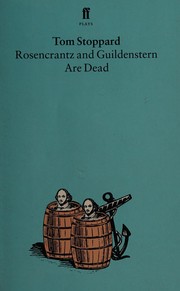
Rosencrantz and Guildenstern Are Dead
Stoppard's 1966 play retells Hamlet from the wings, where two minor courtiers wait, joke, and walk toward a death they cannot see.
2,021-word summary · 9 min read

Fathers and Sons
Arkady brings the nihilist Bazarov home to his father's estate, and a generational argument turns into love, a duel, and an early death.
2,192-word summary · 10 min read
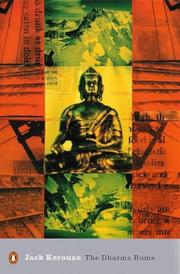
The Dharma Bums
Ray Smith rides freight trains, climbs Matterhorn Peak and argues about Zen with the poet Japhy Ryder in Kerouac's 1958 road novel.
2,729-word summary · 12 min read

Out of the Silent Planet
A Cambridge philologist is kidnapped and taken to Mars, where the natives are civilized and the humans are the dangerous invaders.
2,612-word summary · 12 min read
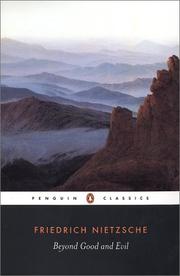
Beyond Good and Evil: Prelude to a Philosophy of the Future
A guide to Friedrich Nietzsche's Beyond Good and Evil: its attack on moral prejudice, the will to power, master and slave morality, and the philosopher of the…
2,597-word summary · 12 min read
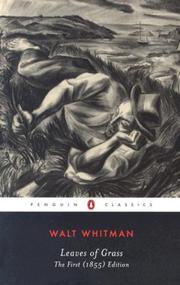
Leaves of Grass
Free verse songs of self, America, bodies and democracy.
2,240-word summary · 10 min read
A Canticle for Leibowitz
After nuclear war, monks save books across centuries while the world rebuilds and falls again.
2,381-word summary · 11 min read
The Fall
A fallen Paris lawyer confesses in an Amsterdam bar, tracing guilt from Paris success to a bridge he failed to face.
2,220-word summary · 10 min read
Solaris
Kelvin reaches a silent station above Solaris and finds grief made solid when the ocean returns his dead wife Rheya, testing memory, science, and the limits of…
2,548-word summary · 11 min read
One Day in the Life of Ivan Denisovich
One freezing day with prisoner Shch-854 in a Soviet camp: roll call, bricklaying in the cold, bread rations, and small wins that let Shukhov call the day…
2,668-word summary · 12 min read
Demian
Hesse's 1919 German classic of Emil Sinclair, from Kromer blackmail to Demian, Abraxas, Beatrice and Frau Eva, ending in war: a short, strange guide to growing…
2,510-word summary · 11 min read
The Island of Doctor Moreau
Shipwrecked Prendick finds Doctor Moreau shaping beasts into men by pain on lost island.
2,137-word summary · 9 min read
The Dispossessed: An Ambiguous Utopia
Physicist Shevek leaves anarchist Anarres for capitalist Urras to share time theory, finding walls both places.
2,288-word summary · 10 min read
Nausea
Historian Roquentin in Bouville catalogs dread as objects turn strange in Sartre diary novel.
2,134-word summary · 9 min read
Faust, Part One
A restless scholar bets his soul against one perfect moment, then ruins an innocent girl in Goethe's 1808 verse tragedy.
2,568-word summary · 11 min read
Aesop's Fables
Short animal tales of hares, foxes, ants, and wolves that still sting: old fables in plain modern English.
2,916-word summary · 13 min read

Thus Spoke Zarathustra
A prophet comes down from ten years alone to preach the overman after the death of God.
1,983-word summary · 9 min read
Tao Te Ching: Annotated & Explained
Eighty one brief verses on the Way and effortless action, with Lin's translation and facing notes.
2,140-word summary · 10 min read
Childhood's End
Silver ships end war and want while Overlords midwife humanity's children into something beyond human.
2,054-word summary · 9 min read
The Communist Manifesto
Marx and Engels trace class struggle from bourgeoisie to proletarians, review rival socialisms, and close with a call to opposition parties. Notes on the 1848…
2,570-word summary · 11 min read
Paradise Lost
Blind Milton's epic of Satan's revolt, Adam and Eve's fall, and their hard walk out of Eden.
2,963-word summary · 13 min read
Walden
Thoreau builds a cabin at Walden Pond and spends two years testing what a person really needs to live well.
2,986-word summary · 13 min read
Steppenwolf
Harry Haller, half man and half wolf in his own mind, dances, loves, and enters a magic theatre in Hesse's strange 1927 novel.
3,181-word summary · 14 min read
Waiting for Godot
Two tramps wait by a tree for Godot who never comes, with jokes, boots, and silence.
2,045-word summary · 9 min read
The Republic
Socrates debates justice and sketches a city ruled by philosophers, with the cave and the soul.
2,167-word summary · 10 min read
The Man in the High Castle
In a 1962 America split between Japan and Germany, an antiques dealer, a craftsman, and a judo teacher cross paths over a banned novel claiming the Allies won,…
2,317-word summary · 10 min read
Starship Troopers
Rico earns citizenship through Mobile Infantry drops against Bugs.
2,071-word summary · 9 min read