

Reading options
What's inside (8 sections)
I put off North and South for years because I thought I knew what it would be. Stern Victorians and mill smoke and a moral about workers and masters shaking hands. A friend who loves Gaskell talked me out of that flat idea. She said the 1855 book from Chapman and Hall, first run in Household Words in 1854 to 1855 with a title pushed on Gaskell by Dickens, reads like a romance wrapped around a strike novel wrapped around a family secret. I started it on a quiet week with tea going cold beside me. By page one hundred I was arguing out loud with Margaret Hale, which is always a good sign.
Margaret is nineteen when we meet her. She lives in Helstone in the south of England, a leafy parsonage world of lanes and roses. She is clever and proud. She is used to being admired for her beauty and her steady manners. Her father Richard Hale is the parson. Her mother is delicate and fretful and attached to comforts. Her brother Frederick is away at sea and rarely named in company. Her cousin Edith is about to marry well in London. Margaret helps with the wedding fuss while feeling oddly apart from it.
That apart feeling matters. Margaret thinks of herself as someone who does her duty without complaint. She also thinks she knows how the world should run. Milton will test both ideas until they crack.
From Helstone to Milton
The move comes fast and without drama on the surface. Richard Hale leaves the Church over doubts of conscience that Gaskell keeps private rather than doctrinally specific. He does not preach a new creed. He steps down because he cannot in honesty say the words required of him. For a parsonage family, that choice means ruin of a quiet kind. No house. No income. Gossip in every lane.
They leave Helstone for Milton, a manufacturing town in the north modeled on Manchester. They rent a small house on a noisy street. The air smells of smoke. Carts rattle past at dawn. Margaret, who loved trees and silence, hates it on sight. Her mother sinks into low spirits. Her father finds work as a private tutor to local men who want classics and logic after factory hours. Margaret tries to hold the household together while grieving the woods she left.
One of his pupils matters more than the rest. John Thornton is a mill owner in his thirties, self made after early family failure. He comes to Mr Hale for study in the evenings, stiff and blunt and hungry to improve himself. Margaret meets him at home and dislikes him at once. She finds him hard and money proud. He finds her haughty and ignorant of trade. Their first talks snap with mutual misreading. She quotes poetry at him as if books settle wages. He answers with plain talk about risk and responsibility for hundreds of hands.
Margaret finds other company that suits her better at first. Nicholas Higgins is a mill hand with a sharp tongue and a thoughtful mind. His daughter Bessy is ill with the lung sickness that follows cotton dust. Margaret visits their bare rooms with soup and concern. She listens. Higgins argues. Bessy coughs and talks of death with a strange calm. These scenes give the book its heartbeat. Gaskell knew Manchester life from charity work and from listening, and it shows in small touches like Bessy asking for flowers she will never see grow outdoors.
Mr Bell enters as an old Oxford friend of Mr Hale. He is dry and kind and childless, with property in Milton and a habit of saying what he thinks. He likes Margaret at once. He offers practical help without fuss. He will matter hugely at the end, though here he mostly watches and jokes and steadies Mr Hale.
I loved this opening movement despite its slowness. Gaskell takes her time settling the Hales into Crampton Crescent and introducing Milton street by street. Some readers will itch for plot. I found the patience worth it because contrast builds. Helstone softness against Milton hardness. Margaret certainty against Thornton certainty. You can feel the collision coming.
Thornton and the mill world
Thornton owns Marlborough Mills, a large complex with a yard and a tall chimney and rows of workers who depend on his orders. He lives on the premises with his mother and sister, which tells you much about him. Mrs Thornton is formidable, fiercely loyal to her son after raising him through poverty. Fanny Thornton is silly and fond of display. Thornton himself works long hours, eats plainly, and expects the same iron discipline from others that he demands from himself.
Margaret sees only the iron at first. She watches him handle a dispute with cool authority and calls it tyranny in her head. He watches her carry herself like a southern lady among northern folk and calls it scorn. Both are partly right and mostly wrong. Thornton runs his mill with a mix of care and blind pride that Margaret slowly learns to read.
Gaskell uses dinners and calls to stage their clashes. At one party, Thornton and Margaret argue over whether masters and men owe each other anything beyond wages. He says supply and demand must rule or all will fail. She says human duty must rule or success means nothing. Neither listens well. Later, at the Thorntons house, Margaret plays piano under pressure and hates being shown off. Thornton watches her with growing interest that he tries to crush as unsuitable.
What keeps these scenes alive is that Gaskell grants Thornton an inner life. We see him after Margaret leaves a room, standing still and replaying her words. We see him with his mother, tender in a guarded way. We see him studying Latin late at night because he refuses to be thought coarse. He is not a villain who will learn kindness in one speech. He is a competent man with a narrow creed that experience will widen painfully.
Higgins serves as bridge and foil. He respects Thornton as a fair payer who keeps his word, even while he fights him over union rules. He likes Margaret for her spirit, even while he teases her southern notions. Through Higgins, Margaret learns that mill folk have politics and pride and internal splits. Not all hands think alike. Some want the strike. Some fear it. Bessy, fading on her bed, begs her father to avoid violence while holding to his principles.
The book is frank about money here in a way I liked. Thornton explains his contracts and his risks without apology. Higgins explains hunger and short time without self pity. Margaret, who never handled accounts, starts to see that goodwill alone does not pay wages when American orders stop. Her education in economics comes through faces, not charts.
Strike and the stone
The strike forms the center of the novel and its most famous scene. Trade slumps. Masters propose lower wages. The union, with Higgins active though skeptical of full stoppage, calls men out. Thornton, who stocked material early and refuses to bend, brings in Irish hands to keep frames running. Feeling in town turns bitter. Crowds gather. Talk of machine breaking floats in the air.
Margaret gets caught in this through Thornton. She happens to be at Marlborough Mills when a crowd surges into the yard demanding the Irish workers. Thornton faces them alone on the steps, cool and contemptuous, refusing to fetch soldiers at once. Margaret, terrified that he will be killed, runs out and stands before him with her arms spread, shouting at the crowd to stop. A stone flies. It strikes her head. Blood runs down her face. The crowd, shamed by hurting a lady, wavers and breaks.
That moment changes everything between the two leads and nothing in public. Thornton misreads her act as love. He proposes soon after in a scene full of pride and feeling. Margaret, still stung by his harshness toward workers and still nursing southern ideas of a gentleman, refuses him with sharp contempt. She says she would not marry him if he were the last man alive. He leaves white faced. She weeps after, not from love but from shame at her own violence of speech.
The stone scene binds Margaret and Thornton in misunderstanding as much as admiration.
Gaskell handles the strike itself with sympathy for both sides and impatience with both slogans. She shows masters dining together and pledging to hold firm while quietly fearing ruin. She shows union men sharing bread while accusing each other of betrayal. Higgins loses work for refusing to join a violent plan. A poor neighbor named Boucher, with a large family and little resolve, joins the strike from pressure, then despairs when relief funds thin. Bessy grows weaker as worry eats her. Margaret carries food between houses while her mother fades upstairs.
Critics often call this section slow, and I will not pretend it races. Gaskell pauses for long talks on political economy that read like essays slipped into dialogue. Thornton lectures. Higgins answers. Mr Hale moderates. If you want pure romance, you will skim here. I found the debates dated in terms yet fresh in feeling. Replace cotton with tech layoffs and the fear sounds current.
The strike ends without triumph. Orders return patchily. Men drift back on reduced terms. Boucher drowns after a final quarrel, leaving orphans that Higgins and Margaret take on. Thornton keeps his mill but loses margin and health. No one declares victory. That refusal of a clean win felt honest to me.
Family trouble and a station lie
While Milton hardens Margaret, Helstone ghosts return through Frederick. Her brother, a naval officer, took part years earlier in a mutiny over brutal discipline. He fled and built a life in Spain under another name. If he returns to England, he faces arrest and possible hanging. Margaret adores him. Her parents speak of him in lowered voices. Letters arrive rarely through careful channels.
Frederick comes secretly when their mother worsens. He slips into Milton under cover of night. Margaret meets him with joy so sharp it scared me a little on the page. They sit with their dying mother. They walk in shadows. For a few chapters, Margaret softens into a sister rather than a judge. Frederick is warm and quick and rash, everything Thornton is not.
Disaster follows a chance meeting. On a late platform at a railway station, Frederick argues with a drunk fellow passenger who recognizes him from the ship. The man, Leonards, grabs at him and threatens exposure. Frederick shakes him off. Leonards falls down stone steps and later dies of the injury. Margaret was there. She lied to police afterward, saying she was not present, to shield her brother. She thought the fall minor and the inquiry routine. It was not.
That lie stains the rest of her story. Thornton sees Margaret at the station at night with a strange man and without explanation. He says nothing but notes it. Later, when a police inquiry reaches Milton and Thornton serves as magistrate, he shields her without being asked, then watches her deny under oath that she was there. He thinks she protects a lover. His contempt mixes with his love and poisons both.
Margaret also loses anchors in quick succession. Her mother dies after long decline. Her father, worn by grief and by his odd position between south and north, dies suddenly at Oxford while visiting Mr Bell. Margaret is left orphaned and shaken, her earlier pride in ruins. She goes to London to stay with her cousin Edith and her lighthearted husband, feeling like a ghost at bright dinners.
Margaret tells one lie to save Frederick and pays for it in lasting shame.
I found this stretch the most moving and the least tidy. Gaskell piles loss upon loss. Bessy dies. Mrs Hale dies. Mr Hale dies. Boucher dies. Leonards dies. Each death serves theme or plot, but together they feel heavy handed. Modern readers may call it melodrama. I felt it as Victorian earnestness about mortality rather than cynical stacking. Still, I wished Gaskell had spared one parent to let Margaret breathe.
The Frederick thread also shows Gaskell at her most careful with law and honor. Margaret knows lying was wrong yet cannot regret shielding a brother from death. Thornton knows she lied yet loves her still. Neither can speak plainly because honor codes forbid it. Their silence costs them a year of possible trust.
Inheritance and a second chance
Mr Bell becomes Margaret guardian in all but name. He settles her in London, watches her restlessness with amusement, and slowly reveals his plans. He owns land in Milton under Marlborough Mills. Rents from Thornton form part of his income. He likes Thornton despite their spats. He loves Margaret like the daughter he never had.
Back in Milton, Thornton fights a losing battle with markets. After the strike, he tried experiments in dining rooms and closer contact with men, urged in part by Margaret words he would not credit to her face. Higgins came to work for him directly after honest talks. For a time it looked like a new model might hold. Then a bad contract and tight credit broke him. He must give up the mill and the house and start again as a jobber.
Bell death shifts the board. He leaves Margaret a large legacy centered on Milton property, including the ground under Marlborough Mills. Margaret, now an heiress, returns north to settle affairs. She meets Higgins, who speaks of Thornton with rough affection. She sees the empty yard and the silent frames. She learns how Thornton kept her secret at the inquest and how he refused to use her lie against her even when it stung him.
Their reunion comes in a business room, not a ballroom. Margaret offers Thornton a loan on plain terms so he can restart with Higgins as a partner in management. He accepts with difficulty. Talk turns personal. He says he loves her still but expects nothing. She, changed by grief and by London hollowness, tells him she cares and proves it by action rather than speech. The book closes on their engagement, quiet and unsentimental after so much noise.
Margaret returns as a landlord and chooses Thornton as a partner in work and in life.
I liked that Gaskell makes money the bridge rather than erasing it. Margaret does not rescue Thornton with a hidden gift that costs her nothing. She risks capital and reputation. He does not take it as charity but as trust to be repaid. Their marriage starts as a joint enterprise. For a novel often shelved as romance, that practical note feels modern.
Higgins gets a decent close too. He keeps work and dignity and a role in the new scheme. His children and the Boucher orphans have a steadier roof. It is not utopia. Wages remain tight. Masters still argue. But the book suggests that steady contact between thinking people can soften cash relations without pretending they vanish.
What holds up and what drags
What holds up starts with Margaret. She is prickly and moralizing and often wrong, which makes her growth matter. Early Margaret judges Thornton by southern manners and finds him vulgar. Late Margaret judges him by conduct under pressure and finds him worthy. Early Margaret pities Higgins from above. Late Margaret asks his counsel as an equal. That arc is earned through humiliation rather than lecture, mainly the station lie and its fallout.
Thornton holds up as well. He is one of the more complete industrial heroes in Victorian fiction. Proud without being cruel. Tender with his mother without being soft. Capable of change without flipping character in a chapter. His proposal and refusal scene still stings. His silent protection of Margaret at the inquest, while believing she loves another man, shows a decency that speeches could not.
The Milton texture holds best of all. Market talk and mill yards and union meetings and sickrooms. Gaskell writes work with respect. She lets Higgins speak in his own idiom without turning him into a mascot. Bessy, though saintly in death talk, feels real in her craving for air and beauty. Mrs Thornton steals every scene she enters with her grim devotion.
What drags is pace. The middle sags under debates that repeat points. Thornton states the master case. Higgins states the men case. Mr Hale mediates. Then they restate it after dinner. Gaskell researched hard and wanted readers to learn. A modern reader may wish she had cut twenty pages of theory and kept the human scenes.
Coincidence strains belief in the last third. Bell happens to own the exact land Thornton needs. Margaret happens to inherit at the exact moment Thornton fails. Frederick happens to be seen by the one man who can expose him at the one station where Thornton watches. Leonards happens to die from a fall that looked slight. Each can be excused alone. Together they feel engineered to force the ending.
Melodrama thickens near deaths and sickbeds. Characters speak long, clear speeches while dying that real people would not manage. Margaret faints and recovers on cue. Mothers bless children with hands on heads. I accepted most of it as period style, but readers new to Gaskell should expect tears wiped openly and often.
Language is rich yet uneven. Gaskell writes plain northern dialogue with skill and southern description with beauty. She also moralizes through the narrator in asides that break immersion. She tells us Margaret is noble when action already showed it. A tighter edit would help. Still, the voice stays warm and intelligent throughout.
Who should read it now. If you like slow burn romance where respect grows from clash, come for Margaret and Thornton. If you like social fiction about work and wages, come for Higgins and Bessy and Boucher. If you dislike sermons and convenient wills, be warned. Skim the essays. Stay for the people.
I finished with more affection than I started. Margaret began as a girl I wanted to shake. She ended as a woman I would trust with money and with secrets. Thornton began as a hard master I judged quickly. He ended as a man who kept faith while hurting. Milton began as noise and smoke. It ended as a place where change, though slow and partial, felt possible. That movement from south to north and back, from certainty to humility, gives the novel its lasting pull.
FAQ
When was North and South published?
Chapman and Hall published North and South in book form in 1855 after serialization in Household Words in 1854 to 1855. Dickens, who ran the magazine, imposed the title.
Is North and South part of a series?
No. It stands alone and is not part of a series.
Who are the main characters?
Margaret Hale is the lead, with John Thornton, Nicholas Higgins and Bessy Higgins, Frederick Hale, and Mr Bell close to the center of the story.
Similar books
Emma
Emma Woodhouse matchmakes Harriet Smith in Highbury while missing Mr Knightley beside her.
3,369-word summary · 15 min read
Far from the Madding Crowd
Bathsheba inherits a farm and chooses badly among three loves before seeing clearly.
1,988-word summary · 9 min read
A Room with a View
Lucy Honeychurch meets the odd Emersons in Florence, gets engaged to the proper Cecil Vyse, then must choose.
2,637-word summary · 12 min read
Austenland
A New York graphic designer obsessed with Mr. Darcy inherits a trip to a Jane Austen theme park, where the fantasy of Regency romance collides with the men…
2,030-word summary · 9 min read

The Shadow Sister
Star D'Apliese steps out of her sister's shadow and follows a bookshop clue into the Edwardian life of Flora MacNichol, a woman who gave up love for duty.
2,260-word summary · 10 min read

Howards End
Forster's 1910 novel follows two families, a house in Hertfordshire, and a burned note, asking whether money and feeling can ever be connected.
2,187-word summary · 10 min read

On Chesil Beach
Two newlyweds spend one terrible night on Chesil Beach in 1962, and the rest of their lives is decided by it.
2,456-word summary · 11 min read

Ivanhoe
A disinherited Saxon knight, a great tournament, a besieged castle and a trial by combat. Scott's most famous novel, set in England in 1194.
2,834-word summary · 13 min read

Doctor Zhivago
A doctor and poet lives through revolution, war, and love in Pasternak's novel of private life under the pressure of Russian history.
2,213-word summary · 10 min read

We
In a city of glass ruled by the Benefactor, a state engineer building a spaceship falls for a woman who wants to tear the One State down.
2,247-word summary · 10 min read
The House of Mirth
Lily Bart, beautiful and penniless at twenty-nine, navigates New York's marriage market until a Dorset yacht scandal strips her of the only currency she has.
2,468-word summary · 11 min read
Anne of Windy Poplars
Anne spends three letter-filled years as principal of Summerside High, outlasts the Pringle clan, and warms a lonely vice-principal and a dreaming little girl…
2,599-word summary · 12 min read
I Capture the Castle
Cassandra journals six months of love and money trouble in a castle.
2,402-word summary · 11 min read
Anne's House of Dreams
Newlyweds Anne and Gilbert start in a seaside house with kind neighbors.
2,465-word summary · 11 min read
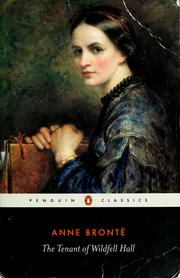
The Tenant of Wildfell Hall
Helen flees a cruel marriage, hides as Helen Graham at Wildfell Hall, and tells her full story through a long diary young Gilbert Markham must read before…
2,838-word summary · 13 min read
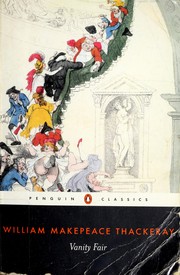
Vanity Fair
Becky Sharp schemes her way up Regency society while loyal Amelia waits, in Thackeray's witty novel without a hero.
2,698-word summary · 12 min read
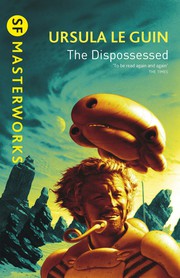
The Dispossessed: An Ambiguous Utopia
Physicist Shevek leaves anarchist Anarres for capitalist Urras to share time theory, finding walls both places.
2,288-word summary · 10 min read
Lady Chatterley's Lover
A baronet's wife, starved in a marriage the war broke, takes the gamekeeper as her lover. Lawrence's banned 1928 novel of class and touch.
2,566-word summary · 11 min read
The Scarlet Pimpernel
A foppish baronet rescues aristocrats from the guillotine while his French wife hunts the hero she scorns.
2,980-word summary · 13 min read
The Constant Princess
Catalina of Spain becomes Katherine, outlasts poverty and spies, and wins Flodden as Henry's queen.
2,065-word summary · 9 min read

The Age of Innocence
Engaged New York lawyer Newland Archer falls for Ellen Olenska, his fiancee's cousin fleeing a bad marriage, and must choose between love and duty in 1870s old…
3,100-word summary · 14 min read
So Long, and Thanks for All the Fish
Arthur Dent finds Earth back again and meets Fenchurch, who sensed the planet's odd moment, in Adams's softer fourth Hitchhiker novel from 1984.
2,448-word summary · 11 min read
Middlemarch
Idealistic Dorothea marries dry scholar Casaubon while ambitious doctor Lydgate marries Rosamond, and a Midlands town watches both marriages strain.
2,883-word summary · 13 min read
Anne of the Island
Anne leaves Avonlea for Redmond College, shares Patty's Place with friends, and learns to tell admiration apart from love.
2,766-word summary · 12 min read

White Nights
A lonely dreamer spends four summer nights with Nastenka in Petersburg, listening, hoping, then losing her at dawn.
2,927-word summary · 13 min read
The Tempest
Prospero raises a storm to wreck his enemies on his island, where his daughter meets a prince and old wrongs face trial.
2,890-word summary · 13 min read
The Hunchback of Notre-Dame
Quasimodo loves Esmeralda from the bells while Frollo lusts and Gringoire watches Paris burn in 1482.
1,939-word summary · 9 min read
The Phantom of the Opera
A masked Erik haunts the Paris Opera, coaching Christine Daae while rivaling Raoul for her. Chandelier crash, cellar lake, and unmasking follow.
2,307-word summary · 10 min read

Breakfast at Tiffany's
A writer recalls his 1943 neighbor Holly Golightly, wild and kind, in a Manhattan brownstone, plus three short stories from Capote's 1958 collection.
2,215-word summary · 10 min read
For Whom the Bell Tolls
An American dynamiter joins Spanish guerrillas for three days to blow a mountain bridge, finding love and doomed courage.
2,286-word summary · 10 min read