
Reading options
What's inside (6 sections)
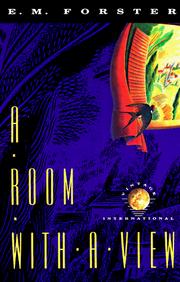
I came to this novel late, after seeing the film years ago and remembering only sunlight, a hillside, and a very annoying fiance. Reading the book felt different, sharper and funnier than I expected. A Room with a View by E.M. Forster was first published in 1908 by Edward Arnold, a 321 page first edition. The summary here follows the Vintage Classics paperback, which runs 256 pages with ISBN 9780679724766. It is a standalone novel, a comedy of manners set between Italy and England. I read it slowly over a week, often in the morning, and found myself arguing with Lucy in the margins.
Lucy Honeychurch is young, middle class, English, musical, and restless without quite knowing it. She plays the piano well, which in this book means more than accomplishment. When she plays, she shows feeling she hides in talk. She travels to Florence with her older cousin Charlotte Bartlett, who acts as chaperone. Charlotte means well and worries without pause. She minds rules about what young ladies should do, whom they should speak to, and how gratitude should be expressed. Lucy loves her and also chafes under her. That tension drives the first half.
The novel opens on a complaint that sounds small and turns out to matter. The two women booked south rooms with a view at the Pensione Bertolini, and the landlady has given them north rooms that look into a courtyard, far apart from each other. Charlotte protests in the dining room. At a nearby table sit Mr Emerson, an older man with plain speech and odd manners, and his son George, quiet and low in spirits. The old man hears the trouble and offers at once to swap rooms, since he and his son already have views. He says women like looking at views and men do not, thumping the table as he speaks. Charlotte is shocked by the forwardness. Lucy is tempted and confused. A clergyman they know, Mr Beebe, happens to be staying at the same pension. He knows the Honeychurches from home in Surrey and smooths things over, and the swap goes ahead. Lucy gets her view over Florence. She also gets a problem, because accepting kindness from the wrong sort of people will be held against her.
The pension and its people
Forster fills the Bertolini with types he clearly enjoyed mocking. Miss Eleanor Lavish is a novelist who announces she will write about everything she sees and who chases local color without much care for the people living it. Mr Eager, an English chaplain in Florence, lectures about churches and the lower classes with equal confidence. Miss Alans, two maiden sisters, watch everything kindly. Mr Beebe moves among them all, decent and observant, fond of Lucy, slower than he thinks to judge others.
The Emersons do not fit. Old Mr Emerson speaks about death, love, and honesty in front of strangers. He asks direct questions. He tells George to be natural. George barely speaks at first. He looks tired and sad, and Lucy notices him the way one notices weather changing. On an outing to Santa Croce, the great church, Lucy goes off without her guidebook and runs into the Emersons among the tombs and frescoes. They talk about beauty and about how to look at things. Later, in a square, Lucy witnesses a sudden street quarrel in which an Italian man is stabbed. The crowd surges. She faints. When she comes round, George is there. He has caught her and steadied her, and he deals with the small aftermath, including her photographs spotted with blood, with a practical calm that stays with her.
I liked these early chapters best. Forster writes Florence as heat, stone, noise, and sudden quiet in churches. He also writes English tourists with a light hand. The jokes about guidebooks, proper behavior, and who may speak to whom still land. If there is a criticism this early, it is that Lucy can seem passive. Things happen around her while Charlotte decides. But passivity is the point for now. Lucy has been trained to let older people arrange her life, and Italy starts to loosen that training whether she wants it or not.
The famous outing comes next. The whole pension party drives out in carriages toward Fiesole, with Italian drivers who misunderstand directions in ways Forster uses for comedy. The party splits. Lucy finds herself alone on a hillside terrace among violets with George. He has been watching her across churches and dining tables, and here, with the plain below them, he kisses her without asking. It is sudden and clumsy and sincere. Charlotte arrives at the worst moment, sees it, and pulls Lucy away. She demands that Lucy tell no one, not even her mother, and insists they leave Italy sooner than planned. Lucy agrees, partly from shame and partly from confusion about what she feels. George says little. His father, when told, looks grave and does not excuse him, though he also does not treat it as ruin.
That kiss shapes everything after. Lucy tells herself it meant nothing. Charlotte tells herself she saved Lucy. Both are wrong in interesting ways.
Windy Corner and Cecil Vyse
The second half moves to Surrey, to the Honeychurch house called Windy Corner. Mrs Honeychurch is blunt and fond of her children. Freddy, Lucy's brother, is good humored and fond of sport and fresh air. The house runs on teasing, music, and walks. Into this arrives Cecil Vyse, a London young man of taste and money who wants to marry Lucy. Cecil reads books, visits galleries, and speaks well about art and literature. He finds the Honeychurches lively and a little common. They find him clever and a little cold. Lucy accepts him.
I found Cecil both funny and painful to read. Forster gives him excellent lines about music and books and then shows him failing at ordinary kindness. He tries to shape Lucy into a work of art rather than know her. He dislikes her playing when it shows too much feeling. He corrects her family. He means to be generous, and sometimes is, but his generosity always comes with instruction. Mrs Honeychurch sees through him faster than Lucy does. Freddy likes him less with each visit. Mr Beebe, who first encouraged the match, grows doubtful. Lucy defends Cecil because a good match should be defended, and because admitting doubt would mean admitting the kiss in Italy still matters.
Then the Emersons return, by Cecil's own doing. Wanting to appear broad minded, Cecil helps them rent a nearby villa that has stood empty. Sir Harry Otway's place, small and pleasant, close enough for visits. Lucy is horrified and tries to hide it. Charlotte, back in England, is horrified and tries to manage it. Freddy, by contrast, befriends George at once. They bathe together in a pond in the woods with Mr Beebe, a scene Forster writes as pure release. Three men of different ages splashing and shouting, with Cecil arriving on the path in his town clothes to watch. It is comic and it is also a judgment. The pond stands for ease with the body and with nature. Cecil stands outside it, literally and in every other way.
Lucy keeps meeting George on walks, at the church, at tennis. Each time she tells herself and others that she feels nothing special. Forster gives these denials chapter titles that accuse her gently. Lying to George. Lying to Cecil. Lying to her mother and brother and servants. The repetition is deliberate and, to my taste, the strongest device in the book. Lucy is not a liar by nature. She lies because the truth would cost her the safe life she agreed to. Each lie is small. Together they form a wall.
Music keeps breaking through. Lucy plays Beethoven and Schumann in the drawing room while Cecil talks over the end. Forster uses those scenes to show what Lucy cannot say. At the piano she is bold. Away from it she agrees with whoever spoke last. Mr Beebe notices before Lucy does, and his slow change of mind about Cecil and George gives the reader permission to change too.
The secret from Italy leaks in an absurd way. Miss Lavish, who heard the story from Charlotte, puts the hillside kiss into her new novel, changing names but nothing else. Cecil reads the passage aloud one afternoon without knowing what he holds, praising its style while Lucy sits frozen. Freddy and others listen. Lucy understands that Charlotte talked after promising silence, and that her private moment has become entertainment. The scene is cruel comedy, and it pushes Lucy to act. She cannot keep pretending the past is buried when it is in print.
Breaking it off and telling the truth
Lucy ends her engagement to Cecil, and Forster handles the interview well. She meets Cecil in the garden and speaks plainly for once. She says he does not really see her, that he wants an ornament, that she cannot marry him. Cecil argues, then condescends, then leaves hurt. Some readers may feel sorry for him here, and Forster allows a little of that. Cecil loved in his way. His way was not enough.
What follows is messier and truer than a clean switch from one man to another. Lucy does not run to George. She announces she will travel to Greece with the Miss Alans to escape gossip and think. She tells George, when he presses her, that she does not love him. She tells her family she is tired. She almost convinces herself. Then old Mr Emerson comes to Windy Corner to say goodbye before the Emersons leave, finds Lucy alone, and talks to her as no one else has.
The talk matters so much that Forster gives it a plain chapter title. Lying to Mr Emerson. The old man listens to Lucy's neat reasons and sets them aside. He tells her she loves his son and is afraid of it, that she has sinned, as he puts it, against passion and truth by denying what she feels. He speaks of his wife, George's mother, and of how briefly joy can last. He does not flatter Lucy. He asks her to stop pretending. Lucy cries, denies, then stops denying. It is the first adult conversation she has in the book where no one minds manners.
I admired this scene and also felt its age. A young woman needs an older man to explain her heart to her. Modern readers may wince. In context, though, Mr Emerson is the only person who treats Lucy as a soul rather than a role. Charlotte treats her as a charge. Cecil treats her as taste. Mrs Honeychurch treats her as a daughter to be settled. Mr Emerson treats her as a person who must choose. That is why the scene works despite its preaching tone.
Once Lucy admits the truth, events move quickly. She cancels Greece. She and George meet honestly for the first time since Florence. Charlotte tries to intervene and is set aside. Mrs Honeychurch is angry, then practical. Freddy is delighted. Mr Beebe is quiet, adjusting his view of the world. Lucy and George marry and return to Florence for their honeymoon, to the same pension, to a room with a view. Charlotte watches them go with mixed feelings. The book ends there in the main text, with Italy holding them as it did at the start, though now without chaperones and lies between them. Forster later added a short note about their later years, written in 1958, which suggests life did not stay simple. I will not spoil its details here beyond saying wars and time touch them like everyone else.
Manners, class, and what still bites
For a book often shelved as romance, this is really a comedy about English restraint. Forster mocks the fear of being thought common, the reliance on guidebooks over eyes, the way clergymen and ladies rank people by accent and address. The Emersons are not perfect rebels. Old Mr Emerson can hector. George can sulk and stare. But they say what they mean, and in this world that counts as radical. Cecil can quote poetry and still fail to see the woman in front of him. Charlotte can be kind and still do harm by guarding respectability above all.
The satire still bites because the habits survive in new forms. We no longer worry about chaperones in Florence, but we still curate matches by school and job, still praise taste over kindness, still tell young people to be sensible about love. Lucy's trap is old fashioned in detail and current in shape. Marry well. Do not make a scene. Do not trust sudden feeling. Forster does not argue that feeling is always right. George could have been a mistake. He argues that refusing to feel, as a policy, hollows a life.
Now for fair criticism, because the book earns some. The middle sags. The Surrey chapters repeat the same dance: Lucy denies, George appears, Charlotte frets, Cecil lectures. Forster knows he repeats, hence those lying titles, but knowing does not always excuse. Cecil becomes more caricature than man as the book goes on. His final scenes recover him a little, yet for long stretches he is only there to be wrong. Some modern readers will also dislike how little Lucy chooses until a man tells her to choose. I felt that too. Her piano playing promises a bolder heroine than the plot delivers until very late.
There are smaller irritations. The Miss Alans and Mr Eager blur for me on a first read. The drivers and landlords in Italy serve jokes and then vanish. Forster's narrator sometimes steps in to explain what a character means, which can flatten a good scene. And while the book mocks class snobbery, it stays inside middle class comfort. Servants and Italians remain background. A reader who wants a wider social picture will find Howards End or A Passage to India more satisfying on that score.
Still, the virtues outweigh the drag for me. The dialogue is quick. The Florence chapters glow without turning into travel writing. The pond bathing scene is genuinely liberating after so much talk of propriety. Mrs Honeychurch and Freddy give the house warmth that makes Lucy's choice feel like gain rather than escape. And Lucy herself, for all her delays, grows. Compare the girl who lets Charlotte pack her off from Italy with the woman who faces Cecil in the garden and then faces Mr Emerson in the drawing room. The change is earned line by line.
Who should read it. Anyone who likes Jane Austen's comedies of misunderstanding but wants Italy instead of the village, and music instead of letters. Anyone curious about Forster before his later, heavier novels. It also suits readers who watched the Merchant Ivory film and want the sharper edges the camera softens. At 256 pages in the Vintage paperback, it asks little time. The prose is clear, the chapters short, the cast small enough to track.
A practical note on texts. The first edition ran 321 pages from Edward Arnold in 1908. Modern reprints reset the type, so page counts differ. The Vintage Classics paperback cited here runs 256 pages. The story is the same. If you pick another reprint, your pages will shift but the chapters and order do not.
I closed the book thinking less about views than about rooms. Forster's title points both ways. A room with a view is a hotel promise, light and air. It is also a mind with an outlook, a life with scope. Lucy starts in rooms chosen by others and ends in one she chose herself. That sounds simple. For her world, it was everything.
FAQ
When was A Room with a View published and who published it?
It was first published in 1908 by Edward Arnold in London. The summary follows the Vintage Classics paperback, which runs 256 pages with ISBN 9780679724766.
Is A Room with a View part of a series?
No. It is a standalone novel, though Forster returned to similar themes in Howards End and A Passage to India.
Should I watch the 1985 film?
Yes, the award-winning Merchant Ivory film from 1985 follows the main plot closely and makes a good companion, though the book gives more of Lucy's inner thoughts.
Similar books
Far from the Madding Crowd
Bathsheba inherits a farm and chooses badly among three loves before seeing clearly.
1,988-word summary · 9 min read
North and South
Margaret Hale moves from rural Helstone to industrial Milton and clashes with mill owner John Thornton amid strikes and loss. A slow burn romance grows through…
3,098-word summary · 14 min read
Emma
Emma Woodhouse matchmakes Harriet Smith in Highbury while missing Mr Knightley beside her.
3,369-word summary · 15 min read

Howards End
Forster's 1910 novel follows two families, a house in Hertfordshire, and a burned note, asking whether money and feeling can ever be connected.
2,187-word summary · 10 min read
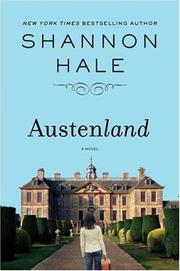
Austenland
A New York graphic designer obsessed with Mr. Darcy inherits a trip to a Jane Austen theme park, where the fantasy of Regency romance collides with the men…
2,030-word summary · 9 min read

The Shadow Sister
Star D'Apliese steps out of her sister's shadow and follows a bookshop clue into the Edwardian life of Flora MacNichol, a woman who gave up love for duty.
2,260-word summary · 10 min read
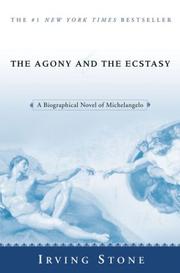
The Agony and the Ecstasy
Irving Stone turns Michelangelo's seventy years of carving, painting, and arguing with popes into a novel about the cost of making something that outlives you.
2,260-word summary · 10 min read
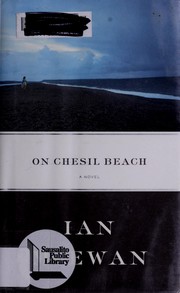
On Chesil Beach
Two newlyweds spend one terrible night on Chesil Beach in 1962, and the rest of their lives is decided by it.
2,456-word summary · 11 min read

Ivanhoe
A disinherited Saxon knight, a great tournament, a besieged castle and a trial by combat. Scott's most famous novel, set in England in 1194.
2,834-word summary · 13 min read

Doctor Zhivago
A doctor and poet lives through revolution, war, and love in Pasternak's novel of private life under the pressure of Russian history.
2,213-word summary · 10 min read
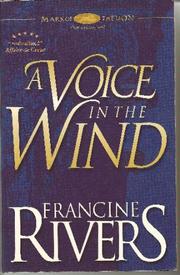
A Voice in the Wind
A young Christian slave in Rome serves a spoiled patrician daughter and catches the eye of her brother, while a captured German gladiator fights for freedom.
2,322-word summary · 10 min read
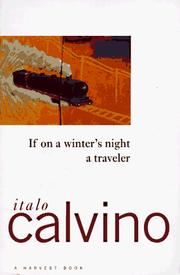
If on a Winter's Night a Traveler
You, the Reader, chase a defective novel through bookshops and translators while ten other novels keep interrupting. Calvino's famous puzzle about the act of…
2,173-word summary · 10 min read
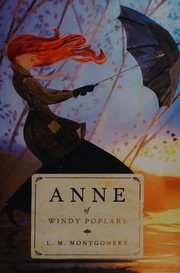
Anne of Windy Poplars
Anne spends three letter-filled years as principal of Summerside High, outlasts the Pringle clan, and warms a lonely vice-principal and a dreaming little girl…
2,599-word summary · 12 min read
I Capture the Castle
Cassandra journals six months of love and money trouble in a castle.
2,402-word summary · 11 min read
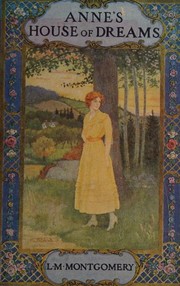
Anne's House of Dreams
Newlyweds Anne and Gilbert start in a seaside house with kind neighbors.
2,465-word summary · 11 min read
The Tenant of Wildfell Hall
Helen flees a cruel marriage, hides as Helen Graham at Wildfell Hall, and tells her full story through a long diary young Gilbert Markham must read before…
2,838-word summary · 13 min read
Lady Chatterley's Lover
A baronet's wife, starved in a marriage the war broke, takes the gamekeeper as her lover. Lawrence's banned 1928 novel of class and touch.
2,566-word summary · 11 min read
The Scarlet Pimpernel
A foppish baronet rescues aristocrats from the guillotine while his French wife hunts the hero she scorns.
2,980-word summary · 13 min read
The Constant Princess
Catalina of Spain becomes Katherine, outlasts poverty and spies, and wins Flodden as Henry's queen.
2,065-word summary · 9 min read
Love & Gelato
After her mother dies, Lina spends a summer in Tuscany, follows a journal through Florence, and learns who Howard is.
2,768-word summary · 12 min read
So Long, and Thanks for All the Fish
Arthur Dent finds Earth back again and meets Fenchurch, who sensed the planet's odd moment, in Adams's softer fourth Hitchhiker novel from 1984.
2,448-word summary · 11 min read
Beautiful Ruins
In 1962 an Italian innkeeper shelters a young American actress, a moment that echoes into modern Hollywood. Jess Walter's 2012 novel links Italy and Los…
2,973-word summary · 13 min read
Anne of the Island
Anne leaves Avonlea for Redmond College, shares Patty's Place with friends, and learns to tell admiration apart from love.
2,766-word summary · 12 min read

White Nights
A lonely dreamer spends four summer nights with Nastenka in Petersburg, listening, hoping, then losing her at dawn.
2,927-word summary · 13 min read

The Tempest
Prospero raises a storm to wreck his enemies on his island, where his daughter meets a prince and old wrongs face trial.
2,890-word summary · 13 min read
The Hunchback of Notre-Dame
Quasimodo loves Esmeralda from the bells while Frollo lusts and Gringoire watches Paris burn in 1482.
1,939-word summary · 9 min read
The Phantom of the Opera
A masked Erik haunts the Paris Opera, coaching Christine Daae while rivaling Raoul for her. Chandelier crash, cellar lake, and unmasking follow.
2,307-word summary · 10 min read
One Italian Summer
Grieving Katy meets her mother Carol at 30 in Positano and learns to see her as a young woman with wishes of her own.
2,399-word summary · 11 min read
Breakfast at Tiffany's
A writer recalls his 1943 neighbor Holly Golightly, wild and kind, in a Manhattan brownstone, plus three short stories from Capote's 1958 collection.
2,215-word summary · 10 min read
For Whom the Bell Tolls
An American dynamiter joins Spanish guerrillas for three days to blow a mountain bridge, finding love and doomed courage.
2,286-word summary · 10 min read