

State of Wonder
2,648-word summary 12 min read 353 pages in the book
- First published
- 2011
- Publisher
- Harper
- Pages
- 353
- ISBN
- 9780062049803
Reading options
What's inside (9 sections)
I came to this book sideways, through Patchett's other novels. Bel Canto gave me the opera house held hostage. The Dutch House gave me the siblings and the mansion. So I opened State of Wonder, published in 2011 by Harper in the United States with the first American edition running 353 pages, expecting another elegant house full of complicated people. Instead the floor dropped out and I was in a boat on a brown river, heading toward a woman I already feared.
That woman is Dr. Annick Swenson. If you have ever had a teacher whose approval you wanted long after you stopped needing it, this book will find you. Marina Singh, the narrator, is forty-something and sensible, a good scientist with a buried past, and Swenson still lives in her head rent free. The whole novel is Marina steaming toward her old mentor to demand answers, and dreading what the answers will cost.
A death notice in the mail
Marina works for Vogel, a pharmaceutical company in Minnesota. She is a pharmacologist, careful and quiet, the kind of researcher who double-checks everything twice. Her boss is Mr. Fox, whose first name is Jim, the chief executive. He is also her lover, though almost nobody knows. Their arrangement suits them. Dinners, discretion, no promises made aloud.
The trouble starts with a letter. It comes from the Amazon, from Dr. Swenson, and it is addressed to Mr. Fox. Swenson runs a research station deep in Brazil, funded by Vogel with what amounts to an open checkbook. She was supposed to be developing a fertility drug of astonishing promise. Instead she sends almost no reports, answers no questions, and now writes to say that Dr. Anders Eckman is dead.
Anders is Marina's office mate. A decent man, a father of three young boys, married to Karen, who keeps a warm and chaotic house. He had flown down to check on Swenson's progress because nobody else could get anything out of her. Now he is gone. The letter says fever. It gives almost nothing else. Karen, widowed by a paragraph, begs Marina to go and find out what really happened to her husband. She wants details. She wants, impossibly, to bury him properly.
Mr. Fox has his own reasons to say yes. He has poured money into Swenson's project for years and received rumors in return. He needs someone Swenson cannot brush off. Marina trained under Swenson years ago at Johns Hopkins, back when she meant to become a surgeon. Nobody else at Vogel has that history. So Marina, who has not left the country in ages and likes it that way, gets a yellow fever shot and a plane ticket.
I liked how Patchett sets the stakes here without melodrama. Nobody is a villain yet. Fox is evasive but not cruel. Karen's grief is plain and specific: three boys asking where their father is. Marina agrees out of guilt as much as loyalty. She knows Anders went in her place, in a sense. She was the one with the connection to Swenson. That quiet guilt hums under everything she does for the next three hundred pages.
Manaus, and waiting
Manaus is where the novel slows down, and where some readers will either settle in or start checking the page count. Marina flies into the heat of the Brazilian interior and discovers that finding Swenson is only slightly easier than finding a particular fish in the Amazon. The research site moves. Radio contact is rare. The only people who know anything are an Australian couple, Jackie and Barbara Bovender, who live in Manaus and run interference for Swenson. They are friendly in the way of people with firm instructions. They feed Marina, drive her around, and tell her nothing useful.
So Marina waits. Weeks of it. She takes a room, learns the city in pieces, swims, sweats, gets her shots updated, and tries not to think about what Karen is enduring back home. Patchett is generous with this stretch. The markets, the rain, the opera house rising out of the jungle city like a rumor, the strange floating feeling of being between assignments. Some of it drags. I will admit I wanted to shake Marina and put her on a boat by day five.
But the waiting does real work. It shows how helpless a competent American professional becomes without her systems. Marina cannot charm, buy, or schedule her way to Swenson. The Bovenders smile and stonewall. Milton, a local taxi driver who ferries people around, becomes more useful than any company contact. And underneath the boredom, Marina's dread builds. She keeps remembering her student years under Swenson, and the reason she quit surgery, and the chapters let those memories surface in fragments before explaining them.
Then Swenson simply appears. No warning, no ceremony. She walks into Manaus, seventy-something and formidable, and informs Marina that she will come upriver. Just like that, the waiting ends. Patchett handles the moment beautifully. Marina has rehearsed speeches for this reunion. They evaporate. Swenson looks her over like a specimen and finds her adequate, and Marina feels fifteen years old again. If you have ever rehearsed a confrontation for weeks and then mumbled through it, you know exactly how this scene feels.
Upriver to the Lakashi
The journey upriver is the book's great passage. They travel by boat, and the pilot is Easter, a young deaf Lakashi boy whom Swenson has taken under her wing. He reads the water the way other children read picture books. Marina watches him work the currents and starts to understand that Swenson, for all her coldness, is loved here in a way no Vogel org chart could explain.
The station sits near the encampment of the Lakashi, an Indigenous people who live deep in the forest. Patchett keeps the Lakashi at a certain distance, seen mostly through Marina's outsider eyes, which is both a choice and a limitation I will come back to. What matters for the story is their astonishing trait. Lakashi women bear children through their whole lives, into ages when other women are long past menopause. Girls and grandmothers nurse babies side by side. The cause, Swenson believes, is the bark of a tree that grows only in their territory, which the women chew across their lives. She calls them martin trees.
Anders, Marina learns, is buried nearby. Swenson takes her to the grave. There is a marker, a place, earth that has settled. Marina stands over the ground where her colleague lies and feels the mission shift. She came to bring back answers and perhaps remains. Now the answers look thinner than she hoped and the remains look impossible to move. She writes to Karen with what she has, which is almost nothing, and hates every careful sentence.
Life at the station falls into rhythm. Marina helps where she can, observes, waits for Swenson to talk. The doctor rations information like medicine, which in a sense it is. Slowly the picture of the research sharpens, and it is stranger and larger than a fertility product for wealthy clients back home.
Bark, babies, and a second medicine
Here is what Swenson has actually been doing with Vogel's blank check. The bark does seem to extend fertility, and a drug from it could let women bear children late in life. That is the product Vogel thinks it is funding, the miracle that would sell itself. But Swenson has found something else in the same bark. It also protects against malaria. The Lakashi, chewing it all their lives, barely suffer from a disease that kills across the tropics.
Swenson cares about the second discovery far more than the first. A malaria protection derived from this bark could save multitudes, and no profit-driven company would fund its development, since the people who need it cannot pay. So she keeps the fertility work visible enough to hold Vogel's interest while pouring the real effort into the malaria project in secret. She also keeps the location hidden because she believes exposure would destroy the Lakashi. Loggers, prospectors, journalists, rival labs: any of them could finish what centuries left intact.
It is a strong moral knot, and Patchett ties it tighter with one more turn. Swenson, at seventy-three, has made herself the first human test subject of the fertility work. She is pregnant. She announces it the way other people announce a change in the weather. Marina, a pharmacologist who understands exactly what that means for a body of that age, is horrified and then, despite herself, fascinated. The old monster has staked her own flesh on her science.
I found these chapters the most alive in the book. The ethical questions refuse to sit still. Is Swenson stealing from her funder or rescuing money for the people who need it most? Is she protecting the Lakashi or using them as a living laboratory while deciding their future alone? Marina argues, backslides, argues again. Swenson swats each objection aside with the ease of long practice. Neither woman is entirely wrong, which is what makes their conversations worth reading.
The uncomfortable thought that stayed with me: every cure has an address, and someone always decides who lives there.
The student and the teacher
To understand why Marina cannot simply defy Swenson, Patchett unwinds their history. Years earlier, Marina was Swenson's student, a promising young doctor training in obstetrics. During a delivery, a mother died. The details arrive in pieces, the way real memories do, but the shape is plain. A catastrophic hemorrhage, a young doctor too slow or too sure, a woman dead on the table, a baby motherless. Swenson's judgment afterward was pitiless. Marina left surgery altogether and rebuilt herself in the lab, where mistakes kill hypotheses instead of people.
This backstory could have felt like a planted device. In Patchett's hands it lands as character. Marina's caution, her double-checking, her terror of being responsible for another death: all of it flows from that room. And Swenson's cruelty then explains Marina's paralysis now. She has spent her adult life proving she is competent enough to stand near that woman again. Standing near her turns out to be different from standing up to her.
There is also the matter of Marina's own body, which the novel treats with unusual frankness. As a student she ended a pregnancy, with consequences that shaped her later choices. Patchett does not stage this as a debate topic. It sits inside Marina as private knowledge, coloring how she watches Lakashi mothers, how she hears Karen's grief, how she regards Swenson's late-life pregnancy. Readers who want the novel to take a side on its fertility questions will find it refuses. It keeps pointing at the women instead, one by one, and asking what each of them actually chose.
The night everything turns
Late in the book, Mr. Fox arrives in Brazil. He has run out of patience and flown down with Mrs. Bovender and Milton driving, determined to see his investment with his own eyes. The trip upriver goes wrong in a way I will not fully detail, except to say a boat is attacked near territory Patchett has taught us to fear, and in the chaos Mrs. Bovender glimpses a white man among a remote group. She thinks, wildly, that he looks like her own long-lost father. The detail lodges in Marina's mind like a splinter.
Around the same time, Swenson's pregnancy fails. The fetus dies, and Swenson, with characteristic command, requires Marina to operate. Marina, who has not cut into a living person since her training years, must perform a Caesarean on her own former teacher in a jungle station. The baby is born still, with a severe condition in which the legs are fused, and does not survive. Patchett writes the scene with clinical calm that makes it harder to bear. Two women who have spent the book circling each other meet at last in the starkest possible intimacy: doctor and patient, student and teacher reversed, grief without ceremony.
Afterward Swenson admits something she should have said months earlier. She never confirmed Anders's death. She buried someone, or ordered someone buried, on thin evidence, and wrote the letter that shattered Karen's life. The white man glimpsed upriver might be Anders after all, alive among a remote tribe, held or kept or simply stuck.
What follows is the novel's most argued-over stretch. Marina and Easter set out to find him, and they do: Anders is alive. But the tribe will not release him except in exchange. They want Easter. Marina, who came to the jungle to undo one loss, agrees to a trade that creates another. She brings Anders home and leaves the boy behind. Swenson, who loves Easter as close to fiercely as she loves anyone, receives this news with outrage that finally cracks her armor. Anders returns to Minnesota, to Karen and the boys, dazed and thinner. Marina follows, carrying what she knows about the bark, the two medicines, and the price of the rescue.
I will not pretend this sequence is tidy. It moves fast after so much slowness, and it asks the reader to accept several turns of luck and hard bargaining in a row. It also lands emotionally, because every character pays. Anders gets his family but loses years he cannot explain. Marina gets her answers but loses Swenson's regard and something of her own clean conscience. Easter, the quietest person in the book, pays most. Patchett knows it, and lets the discomfort sit instead of smoothing it over.
Coming home
The ending divides readers, and I understand both camps. Marina returns to Minnesota changed in ways she cannot report to Vogel. She tells Fox only part of what she learned, shielding the malaria work and the Lakashi as Swenson would want. Her romance with Fox, built on discretion, does not survive full honesty in either direction. Anders is home, which answers Karen's prayer and leaves Marina oddly beside the point, the messenger whose errand ended.
Some readers find this quiet. After the jungle's scale, Minnesota looks small on purpose. I found it honest. Marina does not come back a hero. She comes back a woman who finally acted instead of double-checking, and who must live inside what her action cost. The novel's last movement asks who medicine belongs to: the funders, the doctors, the tribe that chewed the bark for generations without calling it research. It does not answer. It leaves Marina, and us, holding the question.
Fair criticism, then. The Manaus middle is slow, and Patchett's Brazil sometimes feels assembled from the outside, a criticism other reviewers raised at the time about its view of life beyond home. The Lakashi stay background to the white doctors' drama, which sits uneasily beside the book's own warnings about using people. Swenson herself can read as a brilliant-tyrant type the novel never fully punctures. And the final exchange, Easter for Anders, will strike some readers as a turn too far, grief mathematics that no one should accept.
Still, the book holds. Swenson is one of the memorable creations in recent fiction, terrifying and, in flashes, tender. Marina's fear feels true on every page, and her growth never arrives as a speech. The science plot respects the reader's intelligence without drowning the story. And the central image, women under the trees bearing children at every age while companies and doctors argue over who owns the blessing, keeps working on you after the last page.
If Bel Canto was Patchett's novel of captivity and The Dutch House her novel of siblings, this is her novel of consequence. Every choice bills someone. Read it for Swenson, who you will never quite shake. Stay for Marina, who learns that knowing what happened is only the start of answering for it.
FAQ
When was State of Wonder published and by whom?
Ann Patchett published State of Wonder in 2011 with Harper in the United States. The first American edition runs 353 pages and it is a standalone novel.
Is the fertility drug in the book based on real science?
No. The Lakashi people and the martin tree are invented, though the questions about drug funding and research in poor regions are real.
Does Anders stay dead?
He is reported dead at the start, but Marina later finds him living with a remote tribe, and bringing him home costs her Easter.
Similar books

The Signature of All Things
Botanist Alma Whittaker grows up in Philadelphia trade wealth, studies mosses, marries distant Ambrose Pike, and sails to Tahiti seeking how species change.
2,535-word summary · 11 min read

The Beach
A young backpacker follows a dead man's map to a hidden island community, then discovers what the people there are willing to do to keep it secret.
2,067-word summary · 9 min read

James
Percival Everett retells Huckleberry Finn from Jim's side, giving him a library, a hidden school, and a voice the novel lets loose.
2,211-word summary · 10 min read

Breath: The New Science of a Lost Art
Journalist James Nestor investigates how modern humans learned to breathe badly, and what researchers, athletes, and breathwork practitioners have found about…
2,011-word summary · 9 min read

Ivanhoe
A disinherited Saxon knight, a great tournament, a besieged castle and a trial by combat. Scott's most famous novel, set in England in 1194.
2,834-word summary · 13 min read

The Sisters Brothers
Two hired killers ride from Oregon to Gold Rush California to murder a prospector, and find their trade, their brotherhood, and the frontier myth coming apart.
2,095-word summary · 9 min read

Flight Behavior
Dellarobia Turnbow is stuck in a Tennessee farm marriage until a valley full of monarch butterflies, and the scientist who comes to study them, force her to…
2,051-word summary · 9 min read

The Orphan Master's Son
Adam Johnson's Pulitzer-winning novel follows Pak Jun Do from a North Korean orphanage to a deadly identity swap, under a state whose loudspeakers never stop…
2,219-word summary · 10 min read

The Emperor of All Maladies
A biography of cancer from Galen to chemo through one doctor cases.
2,255-word summary · 10 min read

The Hot Zone
Ebola and Marburg move from African outbreaks to a Virginia monkey house and an Army response in suits.
2,291-word summary · 10 min read

Change of Heart
Jodi Picoult's Change of Heart follows June Nealon, her ill daughter Claire, and death-row inmate Shay Bourne, whose wish to donate his heart forces a trial…
2,746-word summary · 12 min read

Daughter of Fortune
Eliza Sommers flees Chile for California gold rush San Francisco, disguised and searching for her lover, finding freedom with Tao Chi'en.
2,009-word summary · 9 min read

Crux
Two broke Mojave teens chase pro climbing dreams as friendship, class gaps, and family strain pull Dan and Tamma apart.
2,489-word summary · 11 min read

Midwives
Midwife Sibyl Danforth's storm night C section brings manslaughter charges her daughter replays for years.
2,014-word summary · 9 min read

The Cider House Rules
Homer Wells grows up in a Maine orphanage under Dr. Larch, who delivers babies and performs illegal abortions.
2,985-word summary · 13 min read

The Covenant of Water
Three generations of a Kerala family face a drowning affliction from 1900 to 1977, from child bride Big Ammachi to physician Mariamma who seeks its cause.
2,955-word summary · 13 min read
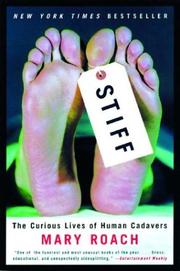
Stiff: The Curious Lives of Human Cadavers
What happens to donated bodies, from crash labs and decay farms to composting and space tests.
2,051-word summary · 9 min read

Born to Run
A hurt runner seeks the Tarahumara of Copper Canyons, finds Caballo Blanco, and joins a hidden fifty mile race about why people run.
2,679-word summary · 12 min read

The Lincoln Highway
Emmett and Billy plan California in 1954, but two escapees steal their car and drag them east to New York.
2,954-word summary · 13 min read

Cutting for Stone
Twin surgeon brothers come of age in Ethiopia and America in Verghese's sweeping medical saga.
2,664-word summary · 12 min read

Heart of Darkness
Marlow pilots a steamer up the Congo for a trading company and seeks Kurtz, the brilliant agent who stopped sending ivory and started sending reports no one…
2,315-word summary · 10 min read

The Immortal Life of Henrietta Lacks
The cells of a poor Black tobacco farmer revolutionized medicine, taken without her knowledge in 1951.
2,139-word summary · 10 min read

Life of Pi
Life of Pi retold: Pondicherry zoo, ship loss, Pi and Richard Parker in a boat, two stories.
1,936-word summary · 9 min read

Lessons in Chemistry
Lessons in Chemistry retold: Elizabeth Zott fired, TV cooking with science, Six-Thirty helps.
1,951-word summary · 9 min read

Commonwealth
An uninvited kiss at a christening breaks two marriages, and six stepsiblings share wild summers until loss and a novel pull them apart.
2,348-word summary · 10 min read

Bel Canto
An opera singer and a Japanese executive are taken hostage at a birthday party, and months of captivity turn into music, routine, and love.
3,864-word summary · 17 min read

Tom Lake
Lara tells daughters about young love with actor Peter Duke at Tom Lake.
2,600-word summary · 12 min read

Violeta
A woman born in 1920 writes her life story to her grandson, from one pandemic to another, through wealth, ruin, passion, and dictatorship in South America.
2,555-word summary · 11 min read

The Thief
A boastful young thief is pulled from a prison to steal a legendary stone for the king's magus, and the story he tells about himself is not the whole story.
2,514-word summary · 11 min read

The Only Good Indians
Four Blackfeet men who killed a pregnant elk are hunted by her spirit a decade later, and the only person who can end the cycle is a teenage girl who was not…
2,010-word summary · 9 min read