
Reading options
What's inside (8 sections)
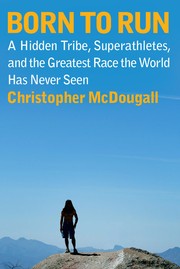
I picked up Born to Run because my own knees complained on short jogs around the block. Christopher McDougall starts in about the same place. He is a writer who likes to move, and his body keeps breaking when he tries. Doctors hand him prescriptions for rest and cushioning. One tells him the human foot was not made for running. That line sticks with him because it sounds wrong. If running wrecks us, why do kids sprint across playgrounds for fun, and why do so many adults keep going back to it after every injury. McDougall published this account in 2009 with Knopf, and the first hardcover runs 287 pages. The pages that follow are his attempt to answer that question by chasing rumors of people who run without apparent pain.
The search takes him to Mexico. In the Copper Canyons of Chihuahua, the Raramuri people, often called the Tarahumara in outside writing, have a reputation for covering huge distances on foot over rough ground. McDougall hears stories that sound almost impossible. Farmers in sandals running through heat and up steep trails. Messengers crossing canyons to deliver news. Old men outlasting younger visitors. He wants to see it himself and to learn how they avoid the injuries that plague American runners. Getting there is hard in every sense. The canyons are remote. Roads are rough. Outsiders have not always behaved well there, so trust comes slowly. His first trips produce fragments more than answers. He glimpses runners at a festival race. He hears names. He misses connections. He gets sick. He keeps returning, which gives the early part of the book its pull. You feel his frustration as leads dissolve, and you start to care about finding the quiet man in the canyons who seems to link the whole story.
Why his feet hurt
The opening chapters stay close to McDougall and his sore feet. He describes himself as big for a runner, over six feet and heavy enough that each footstrike lands with force. He loves basketball and running, yet his heels and arches keep failing. Specialists offer orthotics and softer shoes and cortisone. Friends offer conflicting advice. Rest helps for a while, then the pain returns once he builds mileage again.
What makes this section work is how ordinary it feels. Anyone who has limped home from a three mile loop will recognize the cycle of hope and setback. McDougall does not present himself as an athlete. He presents himself as a middle aged man who wants to keep moving without hurting. That humility carries the reader into the stranger parts of the book.
He also starts asking basic questions that running magazines of the era tended to skip. Why do so many runners get hurt each year even as shoes get softer and more expensive. Is pain simply the price of the sport, or does the price come from how we were taught to run. He reads. He visits coaches. He watches fast people move. A thread emerges that he will pull through the whole book. Perhaps modern runners land too hard on their heels because thick heels invite that contact. Perhaps smaller steps with a flatter foot placement would spread the load. He does not settle this in chapter one. He files it away and heads south, hoping the canyon runners can show him what durable form looks like.
There is a risk here that careful readers will notice. McDougall treats his own injury history as a clue about the whole sport. One sore runner does not prove much about shoes or form. To his credit, he seems to know this, which is why he goes looking for other evidence instead of declaring victory early.
The people who vanish up the cliffs
The Raramuri live across a maze of canyons deeper in places than the Grand Canyon. Farming on thin soil, they move between fields and settlements on foot. McDougall leans on local guides and on patient introductions to learn even a little about daily life there. Corn and beans anchor the diet. Tesguino, a corn beer, fuels festivals and work parties. Running games called rarajipari involve kicking a wooden ball over long courses, sometimes across two days, with wagers and team tactics and deep pride at stake.
McDougall is careful to show that these runners are not mascots for a theory. They are neighbors with humor and rivalries and family obligations. Arnulfo Quimare appears as a gifted young runner, calm and strong on climbs. Silvino Cubesare and other canyon runners drift through accounts of festival races where outsiders struggle to keep up. Women run too, often in skirts and sandals, over ground that would twist an ankle in seconds if you stopped paying attention.
The scenes that stayed with me involve sound more than speed. Feet brushing dust. Breathing settling into rhythm on a grade. A ball clicking ahead on rock. McDougall watches runners eat sparingly before events and laugh afterward. He notices their posture on climbs, upright and patient, and their willingness to walk when walking makes sense. Nobody lectures him about splits or heart rate. The lesson, if there is one, is attitude as much as method. Running belongs inside work and play and travel, not apart from life.
A fair caution applies. McDougall writes as an admiring visitor, and his portrait can tilt toward romance. Poverty and isolation and lack of medical care shape life in the canyons alongside running talent. The book nods at this, including the pressure of drug growers moving through the region, but it does not dwell there. Readers who want a full social history will need other sources. What McDougall offers is a doorway and a reason to respect the running culture he found.
Caballo Blanco
Every search needs a guide, and this book finds one in Micah True, known in the canyons as Caballo Blanco, the White Horse. True was an American boxer and wanderer turned ultrarunner who settled near Urique at the bottom of the canyons. He lived simply, rode or ran between villages, helped with odd jobs, and earned the trust of Raramuri runners. McDougall first hears him described as a ghost, a gringo who runs like an antelope and then disappears back into the hills.
When McDougall finally meets him, True proves blunt and practical. He distrusts fame and sponsors and fuss. He thinks most runners train too hard on too little food and joy, then wonder why they feel stale. He believes in beans and corn and easy hours on the trail. He believes in helping without making a show of it. He also believes that the best way to protect canyon running from exploitation is to keep events small and local, with money going to the community rather than to promoters.
True becomes the bridge McDougall lacked. Through him, the vague plan sharpens into something concrete. Invite a few strong American ultrarunners down for a friendly fifty mile race on canyon trails, with Raramuri runners, so both groups can test themselves and share food and stories. No big course markings. No crowds. Mules to carry supplies. A radiated sense that running can be a meeting place rather than a business. True agrees on the condition that it stays respectful and low key. That tension, between wanting the world to see these runners and wanting to leave them alone, hums through the middle of the book.
It is worth pausing on True himself. He died in 2012 while out running in New Mexico, a few years after this book appeared. McDougall could not have known that when writing. Knowing it now adds weight to his chapters. True reads here as fully alive, stubborn and kind, suspicious of praise yet hungry for connection. The book treats him as a friend rather than a saint, which feels right.
Leadville and the cost of the modern shoe
To explain the Americans who accept True invitation, McDougall detours to Leadville, Colorado. The Leadville Trail 100 began in the early 1980s when a local resident wanted to bring life back to a fading mining town. Ken Chlouber helped build an event famous for thin air and long climbs and plainspoken aid station talk. Finishers earn a line about digging deep. Nonfinishers learn how altitude can empty the legs by mile forty.
Through Leadville, we meet runners who will matter in the canyons. Scott Jurek arrives with a record of wins and a calm plant based diet that puzzles the steak and potatoes crowd. Jenn Shelton comes fast and funny, a young talent who runs with abandon and resists every attempt to make her conventional. Billy Barnett shows up as a big affable presence, proof that ultrarunning bodies come in many shapes. Luis Escobar brings camera gear and curiosity. The Leadville scenes crackle because McDougall lets these people be odd and distinct. He follows Jurek through rough patches and crew stops. He watches Shelton charm and unsettle race officials. He soaks in the small town roar at dawn starts.
The Leadville section also carries the shoe argument. McDougall visits researchers and coaches and inventors who question the thick cushioned trainer. He spends time with Ted McDonald, later known as Barefoot Ted, who runs in thin sandals modeled in part on canyon huaraches cut from tire rubber. He reports on studies of foot strike and impact, and on the idea that feet grow weak when they never have to work. He suggests that modern shoes may have altered gait in ways that raise stress on knees and hips even while they soften the feel under the heel.
Read this part with eyes open. The science as McDougall tells it is suggestive rather than settled. He favors vivid demonstrations over trial data. A lab visit or a road test with one runner cannot prove that thin footwear will save your knees. The book sometimes writes around contrary evidence instead of facing it head on. That choice keeps the story moving, but it leaves runners with real injuries in a tricky spot. If you try less shoe after reading, do it slowly and on soft ground, and treat pain as information rather than weakness. McDougall would likely agree with that caution even if his prose sometimes sounds more certain than the record allows.
Are we built to run
About two thirds through, the book widens from shoes to species. Why can humans, slow and clawless, run down animals that sprint away at first sight. McDougall gathers answers from biologists and anthropologists, including work associated with Daniel Lieberman and others who study endurance and heat. The account runs through familiar markers. Springy leg tendons that store energy. A narrow waist and mobile shoulders that counter rotation. Sweat glands across the body plus sparse hair, which let us dump heat while furry prey must stop and pant. Big buttocks that stabilize us when we run but matter little when we walk.
From these parts, McDougall builds the persistence hunting portrait. A band of hunters finds a kudu or an antelope in morning heat, then trots after it for hours. They do not need to be faster in a dash. They need to keep the animal moving so it cannot cool down. They read tracks and droppings. They drink ahead of thirst when they can. They take turns pressing. By afternoon, the animal staggers, and the hunters walk up. Whether every detail matches every hunt matters less to McDougall than the shape of the claim. Running was once useful. It fed us. It shaped our bodies. Joy in motion may be old wiring rather than modern excess.
I found this the most stirring and the least settled stretch. Stirring because it reframes a lunchtime jog as contact with something ancient. Less settled because evolution stories are easy to tell and hard to test. McDougall leans on interviews and secondary reading, not fieldwork of his own. He sometimes links traits to running a bit too neatly, as if each feature evolved for that purpose alone. Bodies are compromises shaped by many pressures. Still, the core point stands on firmer ground. Humans are unusually good at sustained effort in heat compared with many mammals, and our anatomy reflects that history. You can accept the broad picture while holding the finer claims lightly.
The race at the bottom of the canyons
Everything funnels toward Urique and the fifty mile race True helps set on canyon trails. The buildup feels like a western where the posse assembles slowly. Jurek flies in carrying expectations. Shelton arrives with talent to spare and habits that worry the veterans. Barnett brings bulk and good cheer. Escobar hauls lenses and hopes the mules cooperate. Canyon runners gather with little fanfare, eat simply, rest in shade, and study the visitors with amusement. McDougall himself decides to run, which shifts him from narrator to participant in a way that raises the stakes of the final pages.
Race day brings heat and dust and long climbs out of the canyon and drops back in. McDougall describes the sorting that happens in ultras. Early leaders push. Patient runners hold back. Stomachs turn. Feet blister. Minds play tricks around hour six or seven. He gives Jurek his due as a master of even effort and calm refueling. He gives Arnulfo his due as a climber who seems to float where others grind. He gives Shelton her due for raw courage when the day turns hard. He also shows the unglamorous work of crews and locals handing out water and directions at junctions where a wrong turn could add miles in brutal sun.
I will not spoil the order of finishers here beyond saying the day honors both traditions. What matters more than places is the mingling McDougall wanted from the start. Runners share food after. They trade stories through translators. They limp around together the next morning, laughing at sore legs. True gets the quiet event he asked for, small enough to feel human, useful enough to leave corn and goodwill behind. McDougall finishes changed, not because his feet are magically healed but because he finally trusts a gentler way of training. Shorter strides. Softer landings. More time on trails. More patience with rest. More attention to fun.
That ending lands because it stays modest. The book does not promise that sandals will fix every runner or that joy alone prevents stress fractures. Its fairest reading is as an invitation to test ideas in your own body with care. Run more often and more easily. Strengthen feet and hips. Eat real food. Sleep. Spend time with people who love the trail. Let speed come late if it comes at all.
If there is a weakness that persists past the finish line, it is selectivity. McDougall loves outliers and may underplay middling cases. He spotlights runners who thrive on high mileage or minimal footwear and spends less time on those who tried similar paths and broke down. He loves a clean mechanism, whether shoes or evolution, and may smooth over messier causes of injury like sudden jumps in load or poor sleep or life stress. None of this ruins the book. It means you should read it as a story that opens questions rather than a manual that closes them. Pair it with a coach or a physical therapist if you are hurt. Use its spirit to stay curious, not to self prescribe.
What remains after the dust settles is a warm argument. Running can be social and playful and useful. It can connect a writer with sore feet to farmers in a distant canyon and to racers at ten thousand feet. It can turn a hidden fifty mile run into a shared meal. McDougall set out to fix his stride. He came back with friends and a wider view of what the sport is for. That is why the book has lasted since 2009 while many training fads faded. It reminds runners that durability grows from patience and play, and it tells that lesson through people you will not soon forget.
FAQ
When was Born to Run published and how long is it?
Alfred A. Knopf published the first edition in 2009. The hardcover runs 287 pages and the ISBN is 9780307266309.
Is Born to Run part of a series?
No. It is a standalone work of nonfiction about running, the Tarahumara, and endurance. McDougall later wrote Natural Born Heroes and Running with Sherman.
Will this book help a hurt beginner start running?
It can, but the book warns against expecting simple fixes. McDougall stresses patience, easy miles, and attention to form over shoes alone.
Similar books
Breath: The New Science of a Lost Art
Journalist James Nestor investigates how modern humans learned to breathe badly, and what researchers, athletes, and breathwork practitioners have found about…
2,011-word summary · 9 min read
In Defense of Food
Pollan argues we stopped eating food and started eating nutrients, and offers a plain way back.
2,320-word summary · 10 min read
The Signature of All Things
Botanist Alma Whittaker grows up in Philadelphia trade wealth, studies mosses, marries distant Ambrose Pike, and sails to Tahiti seeking how species change.
2,535-word summary · 11 min read
Why We Sleep: Unlocking the Power of Sleep and Dreams
A Berkeley sleep scientist explains how sleep shapes memory, mood, and health, and what happens when we miss it.
2,755-word summary · 12 min read
State of Wonder
A researcher travels into the Amazon to learn what happened to her colleague, and finds her fearsome former teacher guarding a fertility discovery.
2,648-word summary · 12 min read
The Omnivore's Dilemma
Four meals traced from corn fields to foraging show what industrial food costs and what else is possible.
1,918-word summary · 9 min read
The Thief
A boastful young thief is pulled from a prison to steal a legendary stone for the king's magus, and the story he tells about himself is not the whole story.
2,514-word summary · 11 min read

The Blinding Knife
Kip trains to join the Blackguard while the Prism hides his true identity, loses his colors, and fights a war against a rogue drafter who wants to birth a god.
2,049-word summary · 9 min read
Ship of Magic
A sentient ship wakes when her captain dies, and the family that owns her starts to come apart over who gets to sail her.
2,026-word summary · 9 min read

Inkdeath
The final Inkworld novel sends Mo into the land of the dead, leaves Meggie choosing between two boys, and ends the Adderhead's immortality with three written…
2,062-word summary · 9 min read
Dawnshard
Rysn sails toward forbidden Akinah to save her dying larkin and finds a Dawnshard guarded by the Sleepless.
3,229-word summary · 14 min read
Bone, Vol. 1: Out from Boneville
Three cartoon cousins are run out of Boneville, separated by locusts, and dropped into a valley where rat creatures and an old grudge are waiting.
2,155-word summary · 10 min read

Vow of Thieves
Kazi and Jase return to Tor's Watch to find it occupied, and their marriage is tested by captivity, betrayal, and a war for the town of Hell's Mouth.
2,059-word summary · 9 min read
The Icebound Land
Captured and enslaved in Skandia, Will fights a drug that erases him while Halt and Horace cut a bloody road through Gallica to bring him home.
2,088-word summary · 9 min read
The Field Guide
Three siblings move into a creepy Maine estate, anger a brownie, and find a forbidden guide to the fairy world in the first Spiderwick book.
2,033-word summary · 9 min read
The Beach
A young backpacker follows a dead man's map to a hidden island community, then discovers what the people there are willing to do to keep it secret.
2,067-word summary · 9 min read
Prelude to Foundation
A young Hari Seldon arrives on Trantor with a theory he cannot yet prove, and a hunt through the planet-city forces him to turn psychohistory into a real…
2,013-word summary · 9 min read
The Secret of the Nagas
Shiva hunts the Naga who attacked Sati, discovers her hidden twin sister and lost son, and follows the trail to the Naga capital of Panchavati.
2,442-word summary · 11 min read
Secrets of the Dragon Sanctuary
Kendra is replaced by a plant copy and held by the Society, while Seth steals a unicorn horn so the family can enter a dragon sanctuary.
2,590-word summary · 12 min read
Moonwalking with Einstein: The Art and Science of Remembering Everything
A journalist spends a year training for the U.S. Memory Championship and discovers that extraordinary memory is mostly technique, attention, and a lot of…
2,027-word summary · 9 min read
Lioness Rampant
Alanna searches for the Dominion Jewel with the Shang Dragon, then returns to Tortall to face Duke Roger at Jonathan's coronation.
2,478-word summary · 11 min read

Archenemies
Nova steals for the Anarchists while Adrian hides his Sentinel identity, and a serum that erases prodigy powers puts them both at risk.
2,485-word summary · 11 min read
Witches Abroad
Three Lancre witches fly to Genua to stop a fairy godmother from forcing a servant girl into a storybook marriage, and find a city arranged around a happy…
2,651-word summary · 12 min read
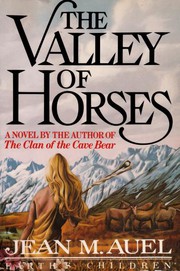
The Valley of Horses
Exiled from the Clan, Ayla survives alone in a hidden valley, tames a horse and a cave lion, and nurses a wounded stranger back to life.
2,311-word summary · 10 min read
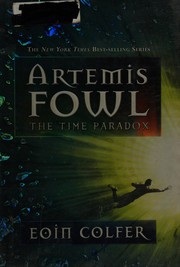
The Time Paradox
When his mother falls ill with a fairy disease, Artemis Fowl travels back in time to find the extinct lemur that can cure her and confronts his younger self.
2,601-word summary · 12 min read
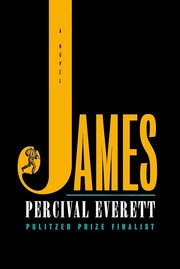
James
Percival Everett retells Huckleberry Finn from Jim's side, giving him a library, a hidden school, and a voice the novel lets loose.
2,211-word summary · 10 min read
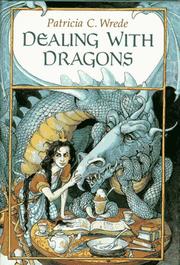
Dealing with Dragons
A princess who hates embroidery runs away to become the cook and librarian for a dragon, then has to outthink wizards, knights, and a plot against the dragon…
2,563-word summary · 11 min read
Carve the Mark
On a planet divided between conquered and conqueror, the tyrant's sister and a kidnapped oracle's son discover that their gifts make them useful to everyone…
2,340-word summary · 10 min read
The Golem's Eye
Two years after The Amulet of Samarkand, Nathaniel is a rising bureaucrat, Bartimaeus is his unwilling servant again, and something made of clay is tearing…
2,299-word summary · 10 min read
Magician's Gambit
Garion and his companions cross haunted Maragor and the caves beneath Rak Cthol to recover the Orb of Aldur.
2,391-word summary · 11 min read