
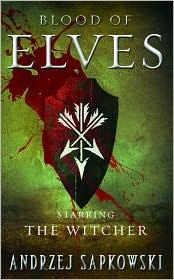
Blood of Elves
3,394-word summary 15 min read 416 pages in the book
- First published
- 1994
- Publisher
- Orbit
- Pages
- 416
- ISBN
- 9780316029193
- Original title
- Krew elfów
- Series
- The Witcher (#3)
Reading options
What's inside (8 sections)
I came to Blood of Elves straight off The Last Wish, expecting more contracts and strigas and pay disputes. The 1994 novel, Krew elfów in Polish, first from superNOWA and in English from Gollancz and Orbit in the Danusia Stok translation, is a different kind of book. It runs 416 pages in the Orbit mass market edition, and most of it is not about Geralt killing things. It is about a girl everyone wants to own, and about old men in castles deciding where armies will march. I missed the short story snap at first. By the middle I understood why Sapkowski slowed down. He needed room for Ciri to become a person before the war swallowed her.
The setup is simple. Cintra has fallen. Queen Calanthe is dead. Pavetta and Duny are long gone. Ciri, the child Geralt claimed by the Law of Surprise, survived the slaughter and the flight through the woods, and Geralt has brought her to Kaer Morhen, the ruined witcher keep in the mountains. Nilfgaard wants her. The Northern kings want her. Mages want to study her. Elves sing about her without knowing her face. Geralt, who once insisted he wanted no part of destiny, now spends his whole winter trying to keep one child alive.
What surprised me is how domestic the opening feels. Old killers mending socks. A girl doing drills. Snow piling against shutters. Then the politics close in, chapter by chapter, until the last third reads like a fuse burning toward Thanedd and a second Nilfgaardian war. This is the first novel of the saga proper, and it behaves like one. Shorter on monsters, heavier on councils, spies, and school lessons.
Kaer Morhen: A Girl Among Old Killers
Kaer Morhen in winter holds only four witchers and one child. Vesemir, the oldest, runs the keep with gruff patience. Eskel is steady and kind. Lambert is sharp tongued and quick to mock. Coen, a younger witcher from another school, helps with drills. They have no work, no pay, and too much time. So they train Ciri the only way they know.
Her days are brutal and funny in turn. She runs the Killer, the obstacle course of beams and walls around the courtyard. She practices footwork with a wooden sword until her hands blister. She learns the pendulum, a swinging sack of straw or stones she must dodge while keeping her balance on a beam. She does somersaults in a cold hall while Lambert shouts corrections and Vesemir pretends not to watch. The witchers feed her oats and dried meat, patch her bruises, and argue about whether a girl should learn the full witcher step, that spinning sword dance meant for mutated bodies.
Sapkowski is good on the small frictions. Ciri cheats at first, skipping rungs, and Lambert calls her out. She sulks. Eskel shows her the move again without comment. She tries to act tougher than she is, swearing like a mercenary, and Vesemir tells her to wash her mouth and then shows her how to hold a blade so it does not fly from wet hands. Coen gives her a sword sized for her and adjusts the drills when her wrists ache. It reads like men who never raised children trying, awkwardly, to raise one.
The problem sits underneath the warmth. Ciri has power, and it leaks out at night. She screams in her sleep in Elder Speech. She has fits where she speaks prophecy in a voice that is not hers, about blood and ice and a Time of Contempt. Objects move. Fevers come and go. Triss will later say the plain truth, but even Vesemir sees enough to worry. The witchers know swords and signs, the small combat magic they use on the Path. They do not know how to handle a Source, a child born with a wild talent for the Power. Training her body is easy. Training what is inside her head is beyond them, and the winter scenes carry that fear under the jokes.
I liked this stretch best. It gives Ciri a home before the plot takes it away. She races the witchers to breakfast. She learns which stairs creak. She names her sword. She listens to Vesemir tell stories about dead witchers and dead boys who failed the Trial of the Grasses. The keep itself feels lived in, with its leaky roof, its hot springs nearby where they bathe in steam, and its shelves of old books nobody fully trusts. When spring comes and she has to leave, the loss lands because Sapkowski let us sit in the place for a while.
Triss Arrives and Names What Ciri Is
Geralt sends for Triss Merigold because he is scared. Triss, chestnut haired, kind, skilled in healing and potions, rides to Kaer Morhen in late winter and nearly does not make it. She falls sick on the trail, weak and humiliated, and Geralt has to carry her in. It is a nice touch. Sorceresses in these books are usually composed to the point of frost. Triss arrives vomiting and cold, and the witchers nurse her with soup and embarrassment on all sides.
Once she recovers, she watches Ciri train and sees what the men missed. The girl is fast and brave, but her real trouble is magical. Triss finds Ciri deep in uncontrolled trances, speaking in tongues, sweating through fevers. She recognizes the signs of a Source who has never been taught to channel. Left alone, that kind of talent can kill the child or drive her mad. Triss tries basic calming drafts and meditation, and they help for a night, then fail. She also notices something older in Ciri blood, the thing the elves call Hen Ichaer, the Elder Blood, passed down from Lara Dorren through Cintra line. That is the part that frightens her most, because it means Ciri is not just any gifted girl. She is the child from Ithlinne prophecy that kings and mages whisper about.
The adult tangle here is handled with care. Triss loves Geralt, or thinks she does, and Geralt lets her stay close while his heart stays elsewhere. They sleep together in Kaer Morhen, and Sapkowski does not dress it up as romance. Triss wants more. Geralt is grateful and distant. She knows about Yennefer, the sorceress Geralt truly loves, and hates that knowledge while still writing to ask for help. I respected that Triss, jealous and sick and out of her depth, still puts Ciri first and tells Geralt the plain fact. The girl needs Yennefer, a stronger mage and a woman who can teach control, not just comfort.
There is a fine scene where Triss talks to Ciri about menstruation and growing up, something the witchers had avoided entirely. It is brief and practical, with herbs and clean cloths and plain talk. Ciri, who can face a pendulum with a sword, is terrified of bleeding and what it means. Triss stays with her through it. That night of care does more to bond them than any lesson about the Power. It also marks the limit of Kaer Morhen. Men can teach a girl to fight. They cannot teach her to live in a changing body while magic tears through it.
Triss leaves with a clear verdict. Keep training the sword work, but get Ciri to Nenneke temple at Ellander, and get Yennefer to take her schooling in hand. The witchers agree, though Lambert grumbles that mages always make things worse. Geralt, who hates asking Yennefer for anything, writes the letter anyway. That choice, pride set aside for Ciri sake, tells you how much he has changed since the days when he claimed he wanted no ties.
The Road to Nenneke Temple
When the passes clear, Ciri leaves Kaer Morhen with Triss for the temple of Melitele in Ellander, where the priestess Nenneke keeps a school for girls. The journey is short on the map and long in feeling. Triss is still weak. Ciri is restless and angry about being sent away from the only home that felt safe. They travel with an escort for part of the way, then alone, through mud and early spring rain.
Sapkowski uses the road to show how the world has curdled. Villages are full of refugees from Cintra and the border lands. Dwarves and halflings keep their heads down. Humans repeat rumors about Scoia'tael, the Squirrel commandos, elven and dwarven youths who have taken to the woods and now kill tax collectors and burn supply wagons. Triss, who once saw Scoia'tael as freedom fighters, now hears frightened farmers describe ambushes and stops defending them so quickly. Ciri listens to everything. She has Cintra blood and Cintra guilt, and she asks blunt questions about who burned whose farm first.
The temple itself is a relief when they reach it. Nenneke, who once healed Geralt and scolded him in The Last Wish, runs a firm and warm house. Girls study letters, herbs, history, and prayer. Ciri gets lessons, chores, and rules. She hates the rules for about a day, then sinks into the routine. She makes friends. She learns to sit still, which for her is harder than sword forms. Nenneke watches her closely, sees the nightmares and the midnight crying, and writes to Geralt that the girl is safe but not settled.
What I appreciated is that Sapkowski does not make the temple a prison or a paradise. The priestesses are strict about prayers Ciri does not believe. Older girls tease her about her scars and her accent. Lessons bore her after Kaer Morhen freedom. Yet the place gives her something the keep could not, other girls her age and women who are neither mages nor mothers but steady. Ciri starts to laugh again here. She plays pranks. She also starts her courses and dreams of Geralt riding back for her, which keeps the ache alive under the daily round.
The criticism some readers make, that this middle sags, has some truth. The travel chapters repeat the pattern of ride, camp, talk about politics, ride again. If you came for monster fights, you will fidget. I found the slowness earned, though, because Ciri needs a normal stretch before Yennefer turns her life upside down again. A girl who only trains and flees would be a plot token. A girl who has done lessons and made friends is someone to worry about.
Dandelion, Rience and the Hunt for Ciri
While Ciri studies, Geralt follows a colder trail. Dandelion, the poet and Geralt best friend, has been tortured by a mage named Rience. Rience wants Ciri. He wants to know where Geralt hid her, who protects her, how to reach her. He burned Dandelion fingers and would have done worse if Geralt had not arrived. The rescue sets the thriller thread of the book.
Rience is not a grand villain. He is a rude, persistent hound working for stronger masters, and that makes him nasty in a believable way. He uses fire magic, threats, and bribed thugs. He leaves burned villages and frightened innkeepers behind him. Geralt, with Dandelion help, tracks him to Oxenfurt and beyond, and hires the detective pair Codringher and Fenn to dig into who pays Rience and why. Codringher, sickly and sharp, spells out what Geralt already fears. Someone with deep funds wants the Cintra heir alive. Nilfgaard is the likely purse, but Northern courts have their own reasons to want her found first.
The Dandelion chapters give the book air. He complains, flirts, exaggerates, and writes ballads that get the facts wrong. He also shows real courage, refusing to give up Ciri under pain, and real guilt after, drinking too much and talking too fast. His friendship with Geralt feels lived in. They insult each other, share coin, and split at dawn without ceremony. When Geralt leaves him somewhere safe, Dandelion keeps asking after Ciri in a way that shows he thinks of her as kin, not as a story.
Yennefer enters this hunt sideways and steals every scene. Geralt finally meets her again after long separation, and their reunion is prickly and tender at once. She agrees to help with Rience, and the interrogation scene is a highlight. Yennefer uses mind magic on a captured agent, cold and exact, while Geralt watches and says little. Rience escapes through a portal at the last moment, helped by his own master, and Yennefer fury is frightening. She does not forgive failure, least of all her own. The sequence sets up her later role as Ciri teacher and shows why even hard men fear her. She loves Geralt, she will help the girl, but she will not be used.
If there is a fair complaint here, it is that Rience slips away once too often. He appears, threatens, escapes by portal, returns, escapes again. Readers who like clean resolutions may grind their teeth. I read it as Sapkowski point. The true hunters are never the men with burned fingers in front of you. They are the paymasters you never see, and cutting off one hound only brings another.
Yennefer Takes Over Ciri Schooling
The heart of the novel, for me, sits in Ellander after Yennefer arrives at Nenneke request. Ciri expects a monster or a queen. She gets a woman in black and white, smelling of lilac and gooseberries, who looks her over and finds her wanting. Lessons start badly. Yennefer demands discipline, posture, clear speech, control. Ciri answers with defiance, witcher oaths, and slammed doors. Nenneke watches and lets them fight it out.
Slowly, stubbornness turns to trust. Yennefer teaches Ciri about the Power as something drawn from earth and air and water, to be taken with respect and returned. She shows her how to breathe through fear, how to close her mind to voices, how to shape a small spell without letting it shape her. She tells her that magic is not a toy and not a curse, but a debt. Ciri, who has been afraid of her own dreams, learns to name what happens to her. The nightmares do not stop, but they loosen.
The mother and daughter pull is strong without ever being stated flatly. Yennefer cannot have children, a wound the books return to often. Ciri lost her mother Pavetta and her grandmother Calanthe and the whole court of Cintra. They circle each other, testing. Yennefer brushes Ciri hair and corrects her grammar in the same breath. Ciri brings Yennefer flowers and then lies about where she got them. When Ciri has a bad night, screaming in Elder Speech about a Time of Contempt and white frost, Yennefer holds her and does not lie about the danger. She says the power is real, the hunters are real, and running will not help. Only learning will.
There is humor too. Ciri tries to impress town boys with a trick and floods a washroom. Yennefer punishes her with extra translation from Elder Speech and then laughs when Nenneke is not looking. Dandelion visits and tells the girls outrageous stories about Geralt, which Yennefer corrects with drier and funnier versions. For a stretch, Ellander feels safe, almost idyllic. Girls singing in the bath. Herbs drying in the stillroom. Lessons under apple trees.
Sapkowski breaks that peace on purpose. Rience, with hired killers called the Michelet brothers, tracks Ciri to the temple town. The attack is quick and vicious. Yennefer answers with overwhelming force, portals and fire and mind pressure, while Nenneke gets the girls behind walls. Ciri sees what high magic looks like when it stops teaching and starts killing, and it terrifies her more than comforts her. Safety, the book keeps saying, is a story adults tell children while they stand watch. Yennefer saves her, but the cost is that Ciri now knows nowhere is fully hidden.
Kings, Spies and the Coming War
Around the personal story, Sapkowski builds a political frame that takes up much of the second half. The Northern kings meet in secret to decide what to do about Nilfgaard. Vizimir of Redania hosts. Henselt of Kaedwen brings old claims. Foltest of Temeria brings caution. Demavend of Aedirn brings anger. Meve of Lyria brings hard sense. Their spymasters listen from corners, chief among them Sigismund Dijkstra, Redania spymaster, huge and blunt, and Philippa Eilhart, sorceress and power behind much of the plotting.
The debate is long and, I think, deliberately wearying. The kings argue about Cintra, about whether to strike south first, about who gets which mines and ports if they win. They speak of Ciri as a marriage prize, a flag to raise over Cintra to justify invasion. Only a few voices note that she is a living girl, not a seal for treaties. Dijkstra reports on Nilfgaard movements, on gold flowing to Scoia'tael bands, on Emhyr var Emreis rebuilding fleets and roads. Philippa pushes for mage control of events, including a conclave on Thanedd island where the Brotherhood of Sorcerers will have to choose sides.
Dwarves and elves get real pages here, not just songs. Yarpen Zigrin, the dwarven fighter who once traveled with Geralt, leads a convoy carrying supplies under Henselt orders, with Geralt riding guard. The ambush by Scoia'tael in the woods is one of the few full battles in the book, and Sapkowski writes it without glory. Arrows from trees. Horses screaming. Men killing boys who look starved. Geralt takes a wound and keeps fighting because there is nothing else to do. Among the attackers is Cahir, the black knight from Cintra who haunts Ciri dreams. Geralt does not kill him when he could, a mercy that will matter later. The scene shows the war already happening in small places while kings talk in warm rooms.
The elven view gets its sharpest voice through Francesca Findabair, called Enid an Gleanna, the Daisy of the Valleys. She is beautiful, canny, and tired of watching her people fade. She bargains with both sides, seeking a free elven land in Dol Blathanna, and accepts help where she can get it, even from Nilfgaard. Sapkowski lets her argue the case without softening it. Young elves join Scoia'tael because slow decline feels worse than quick death. Older elves board the White Ships and leave the world. Humans call all of them Squirrels and hang them from roadside trees. There is no clean side, only hunger and pride and old songs about Lara Dorren and the Elder Blood that suddenly seem less like songs and more like plans.
My criticism is that these council chapters lean on telling. Men sit, talk, recall treaties, name rivers and passes. Dandelion spy chapters help, since he repeats gossip in plain words, and Codringher and Fenn memos cut through with blunt summaries. Still, readers who loved the snap of short stories may find the Hagge debates heavy. I kept a map open and took the chapters slow. The payoff is real. By the end you understand why every power wants Ciri, why Yennefer schooling matters as more than kindness, and why Geralt guard work is only buying time.
The book closes not with victory but with positioning. Ciri stays with Yennefer and heads toward further training and toward Thanedd, where mages will gather and split. Geralt rides out again, wounded and poorer, with Dandelion still singing. Triss returns to courts where Philippa plots. Nenneke keeps her temple open while refugees crowd the yard. War has not fully come, but the granaries are being filled and the smiths are busy. The last pages feel like breath held.
I finished Blood of Elves admiring what Sapkowski risked. He took a popular monster hunter and gave him a child to protect, then spent a whole novel on lessons, letters, and councils. The 1994 superNOWA original set this shape, and the Stok translation keeps the dry jokes intact. The Orbit edition at 416 pages gives the story room without bloating it beyond need. It is not the best place to start the series. Read The Last Wish first, and ideally Sword of Destiny, so Ciri claim lands. Start here only if you want the saga proper from its first novel step. The reward is a fantasy that treats training, teaching, and politics as drama, not filler, and a girl who grows from a drill yard terror into someone who might one day choose her own name for her own reasons.
FAQ
Is Blood of Elves the first Witcher novel?
Yes. It is the 1994 Krew elfów first novel of the saga proper, overall book 3 after The Last Wish and Sword of Destiny, in English from Gollancz in 2008 and Orbit in 2009 in the Danusia Stok translation.
Do I need to read The Last Wish before Blood of Elves?
You should. Blood of Elves assumes Geralt claimed Ciri by the Law of Surprise and leans on Nenneke, Yennefer and Dandelion bonds set earlier, so start with The Last Wish.
Who is hunting Ciri in Blood of Elves?
Rience hunts her for an unseen master while Nilfgaard, Northern kings seeking a Cintra marriage prize, and mages all try to find and use her Elder Blood talent.
Similar books
More from The Witcher first, then related titles.

The Last Wish
Geralt hunts strigas genies and golden dragons while Law of Surprise binds Ciri.
2,598-word summary · 12 min read

Sword of Destiny
Geralt hunts a golden dragon, faces a doppler in Novigrad, and meets Ciri in Brokilon as old promises close around him.
2,256-word summary · 10 min read
The Time of Contempt
Geralt and Yennefer shelter Ciri as mages split and war breaks over the Thanedd coup.
2,355-word summary · 10 min read
Baptism of Fire
Wounded Geralt crosses war country with odd allies to find Ciri after the Thanedd coup.
2,076-word summary · 9 min read
The Tower of the Swallow
Ciri flees as a bandit while Geralt gathers allies to find her.
2,580-word summary · 11 min read
Winter's Heart
Trapped in Far Madding without the Power, Rand baits his betrayers while Mat plots escape from Ebou Dar and Elayne fights for Caemlyn.
2,906-word summary · 13 min read
The Path of Daggers
Rand wields Callandor against Seanchan while Elayne and Egwene maneuver.
2,492-word summary · 11 min read
Knife of Dreams
Rand sets a Seanchan trap while Mat weds Tuon, Perrin storms Malden, Elayne takes Caemlyn, and Egwene defies Elaida.
2,988-word summary · 13 min read
A Memory of Light
Rand faces the Dark One at Shayol Ghul as all armies join the Last Battle.
2,165-word summary · 10 min read
Towers of Midnight
Perrin faces Whitecloak judgment and the wolf dream while Mat enters the Finns' tower for Moiraine.
2,099-word summary · 9 min read
The Blinding Knife
Kip trains to join the Blackguard while the Prism hides his true identity, loses his colors, and fights a war against a rogue drafter who wants to birth a god.
2,049-word summary · 9 min read
Magician's Gambit
Garion and his companions cross haunted Maragor and the caves beneath Rak Cthol to recover the Orb of Aldur.
2,391-word summary · 11 min read
Lirael
A Sightless Clayr girl and a prince afraid of Death join the Dog and Mogget to stop necromancers from waking the Destroyer Orannis at the Red Lake while old…
2,692-word summary · 12 min read
The Black Prism
Dying Prism Gavin Guile hides a secret son while war brews over color magic in the Seven Satrapies.
2,169-word summary · 10 min read
Gardens of the Moon
Empire, gods, and mages collide over Darujhistan as Bridgeburners bleed for Empress Laseen.
2,188-word summary · 10 min read
Crossroads of Twilight
Rand cleansed saidin and the whole world felt it. Book ten follows each faction as they react, stall, and choose sides.
2,264-word summary · 10 min read
The Dragon Republic
Rin survives the last war only to join the Dragon Warlord against the Empress, trading one brutal fight for another.
2,810-word summary · 12 min read
The Gathering Storm
Rand hardens toward breaking the world while Egwene holds the White Tower from a cell in the twelfth Wheel of Time book.
2,176-word summary · 10 min read
Rule of Wolves
A strained king, storm general, and spy witch face invasion, saints, and old shadows in finale.
2,372-word summary · 11 min read

Rhythm of War
Kaladin breaks, Navani holds Urithiru, and Shallan faces the honorspren as war turns inward.
3,095-word summary · 14 min read
Lord of Chaos
Rand offers amnesty to men who can channel while Egwene is raised Amyrlin in exile. Book six of The Wheel of Time builds toward rescue and reckoning at Dumai's…
2,255-word summary · 10 min read
A Crown of Swords
After Dumai's Wells, Rand holds Cairhien while Egwene besieges Tar Valon and Elayne and Nynaeve hunt relief in Ebou Dar. Book seven crowns kings and queens at…
2,828-word summary · 13 min read
The Fires of Heaven
Rand leads the Aiel to war over Cairhien while the White Tower splits, in book five of The Wheel of Time.
2,287-word summary · 10 min read
The Shadow Rising
Rand the Dragon heads for Rhuidean with the Aiel, while Perrin defends the Two Rivers and Elayne and Nynaeve hunt trouble in Tanchico.
3,194-word summary · 14 min read
The Poppy War
A war orphan wins a place at Sinegard academy, bonds with a fire god, and faces invasion.
2,977-word summary · 13 min read
The Great Hunt
Rand hunts the stolen Horn of Valere across the land while Egwene and Nynaeve face the Seanchan and the White Tower.
2,516-word summary · 11 min read

The Dragon Reborn
Rand flees to Tear to claim Callandor while Perrin, Mat, and Egwene are drawn after him to the fallen Stone.
2,644-word summary · 12 min read
Oathbringer
Dalinar chases unity in Urithiru while Kholinar falls and an old oath demands payment.
3,513-word summary · 16 min read
Inheritance
Eragon and Saphira march on Uru'baen to end Galbatorix, with hidden hearts and hard goodbyes.
3,160-word summary · 14 min read
Words of Radiance
Kaladin guards Dalinar, Shallan hunts Urithiru, and the Everstorm gathers.
2,754-word summary · 12 min read