
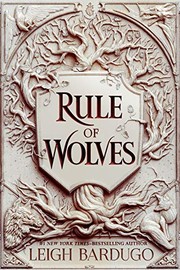
Rule of Wolves
2,372-word summary 11 min read 608 pages in the book
- First published
- 2021
- Publisher
- Imprint
- Pages
- 608
- ISBN
- 9781250142306
- Series
- King of Scars (#2)
Reading options
What's inside (8 sections)
- A King Pretending to Be a King While His Country Starves
- Nina in Fjerda and the Girl Who Wears Other Faces
- The Monk, the Saint, and the Darkling Who Will Not Stay Dead
- Spies, Twins, and a Throne Made of Lies
- War on Ice and Fire and the Price of Miracles
- Endings That Break Open More Than They Close
- Key takeaways
- FAQ
A King Pretending to Be a King While His Country Starves
I went into Rule of Wolves nervous because finales often collapse under their own armies, and this one starts with Ravka already bleeding, which tells you Bardugo is not going to give easy wins. Nikolai Lantsov, king of Ravka, privateer turned soldier turned reluctant saint maker, is trying to hold a nation together after civil war, with the Fjerdan army pressing the northern border, grain running short, and his own monster waking up inside him at night. The demon he inherited from the Darkling's attack, that shadowed winged thing that tore out of him in King of Scars, is still there, scratching under his skin. He hides it with jokes and tailoring and Isaak, a loyal guard who wears Nikolai's face with Grisha craft to appear at ceremonies while the real Nikolai sneaks off to do dangerous work.
Zoya Nazyalensky, general of the Second Army, Stormwitch, dragon legend in the making, is the other pillar holding up the roof. She loves Nikolai and resents loving him, because she watched her aunt die, watched her mentors fail, and swore never to be soft. Now she commands squadrons, trains new Grisha, argues with priests who want Elizaveta as saint, and tries to keep Nikolai alive without letting him see how scared she is. Their banter is still sharp, all insults about coats and cheekbones, but underneath is exhaustion. Bardugo does a great job showing rule as admin, signing grain orders, listening to Genya explain dye shortages, hearing David invent weapons while half asleep, deciding which village gets soldiers and which gets prayers.
The opening moves are political and painful. Fjerda, driven by young Prince Rasmus and his zealot commanders, pushes witch hunts and new weapons, including tank like engines and poison gas. Ravka's allies are thin. Novyi Zem is distracted, Kerch wants money, Shu Han plays its own game with Princess Ehri and her twin sister Alys. Nikolai even considers marriage alliances he does not want, while Zoya pushes for striking first with Grisha power. My criticism is that the first hundred pages juggle so many councils and names that I had to keep notes, and Isaak chapters can feel slow until they turn sharp. But the specificity, the frozen roads, the empty barns, the soldiers sharing boots, makes the stakes feel painfully real. This is not a war of prophecies. It is a war of bread.
Nina in Fjerda and the Girl Who Wears Other Faces
Nina Zenik's thread was my favorite in the previous book and remains the beating heart here, though it hurt to read. After infiltrating Fjerda as Mila Jandersdat, a grieving Fjerdan girl, Nina is deep undercover in the Ice Court culture that hates Grisha. She is mourning Matthias Helvar, the Fjerdan soldier who loved her and died for her, and she carries his body memories in every prayer she refuses to say. Her mission is to smuggle Grisha to safety and spy on the development of jurda parem, the drug that makes Grisha power violently amplified and addictive. She is aided by Hanne Brum, daughter of the fanatical commander Jarl Brum, who is secretly sympathetic and secretly much more.
Hanne is one of Bardugo's best late additions. Assigned female at birth but living as a boy in the military structure to survive, Hanne is tall, kind, fierce, and tired of performing a self that is not true. Nina, who knows about masks, becomes protector and friend and something more complicated. Together with Leoni, a Zemeni Grisha scientist, and Adrik, marked by war, they pose as brides, nurses, factory girls to get inside labs and prisons. There are brutal scenes in factories where Grisha are drained, in churches where sermons call them demons, at dinners where Nina must smile while men joke about burning witches. Bardugo writes Nina's humor as armor, jokes about cheese and cleavage while her hands shake.
The spy work tightens around the parem supply and the Fjerdan plan to use enhanced Grisha as weapons or to frame Ravka. Nina also struggles with her own parem damaged power. Since taking parem, her Heartrender ability changed, letting her sense and even control the dead, which terrifies and tempts her. She raises a corpse once to save friends and feels sick with power and grief. I thought this was a brave choice, letting a beloved funny character become frightening to herself. A fair criticism is that the Hanne reveal and romance can feel rushed beside the war plot, with too few quiet pages to breathe. But the scene where Hanne chooses a new name and Nina fiercely defends that choice in a chapel full of enemies made me tear up. In a book about nations, this thread remembers persons.
The Monk, the Saint, and the Darkling Who Will Not Stay Dead
Every Ravkan story eventually circles back to the Darkling, and Bardugo knows we are both sick of him and fascinated, so she brings him back sideways. A charismatic monk called the Apparat? No, a new holy man named Yuri Jostov becomes convinced that the Starless Saint still speaks, and he gathers pilgrims seeking miracles after the Fold is gone but scars remain. Yuri is earnest, young, traumatized, and easy to use. Through him, the cult of Sankt Elizaveta grows, promising that Elizaveta, the ancient power hungry Saint who experimented on Grisha, will return to save Ravka. Zoya distrusts saints on principle, and Genya, scarred by the Darkling, warns that worship often hides hunger.
The horror is that Elizaveta is real after a fashion, and she has been keeping the Darkling alive in fragments. The Darkling, Aleksander Morozova, who died at the end of the original trilogy but left seeds of shadow, exists as a starved whisper attached to Yuri, feeding on faith and fear. Bardugo gives us chilling cathedral scenes, processions with bones, hymns that sound sweet until you hear the words, miracles that cost blood. Nikolai, who shares dark power lineage, feels the pull in his dreams. His demon grows stronger as the Darkling strengthens, suggesting they are linked. He wakes with black veins, with feathers in his bed, with memories that are not his.
I liked that Bardugo does not redeem the Darkling with a sad boy excuse, but she does make him pitiable. He is tired, furious at being worshipped and caged, desperate to live again in a body. When he finally returns in flesh through Elizaveta's rites, using Yuri as vessel and bait, he is not the polished general of Shadow and Bone but something thinner and more desperate. The confrontation scenes crackle because Zoya and Nikolai both carry pieces of him, literally in power and trauma. My criticism is that the saint lore gets dense, with Elizaveta's garden, the thorn wood, the Starless history requiring recall from prior books, and Yuri can feel like a plot device more than a person until very late. Still, the idea that faith can be farmed to resurrect monsters feels painfully timely, and Bardugo stages it with cold incense and warm blood.
Spies, Twins, and a Throne Made of Lies
While war brews and saints stir, Bardugo runs a deliciously tense political thriller about who gets to sit on Ravka's throne and who gets to decide what Shu Han does next. Isaak, the guard wearing Nikolai's face, falls into real danger when Fjerdan agents and Ravkan traitors plot assassination and replacement. He is sweet, devout, lonely, writing letters to his mother, trying to mimic Nikolai's swagger while falling for Ehri, the Shu princess sent to consider marriage. Ehri is kind and clever, underestimated because she is soft spoken, and she sees through Isaak faster than he fears. Their gentle romance, all library meetings and shared cakes, provides rare softness.
In Shu Han, the stakes are lethal. Princess Ehri and her twin Alys become targets in a coup driven by hardliners who want war with Ravka and control of parem secrets. Mayu Kir-Kaat, the Tavgharad bodyguard who failed once and now lives for atonement, protects them with Tamar Kir-Bataar, fierce and funny, while Tolya, her brother, fights beside Nikolai. There are poisoned teas, switched veils, tunnels under palaces, and a fantastic sequence where Mayu must choose between orders and conscience while holding a knife to someone she loves. Bardugo writes Shu Han with more texture here than before, food, theater, guns, engines, showing a nation modernizing fast and splitting over it.
The Ravkan court plot peaks with an attempt to expose fake Nikolai and use the chaos to install a Fjerdan friendly ruler, with Prince Rasmus posturing as both holy warrior and reasonable diplomat. Nikolai has to decide whether to sacrifice Isaak's safety for the larger game, and Zoya has to decide whether to obey a king or save a man. I admired how Bardugo lets good people make cold choices and then sit with them. A criticism is that keeping track of Shu twins, Fjerdan princes, Kerch merchants, and Zemeni envoys can exhaust, and some reveals rely on characters withholding info for chapters to preserve surprise. Yet when Isaak chooses courage over script and Ehri chooses truth over treaty, I felt genuine suspense, not just chess moves. Thrones in this book are not chairs. They are stories people agree to believe until blood breaks the spell.
War on Ice and Fire and the Price of Miracles
The last third is full war, and Bardugo writes battle with a clarity that never lets you forget cost. Fjerda invades with new tech, armored vehicles, gas, parem enhanced Grisha forced to fight, while Ravka answers with Grisha steel, Zoya's storms, Nikolai's daring airships, and David's desperate inventions. There is a brutal river battle where ice breaks under soldiers, a factory raid where Nina must decide whether to burn poison stock and kill addicts to save thousands, a night raid where Tolya and Tamar fight back to back while reciting prayers to different saints. Zoya finally lets her dragon form fully emerge, not as metaphor but as literal transformation tied to Elizaveta's thorn wood and her own ancestry, and Bardugo stages it as terrifying and glorious, scales, storm, scream.
Nikolai's arc converges here too. To stop the Darkling and save Ravka, he must confront the demon inside him, which means accepting that he cannot cut out darkness without cutting out part of himself. He flies, falls, burns, jokes even while bleeding. David Kostyk, gentle Fabrikator who loves Genya and loves making things, sacrifices himself to destroy a key weapon or ritual focus, and his death wrecked me because it was so quiet and practical, a maker unmaking himself to save makers. Genya's grief afterward is one of the rawest passages Bardugo has written, no pretty speeches, just rage and numb hands trying to mend what cannot be mended.
Nina's choice is equally brutal. She uses her death power on a massive scale to stop Fjerdan forces, raising fallen soldiers to hold a line, knowing it will mark her forever and horrify allies. Hanne stands with her, choosing love and truth over family and nation. The Darkling and Elizaveta are defeated not by a bigger blast but by starving their worship, breaking relics, and Zoya claiming storm power for herself rather than as saint gift. My criticism is that the lore mechanics of who can kill an immortal saint and why now can feel fuzzy in the rush, with rules introduced close to use. But emotionally the battles land because Bardugo keeps cutting to small things, a dropped glove, a shared apple, a letter never sent. Victory tastes like ash and snow, not triumph.
Endings That Break Open More Than They Close
Finales must end and Bardugo chooses bittersweet and open, which I respected even where I ached. Ravka survives but is shattered, needing years to rebuild farms and trust. Nikolai lives, but the easy rogue prince is gone, replaced by a king who knows exactly what his smile costs. His romance with Zoya finally becomes explicit, not with a wedding pageant but with a private vow and a public acknowledgment that the general and the king choose each other as partners in work and life. Zoya becomes more than general, something like queen in power if not title, dragon and saint slayer, still prickly, still loyal, finally allowing herself to want a future. Their last scenes together are tender without being soft, full of teasing about bad coats and worse plans.
Nina's ending is the most painful and honest. She does not get clean pardon or simple homecoming. Feared for her death power, grieving Matthias and David, she leaves with Hanne to find a place where they can live without uniforms, taking a new name and a new road. It is not punishment but self exile, a recognition that heroes who touch death need time to become human again. Hanne's affirmation of identity is handled with care, supported by friends, not magically solving prejudice but insisting on dignity. Mayu and Ehri forge a new Shu path, with Alys stepping into leadership in a way that hints at future stories. Isaak's fate shows that ordinary bravery matters as much as Grisha power.
Did everything resolve. No, and that is both strength and flaw. The Darkling's end feels final this time yet leaves embers, Elizaveta's garden is broken but stories remain, parem still exists in hidden labs, Fjerda still hates Grisha. Some readers will feel cheated that after 608 pages war still simmers. I felt it was truthful, because Bardugo has always written about systems, not single villains. The book is long, sometimes baggy, with travel and council scenes that could have been trimmed, and newcomers will drown without prior books. But as a closing chord to Nikolai and Zoya and Nina, it sings. I finished thinking less about who won and more about who kept showing up, the guard in a borrowed face, the girl who laughed at funerals, the king who learned to kneel to his people. That feels like the right saint story, one where no one is clean and everyone is needed.
Grisha steel breaks, saints fall, but bread and names and vows are what hold a country together.
FAQ
Do I need earlier Grisha books first?
Yes, this finale assumes knowledge of King of Scars, Six of Crows, and Shadow and Bone arcs.
Do Nikolai and Zoya end up together?
They openly choose each other as partners in rule and life, without a tidy wedding.
Similar books
More from King of Scars first, then related titles.
King of Scars
King Nikolai fights a monster inside him while Nina spies in Fjerda and old saints wake in Ravka.
2,934-word summary · 13 min read
Ruin and Rising
Hiding in the White Cathedral, a weakened Alina hunts the firebird while the Darkling holds Ravka and the Fold widens.
2,775-word summary · 12 min read
Siege and Storm
Alina hunts a second amplifier with Mal while the Darkling returns and Sturmhond offers a cunning alliance.
2,122-word summary · 9 min read
Inheritance
Eragon and Saphira march on Uru'baen to end Galbatorix, with hidden hearts and hard goodbyes.
3,160-word summary · 14 min read
Brisingr
Eragon rescues Katrina, backs a dwarf king, and earns a burning sword.
2,214-word summary · 10 min read
Shadow and Bone
Orphan Alina Starkov learns she is a Sun Summoner who may destroy the Shadow Fold, if the Darkling lets her.
2,284-word summary · 10 min read

The Blinding Knife
Kip trains to join the Blackguard while the Prism hides his true identity, loses his colors, and fights a war against a rogue drafter who wants to birth a god.
2,049-word summary · 9 min read

Inkdeath
The final Inkworld novel sends Mo into the land of the dead, leaves Meggie choosing between two boys, and ends the Adderhead's immortality with three written…
2,062-word summary · 9 min read

Lioness Rampant
Alanna searches for the Dominion Jewel with the Shang Dragon, then returns to Tortall to face Duke Roger at Jonathan's coronation.
2,478-word summary · 11 min read

The Siren
Saved from a shipwreck in 1930, Kahlen becomes a siren who sings men to their deaths for the Ocean, until a boy in a college library makes her want a life she…
2,369-word summary · 11 min read

The Golem's Eye
Two years after The Amulet of Samarkand, Nathaniel is a rising bureaucrat, Bartimaeus is his unwilling servant again, and something made of clay is tearing…
2,299-word summary · 10 min read

The Rose & the Dagger
Shahrzad is pulled from her Caliph husband and left in a desert camp of rebels, needing to break his curse and end a war before it ends her.
2,520-word summary · 11 min read

The Queen of the Tearling
Nineteen-year-old Kelsea leaves the woods to take her throne, ends a shipment of human captives, and draws the Red Queen's revenge.
2,357-word summary · 10 min read

We Hunt the Flame
In a fractured Arabia-inspired world, a disguised huntress and a prince-assassin race to find a magic-restoring book and confront an ancient evil.
2,195-word summary · 10 min read
The Magician
Sophie and Josh flee to Paris with Nicholas Flamel, where John Dee, Machiavelli, and an awakened god close in on the missing pages of the Codex.
2,162-word summary · 10 min read

The Hazel Wood
Alice Proserpine has spent her life running from bad luck. When her mother vanishes, she follows a trail of fairy-tale clues to her grandmother's estate and…
2,064-word summary · 9 min read
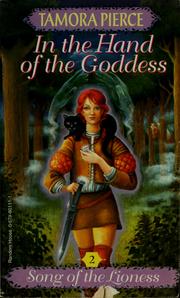
In the Hand of the Goddess
Alanna, still disguised as a boy, survives war, court plots, and a death duel as the Goddess's chosen warrior in the second Song of the Lioness book.
2,018-word summary · 9 min read

Blue Moon
Ever Bloom tries to save her immortal boyfriend, Damen, from a mysterious illness while a new student named Roman quietly takes control of her school and her…
1,998-word summary · 9 min read
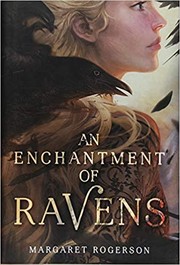
An Enchantment of Ravens
Isobel, a mortal artist in the fairy town of Whimsy, paints a portrait of the autumn prince and falls in love with him, breaking the laws of her craft.
2,087-word summary · 9 min read
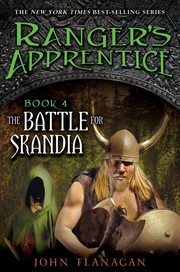
The Battle for Skandia
Will and Evanlyn are still hiding in the Skandian mountains when Halt and Horace arrive with word of a Temujai invasion that could roll on to Araluen next.
2,248-word summary · 10 min read
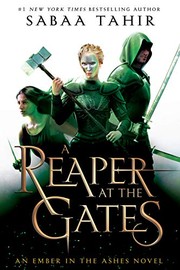
A Reaper at the Gates
The Martial capital falls to an army of ghosts, Elias becomes the Soul Catcher, and Laia and Helene pay brutal prices as the Nightbringer moves to free the…
1,991-word summary · 9 min read

The Bane Chronicles
Eleven stories across five centuries follow Magnus Bane from a ban in Peru to his first date with Alec in this illustrated Shadowhunter companion.
2,470-word summary · 11 min read

The Indigo Spell
Sydney Sage hunts an aging witch, learns forbidden magic, and finally admits she loves Adrian, while the Alchemist tattoo on her cheek may be controlling her.
2,604-word summary · 12 min read
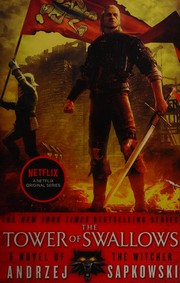
The Tower of the Swallow
Ciri flees as a bandit while Geralt gathers allies to find her.
2,580-word summary · 11 min read
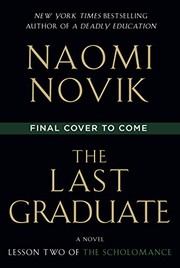
The Last Graduate
El must survive graduation when the school feeds seniors to monsters.
2,232-word summary · 10 min read

Rebel Angels
Gemma returns to the realms to bind magic while facing Circe and London season.
2,708-word summary · 12 min read
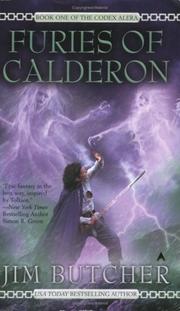
Furies of Calderon
Furyless Tavi defends Calderon Valley when the Marat return and lords scheme.
2,587-word summary · 11 min read

A Winter's Promise
Ophelia reads objects and is sent to marry Thorn on a cold ark.
2,502-word summary · 11 min read
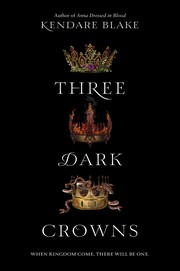
Three Dark Crowns
Three triplet queens must kill each other for the crown, but love and gifts get in the way.
2,134-word summary · 9 min read

Every Heart a Doorway
Nancy returns from the Halls of the Dead to a school for travelers, where a murder forces portal children to face grief, belonging and the price of going home.
2,400-word summary · 11 min read