
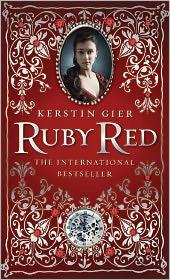
Ruby Red
3,040-word summary 14 min read 330 pages in the book
- First published
- 2009
- Publisher
- Henry Holt and Co.
- Pages
- 330
- ISBN
- 9780805092523
- Original title
- Rubinrot
- Series
- Precious Stone Trilogy (#1)
Reading options
What's inside (8 sections)
I picked up Ruby Red on a rainy weekend because a friend would not stop talking about it, and I expected something light and a little silly. What I got was the first book in the Precious Stone Trilogy, originally published in German as Rubinrot in 2009 by Arena Verlag and then in English in 2011 from Henry Holt and Co. in a 330 page edition translated by Anthea Bell, ISBN 9780805092523, and it sucked me in much faster than I want to admit. It is funny, romantic, a little chaotic, and very British in setting even though it was written by a German author. I finished it in two sittings and immediately wanted the next one, which tells you a lot about how it reads.
The basic setup is simple enough to explain to someone who has never heard of it. In London, in the present day, two old families carry a time travel gene. In each generation, a boy and a girl are expected to inherit it. They are part of a set of twelve travelers through history, each named for a jewel. Gwyneth Shepherd is sixteen, messy haired, opinionated, and completely sure she does NOT have the gene. Her perfect cousin Charlotte does. Or so everyone thinks. Charlotte has been trained since childhood in fencing, dancing, history, languages, and how to make polite conversation in the eighteenth century. Gwyneth has been happily ignored, cracking jokes with her best friend Lesley, arguing with her mother Grace, and trying to survive school. Then one morning Gwyneth finds herself suddenly in a very different London, and her whole life flips.
That is the hook, and Gier handles it well. The book never pretends to be hard science fiction. It is a friend telling you a wild story over tea, with ghosts and secret lodges and handsome boys and dresses that weigh a ton.
Growing Up in the Shadow of Charlotte
The first part of the book lives almost entirely inside Gwyneth's head, and that is a good thing because her voice carries everything. She lives in a big old house in London with her mother Grace, her siblings, her grandmother Lady Arista, her great aunt Maddy who sees things that are not quite there, and Charlotte and Charlotte's mother Glenda. It is crowded and female and full of sideways comments.
Charlotte is beautiful, poised, straight A, and endlessly prepared to be the Ruby, the female traveler of her generation. Her mother has planned her whole life around it. Gwyneth, by contrast, is treated as ordinary. She hates school uniforms, she loves old movies, she is quick with sarcasm, and she can see ghosts. She chats with a little ghost boy named Robert in school and with a gargoyle named Xemerius later on, and at first these moments feel like quirky side details. They turn out to matter more than you expect.
What I liked here is how normal Gwyneth feels. She is not trying to be special. She is annoyed when her stomach flips and she gets dizzy in the middle of breakfast, and she is terrified when she lands in the past without warning and has to talk her way out of trouble in a street that smells and looks wrong. Anthea Bell's translation keeps her dry humor intact. Gwyneth notices ridiculous things, like how uncomfortable old shoes are or how strange people smell, and that grounds the fantasy.
The criticism I have this early is fair, I think. Gier leans hard on the ugly duckling versus perfect cousin setup. Glenda is almost cartoonishly snobby, Lady Arista is cold, and Charlotte swings between frosty and superior. It works for comedy, but it leaves little room for sympathy for Charlotte at first. You are clearly supposed to root for Gwyneth, and you do, but part of me wished Charlotte had been given one real soft scene early on to make her feel more human before the reveal.
The Day Everything Changes
Gwyneth has two uncontrolled jumps before anyone believes her, and both scenes are great because they are played for panic rather than wonder. The first time, she is on her way to school and suddenly she is in the past, surrounded by carriages and men in wigs, with no phone and no plan. The second time is worse because she lands in a more dangerous spot and has to run. When she finally tells her mother and Lesley, the reaction splits perfectly. Lesley is thrilled and starts researching immediately. Grace looks guilty, which is our first clue that the adults have been hiding a lot.
It turns out Grace lied about Gwyneth's birth date to protect her. Gwyneth was actually born on the prophesied day, not Charlotte. Grace did not want her daughter pulled into the world of the Guardians, the secret lodge in Temple that watches over the travelers. So Charlotte was trained for a life that was never hers, and Gwyneth was left completely unprepared for the life that is hers. When the Guardians test her blood and it confirms she is the Ruby, the family drama explodes. Glenda is furious. Charlotte is humiliated. Lady Arista is calculating. Grace is defensive but loving in her own stubborn way.
I love how London itself becomes a character here. The modern parts feel lived in, with school corridors, buses, fish and chips, and Lesley googling everything. The lodge in Temple feels like another country, all dark wood, ritual, passwords, and old men who think they know best. Gwyneth is dragged there for tests and lessons, poked and prodded, asked to faint on command, and told to be grateful. Her confusion mirrors ours, which helps because the rules of time travel in this series are complicated.
The time travel system goes like this. Each of the twelve has a specific period they can visit without help, but with the Chronograph, a kind of clock device that reads their blood, they can be sent anywhere in the past. Each traveler has to have their blood read into the Chronograph to complete a circle that is supposed to bring some mysterious benefit, maybe a cure or immortality or power, depending on who you ask. Gwyneth is number twelve, the Ruby, the last one needed. Gideon de Villiers, seventeen, handsome, arrogant, and already experienced, is number eleven, the Diamond. They are supposed to work as a pair.
My small complaint in this middle stretch is pacing. There are a lot of explanations about the circle, the founders, the inner and outer circles, and who traveled when, and it can feel like a history lesson wedged into a teen comedy. I found myself skimming some of the lodge lectures on first read and then going back later when Lucy and Paul started to matter more.
Gideon de Villiers and a Partnership That Starts Badly
Gideon is introduced as basically perfect and perfectly annoying. He is tall, green eyed, athletic, polite to adults, and rude to Gwyneth. He has been traveling for a while, he knows the etiquette, he can sword fight and dance, and he clearly adored the idea of partnering with Charlotte, who was raised to be his match. Instead he gets Gwyneth, who shows up in borrowed dresses, says the wrong thing, faints at bad moments, and asks too many questions.
Their first controlled trip together, back to the eighteenth century to meet the Count, is a disaster in the most entertaining way. Gwyneth has had about five minutes of training. She does not know how to curtsy properly. She does not know the titles. She is wearing a dress that feels like armor. Gideon spends most of the time hissing corrections at her and then turning on charm for strangers. And yet Gier makes you feel the pull between them. He is infuriating, but he saves her when she freezes. She is inexperienced, but she notices things he misses, like how scared people look around the Count or how scripted the whole meeting feels.
There is a scene I still remember clearly where Gwyneth is trying so hard not to embarrass herself at a formal gathering that you can feel your own face getting hot. Gier is good at that kind of social anxiety comedy. You laugh, but you also want to hug her.
The romance is where you have to decide how much patience you have. Gideon blows hot and cold. One minute he is almost tender, fixing her hair or telling her she did well, and the next he is cold and dismissive, warning her not to get attached because travelers should not fall in love. On first read I found it swoony in that classic young adult way. On second thought, it is classic bad boy behavior excused by good looks and a tragic past. The book knows this a little, because Gwyneth calls him out more than once, and Lesley flat out tells her he is trouble. Still, if instant love with bickering bothers you, this stretch will test you. I would say give it room, because his character makes more sense once you learn what the lodge has told him about Gwyneth and about the future.
You cannot trust everyone in Temple, and you cannot trust everything they tell you about love and duty. That is the lesson Gwyneth starts to learn here, even if she does not want to believe it yet.
Lucy, Paul, and the Theft That Broke Everything
Just when Gwyneth starts to accept her role, the story widens. She keeps hearing two names whispered like curses by the Guardians. Lucy Montrose and Paul de Villiers. Lucy was supposed to be the last Ruby before Gwyneth, ahead of schedule. Paul is Gideon's older brother. A year or so before the main story, on the night they were supposed to have their blood read into the second Chronograph, Lucy and Paul stole the device and ran into the past. They disappeared with it. Now the Guardians have only the first Chronograph, which is almost full but missing those last readings, and they need Gwyneth and Gideon to fill it by traveling and giving blood samples in the past.
At first Lucy and Paul sound like villains in lodge stories. The Guardians describe them as thieves and traitors who put the whole mission at risk. Then Gwyneth actually meets them, briefly and confusingly during a jump, and they do not act like villains at all. Lucy is bright and scared and determined. Paul is older, protective, funny in a tired way. They warn Gwyneth not to trust the Count and not to give her blood blindly. They say the circle must not be closed. They say people will die if it is.
This is my favorite part of the book because it flips the moral map. Up to now the Guardians have presented themselves as noble scholars protecting history. Falk de Villiers, Gideon's uncle and the head of the lodge, is smooth and reasonable. Mr. George is kind and seems to genuinely like Gwyneth. Madame Rossini the costume mistress is warm and practical. Dr. White the doctor is fussy but caring. But Lucy and Paul suggest all that kindness sits on top of something darker. Why do they need the blood of twelve people across centuries? Why is the Count still giving orders from the past? Why did Grace lie, and why did Lucy's parents die in such a strange way?
Gwyneth does not get answers yet, and neither do we. That is deliberate. Ruby Red is very much part one. It sets up the mystery of the stolen Chronograph, the missing readings, and the question of what happens when the circle is complete. Some readers will find that frustrating, and I get it. You spend 330 pages learning rules that might be lies. But I found the uncertainty exciting because Gwyneth herself starts to think like a detective instead of just a pawn. She and Lesley make timelines, lists of travelers, and theories. Lesley, who is an ordinary girl with no powers, becomes essential because she thinks clearly while everyone else recites prophecy.
The Count and the Lodge
We have to talk about Count Saint-Germain, because he is the shadow over everything even though he appears only a few times. In history he was a real eighteenth century adventurer who claimed to be centuries old, and Gier uses that legend perfectly. In this story he is the fifth traveler, the one who founded the lodge and wrote the prophecies. When Gwyneth and Gideon meet him in 1782, he is magnetic and terrifying. He can read minds, or seems to. He flatters Gwyneth, calls her his little ruby, and then says cold, precise things about her death. He tells Gideon to keep her in line. He talks about the circle closing soon and about sacrifices.
Those scenes are chilling because everyone around the Count performs obedience. Grown men bow. Women curtsy and stay quiet. Gideon, who is normally so confident, goes pale and obedient. Gwyneth, who has no training, blurts out honest things and gets away with it for a second because the Count finds her amusing. But you can feel the danger. He is not a kindly mentor from the past. He is a politician who has waited centuries for this moment and who sees Gwyneth as a tool.
Back in the present, the lodge mirrors him on a smaller scale. There are endless rules. Do not take anything from the past. Do not talk about the future. Do not fall in love. Eat this, wear that, sign this. Gwyneth breaks small rules constantly, not to be rebellious but because she is human. She befriends the gargoyle Xemerius, who can only be seen by her and who follows her around London making rude comments and spying for her. She sneaks out with Lesley. She asks Paul and Lucy for their side when she is told not to. Each broken rule makes her more likable and more at risk.
If I have a fair criticism here, it is that the lodge can feel too obviously sinister too quickly. The book wants us to doubt them, so it stacks suspicious behavior: locked rooms, hushed arguments, missing documents, adults lying to children for their own good. Subtle it is not. I did not mind because I read it as Gwyneth slowly waking up, but a reader who prefers gray villains might wish for a little more charm from Falk or the Count before the mask slips. As it stands, you are primed to side with Lucy and Paul long before you have proof, mostly because Gwyneth likes them and Gideon confuses her.
An Ending That Is Really a Beginning
The last third moves fast. Gwyneth and Gideon are sent back again, this time to a ball in the past where Gwyneth has to play a lady and gather information without giving herself away. She dances badly, she sweats, she worries about her hair, and then she surprises herself by holding her own in conversation. Gideon sees her differently here, and for a moment their bickering turns into something softer. They almost kiss. They almost trust each other. Then duty crashes back in. He reminds her of the rules. She reminds him she did not choose any of this.
Without spoiling every beat, the book ends not with victory but with a deeper tangle. Gwyneth learns more about her own family, especially about her father who died young and about why her mother is so frightened. She learns that Charlotte knew more than she let on and is hurting in a way that makes her less of a caricature. She learns that Gideon has been told a prophecy that says she will die for love, and that he may have been ordered to make her fall for him to keep her compliant. That last idea lands like a stone. Is his kindness real or tactical? Gwyneth does not know. We do not know. And Lucy and Paul are still out there in time with the stolen Chronograph, waiting, warning, loving each other in a way that suggests travelers can choose their own path.
So yes, it is a cliffhanger. The circle is not closed. The romance is not resolved. The Count is still waiting. Some readers hate that, and I understand the complaint that Ruby Red feels like setup without payoff. I felt that sting too the first time, especially because the final chapters raise the stakes and then stop. But on reflection, the structure makes sense for a trilogy opener. Gier needed to establish twelve travelers, two chronographs, two centuries of scheming, a schoolgirl heroine, a ghostly sidekick, and a love interest who might be lying. That is a lot for 330 pages, and she keeps it readable and funny throughout. The translation helps a lot. Bell keeps the dialogue snappy and the historical bits clear without making them sound like a textbook.
What stays with me is not the plot mechanics but Gwyneth herself. She is brave without pretending to be fearless. She cries, she jokes when she should stay quiet, she protects Lesley and her little brother Nick, she talks to ghosts with kindness, she stands up to Gideon when he is cruel and forgives him too quickly when he is sweet, which feels painfully true to sixteen. She is growing into someone who will question prophecy rather than kneel to it. If you like heroines who think out loud and learn as they go, you will like her company.
Would I recommend it? Easily, with two caveats. If you need all answers in one volume, wait until you have book two, Sapphire Blue, ready. And if love triangles and brooding boys annoy you, know that Gideon starts as that boy, though the series gives him reasons and gives Gwyneth the spine to challenge him. For me, Ruby Red works as a warm, witty entry into time travel in London, with enough secrets about Lucy, Paul, and Count Saint-Germain to pull you forward. I closed it feeling like I had made new friends and been lied to by charming old men, which is exactly the feeling Gwyneth has.
FAQ
Do I need to know history to enjoy Ruby Red?
No. Gwyneth knows little at first, so you learn alongside her through mistakes and Lesley's research into titles and manners.
Is Ruby Red appropriate for younger teens?
Generally yes. There is kissing, danger, and talk of prophecy, but focus stays on adventure, friendship, and first love.
Should I read the books in order?
Yes. Start with Ruby Red, then Sapphire Blue, then Emerald Green. The chronograph mystery builds across all three.
Similar books
More from Precious Stone Trilogy first, then related titles.
Sapphire Blue
Gwyneth trains with Gideon for new jumps while Lucy and Paul warn the circle must stay open.
2,218-word summary · 10 min read
Emerald Green
Gwyneth must close the blood circle that will crown an immortal tyrant, and the prophecy says her death is the final lock.
2,044-word summary · 9 min read

Vow of Thieves
Kazi and Jase return to Tor's Watch to find it occupied, and their marriage is tested by captivity, betrayal, and a war for the town of Hell's Mouth.
2,059-word summary · 9 min read

The Lost Sisters
Taryn Duarte writes a letter to her twin, Jude, explaining how she fell for Locke and why she stayed silent while he used them both.
1,914-word summary · 9 min read

Archenemies
Nova steals for the Anarchists while Adrian hides his Sentinel identity, and a serum that erases prodigy powers puts them both at risk.
2,485-word summary · 11 min read

The Siren
Saved from a shipwreck in 1930, Kahlen becomes a siren who sings men to their deaths for the Ocean, until a boy in a college library makes her want a life she…
2,369-word summary · 11 min read

Cruel Beauty
A girl raised to kill the demon prince who rules her cursed land instead falls in love with him, in a retelling that mixes Beauty and the Beast with Bluebeard…
2,669-word summary · 12 min read
Demonglass
Sophie Mercer spends the summer at the Council's English estate, where two new demons, a suspicious host, and Archer's return complicate her plan to remove her…
2,771-word summary · 12 min read

Born at Midnight
Kylie Galen is sent to a camp for troubled teens and discovers it is a haven for vampires, werewolves, and witches, and that she may be something stranger…
2,310-word summary · 10 min read

The Rose & the Dagger
Shahrzad is pulled from her Caliph husband and left in a desert camp of rebels, needing to break his curse and end a war before it ends her.
2,520-word summary · 11 min read

We Hunt the Flame
In a fractured Arabia-inspired world, a disguised huntress and a prince-assassin race to find a magic-restoring book and confront an ancient evil.
2,195-word summary · 10 min read

Stars Above: A Lunar Chronicles Collection
Nine Lunar Chronicles stories fill in the histories of Cinder, Wolf, Thorne, Cress, Winter, and Jacin, and end with a wedding after the war.
2,230-word summary · 10 min read

Lore
Lore Perseous, the last of a hunted bloodline, is pulled back into the Agon when a wounded Athena offers her revenge against the god who killed her family.
2,188-word summary · 10 min read
House of Salt and Sorrows
Annaleigh Thaumas investigates her sister's death in a cursed island manor where the balls are illusions and the sea god is always listening.
2,025-word summary · 9 min read
Cemetery Boys
A trans brujo in East Los Angeles summons the ghost of a boy who refuses to move on, and together they uncover a murder hidden beneath Día de los Muertos.
1,997-word summary · 9 min read
Blue Moon
Ever Bloom tries to save her immortal boyfriend, Damen, from a mysterious illness while a new student named Roman quietly takes control of her school and her…
1,998-word summary · 9 min read
An Enchantment of Ravens
Isobel, a mortal artist in the fairy town of Whimsy, paints a portrait of the autumn prince and falls in love with him, breaking the laws of her craft.
2,087-word summary · 9 min read
Switched
A Minnesota teenager who can make people obey her discovers she is a changeling troll princess, and the hidden kingdom she came from wants her back.
2,131-word summary · 9 min read
A Reaper at the Gates
The Martial capital falls to an army of ghosts, Elias becomes the Soul Catcher, and Laia and Helene pay brutal prices as the Nightbringer moves to free the…
1,991-word summary · 9 min read
Fable
Abandoned on a lawless island at fourteen, Fable spends four years diving for gems to buy passage off it, straight into the cutthroat trade of the Narrows.
2,320-word summary · 10 min read

World After
Penryn wakes from near-death to find her altered sister Paige hunted as a monster, and follows her into the angels' scorpion factory and Uriel's coup.
2,213-word summary · 10 min read
The Prison Healer
Kiva, a teenage healer in a death prison, volunteers to face four elemental trials for a dying rebel queen, and the truths she uncovers change everything.
2,062-word summary · 9 min read

The Indigo Spell
Sydney Sage hunts an aging witch, learns forbidden magic, and finally admits she loves Adrian, while the Alchemist tattoo on her cheek may be controlling her.
2,604-word summary · 12 min read
Beautiful Chaos
Ethan Wate is losing himself piece by piece as the broken Order of Things demands a sacrifice, and the answer may be the last person anyone expected.
2,068-word summary · 9 min read
Wayward Son
Simon and Baz road trip America after the war to decide what normal means.
2,505-word summary · 11 min read
This Savage Song
Monster hunter Kate meets August, a monster who plays violin.
2,574-word summary · 11 min read
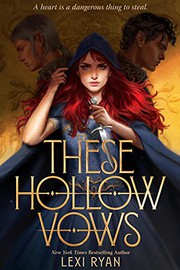
These Hollow Vows
Brie trades with the Unseelie to save her sister and steals for a prince.
2,384-word summary · 11 min read

The Winner's Curse
An aristocratic girl buys a slave who is secretly a prince plotting rebellion.
2,124-word summary · 9 min read
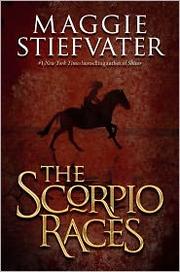
The Scorpio Races
Two riders risk deadly water horses in an island race for money and freedom.
2,352-word summary · 10 min read