
Reading options
What's inside (10 sections)
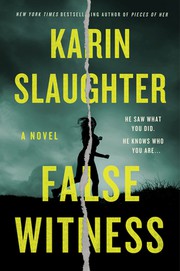
Karin Slaughter does not write cozy crime. False Witness opens in a pandemic-struck Atlanta in 2021 and immediately establishes that its characters are exhausted, edgy, and carrying damage they have not dealt with. Leigh Collier is a defense attorney at a prestigious firm, separated from her husband Walter, raising a sixteen-year-old daughter named Maddy, and managing to keep a smile on for the parent-teacher parts of her life. Underneath that surface is a secret. Twenty-three years earlier, in 1998, Leigh and her younger sister Callie killed a man and buried him, and they have spent every day since pretending it never happened.
I have read a lot of Slaughter, and this standalone is one of her meanest and also one of her most focused. There is no Will Trent here, no procedural safety net, just two sisters and the man who has finally figured out what they did.
The case that is not a coincidence
Leigh gets pulled onto a new client at the worst possible moment, the night of Maddy's school play. A junior partner asks her to defend Andrew Tenant, a wealthy man accused of multiple counts of rape, and the firm makes it clear that declining is not really an option if Leigh wants to keep her job. Trial is in a week. When Leigh meets the client, she recognizes him. Andrew is the little boy she and Callie once babysat, the son of the man they killed. Back then he was called Trevor.
Andrew does not waste time. He tells Leigh that he knows what the sisters did, that he has a videotape of the murder, and that if she fails to get him acquitted or throws the case on purpose, he will release the tape. That tape is not the only thing he holds over her. It also contains footage of his father Buddy abusing a teenage Callie, and Andrew threatens to post all of it online. Leigh knows exactly what public exposure would do to her sister, who has been fragile and addicted for most of her adult life.
The trap is elegant. Leigh is a defense attorney, which means she has professional skills that make her useful to Andrew, and a personal stake that makes her controllable. He wants her to defend him by any means necessary, including methods that could cost her license. She wants to find a way to get him convicted and locked away where the tape does not matter. Much of the novel is the slow grinding of that problem.
What happened in 1998
The book alternates between the present and the summer of 1998, and the past chapters are where the real horror lives. Buddy Waleski was a man everyone in the neighborhood found charming. He molested Callie for two and a half years, and he videotaped the assaults and showed them to his friends. Callie discovered the tapes and threatened to tell Buddy's wife Linda. Buddy attacked her, and Callie cut him with a kitchen knife, into the upper left thigh, nicking the femoral artery. He started to bleed out. She called her older sister instead of an ambulance.
Leigh finished the job. She wrapped plastic wrap around his head and held it, and between the two of them they made sure Trevor was asleep, cleaned up, and hid the body. Neither girl knew that a camera in the kitchen had captured them. The detective work felt sloppy and lucky, which is realistic for a panicked teenager and makes the twenty-three-year streak of not getting caught believable.
The backstory also complicates Leigh in a way that matters. Buddy assaulted her once too, when she was thirteen and also babysitting, and she shoved his hand away and never told anyone, then quit and passed the job to Callie. That decision, or non-decision, is the source of the guilt that runs her whole life. She did not just help her sister bury a body. She handed her sister to the man in the first place, and she has never forgiven herself.
Andrew and the pattern
In the present, Andrew is guilty. Slaughter does not leave any ambiguity about that. He has been assaulting women, and every attack carries the same signature: a slice on the upper left thigh, right over the femoral artery, close to where Callie cut his father all those years ago. He has recreated the injury that marked his childhood and turned it into his method.
Andrew also has a failsafe. His friend and private investigator Reggie Paltz keeps digital backups of the tapes and is instructed to release them if anything happens to Andrew. That detail is what makes the sisters' problem so hard to solve through simple violence. Killing Andrew would only pull the trigger.
When Andrew escalates, it stops being a legal problem and becomes a survival one. He rapes and murders Ruby, the mother of one of Maddy's friends. He makes sure Leigh and Callie see how much he knows about Walter and Maddy, dropping the same language Buddy used on Callie. That is when the two sisters decide they will do whatever it takes to protect the people they love.
The sisters and Maddy
The emotional spine of the book is the relationship between Leigh and Callie, and the reveal that Maddy is Callie's biological daughter. Callie got clean for nine months to have the baby and then gave her to Leigh and Walter to raise, and Maddy has no idea. Callie has kept her distance ever since, never once claiming her, and that restraint is its own kind of love. When Andrew threatens Maddy, Callie's protective instinct goes off like a flare, and she acts without hesitation.
Callie is the novel's most vivid character. She is a heroin addict, unreliable, funny in a bleak way, and clever in ways her family underestimates. She stalks Andrew's fiancee Sidney, ingratiates herself at an AA meeting, and plans to hurt Andrew through the people close to him. It is not a healthy plan, but it is a plan, and the book lets her have agency instead of making her a passive victim of her addiction.
Leigh, meanwhile, finally tells Walter the truth about 1998 and about her own assault. His response is the closest thing to grace in the novel. He tells her that she was thirteen and nobody protected her, and that she needs to stop carrying guilt for being a child. It does not fix her, but it is a genuine bright spot.
The endgame
The climax happens fast and ugly. Leigh and Walter kidnap Reggie to seize the servers and laptops, but the original tapes are in a safe in Andrew's house. Callie tricks her sister into going to the wrong address, then goes alone to the childhood home where Buddy died. Sidney and Andrew are waiting. Callie kills them both, and then she kills herself.
It is a brutal resolution, and Slaughter earns it by refusing to offer a clean exit. Callie solves the problem the only way she can and pays for it completely. The book does not pretend this is a triumph. It is one damaged person deciding that the people she loves are worth more than her own life, which is both noble and tragic, and the novel holds both readings at once.
That is the ending, and at first it looks like the secret dies with Callie. Then Linda, Andrew's mother, shows up at the funeral and gives Leigh the original tapes that Andrew had stashed at her house. Linda says she knew all along who killed Buddy, and that the sisters did her a favor. Leigh ends the book with the originals and the copies from Reggie's office, the evidence secured, and her sister at rest.
The system that fails women
False Witness is, underneath the thriller plot, an angry book about how institutions handle violence against women. Buddy was a beloved neighbor, and the adults around Callie either did not notice or did not want to. When Callie finally fought back, the law would have treated her as the criminal, not the man bleeding on the floor. Leigh becomes a defense attorney, which means she spends her career inside the machinery that let men like Buddy and Andrew walk away, and she knows exactly how the game is played.
Andrew's own confidence comes from that knowledge. He refuses to plead guilty not because he is innocent but because a plea would encourage other women to come forward and because he believes his wealth and his lawyer can protect him. The novel makes the point bluntly with a secondary character, Cole Bradley, who explains the escalation from peeping to rape to murder. Slaughter is not subtle here, and she does not want to be.
The pandemic setting sharpens the theme. Courts are backlogged, juries are unpredictable, and everyone is stuck at home with the people who hurt them. The isolation makes the danger more intimate. Andrew does not need to corner the sisters in an alley when he can call them, text them, and show up at a soccer practice while wearing his dead father's gold watch.
Why the secret is the real villain
The murder of Buddy is the inciting wound, but the book's actual antagonist is the secret about it. Everything the sisters do for twenty-three years, every bad choice and every distance they keep from each other, flows from the decision to bury him and never speak of it. Leigh cannot let anyone close because closeness means explaining herself. Callie cannot stay clean because the shame is worse than the drugs. The tape gives Andrew leverage, but the sisters gave the tape its power by needing it to stay hidden.
That is why the resolution cannot be a courtroom win. Even if Leigh somehow got Andrew convicted, the tapes would still exist, and the sisters would still be living under that threat. The only way out is for someone to pay the full price, and Callie chooses to be that someone. It is bleak, but it is consistent. The book has told you from the first chapter that this secret will cost something enormous.
There is also a quieter point about who gets believed. Callie, as an addict, is the person nobody takes seriously, and yet she is the one who understands the threat most clearly. Leigh, as the polished professional, is the one everyone trusts, and yet she has been living a lie her entire adult life. Slaughter lets the disreputable sister be right, which is a running theme in her work.
What works and what does not
Slaughter is very good at dread. The pandemic setting is used well. The masks, the isolation, the sense that everyone is one bad week away from falling apart, all feed the paranoia. Andrew is genuinely menacing in the calm, entitled way of a man who has never faced a consequence. The structure, cutting between the terrified teenagers of 1998 and the controlled professional of 2021, keeps both timelines urgent.
The novel is also relentless. It is long, and the middle includes a lot of legal and investigative procedure that some readers will find slows the pace. The violence, especially against women, is graphic and frequent, and the book uses anti-Asian hate crime and the murder of a middle-aged mother to raise the stakes in ways that occasionally feel like shock for its own sake. If you want a thriller without that weight, this is not the one.
The moral arithmetic is uncomfortable on purpose. Buddy was a child molester, and there is a part of every reader that is glad he died. But the novel is careful to show how that single act warped both sisters for decades, and how the guilt did not make them better people, only more secretive ones. It is a study of what a secret does to a family when the family keeps choosing to protect it.
I would not call this Slaughter's very best book, but it is one of her most emotionally direct. The bond between the two sisters, one who did the killing and one who covered it up, is the reason to read it. Everything else, the tapes, the cat and mouse, the courtroom, is machinery that serves that relationship. And the final image of Callie at rest, with the tapes that ruined her girlhood finally out of the wrong hands, is the closest thing to justice the story can offer.
FAQ
Is False Witness part of the Will Trent series?
No. False Witness is a standalone novel. Karin Slaughter's Will Trent and Grant County series are separate, though all are set in Georgia.
When was False Witness published?
William Morrow published it on July 20, 2021. The hardcover runs 448 pages with ISBN 9780062858092.
Does False Witness have a happy ending?
Not exactly. Callie dies, but she kills Andrew and saves the people she loves, and Leigh recovers the videotapes that caused the family's decades of fear.
Similar books
The Good Daughter
Twenty eight years after a home invasion shattered her family, a lawyer witnesses a school shooting that reopens old wounds.
2,505-word summary · 11 min read

Pretty Girls
Estranged sisters Claire and Lydia reunite after a murder exposes snuff films, their sister Julia's fate, and a killer near Lydia's daughter.
2,498-word summary · 11 min read

Girl, Forgotten
A rookie US marshal guards a judge with a stalker and ends up reopening the 1982 prom-night murder of the judge's pregnant daughter.
2,111-word summary · 9 min read
Pieces of Her
After her mother kills a mall shooter with shocking skill, Andy Oliver uncovers a hidden 1980s past of radicals and wealth.
2,791-word summary · 12 min read

What She Knew
Rachel lets her eight-year-old son run ahead in a Bristol park, and the nine-day search turns her into a suspect in the public eye.
2,952-word summary · 13 min read

The Beach House
A young valet is beaten to death at a Hamptons party, and his law-student brother spends a year building a case against the family that covered it up.
2,049-word summary · 9 min read

Six Years
A professor who promised to forget the woman he loved sees her husband's obituary and discovers that the wedding, the marriage, and the woman herself may never…
2,076-word summary · 9 min read

Rules of Prey
Minneapolis detective Lucas Davenport hunts a killer who leaves a new rule at every scene and treats murder as a game of wits.
1,914-word summary · 9 min read

4th of July
Lindsay Boxer shoots two armed teenagers in self-defense, faces a wrongful-death trial, and spends her leave chasing a string of throat-slashing murders in…
2,192-word summary · 10 min read
Persuader
Reacher goes undercover in a Maine crime family to find a missing DEA agent and the man he once failed to kill, and Lee Child keeps the whole thing tight,…
2,278-word summary · 10 min read

61 Hours
A bus crash strands Jack Reacher in a snowbound South Dakota town where a drug gang, a corrupt police force, and a single witness are on a collision course.
2,227-word summary · 10 min read

Still Missing
A realtor is abducted at a Vancouver Island open house and held for more than a year. Told through therapy sessions, the novel follows her escape and the hunt…
2,466-word summary · 11 min read

Bad Luck and Trouble
A deposit of $1,030 summons Jack Reacher back to his old army unit, which is being picked off one name at a time.
2,366-word summary · 11 min read

3rd Degree
The third Women's Murder Club novel follows a San Francisco terror cell and a three-day killing schedule, and it costs the club a member.
2,685-word summary · 12 min read

Worth Dying For
Reacher stops for one night in rural Nebraska and finds a family that runs the county, a missing girl and a shipment worth killing for.
2,021-word summary · 9 min read

The Ex
Cassie thinks her new boyfriend's ex is the woman harassing her, but Freida McFadden's thriller keeps rearranging who the ex actually is.
2,103-word summary · 9 min read

Say You're Sorry
A widowed prosecutor defends the teenager accused of killing her babysitter, uncovering a small town's secrets and a killer hiding in plain sight.
2,116-word summary · 9 min read

Echo Burning
Reacher hitches a ride with a Texas woman who wants her abusive husband killed, then has to prove she did not murder him when he comes home.
2,209-word summary · 10 min read
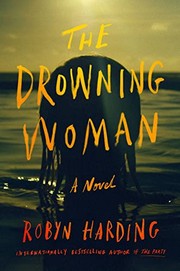
The Drowning Woman
Living in her car in Seattle, Lee saves a wealthy stranger from drowning. The friendship that follows draws her into abuse, murder, and a plan to disappear.
2,578-word summary · 11 min read

The Woods
Twenty years after two teenagers were murdered and two vanished at summer camp, prosecutor Paul Copeland identifies a fresh corpse as one of the missing.
2,490-word summary · 11 min read

The Boy from the Woods
Wilde, found feral in a New Jersey forest in 1986, hunts for a missing teenager while a senator's secrets tear a wealthy town apart.
2,270-word summary · 10 min read
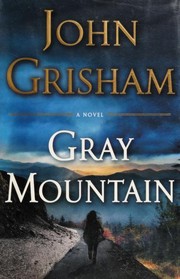
Gray Mountain
A Manhattan associate furloughed after the financial crash takes a year of unpaid legal aid work in Appalachian coal country, and finds the case of her life…
2,026-word summary · 9 min read
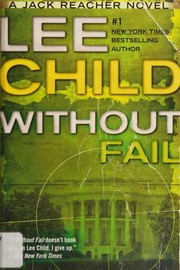
Without Fail
Reacher is asked to test vice presidential security by planning to kill.
2,084-word summary · 9 min read
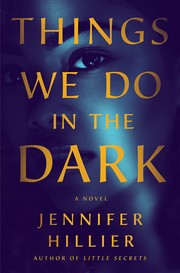
Things We Do in the Dark
A comedian kills her husband, then a podcaster digs up her teen murder past.
2,427-word summary · 11 min read

The Widow
A widow of a suspected criminal faces reporters and police while hiding what her marriage really cost.
2,599-word summary · 12 min read
The Racketeer
A jailed lawyer trades a judge murder secret for freedom and revenge.
2,434-word summary · 11 min read
The Night Swim
A true crime podcaster covers a rape trial while probing an old drowning in a small town.
2,260-word summary · 10 min read
The Judge's List
Lacy Stoltz hunts a sitting judge who murders off his list.
2,513-word summary · 11 min read
The Innocent
A government hitman refuses one kill and must protect a teenage girl at the center of a cover-up.
2,403-word summary · 11 min read
The Girl Who Was Taken
A survivor returns alone while a reporter digs for her lost sister.
2,261-word summary · 10 min read