
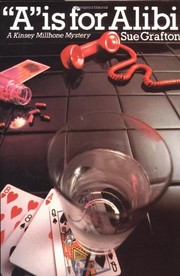
A Is for Alibi
2,118-word summary 9 min read 288 pages in the book
- First published
- 1982
- Publisher
- Holt, Rinehart and Winston
- Pages
- 288
- ISBN
- 9780805013344
- Series
- Kinsey Millhone (#1)
Reading options
What's inside (8 sections)
I came to A Is for Alibi late, after hearing Sue Grafton described as the writer who made the alphabet feel like a dare. Friends who love detective stories kept telling me to start at the beginning, with Kinsey Millhone in a converted garage in California, doing her own laundry and her own legwork. I finally picked it up on a slow weekend. It was first published in 1982 by Holt, Rinehart and Winston, and the standard edition runs 288 pages. It is the first book in the Kinsey Millhone series, and it reads like an introduction that does not waste time apologizing for itself.
Kinsey narrates in her own voice, dry and practical. She is thirty-two, twice divorced, an ex-cop working as a private investigator in Santa Teresa, a fictional version of Santa Barbara. She rents a small office, lives in a garage apartment owned by a kind older landlord, runs most mornings, and eats simply. She keeps a black dress for funerals and not much else for show. I liked her within about ten pages, not because she tries to charm the reader but because she states the facts of her life without decoration.
The case starts when Nikki Fife walks into Kinsey's office. Nikki has just served eight years in prison for the murder of her husband, Laurence Fife, a prominent divorce lawyer with a reputation for ruthlessness and cheating. The police believed Nikki poisoned him. A jury agreed. Now Nikki is out on parole and says she did not do it. She wants Kinsey to find out who did.
That is a hard assignment. Eight years have passed. Memories have settled into shapes that suit the people holding them. Records are scattered. Some witnesses have moved, married, changed names, or died. Kinsey takes the job anyway, partly for the money and partly because Nikki's claim has a stubborn ring of truth to it.
A garage apartment and a woman out of prison
The opening chapters spend most of their energy placing Kinsey in the world. She explains her routine, her rent, her car, her office arrangement, the way she divides work between private cases and routine insurance referrals. Some readers find this slow. I found it reassuring, because Grafton is showing how a working investigator actually lives, paycheck to paycheck, without a big agency behind her.
Nikki makes a strong impression. She is composed rather than tearful. She has children she wants to reconnect with and a life she wants to rebuild. She does not ask Kinsey to like her. She asks for work. Kinsey checks the court records, reads the old trial coverage, and starts mapping the people around Laurence Fife at the time he died.
Laurence himself comes across as the kind of man who collected enemies through ordinary selfishness. A divorce lawyer who played hard, a husband who cheated, a partner who kept secrets. Plenty of people in Santa Teresa had reasons to dislike him. That gives Kinsey a wide field, which is both an opportunity and a problem.
One early thread involves Nikki's young son, who was small when the murder happened and whose hearing impairment made his testimony uncertain at the time. Kinsey treats him gently. She does not press him for a breakthrough memory. She notes what he can and cannot say about that period, and she moves on to documents and adults.
Eight years cold
Cold cases run on paper, and Grafton clearly enjoys the paper. Kinsey pulls police reports, reads trial transcripts, looks at property and business records, and knocks on doors. She interviews Laurence's first wife, Gwen, who is still angry about how her marriage ended. She talks to the grown children from that first marriage. She looks into Laurence's law practice and his partnership with Charlie Scorsoni, a man Kinsey finds attractive in a way she half distrusts in herself.
The interviews give the book its texture. Grafton has an eye for workplaces and kitchens, for the small jobs people do while they talk. One witness grooms dogs. Another sews. Someone lays brick. These details could feel like filler, but they kept the conversations grounded for me. People in this book have jobs and bills alongside their motives.
Kinsey also keeps up her bread and butter work on the side, including routine insurance investigations. That subplot will matter less to most readers than the murder, and honestly it sometimes reads like Grafton reminding herself that Kinsey needs to eat. Still, I appreciated the reminder that private investigation is mostly routine, with occasional danger, rather than the other way around.
The weak spot in this middle stretch is repetition. Kinsey drives somewhere, asks questions, gets partial answers, drives back, writes notes. Then she does it again. The rhythm is true to the job, but a few interviews blur together. I had to flip back once or twice to remember who worked where eight years earlier.
The second poisoning
The case sharpens when Kinsey learns that Laurence Fife was not the only person to die that way. Shortly after his death, Libby Glass, a bookkeeper who had done work for Laurence and Charlie, died in similar circumstances. That changes the shape of everything.
If two people connected to the same law office died of similar poisoning close together, then Nikki's conviction starts to look less secure. Perhaps Laurence's death was not a domestic murder at all, but part of something connected to the practice. Or perhaps the two deaths have different causes and only look linked. Kinsey has to hold both ideas at once.
She digs into Libby's life. Libby was quieter than the lawyers around her, competent with numbers, not socially prominent. Kinsey talks to Libby's parents, who are still grieving, and to former colleagues and an old boyfriend who is not eager to revisit the past. Nobody describes Libby as dramatic. That ordinariness makes her death feel sadder than Laurence's, at least to me.
The question of an affair surfaces. Laurence had a reputation as a philanderer, and Kinsey has to ask whether he was involved with Libby. The answer matters because it could supply either a jealous motive or a professional one. Grafton handles this without sensationalism. Kinsey asks plain questions and records uncomfortable answers.
The double death structure is the best part of the plotting. One poisoning looks like a marriage ending in murder. Two poisonings look like a pattern, and patterns point toward planning.
Interviews, paperwork and bad judgment
By the midpoint, Kinsey has several live threads and no clean answer. Gwen, the first wife, has motive in the oldest sense: betrayal. She is intelligent and direct, and her anger has not cooled much in eight years. Kinsey respects her honesty while noting that honesty and innocence are different things.
Then there is Charlie Scorsoni, Laurence's former law partner. Charlie is loyal to his dead partner in public, smooth in conversation, and attentive to Kinsey in a way that flatters her. Kinsey, who admits early that her romantic choices have been poor, starts seeing him socially. This is where I wanted to reach into the pages and suggest she slow down.
The romance is the least convincing part of the book for me. Kinsey is careful everywhere else, checking locks, verifying stories, keeping copies. With Charlie, she relaxes faster than her own judgment should allow. Grafton knows this is a flaw; Kinsey herself flags it. But knowing it does not fully excuse the pages where the investigation softens because Kinsey enjoys Charlie's company.
More solid is the financial thread. Kinsey starts looking closely at the law office books, at who handled money, at what Libby Glass might have seen before she died. Numbers leave traces even when people lie. This is slow work, and Grafton writes it with patience. Bank records, office procedures, salary details that do not match the job described. A secretary paid more than her duties seem to justify. Debts that linger.
Sharon Napier, Laurence's former secretary, draws Kinsey's attention. Sharon has since moved to Las Vegas and works as a dealer. She earned a high salary for modest skills, which raises an obvious question about what else she was paid for. Kinsey travels to see her, and Sharon proves evasive, nervous, and possibly ready to trade information for safety.
Sharon and the shape of the answer
I do not want to lay out every turn, since this is a mystery and the turns are the point. But the solution comes in two parts, and both parts matter.
The first part concerns Laurence Fife. After following the cold trail through old lovers, family grievances, and office politics, Kinsey arrives at an answer tied to jealousy and a marriage that ended badly years before the murder. Gwen, the first wife, committed that killing. The motive reaches back to betrayal rather than money, and the method depended on access and timing rather than elaborate planning.
The second part concerns Libby Glass. Her death was not a copy of the first, though it looked like one. It was a separate killing with a separate motive, designed to look connected. Libby had found signs of embezzlement in the law office accounts. Charlie Scorsoni killed her to protect himself, using a similar poison so the death would read as part of the same story. When Sharon Napier later threatened to expose what she knew, Charlie killed her too.
That structure explains both the strengths and the weaknesses readers argue about. On the positive side, the two killer design is clever and thematically neat: one murder from passion, one from greed, overlapping by accident and then by imitation. On the negative side, the reveal leans on a familiar move from classic detective fiction, where the charming man close to the investigator turns out to be dangerous. Readers of Hammett will recognize the shape.
Kinsey's realization about Charlie lands hard because it is personal. She has slept with him, trusted him, let him into her apartment and her routine. Learning that he is a killer forces her to reexamine not only the case but her own judgment. I thought Grafton wrote this section with appropriate discomfort rather than melodrama. Kinsey feels foolish and angry, and she does not forgive herself quickly.
The beach at the end
The final confrontation takes place on the beach, and it is frightening in a plainspoken way. Charlie hunts Kinsey, and she runs out of clever options. She hides where she can, including among trash and rubbish, with no dignity and no plan beyond survival. When Charlie finds her, she shoots him.
It is the first time Kinsey has killed anyone, and Grafton refuses to make it feel triumphant. Kinsey is shaken. She thinks about how she tried to keep her life simple and how little control she actually had over events. The closing pages are brief and subdued. There is no long celebration, no neat return to routine. Nikki is cleared of her husband's murder, which resolves the contract, but the cost stays with Kinsey.
That refusal to glamorize the killing is what stayed with me. Many first in series detective novels end with the hero proving toughness through violence. Grafton ends with her hero feeling the weight of it. The book closes on a somber note that makes Kinsey easier to trust going forward.
Fair criticism belongs here too. The plotting wobbles in places. Too many suspects get similar amounts of attention, so the middle sags. Kinsey's running routine, mentioned often, will either amuse or bore depending on taste. I found it mildly boring by the third mention, though it does pay off as characterization: she is someone who manages stress through solitary effort. The insurance fraud side thread also feels stitched on, present mainly to show Kinsey working other jobs while the main case develops.
Still, the series launch works. Kinsey Millhone stands apart from the hard boiled men who dominated the genre: funny without performing, tough without posturing, independent without pretending she needs no one. Santa Teresa feels lived in. The dialogue is sharp. The procedure feels honest. If you like mysteries where the detective earns the answer through interviews and records rather than luck or technology, this one holds up well for a book written before cell phones and search engines.
I finished it thinking Grafton had set herself a difficult task with the alphabet premise and met it by keeping the first entry modest. No conspiracy, no serial killer, no citywide corruption. Just a dead lawyer, a convicted wife who says she is innocent, a second death that reframes the first, and a young woman with a notebook asking questions until the answers turn dangerous.
FAQ
When was A Is for Alibi published?
It was first published in 1982 by Holt, Rinehart and Winston. The standard edition runs 288 pages and the ISBN is 9780805013344.
Is A Is for Alibi the first Kinsey Millhone book?
Yes, it is book 1 in the Kinsey Millhone series, introducing the Santa Teresa private investigator and ending with the first time she kills in self-defense.
What is the basic setup of A Is for Alibi?
Laurence Fife was poisoned, and his wife Nikki served eight years before hiring Kinsey. A similar poisoning of bookkeeper Libby Glass points to a second, separate killer.
Similar books
More from Kinsey Millhone first, then related titles.

How the Light Gets In
Gamache investigates the murder of the last Ouellet quintuplet while the Sûreté he served is dismantled from inside by the man who took his protégé.
2,279-word summary · 10 min read
Bury Your Dead
Recovering from a failed raid that killed his officers, Gamache investigates a murder in a Quebec City library while Beauvoir reopens a case in Three Pines.
2,022-word summary · 9 min read

The Trespasser
A Dublin Murder Squad detective investigates a staged dinner-party killing and finds a cover-up that reaches into her own department.
2,051-word summary · 9 min read

Rules of Prey
Minneapolis detective Lucas Davenport hunts a killer who leaves a new rule at every scene and treats murder as a game of wits.
1,914-word summary · 9 min read

The Late Show
Exiled to the LAPD night shift after accusing her supervisor, Renée Ballard keeps two cases that were meant to be handed off at dawn: a brutal assault and a…
2,563-word summary · 11 min read
Finger Lickin' Fifteen
Lula sees a celebrity chef decapitated and talks Stephanie into entering a barbecue contest to lure the killers, while Ranger hires her to find a security leak…
2,248-word summary · 10 min read
Fearless Fourteen
Bounty hunter Stephanie Plum babysits a teenager, guards a fading singer, and hunts nine stolen million dollars under her boyfriend's basement.
2,466-word summary · 11 min read

3rd Degree
The third Women's Murder Club novel follows a San Francisco terror cell and a three-day killing schedule, and it costs the club a member.
2,685-word summary · 12 min read
Lean Mean Thirteen
Stephanie Plum's ex-husband disappears after she attacks him, leaving her suspected of murder and chasing a forty-million-dollar secret through Trenton.
2,100-word summary · 9 min read
The Memoirs of Sherlock Holmes
Doyle's second Holmes collection gathers twelve Strand stories, including the early case of the Gloria Scott and the confrontation with Moriarty at Reichenbach…
2,390-word summary · 11 min read

The Redbreast
Harry Hole chases an ageing sniper through modern Oslo while two Norwegian volunteers on the Eastern Front carry a fifty-year-old betrayal toward a royal…
2,453-word summary · 11 min read
The Murder on the Links
Poirot arrives in France too late to save his client, who is found stabbed in a grave and was not the man he claimed to be. Christie's second Poirot novel.
2,055-word summary · 9 min read
Broken Harbor
A family is found slaughtered in a half-built Dublin estate where no one broke in, and star detective Scorcher Kennedy must explain the holes in the walls.
2,308-word summary · 10 min read
The Maltese Falcon
Sam Spade hunts a jeweled bird through lies after his partner is killed.
2,529-word summary · 11 min read
One, Two, Buckle My Shoe
Poirot links a dentist murder to a missing banker and stolen millions.
2,549-word summary · 11 min read
Cruel & Unusual
Scarpetta links an execution to a boy's murder while someone steals bodies.
2,533-word summary · 11 min read
Case Histories
A Cambridge PI takes three cold cases that tangle with his own loss.
2,465-word summary · 11 min read
At Bertram's Hotel
Miss Marple finds a luxury hotel fronting robbery and murder.
2,550-word summary · 11 min read
The Man in the Brown Suit
Anne Beddingfeld sees a Tube death in London and chases a paper clue to South Africa, diamonds, and the hidden Colonel.
2,292-word summary · 10 min read
The Body in the Library
A strange girl found dead in a library pulls Miss Marple into lies about dance halls and film.
2,017-word summary · 9 min read
Maisie Dobbs
A maid turned war nurse opens a London inquiry agency in 1929 and traces a quiet case to a refuge for shattered soldiers.
2,382-word summary · 11 min read

2nd Chance
Lindsay Boxer and the Women's Murder Club hunt the Chimera killer after a church shooting in San Francisco.
2,572-word summary · 11 min read
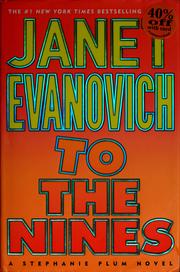
To the Nines
Janet Evanovich's ninth Stephanie Plum case retold: a missing skip, threats in Trenton, and a rescue run to Las Vegas.
2,839-word summary · 13 min read
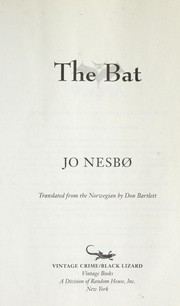
The Bat
Oslo detective Harry Hole aids Sydney police after a young Norwegian woman is murdered and finds a wider pattern. Grief, drink, and a lost partner shape the…
2,766-word summary · 12 min read
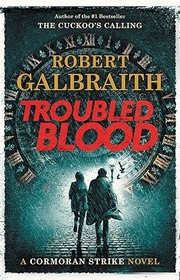
Troubled Blood
Strike and Robin take a year long cold case: doctor Margot Bamborough vanished in 1974, with a nurse hiding more.
2,211-word summary · 10 min read
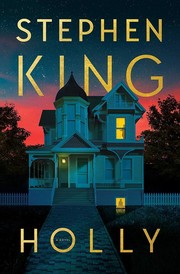
Holly
Grieving detective Holly Gibney takes a missing-girl case in 2021 and traces it to two polite retired professors with a basement secret.
2,607-word summary · 12 min read
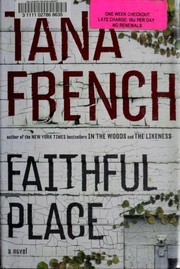
Faithful Place
Undercover Frank Mackey returns to Faithful Place when lost love Rosie suitcase is found.
2,161-word summary · 10 min read
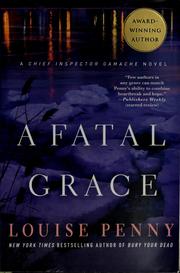
A Fatal Grace
Gamache returns to Three Pines for Christmas where hated CC de Poitiers is electrocuted on a frozen lake.
2,339-word summary · 10 min read
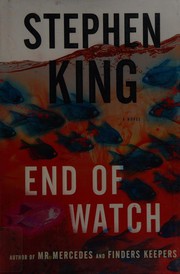
End of Watch
A dying Bill Hodges and Holly Gibney face Brady Hartsfield again, as rigged game consoles push hurt teens toward suicide.
2,923-word summary · 13 min read
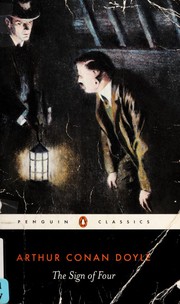
The Sign of Four
Mary Morstan's pearls lead Holmes and Watson from foggy London to Agra treasure and a Thames chase.
2,114-word summary · 9 min read