
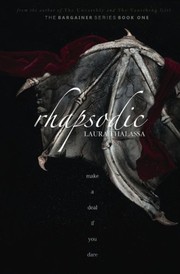
Rhapsodic
2,188-word summary 10 min read 422 pages in the book
- First published
- 2016
- Publisher
- CreateSpace Independent Publishing Platform
- Pages
- 422
- ISBN
- 9781541130852
- Series
- The Bargainer (#1)
Reading options
What's inside (9 sections)
Why I picked it up
I came to this book because a friend who reads a lot of fae romance told me it was the one that got her through a long winter. She described a siren who owes a pile of magical debts and the patient creditor who finally comes to collect. That sounded like a setup for either a cat and mouse game or a slow burn, and I wanted to see which one it was. The edition I read is the CreateSpace Independent Publishing Platform paperback from 2016, 422 pages, the first book in The Bargainer series. It alternates between now and then, with present day chapters and past chapters reaching back to when the heroine was a teenager. If dual timelines bother you, be warned. This one commits to them fully.
I should also say up front that this is an explicit romance with dark themes. The backstory includes abuse and coercion, and the present day relationship has a power gap that the book treats as part of the appeal. I will get into where that worked for me and where it grated. As a reading experience, it moved fast. Short chapters, banter on nearly every page, and a mystery underneath about missing fae that kept me turning pages past midnight.
The bracelet and the man in her room
Callypso Lillis goes by Callie. She is a siren, which in this world means her voice can compel people and her nature draws attention she does not always want. She works as a private investigator, mostly human cases, and she tries to keep her head down. The most visible thing about her is the bracelet on her wrist. It is a row of small black beads, and each bead marks a favor she owes to one man. Only repayment or death will remove them. She has carried them for seven years.
The man is Desmond Flynn, called Des, known across both worlds as the Bargainer. If you need something done, something found, someone persuaded, you go to him. He names a price. Everyone pays eventually. Everyone except Callie, because for seven years he has asked for nothing. Then the book opens with him sitting in her room, grinning, unafraid of her, and telling her the waiting is over. He collects the first bead for a kiss. He collects another for a truth spoken aloud. Each payment is small and each one is intimate, and Thalassa makes it clear this is deliberate. He is not working down a ledger. He is rebuilding a connection on his own schedule.
What makes the opening chapters fun is that Callie is not helpless and not impressed. She argues about every term. She tries to pay beads off with technicalities. She sets rules about where he can appear and when, and he honors the letter of them while ignoring the spirit. Their dialogue has a practiced rhythm, teasing that sounds like two people resuming a conversation from years ago rather than starting one. Because that is what it is. The book tells you early that they knew each other before, that something broke between them, and that Des has been patient in a way that reads as either romantic or alarming depending on your mood. I swung between those readings for most of the book.
How Callie got here
Every few chapters, the story steps back to show how a teenage girl ended up owing her life to a fae king. Young Callie lives in a bad home situation. Her mother is gone or useless depending on the memory, and the man in the house uses fear to control her. Thalassa writes these scenes without relish. The details stay at the level of locked doors, raised voices, and a girl counting the days until she can leave. When Callie first calls on the Bargainer, she is sixteen and desperate, asking for small rescues. A door unlocked. A night without harm. A little money. Each one costs a bead.
Des in these past chapters is careful in a way that matters. He answers a desperate teenager's bargains without taking advantage in the obvious ways, and he sets boundaries that the adults around her do not. He gives her shelter in increments, advice disguised as mockery, and protection priced so she can afford it. Reading these sections, I understood why adult Callie trusts him past the point of sense. He was the one person who showed up when she called. The book earns that loyalty in small scenes, a coat offered, a threat quietly removed, a promise kept exactly as worded.
The turn comes when Callie is older and the debts have piled past counting. Something happens between them that the book reveals slowly, a betrayal as she sees it, tied to her siren nature and to what Des wants from her. She cuts him off. She spends seven years building a life that does not include him, taking PI jobs, learning control of her voice, keeping human friends at arm's length. The beads stay on her wrist the whole time, a reminder she cannot pay down alone. When Des returns, the past chapters start landing harder, because now you know what each shared joke cost. I found this structure effective even when individual past chapters felt short. They work as punctuation, not as a second novel.
The missing warriors and the glass caskets
Under the romance runs a mystery that gives Des his reason for collecting now. In the Otherworld, the fae land that sits alongside the human one, warriors have started vanishing. The pattern is grim. The men disappear without trace. Later the women connected to them are found dead, each sealed in a glass casket with a child held to her breast. No one can explain how the bodies are placed or what the children mean. Whispers among the enslaved and the low fae speak of an old evil awake again, something with a taste for rare creatures.
Des is the King of the Night, ruler of one court of the Otherworld, and the missing soldiers are his people. He needs Callie because her siren nature is relevant to the force behind the disappearances. The book is coy about exactly why for most of its length. Her voice works on fae as well as humans, her bloodline carries something old, and whatever is taking warriors wants bargaining chips that sing. Des will not say this plainly. He feeds Callie tasks one bead at a time, a visit here, a song used there, a door opened in a place she should not go. She accuses him of using her as bait. He answers, in essence, that she is the only lure that works.
I liked this plot more than I expected, mostly because it stays in the background where it belongs for a first book. There are trips into the Otherworld that show markets, courts, and the casual cruelty of fae hierarchies. There are fights where Des is terrifying in a way the banter hides, all stillness and old power. There is a slave trade thread that the book treats seriously, with caged fae and buyers who collect the exotic. Callie, who knows what it is to be owned in a smaller way, reacts with anger that feels personal rather than heroic. The solution to the mystery is not in this volume. What Rhapsodic does is establish the shape of the threat and why Des cannot face it without the one person who has every reason to refuse him.
The romance and the steam
Readers pick up this series for the relationship, so here is an honest account of it. Des courts Callie with total focus. He remembers what she likes, he shows up when she is in danger before she calls, and he touches her only within the terms they negotiate, then pushes at the edges of those terms with a smile. Callie resists with insults and rules and then gives ground in scenes that are written to be hot. Her siren voice responds to him. His fae nature responds to being wanted. The love scenes arrive in the back half and are explicit, with dirty talk and power play framed as consensual games between people who have wanted each other for years.
When it works, it works because Callie keeps her spine. She names what she wants, she stops scenes to renegotiate, and Des obeys in the moment even when he grumbles. There is a scene built around a single bead's worth of honesty where she admits attraction, and the book treats that admission as braver than any bedroom scene. I believed they loved each other in the bickering chapters more than in the naked ones, which I mean as praise. The banter is specific. He teases her about her cheap coffee and her terrible sleep habits. She teases him about his vanity and his dramatic entrances. Couples who have inside jokes feel married on the page, and these two collect them.
That said, the steam follows a pattern that wore on me. Des surprises Callie in her home, in her bath, in her bed. She protests, he charms, she melts. Once is a scene. Four times is a template. The book wants this to read as a powerful man unable to stay away from the one woman who matches him. There were moments where I read it instead as a man who never hears no the first time. Callie always consents before anything happens, and the text is careful about that line. But the path to yes runs through cornering her first, and if you have lived with anyone who does that, the charm may not cover it. Your mileage will vary, and I think it is worth knowing before you start.
What bothered me, fairly stated
Let me lay out the criticisms plainly, since this book has real ones. First, the consent edges described above. The story frames Des as safe because he stops when told and because his motives are protective. A kinder reading says he waited seven years out of respect. A harder reading says he engineered her isolation so she would have no one else to call. The text supports both, which may be intentional, but it never fully sits with the harder one. If power gaps in romance bother you, this will bother you.
Second, repetition. The banter is fun but it loops. How many times can Des appear uninvited and Callie threaten him with household objects before the scene plays itself out? The bead payments also follow one shape. He names a price, she haggles, they trade a kiss or a secret, one bead vanishes. The ritual is the point, I understand that, and watching the bracelet thin is satisfying. Still, the middle third sags because the mechanism never changes. A PI case in the human world breaks things up for a chapter, then it is back to the bedroom ledger.
Third, the past timeline sometimes tells what the present already showed. We learn twice that Callie is stubborn, twice that Des is possessive, twice that her home was cruel. The second telling rarely adds new facts. I wanted fewer flashbacks with more weight, especially around the betrayal that split them. When the full explanation arrives, it lands, but it has to fight through deja vu to do it. None of this ruined the book for me. It kept it from being a favorite.
There is also a craft point worth making. Thalassa writes clean sentences and strong dialogue, but her metaphors cluster around the same images. Night, stars, teeth, hunger. After three hundred pages the fae all sound hungry in the same words. A sharper edit of the middle would have helped. The 422 pages read fast because the chapters are short, not because every page earns its place.
Where it leaves things
Without spoiling the final moves, the book closes its opening arc while leaving the war open. The bracelet is thinner. Callie knows more about what Des kept from her, though not everything. The glass caskets remain unexplained, the missing warriors remain missing, and the thing hunting rare fae has noticed the siren who keeps walking into its territory. The last chapters promise that the next book goes deeper into the Otherworld and further into what Callie is. That promise worked on me. I finished wanting the second book, which is the main job of a first book.
Who should read it? If you like fae romance with explicit scenes, a heroine who talks back, and a hero whose patience might be devotion or strategy, this will scratch the itch. If you need the power balance to feel equal from the start, or you want the mystery solved in one volume, look elsewhere. Check content warnings for the abuse backstory and for scenes built around coercion fantasies. I went in for the mystery and stayed for Callie, who holds the whole glittering structure up through stubbornness alone. Des collects debts. She collects reasons to forgive him, one bead at a time, and charges interest.
FAQ
Who is the Bargainer?
Desmond Flynn, also called Des, is the King of the Night in the Otherworld. He trades favors for prices and waited seven years to collect from Callie.
What are the black beads?
Each bead marks one favor Callie owes Des. Only repayment or death removes them, and Des collects them one at a time.
Is Rhapsodic part of a series?
Yes, it is book one of The Bargainer series by Laura Thalassa, followed by A Strange Hymn. It has explicit scenes and dark themes.
Similar books
More from The Bargainer first, then related titles.

The Lost Sisters
Taryn Duarte writes a letter to her twin, Jude, explaining how she fell for Locke and why she stayed silent while he used them both.
1,914-word summary · 9 min read
An Enchantment of Ravens
Isobel, a mortal artist in the fairy town of Whimsy, paints a portrait of the autumn prince and falls in love with him, breaking the laws of her craft.
2,087-word summary · 9 min read


Dreamfever
With the walls between worlds down and Mac broken by the Fae, Dreamfever is the darkest volume of the Fever series, and the one that changes everything.
2,007-word summary · 9 min read
Deadlocked
A dead woman on Eric's lawn starts a murder investigation, a vampire queen wants Eric as her consort, and the fairies in Sookie's life close in.
2,885-word summary · 13 min read
A Deal with the Elf King
A village herbalist is exposed as the hidden Human Queen, married to a cold elf king, and given three months to save his dying kingdom or be bound to it…
2,094-word summary · 9 min read

These Hollow Vows
Brie trades with the Unseelie to save her sister and steals for a prince.
2,384-word summary · 11 min read

The Iron Queen
Meghan faces the Iron King past while Ash pays a winter price.
2,548-word summary · 11 min read

The Dark One
Winnie trades with Hook while Peter Pan turns cruel in Neverland.
2,596-word summary · 12 min read
Shadowfever
Mac Lane hunts the Sinsar Dubh in Dublin as Fae walls fail and Barrons secrets surface.
3,016-word summary · 13 min read
Fated Throne
Twins face the throne trial as heirs close in and stars shift.
2,349-word summary · 10 min read

Bloodfever
Mac hunts the Sinsar Dubh in Dublin while Barrons tests her.
2,124-word summary · 9 min read

Cursed Fates
Twin heirs Tory and Darcy Vega face Lionel Acrux, brutal trials and tangled mate bonds in this fifth Zodiac Academy book, a 749-page bridge to open war and…
2,750-word summary · 12 min read
Gleam
Captive Auren finds power in gold touch while Slade hunts her across kingdoms in Plated Prisoner book three.
2,073-word summary · 9 min read

Shadow Princess
Tory and Darcy learn they are Phoenixes with shadows inside them and face Lionel, the Heirs and a rescue that goes wrong.
2,837-word summary · 13 min read
Glint
A gold-skinned captive of Midas falls to Fourth Kingdom troops and learns to fight with the ribbons she hid.
2,969-word summary · 13 min read
The Reckoning
Twin heirs survive trials and hazing at Zodiac Academy while the heirs start to split.
1,984-word summary · 9 min read
Gild
A gold-skinned woman kept as Midas favored learns her cage is a bargain, then war drags her onto the road.
2,755-word summary · 12 min read
The Awakening
Twin sisters Tory and Darcy Vega learn they are lost Fae heirs and enter Zodiac Academy in Solaria, where the four Heirs bully them to force them off the…
2,960-word summary · 13 min read

House of Sky and Breath
Bryce and Hunt want normal love but rebels and Asteri pull them to war and portals.
2,204-word summary · 10 min read
The Wicked King
Jude must hold Cardan on the Elfhame throne while the Undersea plots.
3,439-word summary · 15 min read
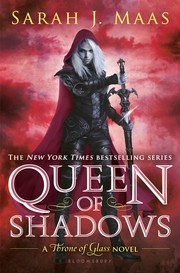
Queen of Shadows
Celaena returns to Rifthold as Aelin to free magic, face Arobynn and the Valg, and reunite with Rowan and Chaol.
4,447-word summary · 20 min read

Empire of Storms
Aelin gathers armies and faces Maeve while Elide and Manon flee Morath.
4,466-word summary · 20 min read

A Court of Silver Flames
Silver Flames retold: Nesta trains with Cassian, Valkyries rise, war with Koschei looms.
2,126-word summary · 9 min read
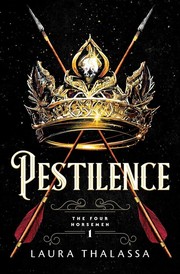
Pestilence
Firefighter Sara Burns shoots the Horseman Pestilence and discovers he cannot die. Taken captive, she rides with him as his plague sweeps the world.
2,508-word summary · 11 min read

Six Scorched Roses
A dying scholar bargains with a reclusive vampire for blood, and six roses turn a transaction into a slow, dangerous romance.
2,663-word summary · 12 min read

Vow of Thieves
Kazi and Jase return to Tor's Watch to find it occupied, and their marriage is tested by captivity, betrayal, and a war for the town of Hell's Mouth.
2,059-word summary · 9 min read

Magic Burns
A magic flare hits Atlanta, and mercenary Kate Daniels must recover stolen maps, find a missing witch, and keep a teenage girl alive while Celtic gods try to…
2,021-word summary · 9 min read
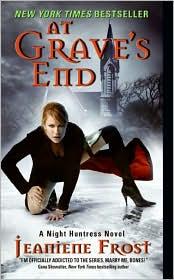
At Grave's End
Cat and Bones face Max, a zombie-raising ancient vampire, and a prophecy that ties their marriage to Patra's death in the third Night Huntress novel.
2,061-word summary · 9 min read

Blood Bonds
Oleander is chained in a Resistance camp, and her five Bonds have to find her before Silas Davies finishes what he started in this third Bonds that Tie book.
2,018-word summary · 9 min read