
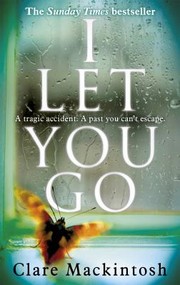
I Let You Go
2,916-word summary 13 min read 384 pages in the book
- First published
- 2014
- Publisher
- Sphere
- Pages
- 384
- ISBN
- 9780751554151
Reading options
What's inside (6 sections)
I picked up I Let You Go because a friend kept telling me the twist made her turn straight back to page one. I went in expecting a standard missing driver story set in Bristol. What I got instead was slower and sadder for a long stretch, then much darker. Clare Mackintosh first published it in 2014 with Sphere in the UK, and it later came out in the US with Berkley. The Sphere paperback I am describing runs 384 pages with ISBN 9780751554151. It is a psychological thriller about a hit and run, a woman hiding on the Welsh coast, and a police case that refuses to stay closed.
The opening stays with me because it is so ordinary. It is a rainy November afternoon in Bristol. A young mother is walking home from school with her five year old son Jacob Jordan. He runs a little ahead, the way children do when they want to race. A car comes fast, strikes him, and keeps going. His mother Anya is left in the road. There is no long speech about it. Mackintosh gives you the wet tarmac, the noise, people stopping, and then the absence. I had to put the book down for a minute. Anyone who has walked a child home from school will feel that page in the stomach.
From there the book splits. One thread follows the police. The other follows a woman called Jenna Gray who leaves Bristol soon after and rents a small stone cottage on the Welsh coast near a village called Penfach.
Jenna is the reason the middle of the book feels different from most crime novels. She is not wisecracking or brave. She is jumpy, thin, barely sleeping. She drops her old life almost completely. She takes a bus, then finds her way to Wales, rents from a local farmer, and tries to be invisible. The cottage is cold and a bit run down. The wind gets in. She walks the beach. She cries in a way that feels private rather than performed. I believed her fear even before I understood it.
Her project in Wales gave the story a shape I did not expect. She starts a small business called Written in the Sand. People send her words for the beach and she photographs them before the tide takes them. It could have been twee. In practice it works because Mackintosh ties it to Jenna herself. Here is someone trying to make something that lasts only a few hours, then letting the sea take it. That fits a person who does not think she deserves anything permanent.
The dog helped too. Jenna takes in Beau, a black and white spaniel cross, a surviving puppy from a dumped bag. He cries at night. She is afraid to get close to him at first. Anyone who has taken in a rescue animal will recognize the back and forth. She snaps at him once when he will not obey, then hates herself for it. Slowly he starts sleeping on her bed and waking her from nightmares by leaning against her. It is not subtle, but it moved me. The scenes where she walks him early to beat the crowds to get her photos done are among the calmest in the book, and you start to want that calm to hold.
Then there is Patrick. He is the local vet who treated Beau, easy mannered, known in the village pub, the kind of man who releases a healed bird where he found it so it has a better chance. He asks Jenna about her work and invites her for a drink. She says yes, then spends the whole day shaking with nerves. She enjoys parts of the evening, then panics when he offers to walk her home and half runs away. That reaction looks rude from the outside. Inside her head it makes complete sense. She does not trust her own judgment about men anymore. She has a rehearsed story about her past that falls apart if anyone asks a second question. I felt frustrated with her and protective of her at the same time.
The Bristol investigation that will not close
The police thread is led by DI Ray Stevens and DC Kate Evans of Bristol CID. Ray has seventeen years in the job. He is tired, decent, trying to hold a marriage together while working a case with no forensic luck. His wife Mags used to be in the police herself and now feels sidelined at home with their twelve year old son Tom, who is having trouble at school. Kate is younger, sharp, angry about this case in a way that keeps her working it after hours. She asks at the scene what kind of person kills a five year old and drives on. It is a fair question and the book never really lets it go.
What I liked here is how ordinary the police work feels. Mackintosh spent twelve years in the police before writing fiction, and it shows in small ways. There is a fragment from a fog light that suggests a Volvo. There are house to house calls that lead nowhere. There is pressure from above to scale the case back because it is getting embarrassing. There is an anniversary appeal with roadside banners and a short run in the local paper because that is all the senior officer will approve. No genius leap. Just two people keeping a file alive when everyone else wants it shelved.
The part that worked less for me is the personal pull between Ray and Kate. They spend late nights on the case, they share takeaway, they talk about things they do not tell their partners, and there is a kiss they both agree to forget. I have read that line in other police books, and you can see where it is heading. Ray feels guilty, Kate feels embarrassed, work gets awkward, home gets colder. It takes pages that could have gone to Anya, the actual grieving mother, who largely disappears after the opening. I missed her. The book tells you she is Polish, young, isolated, devastated, and then moves on. I wanted one more scene with her in that first year, just to keep Jacob as a person rather than a case name.
Still, the investigation has a stubborn quality that kept me reading. Ray and Kate recheck the car angle, they chase a witness memory of a red Ford with a cracked windscreen, they run checks that come up empty, they argue about whether the anniversary appeal is worth it. When the break finally comes, it does not feel like luck. It feels like what happens when you leave a light on long enough.
A year on and an arrest in Wales
About a year after Jacob died, the appeal brings a lead. A witness account points toward a car linked to Jenna Gray. Ray and Kate drive to Wales. The cottage that had started to feel safe suddenly feels exposed. They arrest Jenna at home for causing death by dangerous driving.
This is where the book changes temperature. Up to this point you have assumed Jenna is Jacob's mother. She grieves like a mother. She sees the accident when she closes her eyes. She talks about guilt as if she let go of a hand. The arrest forces you to rethink every one of those passages. She is not Anya. Anya is still in Bristol. Jenna is the driver, or so it seems. She does not fight. She confesses quickly and pleads guilty. The village turns. Someone paints words on her door telling her to leave. People who had been kind now cross the street. Patrick looks stricken. He had gone through a box under her bed and found a passport in the name Jennifer Petersen, which tells Ray she is married and has been using a different name.
I remember feeling cheated for about ten pages, then realizing that was the point. Mackintosh has been letting you misread Jenna's grief on purpose. Reread in your head those early Wales chapters and they tilt. When Jenna says she was taken in by a warm smile once before, you thought she meant a boyfriend who left. When she screams at Beau and then says it is not the dog she is seeing but the man who took her baby and ended her life, you thought she meant the hit and run driver. The wording allows both readings. That is clever plotting, though I will admit it relies on you not asking certain questions. Why does she never visit a grave. Why does she have burns and scars she will not explain. Why does she flinch at such specific triggers. On first read you file those as trauma details. On second thought they are clues.
The court stretch is strong because Jenna will not defend herself. She stands in the dock, small, cut off, accepting blame while Ray and Kate start to feel the story does not fit. There are protesters outside. There is press. Her sister Eve, who lives in Oxford and has been looking for her, comes forward and adds another piece. Eve has not seen her sister in a long time. That estrangement starts to look less like family drift and more like someone being cut off from help.
Ian and what was really happening at home
Part two introduces Ian, Jenna's husband, in his own voice, and the book gets much harder to read. His name in the files is Ian Francis Petersen. His chapters describe courtship that curdles into control. He pursues Jenna when she is younger and flattered. He moves fast. He criticizes friends until she sees less of them. He takes charge of money. He kills her kitten and says it was an accident. He hits her on their honeymoon in Venice and apologizes with gifts. He burns her with a cigarette. He pours boiling water over her hand after the crash. He beats her while she is pregnant, and she loses their son Ben, stillborn. He tells her she is useless without him, then tells her he loves her, then tells her she made him do it.
I am not going to pretend these chapters are enjoyable. They are meant to be nauseating, and they are. Mackintosh writes them in a flat, reasonable tone that is worse than shouting. Ian thinks he is logical. He thinks Jenna exaggerates. He thinks the restraining order taken out by a previous partner was unfair. He thinks rules do not apply to him when he is angry. If you have known anyone who lived with this kind of partner, you will recognize the pattern of apology, gifts, good weeks, then a slammed door over nothing. If you have not, the chapters can feel relentless. I had to take breaks. One long section in the middle could have been cut without losing force.
What the Ian chapters do change is the meaning of the crash. Jenna, whose real married name is Jennifer Petersen, was in the car that night but she was not driving. Ian was driving her car. After an argument he drove fast in the rain, struck Jacob, and kept going while Jenna begged him to stop. He locked the doors. He threatened her after. She took the blame because she believed, with good reason, that telling would get her killed, and because she already carried guilt about Ben and felt she had no standing to ask for help. The pale blue card Ray finds in her purse, the kind handed out by a refuge with a simple symbol, is what finally pushes him and Kate to look at domestic abuse files and talk to a support worker called Natalie. That worker has a folder on Ian and Jennifer Petersen that makes for grim reading. His file shows earlier violence and a restraining order from another woman.
This reframe is the book's engine. The title starts to carry more weight. I let you go, in Ian's mouth, means he allowed Jenna to run to Wales for a while because he liked knowing he could fetch her back. In Jenna's mouth, by the end, it means something else, about releasing guilt that was never fully hers and releasing the idea that love has to hurt to count. I thought that was well done without being hammered home. Mackintosh lets Ray's wife Mags be the one who recognizes the refuge symbol, which is a nice touch. Mags has been stuck at home for most of the book, and giving her that moment of professional memory makes her more than the neglected wife.
A criticism I have to be honest about is that some of this relies on the police missing basic checks for a year. How does a married woman vanish and rent under a slightly different name without a flag. How does a car trace take that long. Mackintosh tries to cover it with underfunding and the wrong car make early on, Volvo versus Ford, and with Jenna keeping her head down. I bought it just enough to keep going, but readers who want airtight procedure may snag on it. I also thought the village turn, kind to cold in a day, was fast. Fear does that in small places, and the book knows it, but one more scene of someone defending her would have felt truer.
The cliff in the storm and what stays with you
The last stretch moves quickly once Ian finds Jenna. He gets hold of a postcard she sent to Eve showing the bay near Penfach, and that is enough. He drives to Wales. He leaves her old car back at the cottage as a mind game. He puts a CD inside with his voice on it, singing their wedding song and talking over it, which is one of the creepiest details in the book because it is so petty and personal. He waits for a storm. He gets into the cottage. He tells her she told on him even though she had barely spoken in court. He hits her. He drags her toward the headland in wind and rain.
Jenna fights back on the cliff path. The undercurrent Patrick once warned her about is loud below. The rock is slick. Ian slips during the struggle and falls. His body is not found, which Mackintosh leaves open on purpose. Ray and Kate arrive with backup after putting the abuse file together and linking Ian to the car, but they are just too late for the fight itself. The charges against Jenna for the driving death are dropped once the evidence shows Ian was behind the wheel. She is free in law. In life she is shaky, bruised, grieving Ben all over again, trying to face Eve and Patrick without lying.
I will not spoil the very last image beyond saying it involves the sand and a question about whether fear ever fully leaves. Some readers will love the ambiguity. I did, mostly, though I thought the cliff fight itself leans toward melodrama after such careful realism. A man who controls through paperwork and quiet threats turning into a stormy hilltop attacker is a gear change. It works as release, you want Jenna to survive on her own terms, but it is louder than the rest of the book. If you prefer quiet endings, this one may feel big. If you like a physical showdown after long dread, it will satisfy.
Who should read this and who should skip it. Read it if you like twist thrillers where the twist actually changes what the book is about, rather than just adding a shock. Read it if you can sit with long sections on grief and recovery, beach walks, pub chats, dog training, police paperwork. Skip it for now if detailed domestic abuse will hit too close, because the second half does not look away, and if you need a fast plot throughout, because the Wales middle is deliberately slow. Note it includes beating, coercion, pregnancy loss, and the death of a child at the start.
What stays with me, a week later, is not the puzzle but two smaller things. One is Mags Stevens at home, piecing together a life after police work, spotting the refuge card when two working detectives miss it, reminding you that knowledge does not vanish when you leave a job. The other is Jenna photographing words that wash away. She starts by writing what other people ask for. By the end she is choosing what to write herself. That sounds small. In a book about a woman who was told what to think for years, choosing her own sentence feels like the whole story.
Facts to keep straight for anyone shelving it. First published in 2014 in the UK by Sphere. US paperback followed in 2016 with Berkley. The standard Sphere paperback runs 384 pages with ISBN 9780751554151. Author Clare Mackintosh, a former CID officer, wrote it as her debut. It won debut awards and became a Richard and Judy Book Club pick in the UK. It is standalone, no series. Tags that fit are psychological thriller, crime fiction, mystery, domestic abuse, and grief. If you read it, read it in order and do not peek at summaries of part two. The turn works best when you have lived in Jenna's Wales for a while first.
FAQ
Is I Let You Go part of a series?
No. It is a standalone debut from 2014, with no series or series order, centered on Jenna, Ian, Ray, and Kate.
What is the central twist without giving everything away?
Jenna is not Jacob mother. She is Jennifer Petersen, and her guilty plea covers for her abusive husband Ian, who was driving that night.
Who should be careful before reading it?
Anyone sensitive to child death, beating, coercion, and pregnancy loss should wait, since the opening kills five year old Jacob and part two details Ian abuse.
Similar books

What She Knew
Rachel lets her eight-year-old son run ahead in a Bristol park, and the nine-day search turns her into a suspect in the public eye.
2,952-word summary · 13 min read
Heist Society
A teenage art thief gets expelled from boarding school, then has two weeks to steal five paintings back from a London museum and clear her father.
2,781-word summary · 12 min read

Still Missing
A realtor is abducted at a Vancouver Island open house and held for more than a year. Told through therapy sessions, the novel follows her escape and the hunt…
2,466-word summary · 11 min read
The Pilot's Wife
Kathryn Lyons's husband dies in a plane crash, and the investigation reveals a secret life that forces her to rethink their marriage.
2,006-word summary · 9 min read

Echo Burning
Reacher hitches a ride with a Texas woman who wants her abusive husband killed, then has to prove she did not murder him when he comes home.
2,209-word summary · 10 min read
The Survivors
Kieran Elliott returns to Evelyn Bay twelve years after a storm killed his brother, and a young woman's murder forces the town to face what it has concealed.
2,571-word summary · 11 min read
The End of Her
A sleep-deprived mother of twins faces a stranger's accusation that her husband murdered his first wife in Shari Lapena's domestic suspense novel.
2,383-word summary · 11 min read
Strange Sally Diamond
Sally Diamond takes her dying father's joke literally and burns his body, then learns her whole childhood was built on a kidnapping and a lie.
2,411-word summary · 11 min read
Family of Liars
The prequel to We Were Liars: Carrie Sinclair finally tells the story of the summer of 1987, the boy who died on Beechwood Island, and the lie her family built…
2,072-word summary · 9 min read

The Woods
Twenty years after two teenagers were murdered and two vanished at summer camp, prosecutor Paul Copeland identifies a fresh corpse as one of the missing.
2,490-word summary · 11 min read

The Widow
A widow of a suspected criminal faces reporters and police while hiding what her marriage really cost.
2,599-word summary · 12 min read
The Therapist
A couple moves to a gated street where the previous therapist was murdered in their house.
2,437-word summary · 11 min read
The Night Swim
A true crime podcaster covers a rape trial while probing an old drowning in a small town.
2,260-word summary · 10 min read
The Last House on Needless Street
A lonely man, a cat and a mysterious neighbor pull you into a house full of buried trauma.
2,627-word summary · 12 min read
In My Dreams I Hold a Knife
College friends reunite ten years after a murder with a trap set.
2,252-word summary · 10 min read
Everything We Keep
A widow questions her husband's death when a stranger claims his past.
2,307-word summary · 10 min read

We Begin at the End
Thirteen-year-old Duchess Day Radley shields her little brother Robin after their mother dies, as freed killer Vincent King returns and sick chief Walk tries…
2,956-word summary · 13 min read
Twenty Years Later
A TV host reinvestigates a 20-year-old murder after a 9/11 victim ID names the accused, and the case pulls her own hidden past into view.
2,726-word summary · 12 min read
Sadie
Sadie hunts sister killer while podcast chases her in split narrative thriller.
2,091-word summary · 9 min read
Before the Fall
A private jet falls off Martha's Vineyard. A painter and a small boy survive, then face grief and the news cycle.
2,185-word summary · 10 min read
The Keeper
Retired cop Cal Hooper faces one last killing in his Irish village.
2,129-word summary · 9 min read
The Good Lie
A psychiatrist and a grieving lawyer reopen a closed serial killer case in California and find the profile points somewhere painful.
2,964-word summary · 13 min read
Magpie Murders
An editor receives a mystery manuscript with the last chapter missing, then the author dies. A double murder story across modern London and a 1950s village.
2,705-word summary · 12 min read
The Last Anniversary
A single woman inherits island house and unknots a vanished baby story.
2,158-word summary · 10 min read
Suzanne's Diary for Nicholas
A dumped editor reads a Vineyard mother's diary that reframes everything.
2,087-word summary · 9 min read
Little Secrets
A mother missing a son finds her husband cheating and handles both herself.
2,008-word summary · 9 min read
A Bend in the Road
Widowed sheriff Miles loves teacher Sarah while her family's secret touches his wife's death.
2,182-word summary · 10 min read
The Surgeon
A Boston killer copies an attack surgeon Catherine Cordell survived, and detective Jane Rizzoli must stop him before he reaches her.
2,154-word summary · 10 min read
I'm Thinking of Ending Things
A woman drives out to meet her boyfriend's parents while planning to leave him, and the night turns quietly wrong.
2,754-word summary · 12 min read
The Lying Game
Isa returns to Salten with her baby when bones surface in the marsh and force four school friends to face what they buried.
2,277-word summary · 10 min read