
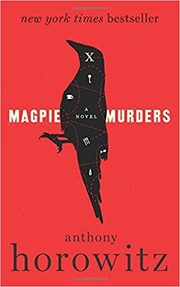
Magpie Murders
2,705-word summary 12 min read 560 pages in the book
- First published
- 2016
- Publisher
- Orion
- Pages
- 560
- ISBN
- 9781409158363
- Series
- Susan Ryeland (#1)
Reading options
What's inside (8 sections)
A friend pressed this book on me with a warning that turned out to be accurate. You finish the first half and feel pleased with yourself. Then the second half makes you question everything you just read. Magpie Murders came out in 2016 from Orion, and it opens the Susan Ryeland series. The setup is simple to describe and tricky to pull off. An editor gets the new manuscript from her star crime writer. The last chapter is missing. Then the writer is found dead.
I picked it up because I like old village mysteries but often get bored by pastiches of them. This one kept me reading for a different reason. It is two mysteries that share characters without sharing the same world. One is set in the 1950s in a small English village. The other is set in modern London publishing. Horowitz, who created Midsomer Murders for television and has written Sherlock Holmes and James Bond novels, uses both settings to talk about how crime novels get made, who gets paid, and who gets to feel clever at the end.
Susan Ryeland works for a small firm called Cloverleaf Books. Her main author is Alan Conway, a difficult man who writes a very successful series about a detective named Atticus Pund. Pund solves murders in sleepy places in the manner of Poirot, courteous and foreign and observant. Susan has edited Conway for years. She likes the books more than she likes the man. Her boss Charles Clover is getting ready to retire. Her boyfriend Andreas wants her to leave London and help run a small hotel on Crete. Susan is stuck between a job that pays the bills and a life that sounds calmer.
Then the manuscript for Conway's latest, also called Magpie Murders, arrives without its ending. Susan reads it anyway because that is her job. She wants to know how Pund solves the Pye Hall killings. Before she can get the missing pages, she hears Conway is dead. What looked like suicide starts to look wrong to her. That is where the book changes from a publishing story into an investigation.
The job Susan thought she knew
The early chapters spend time on office life, and I was glad they did. Susan explains royalties and print runs and cover meetings the way people actually talk about work, with irritation and affection mixed together. Cloverleaf depends on Conway. Without Pund, there is no firm. Conway knows it and behaves accordingly. He is rude to assistants, picky about commas, and openly bored by the detective books that made him rich. He wants to be remembered as a serious writer. Susan keeps telling him, in polite editorial language, that readers want another Pund.
This part also sets up Susan as a narrator. She is in her forties, good at her job, tired of London rents and late trains, and loyal to people who do not always deserve it. Andreas is patient but clear about what he wants. He has family property in Greece and a plan. Charles is charming in the way older bosses can be, full of lunch stories and sudden decisions. The office junior and the freelance copy editor drift in and out. None of this feels like filler once the deaths start, because every work relationship becomes a possible motive.
One detail I appreciated is how Susan reads. She notices when a character name echoes someone real. She spots when Conway is being lazy and when he is being spiteful. Editors in novels are often either saints or fools. Susan is neither. She misses things, too. When she finally admits the last chapter matters for more than production schedules, the book has already trained you to read the way she does, looking for small shifts in wording.
If you have never read a Horowitz book, this opening tells you what kind of writer he is. He likes fair clues. He likes structure. He also likes to remind you that structure is a choice someone paid for.
Murder at Pye Hall
The manuscript inside the novel is a full period mystery, not a sketch. It is set in 1955 in Saxby-on-Avon, a village of the sort where everyone knows who walks to church and who drinks at lunch. The main house is Pye Hall, home to Sir Magnus Pye and his family. The housekeeper, Mary Blakiston, is found dead at the bottom of the stairs. At first it looks like a fall. Her estranged son Robert had reasons to wish her gone, and village talk points at him fast.
The next day brings a second death. Sir Magnus is found murdered. His wife Frances, his sons, the vicar, the local doctor, and a handful of staff and neighbors all have the usual mix of money troubles, old affairs, and buried grudges. Pund arrives with his assistant James Fraser. The local man, Detective Inspector Chubb, is polite and out of his depth. The pattern will feel familiar if you grew up on Christie. A closed circle. A country house with too many keys. A timetable that almost fits.
Horowitz does not rush this middle. Pund interviews people in turn. He walks the rooms. He asks about letters and wills and dogs and garden sheds. He notices who cleans what and who was where when the stairs were wet. I found myself taking notes in the margin even though I knew Susan did not have the ending either. The pleasure here is old fashioned. You get suspects with faces and habits, not puzzles with names attached.
There are two threads that keep the period section from feeling too cozy. Pund is ill. He suffers from headaches and worse, and Fraser can see his boss fading. The book treats this plainly, without turning it into a speech. And Mary Blakiston, the first dead woman, refuses to stay a simple victim. She was a busybody, yes, but she also knew something about her own family that frightened her enough to write it down.
How Pund explains it
Pund gathers people and talks through the case in the classic manner. I will lay out the solution as the manuscript gives it, because Susan spends the rest of the novel testing whether that solution was honest.
According to Pund, Mary Blakiston died by accident. She fell. No one pushed her. That matters because the village had already decided Robert killed her. The real killing came after. Years earlier, Robert had murdered his brother Tom and the family dog, Bella. Mary knew or had worked out what Robert did. She feared the violence would continue, perhaps into a new generation, and she wrote a letter meant for Sir Magnus if anything happened to her. She also told Robert the letter existed.
Sir Magnus read the letter after Mary died. He confronted Robert. Robert killed him and burned the letter. With the paper gone, the proof of the older crime went with it, or so Robert hoped. Pund reconstructs this from small remains, talk about ink and ash, who ordered what burned in which grate, who asked the wrong question too quickly. Chubb arrests Robert for the murder of Sir Magnus. The manuscript ends without the final settling chapter Susan expects, the one where loose ends get tied and Pund goes home.
I admired the shape of this even while part of me resisted it. The accident followed by a murder is a neat reversal. It punishes the reader for assuming both deaths must have the same cause. It also lets Horowitz play a quiet game with sympathy. Robert is guilty of terrible things, but the person whose death starts the book was not killed at all. The village wasted its anger on the wrong event.
What nagged at me is that the burned letter does a lot of work. Pund tells us what it must have said, and his logic is sound within the story, but Susan cannot check it and neither can we. That is deliberate. Horowitz wants the inner book to feel complete and slightly sealed off. Still, if you prize mysteries where you can beat the detective to the answer with the same papers he holds, you may feel the last steps lean on his authority more than on shared evidence.
Susan stops editing and starts detecting
Back in London, Susan cannot let the missing chapter go. Conway is dead. The firm needs the book to survive. Charles shows her a note that looks like suicide, but the wording bothers her. People who knew Conway start saying things that do not line up. His cleaner, his former partner, a neighbor, a driver. Susan visits the Suffolk village where Conway lived, attends the funeral, and makes a private list of who might have wanted him dead.
This is the part of the novel I read fastest. Susan is not a detective, and Horowitz lets her be bad at it in believable ways. She asks a question twice. She forgets to write down a time. She trusts someone because they make good tea and distrusts someone else for interrupting her. Her sister helps. Andreas worries. Charles alternates between fatherly concern and commercial panic. Every conversation about advances and rights and publication dates carries a second meaning once Susan starts to wonder if Conway was killed for what he wrote.
Two pressures build on her at once. Charles offers her the top job at Cloverleaf as he steps back, which would mean staying in London and carrying the firm. Andreas renews the invitation to Crete, which would mean leaving publishing and starting over. Susan keeps postponing the choice by working harder on the manuscript problem. That felt true to life. Grief and career fear make people busy rather than wise.
Her method is simple. She compares the people in Conway's life to the people in his book. Conway based village characters on real neighbors and colleagues, sometimes kindly and sometimes cruelly. A name here, a habit there, a house layout, a dog, a quarrel about money. Susan walks the real streets with the fictional map in her head. Some matches are clear. Some are traps Conway set for amusement. Sorting them takes up the heart of the novel, and it is where Horowitz is most playful about his own trade.
The joke Conway hid in the titles
The cleverest idea in the book is also the ugliest, which seems to be the point. Conway planned nine Pund novels. Susan learns that the first letters of those titles were meant to form a pattern, an acrostic that points to a rearrangement of the detective's own name. Worked out, the letters spell a crude insult aimed at Pund, at mystery readers, and at the career Conway felt stuck inside.
I will not spell out the phrase here because the novel treats it as a spiteful reveal, not a clue to admire. What matters is what it tells Susan about motive. Conway hated the genre that fed him. He wanted literary praise and felt editing and sales had boxed him in. He was ready to embarrass his publisher, his editor, and his audience in one move. For Charles, who built Cloverleaf on Pund money, that plan was not a joke. It was ruin.
Susan finds the missing pages at the office, on paper, after a long stretch of looking in the wrong places. The scene is quiet, almost dull, which makes it land harder. No safe cracking. No chase. Just a file where it should have been and a cold feeling as she reads. One page had been taken and used as the supposed suicide note. The handwriting match, the paper stock, the torn edge. Conway did not kill himself. He was killed by someone who needed the plan for nine books to stay hidden and who knew how publishing paperwork could cover a gap.
The confrontation that follows is frightening because it happens in daylight, among desks and proofs. Charles admits what he did in the language of business necessity, as if murder were another difficult decision about cash flow. He knocks Susan out and sets the office on fire to hide the evidence. Andreas arrives in time to get Susan and the pages out. The firm collapses. The completed book is published elsewhere. Charles is arrested. Susan, once she recovers, accepts that London publishing may be finished for her and goes with Andreas to Crete to run the hotel.
I believed the rescue and the fire even though fires in novels often feel staged. Here it works because the office is full of paper. Anyone who has worked near a print schedule knows how fast paper, solvents, and old wiring can turn a small act into a large one.
What holds up and what wears thin
The double structure is the reason to read this. Most books within books give you a few pages of fake text. Horowitz gives you a whole novel, with its own detective, victim, suspects, and solution, then asks you to reread it as evidence. When Susan realizes a village gossip maps to a real cleaner or a fictional will maps to a real contract, the earlier chapters gain a second meaning. I flipped back twice, which I rarely do, and both times the detail was there.
Pund himself is drawn with care. He is polite without being soft, and his illness gives his patience a limit. Fraser as his assistant avoids the usual bumbling sidekick role. He watches, writes things down, and asks the plain question Pund skips. Chubb, the local inspector, is allowed dignity. He is not a fool for the London genius to correct. He knows the village and says so.
Susan carries the modern half well. She is competent at work and uncertain everywhere else, which makes her easy to follow without always agreeing with her. Her bond with Andreas is written in small scenes, shopping and phone calls and missed trains, rather than big declarations. Her grief for Conway is mixed with guilt, since she edited him into a shape he resented. That guilt drives her to finish his book even as she learns he despised her taste.
The weaknesses are real, though they did not spoil the book for me. The middle is long. The Pund investigation takes its time with interviews that sometimes repeat the same point about money or status. Readers who want pace may skim. A few village characters stay thin, defined by one habit or one secret, and two of them blur together until the solution separates them. Susan's publishing admin, contracts and schedules and meetings, is well observed but heavy in one stretch before the funeral. And as noted, the burned letter means the inner solution asks for trust at the exact moment a suspicious reader wants paper.
Who should skip it? If you dislike period mysteries, the long Pund section will test you, even though the modern frame keeps interrupting with reminders that the pastiche is the point. If you want hard edged crime with forensics and procedure, this will feel soft. If crude jokes about readers and writers bother you, the titles trick will leave a bad taste even after Charles pays for his crime.
For me the balance tipped toward admiration. The book respects the village mystery enough to write a good one, then respects the reader enough to show the cost of writing it on demand. Conway is awful company, but his complaint has teeth. Susan choosing Crete over the top job is not framed as escape or defeat. It reads as someone who handled words for years deciding to handle something else for a while, like breakfast tables and ferry times. After two murders in fiction and one in fact, that ordinary future feels earned.
If you read it with a friend, compare notes at two points. First after Pund names Robert, before Susan finds the pages. Ask whether the letter convinces you. Then after Charles confesses. Ask whether the motive needed the insult or whether money and pride were enough. My answers changed between readings, which is why the book stays on my shelf near the Christies it loves and argues with.
FAQ
Is Magpie Murders the first Susan Ryeland book?
Yes. It was first published by Orion in 2016 as Susan Ryeland book one, followed by Moonflower Murders and Marble Hall Murders.
Who is Atticus Pund inside the story?
He is the fictional detective in Alan Conway's novels, a courteous investigator who solves 1950s village cases with his assistant James Fraser.
Do I need to like old fashioned whodunits to enjoy it?
The long Pund section honors that style, while the modern half questions its cost. Readers who dislike period interviews may find the middle slow.
Similar books
More from Susan Ryeland first, then related titles.
The Surgeon
A Boston killer copies an attack surgeon Catherine Cordell survived, and detective Jane Rizzoli must stop him before he reaches her.
2,154-word summary · 10 min read

What She Knew
Rachel lets her eight-year-old son run ahead in a Bristol park, and the nine-day search turns her into a suspect in the public eye.
2,952-word summary · 13 min read

The Beach House
A young valet is beaten to death at a Hamptons party, and his law-student brother spends a year building a case against the family that covered it up.
2,049-word summary · 9 min read
The Art Forger
A disgraced Boston painter agrees to copy a Degas stolen from the Gardner Museum, then begins to suspect the original she is copying is itself a forgery.
2,117-word summary · 9 min read

Six Years
A professor who promised to forget the woman he loved sees her husband's obituary and discovers that the wedding, the marriage, and the woman herself may never…
2,076-word summary · 9 min read

Rules of Prey
Minneapolis detective Lucas Davenport hunts a killer who leaves a new rule at every scene and treats murder as a game of wits.
1,914-word summary · 9 min read

4th of July
Lindsay Boxer shoots two armed teenagers in self-defense, faces a wrongful-death trial, and spends her leave chasing a string of throat-slashing murders in…
2,192-word summary · 10 min read

Heist Society
A teenage art thief gets expelled from boarding school, then has two weeks to steal five paintings back from a London museum and clear her father.
2,781-word summary · 12 min read

61 Hours
A bus crash strands Jack Reacher in a snowbound South Dakota town where a drug gang, a corrupt police force, and a single witness are on a collision course.
2,227-word summary · 10 min read
The Girls in the Garden
Clare moves her daughters to a gated London garden where the community feels safe; at the midsummer party, twelve-year-old Pip finds her sister bleeding in the…
1,973-word summary · 9 min read
The Moonstone
A cursed yellow diamond vanishes on the night of a birthday party, and eight witnesses tell what they saw.
2,603-word summary · 12 min read

Still Missing
A realtor is abducted at a Vancouver Island open house and held for more than a year. Told through therapy sessions, the novel follows her escape and the hunt…
2,466-word summary · 11 min read

Indigo Ridge
A new police chief in a Montana town meets the founding family's eldest son in a bar, and one night later a body turns up under their cliff.
2,763-word summary · 12 min read

Bad Luck and Trouble
A deposit of $1,030 summons Jack Reacher back to his old army unit, which is being picked off one name at a time.
2,366-word summary · 11 min read

3rd Degree
The third Women's Murder Club novel follows a San Francisco terror cell and a three-day killing schedule, and it costs the club a member.
2,685-word summary · 12 min read

Worth Dying For
Reacher stops for one night in rural Nebraska and finds a family that runs the county, a missing girl and a shipment worth killing for.
2,021-word summary · 9 min read
Tinker, Tailor, Soldier, Spy
Retired spymaster George Smiley is brought back to find a Soviet mole inside British intelligence, and the trail leads through old friends, old betrayals, and…
2,092-word summary · 9 min read

The Best of Friends
Three lifelong friends discover their teenage sons were hiding more than anyone knew after a night that leaves one dead, one in a coma and one silent.
2,040-word summary · 9 min read
See Me
A law student with a violent past falls for a prosecutor whose old case returns as a stalker, in a romance with a thriller at its center.
2,007-word summary · 9 min read

Say You're Sorry
A widowed prosecutor defends the teenager accused of killing her babysitter, uncovering a small town's secrets and a killer hiding in plain sight.
2,116-word summary · 9 min read
Ghosted
After seven perfect days with Eddie, Sarah is ghosted, and her search for answers uncovers a secret tied to the accident that changed both their lives.
2,011-word summary · 9 min read

Echo Burning
Reacher hitches a ride with a Texas woman who wants her abusive husband killed, then has to prove she did not murder him when he comes home.
2,209-word summary · 10 min read
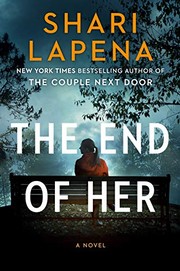
The End of Her
A sleep-deprived mother of twins faces a stranger's accusation that her husband murdered his first wife in Shari Lapena's domestic suspense novel.
2,383-word summary · 11 min read

Girl, Forgotten
A rookie US marshal guards a judge with a stalker and ends up reopening the 1982 prom-night murder of the judge's pregnant daughter.
2,111-word summary · 9 min read
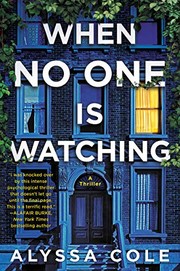
When No One Is Watching
Sydney Green watches her Brooklyn block's Black residents vanish one by one in Cole's Edgar-winning thriller about gentrification as a crime scene.
2,165-word summary · 10 min read

The Woods
Twenty years after two teenagers were murdered and two vanished at summer camp, prosecutor Paul Copeland identifies a fresh corpse as one of the missing.
2,490-word summary · 11 min read

The Witch Elm
Toby Hennessy has always been lucky, until a beating leaves his memory full of holes and a skull turns up in the garden of the family home. A stand-alone novel…
2,021-word summary · 9 min read

The Boy from the Woods
Wilde, found feral in a New Jersey forest in 1986, hunts for a missing teenager while a senator's secrets tear a wealthy town apart.
2,270-word summary · 10 min read
Without Fail
Reacher is asked to test vice presidential security by planning to kill.
2,084-word summary · 9 min read
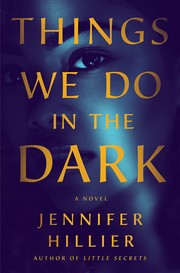
Things We Do in the Dark
A comedian kills her husband, then a podcaster digs up her teen murder past.
2,427-word summary · 11 min read