
Bleach, Vol. 1
2,495-word summary 11 min read 192 pages in the book
- First published
- 2002
- Publisher
- Viz Media
- Pages
- 192
- ISBN
- 9781591164418
- Series
- Bleach (#1)
Reading options
What's inside (9 sections)
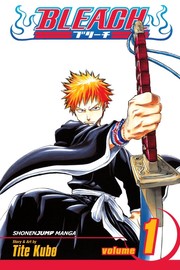
I did not come to Bleach early. Friends talked about it for years as one of the big three, next to Naruto and One Piece, and I kept nodding without picking it up. What finally pushed me was a used copy with a bent spine in a shop bin. I bought it for the art on the cover, a boy with orange hair holding a sword far too big for him. I read it on the bus and missed my stop. That first volume is short, 192 pages in the Viz Media edition from 2002 with ISBN 9781591164418, and it moves fast. It is book one in the Bleach series. Tite Kubo serialized the story in Weekly Shonen Jump starting in 2001, and it later ran to 74 volumes. You can feel that long run waiting inside this setup, even if Vol. 1 stays small and local.
Ichigo Kurosaki is fifteen and tired in a way teens get when they carry something odd. He can see ghosts. Not in a vague sense. He talks to them in the street. He brings flowers for a girl who died near his school. He scares bullies away from a shrine because a spirit asked him to. People think he is tough because of his hair and his frown. Mostly he is just busy dealing with visitors no one else can see. He lives in Karakura Town with his father Isshin, who acts goofy and loud at breakfast, and with his two younger sisters Karin and Yuzu, who keep the house running with a warmth that grounds the whole volume. His mother Masaki died when he was young, and that loss sits under his jokes. Kubo does not explain everything here. He lets Ichigo visit her grave and go quiet, and you understand enough.
School gives Ichigo a daily frame. He spars verbally with classmates. He protects kids who get picked on. Two of those classmates matter a lot, even if Vol. 1 only sketches them. Orihime Inoue is bright and strange and kind, always half lost in her own thoughts, always feeding her odd ideas with a straight face. Yasutora Sado, called Chad, is huge and silent, loyal in a way that shows in actions rather than talk. They sit near Ichigo, trade notes, walk home through the same streets. At this point they do not know about soul reapers or Hollows. They just know Ichigo gets into fights and then pretends it was nothing. I liked that Kubo holds them back. It makes Karakura feel like a real school town before the night side breaks in.
The night side arrives with Rukia Kuchiki. She is small, dark haired, dressed in black, annoyed at having to explain herself. She is a soul reaper, one of the guides who send lost spirits onward and who fight corrupted spirits called Hollows. Kubo draws her first appearance like an intrusion. She steps through Ichigo's bedroom wall as if walls were suggestions. Ichigo, who can see her when his family cannot, tries to throw her out. She calls him rude and starts to lecture. Then a Hollow comes through the night, and the lecture stops.
Hollows are the core threat of this volume. They are lost souls that turned hungry and masked, with white bone masks and holes in their chests and a pull toward the living they once knew. They hunt people with strong spirit energy. That puts Ichigo's family in danger because Ichigo shines to them like a lamp. Rukia tries to fight the first one alone, as she has done many times before. She is skilled with her sword and with binding arts, but she is caught off guard while protecting Ichigo. She gets hurt badly. With her power failing and Ichigo's family exposed, she makes a desperate offer. She will place her sword in him and give him half her power for one strike. He takes more than half. He takes almost all of it.
That transfer is the hinge of Vol. 1. Ichigo, who started as a kid who could see ghosts, suddenly holds a sword as long as he is tall. His hair and clothes change with the surge. He kills the Hollow with raw force and no form. Rukia survives, but her powers do not come back as they should. She is stuck in a powerless body, stuck in Karakura, stuck shopping for normal clothes and hiding her sword in a cane. She moves into Ichigo's closet, literally, and starts schooling him between classes. Cleanse this spirit. Do not swing wildly. Do not pick fights you cannot finish. Ichigo listens badly and fights hard, which sets the tone for much of what follows.
A boy who sees ghosts
What hooked me first was not the fights. It was the opening job Ichigo gives himself. He helps the dead move on in small ways. He listens to a spirit tied to a park. He stands up for a kid being haunted at school. Kubo frames these as chores rather than missions. Ichigo complains. He still shows up. That mix of irritation and care tells you who he is faster than any speech.
His home life adds weight without slowing the pace. Isshin wrestles him in the morning and posters the clinic wall with silly notices. Yuzu cooks and fusses. Karin sees ghosts faintly too and pretends she does not care. They bicker over television and chores. Then Ichigo goes to the cemetery and the noise drops away. You see that his toughness is partly grief management. He could not save his mother, so he tries to save everyone now. Kubo never states it that plainly in Vol. 1. He shows it in glances and in the way Ichigo runs toward danger when his sisters cry out.
Rukia reads him fast. She calls out his habit of scowling instead of asking for help. She mocks his grades and his manners. Under that she respects his instinct to shield others.
Rukia and the Hollow hunt
Rukia explains her work in pieces, between arguments and first aid. Soul reapers guide whole spirits called Pluses to the next world through a ritual called soul burial. Hollows are what happens when that guidance fails and grief curdles into hunger. They wear masks because they lost their faces, in a sense, and they hide their wounds behind appetite. Rukia carries a sword that can cleanse them and perform the burial. She also carries paper charms and spoken bindings that slow a foe long enough to strike.
Vol. 1 keeps those lessons basic on purpose. Rukia draws diagrams. She scolds. Ichigo forgets. Then a Hollow attacks and theory ends. One early fight happens near the Kurosaki home, which raises the cost at once. It is not a distant monster in a forest. It is on his street, after his sisters. Another centers on Orihime and her dead brother Sora, who lingers as a spirit tied to a hairpin she wears daily. That story takes up a large part of the volume and gives the Hollow idea real pain. Sora loved Orihime. Death twisted that love into jealousy. When he turns, he does not hunt strangers. He hunts her.
That Orihime chapter surprised me with how sad it gets. Orihime talks to her hairpin as if her brother can hear. Sora watches, souring, whispering that her friends will leave her. Ichigo and Rukia arrive late, and find a house already cold. The fight that follows is messy. Orihime has to speak to reach the brother inside the mask.
Chad gets a smaller beat that points forward. He is attacked while protecting a parakeet that carries a spirit, and he refuses to run even when cut up. Ichigo arrives and sees the shape of loyalty Chad offers without speeches. It is a simple scene, mostly fists and rain, but it sets up why these classmates will matter later. Kubo is planting seeds without pausing to label them.
Substitute work and bad training
With Rukia drained, Ichigo becomes a substitute soul reaper. That word substitute matters. He has no rank. He has no training. He has a huge sword and strong instincts and a teacher living in his closet. Rukia gives him a badge of sorts and a routine. Patrol at night. Check cold spots. Send Pluses on. Call for help you will not get.
Training is mostly failure, which kept me reading. Ichigo cannot control his spirit pressure, so his presence draws Hollows from blocks away. He swings too wide. Rukia hits him with her glove to pop his soul out, then scolds him while a fake soul pilots his body at school. These gags repeat, and some land better than others.
What saves the stretch is that Ichigo hates feeling used. He asks why soul reapers let Hollows pile up in one town. Rukia answers with rules and staffing she only half knows herself. He keeps helping anyway, but his complaints point at the larger system later volumes will probe.
Kubo also uses Ichigo's size well. His sword, called Zangetsu later though Vol. 1 barely names it, looks absurd in a bedroom. In a street it looks right. Kubo draws the weight of it, the drag on the ground, the way Ichigo needs two hands and still stumbles. Power here is not clean. It tears sleeves and floor tiles. When Ichigo finally lands a clean cut, you feel relief more than triumph.
Family under attack
Vol. 1 keeps circling one fear. What if being strong paints a target on your home. Ichigo's spirit energy does exactly that. Hollows come to Karakura because he is there. His sisters hear strange sounds. His father patches wounds without asking enough questions. Karin pretends toughness, but she clutches Yuzu's sleeve when glass rattles. Kubo draws home invasion with care. Doors bow inward. Air goes thin. A sister calls a name and gets no answer.
Isshin gets little page time, yet he sticks in memory. He plays the clown, with over loud greetings and fake martial arts poses in the clinic. Then he looks at Ichigo a beat too long when blood shows on a shirt. You sense he knows more than he says, though Vol. 1 does not confirm it. I liked that restraint. Not every parent in shonen needs a secret, but Kubo leaves the door cracked just enough to notice.
The volume also gives Yuzu and Karin small jobs that pay off in feeling. Yuzu leaves food out for Ichigo when he skips dinner for patrol. Karin kicks his shin when he lies badly. Those acts keep the stakes human. When Rukia warns that Hollows chase bonds, you think of soup on a table and a sister waiting up. That is stronger than any lore page.
Orihime's home echoes the same idea from another angle. She lives alone with memories and talks brightly to cover silence. Her brother's hairpins are prayer and anchor at once. When Sora turns and accuses her of forgetting him, the hurt is not abstract. It is about laundry and meals and who walks you home. Kubo stages the end of that arc with unusual softness for this genre. No long speech about duty. Just a sister saying she remembers, and a mask cracking under the weight of it.
What Soul Society looks like from far away
Soul Society itself barely appears in Vol. 1, which is smart. Rukia speaks of it like a worker speaks of head office. There are captains and courts and laws about power transfer. There are punishments she fears to name. She mentions noble houses and duty with a flat tone that suggests both pride and fatigue. She wears black, follows forms, apologizes to no one. Yet she broke a major rule to save Ichigo, and now she hides. That gap between her respect for law and her choice to break it gives the book its quiet tension.
Kubo drops terms without drowning you. Plus. Hollow. Soul burial. Spirit pressure. Each gets a short demo rather than a manual. Ichigo asks plain questions that let Rukia answer in plain words.
You also see class edges early. Rukia carries herself with care around names and forms, as if aware she is judged. Ichigo bulldozes those forms and asks why they matter.
By the end of the volume, Soul Society feels like weather on the horizon. You cannot see the storm, but the air changed. Rukia checks the sky more often. Her messages go unanswered. Ichigo pretends not to notice her worry. He patrols harder to prove she made the right call. That unspoken pact, to keep working and hope the bill never comes due, closes Vol. 1 on a steady note rather than a cliffhanger scream.
Art, jokes, and fair knocks
Kubo's art is the main reason to start here rather than with a summary. Faces are long and sharp, with heavy blacks around eyes and coats that flare like wings. Hollows look great, all teeth and mask curves and wrong joints. A sword swing gets a full page with almost no text, then a small panel of fallout. Sound effects in the Viz Media edition are retouched in English, which keeps pages clean.
Humor is hit and miss, and that is my first fair criticism. Rukia's drawings to explain lore are intentionally ugly and genuinely funny. Isshin's morning attacks made me laugh once, then less the third time. Kubo leans on yelling when a scene needs a beat, and Vol. 1 has many such beats.
Structure is my second knock. The volume runs on a clear formula. Cold open with a spirit. Rukia explains. Hollow appears. Ichigo arrives late. That loop teaches the rules well, but after the third turn you can call the beats early.
My third criticism is about who gets saved. Orihime spends much of her spotlight hurt or held, waiting for others to settle her fate. Rukia, strong at the start, spends much of the middle depowered and giving orders from the sidelines.
Even with those knocks, Vol. 1 works as an entry. It roots power in family meals and school roofs rather than prophecies. It gives you a rule breaker to root for and a rule keeper to argue with. At 192 pages it asks little and offers a clear promise. I closed it wanting Vol. 2, which for a first volume is the whole job.
Who should pick this up
New manga readers can start here without homework. You read right to left, follow Rukia's mini lessons, and learn terms as Ichigo learns them. Teens will find the school frame familiar, though fights get bloody and Hollows look frightening in closeup.
I keep thinking about one small image. Ichigo carrying flowers to a roadside memorial no one else tends. Rukia watching from a step behind, saying nothing. Vol. 1 has many loud pages, but that quiet one explains why the series ran 74 volumes.
FAQ
Which stories does Bleach, Vol. 1 cover?
Vol. 1 opens with Ichigo meeting Rukia and becoming a substitute, then follows early Hollow cases around Karakura involving Orihime and Chad. It stays local and teaches terms like Plus, Hollow, and soul burial.
When was Bleach, Vol. 1 published?
Tite Kubo serialized Bleach in Weekly Shonen Jump from 2001, and the cited Viz Media edition of Vol. 1 appeared in 2002 with 192 pages and ISBN 9781591164418. The series later ran to 74 volumes.
Is Vol. 1 a good starting point?
Yes. Vol. 1 needs no prior lore and reads right to left, with Rukia explaining rules as Ichigo learns them. Expect bloody sword fights and sad ghost stories about grief and family.
Similar books
More from Bleach first, then related titles.
Chainsaw Man, Vol. 1: Dog and Chainsaw
A broke teenage devil hunter and his chainsaw dog get a second life, a government leash, and a fight that stops mid-swing in Fujimoto's horror comedy.
2,584-word summary · 11 min read
Demon Slayer: Kimetsu no Yaiba, Vol. 1
Tanjiro joins the corps after demons kill his family and turn Nezuko.
2,478-word summary · 11 min read
My Hero Academia, Vol. 1
Quirkless Izuku inherits All Might's power, trains ten months, and breaks bones to save Ochaco at the U.A. exam.
2,705-word summary · 12 min read
Tokyo Ghoul, Vol. 1
Student Ken Kaneki becomes half-ghoul after Rize attack and hides at Anteiku.
2,438-word summary · 11 min read
Spy x Family, Vol. 1
Spy Twilight builds fake family with assassin wife and telepath child.
2,201-word summary · 10 min read
Naruto, Vol. 1: Uzumaki Naruto
Naruto Uzumaki fails his ninja exam, steals a forbidden scroll, and lands on Team 7. A full chapter by chapter retelling of Vol. 1 plus Kishimoto context.
2,942-word summary · 13 min read
Death Note, Vol. 1: Boredom
Light Yagami finds a notebook that kills with a written name, and the hidden detective L sets a trap to expose him.
2,989-word summary · 13 min read
The Tale of the Body Thief
Lestat trades bodies with a psychic thief for one day of mortality and ends up trapped, sick, and hunting his own vampire body.
2,069-word summary · 9 min read

The Only Good Indians
Four Blackfeet men who killed a pregnant elk are hunted by her spirit a decade later, and the only person who can end the cycle is a teenage girl who was not…
2,010-word summary · 9 min read
Lisey's Story
Two years after her novelist husband dies, Lisey Landon follows a trail of clues into his childhood and the other world that made him a writer.
1,998-word summary · 9 min read

Magic Burns
A magic flare hits Atlanta, and mercenary Kate Daniels must recover stolen maps, find a missing witch, and keep a teenage girl alive while Celtic gods try to…
2,021-word summary · 9 min read
At Grave's End
Cat and Bones face Max, a zombie-raising ancient vampire, and a prophecy that ties their marriage to Patra's death in the third Night Huntress novel.
2,061-word summary · 9 min read
The Awakening / The Struggle
A popular high school girl falls for a vampire, then discovers that his dangerous brother wants her too, in the first two books of the Vampire Diaries series.
2,660-word summary · 12 min read
Persuader
Reacher goes undercover in a Maine crime family to find a missing DEA agent and the man he once failed to kill, and Lee Child keeps the whole thing tight,…
2,278-word summary · 10 min read
Born at Midnight
Kylie Galen is sent to a camp for troubled teens and discovers it is a haven for vampires, werewolves, and witches, and that she may be something stranger…
2,310-word summary · 10 min read

61 Hours
A bus crash strands Jack Reacher in a snowbound South Dakota town where a drug gang, a corrupt police force, and a single witness are on a collision course.
2,227-word summary · 10 min read
Lover Unleashed
Paralyzed vampire warrior Payne and surgeon Manny Manello collide in an adult paranormal romance, as Xcor's Band of Bastards arrives in Caldwell for revenge.
2,374-word summary · 11 min read
Her Fearful Symmetry
Twins Julia and Valentina inherit a London flat above Highgate Cemetery from an aunt they never met, then find a ghost in it and a family secret.
2,057-word summary · 9 min read
Angels' Blood
Nalini Singh's 2009 Guild Hunter opener sends vampire hunter Elena Deveraux after a murderous archangel in New York, while its most powerful ruler watches.
2,367-word summary · 11 min read
American Assassin
Before he became the CIA's most feared counterterrorist, Mitch Rapp was a Syracuse student mourning his girlfriend, killed on Pan Am Flight 103. Then came…
2,114-word summary · 9 min read

The Chemist
A former government interrogator on the run takes one last job, then learns the case she was handed was built to pit her against him.
2,249-word summary · 10 min read

Starsight
Spensa Nightshade goes undercover aboard the Superiority space station Starsight to steal a hyperdrive, and finds a frightened bureaucracy where she expected…
2,568-word summary · 11 min read
Saving the World and Other Extreme Sports
Max and the flock split in two to take down the lab behind their lives, one half in California and the other in Europe.
2,175-word summary · 10 min read

Origins
Stefan's diary of 1864 and 1888: how he and Damon fell for Katherine, became vampires, and went looking for a killer in London.
2,056-word summary · 9 min read
Heir to the Empire
Grand Admiral Thrawn returns from the Unknown Regions and outmaneuvers the New Republic while Luke, Leia, Han and smuggler Talon Karrde race him toward…
2,323-word summary · 10 min read

Bad Luck and Trouble
A deposit of $1,030 summons Jack Reacher back to his old army unit, which is being picked off one name at a time.
2,366-word summary · 11 min read

Worth Dying For
Reacher stops for one night in rural Nebraska and finds a family that runs the county, a missing girl and a shipment worth killing for.
2,021-word summary · 9 min read
The Diviners
In 1920s New York, Evie O'Neill's ability to read objects pulls her into an occult investigation that awakens something far older and more dangerous.
2,045-word summary · 9 min read
Paranormalcy
A teenage agent who can see through glamour falls for a shape-shifter and learns the agency she works for is hiding her true nature.
2,041-word summary · 9 min read
Locke & Key, Vol. 1: Welcome to Lovecraft
After their father is murdered, the Locke children move into a haunted family estate where keys unlock doors to ghosts, other places, and dangerous secrets.
2,019-word summary · 9 min read