
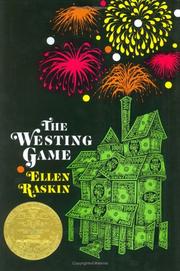
The Westing Game
2,908-word summary 13 min read 185 pages in the book
- First published
- 1978
- Publisher
- E.P. Dutton
- Pages
- 185
- ISBN
- 9780525423201
Reading options
What's inside (8 sections)
I came to The Westing Game through the Newbery shelf at the library, the way a lot of readers seem to find it. The gold seal promised a classic. The back cover promised a murder with sixteen suspects. What I did not expect was how little of the book behaves like a normal mystery. There is a dead millionaire and a question about who killed him, but most of the pages are about rent checks and restaurant shifts and kids playing the stock market and neighbors stealing clues out of each other's mailboxes. I finished it in two sittings and spent half of the second one flipping back to the cast list.
It helps to know what kind of object this is. Ellen Raskin published it with Dutton in 1978, and the first edition runs 185 pages. Raskin wrote and illustrated her own books, and you can feel the illustrator's mind in this one. People are introduced the way a cartoonist introduces them, with one or two strokes that stick. A girl who kicks shins. A woman who decorates everything in sight. A man who diagnoses everyone he meets. The strokes are broad, but they let Raskin keep sixteen heirs plus a lawyer and a doorman and a realtor in motion without the whole thing collapsing. The book went on to win the Newbery Medal, and it still shows up on classroom shelves because it gives young readers a fair puzzle and gives adults a plot that keeps rearranging itself underneath them.
A building that faces the wrong way
The book opens at Sunset Towers, a new apartment house on the shore of Lake Michigan, and the first joke is architectural. The sun sets in the west, as just about everyone knows, but Sunset Towers faces east, straight at the mansion of Samuel W. Westing. Westing made his money in paper. The numbers attached to his name are absurd on purpose. He is the kind of rich man whose house has a name and whose death would make the papers for a week.
The tenants arrive through Barney Northrup, a young salesman who seems to know exactly which apartment will tempt which renter. A dressmaker gets the right light. A doctor gets the right prestige. A family chasing status gets the impression of status. Nobody wonders very hard why a brand new building still has vacancies for exactly the people who take them. That failure of curiosity is part of the design. Raskin is showing you the first move of the game before anyone knows a game is being played.
Then the rumors start. Westing is dead. His body lies in the mansion across the road, and something strange is going on over there. Tabitha Ruth Wexler, thirteen years old, known to everyone as Turtle, takes a dare and goes into the house. Turtle is the beating heart of this novel, so her introduction matters. She wears her dark hair in a long braid, and anyone who grabs it gets kicked in the shin. She plays the stock market. She plays chess. She keeps her face still when adults lie to her. In the mansion she finds the corpse laid out in the bedroom, hears sounds she cannot explain, and runs home terrified. Nobody believes her account in full. That disbelief follows her for a large part of the book, and it matters, because Turtle spends the rest of the story being the person who is right earliest and believed latest.
The funeral happens. The will is read by Julian Eastman, the chairman of the board of Westing's company, and it is a strange document. Westing declares that he was murdered. He names sixteen of the Sunset Towers tenants as his heirs, calling them his nieces and nephews though almost none of them are related to him or to each other. He orders them to play his game. They will be split into pairs. Each pair gets money and clues. Whoever names the murderer and explains the motive inherits the fortune and control of the company. The rest get nothing much. Judge J.J. Ford, the one heir who actually knew Westing, objects that there is no proof of murder at all. She is overruled by greed and curiosity, which is exactly what the dead man counted on.
Sixteen heirs and eight envelopes
The middle of the book is a machine with sixteen moving parts, so it helps to meet the pairs the way the will sets them up. Jake Wexler, a foot doctor with a side business taking bets, is paired with Sun Lin Hoo, the young wife of a restaurant owner, newly arrived and still learning English. Turtle is paired with Flora Baumbach, a sixty year old dressmaker with no children of her own, who becomes the closest thing Turtle has to a second mother. Chris Theodorakis, fifteen, bright, a watcher of birds, confined to a wheelchair by a muscle condition, is paired with Denton Deere, a young medical intern engaged to the beautiful Angela Wexler. Judge Ford is paired with Sandy McSouthers, the building doorman, a likable man who got fired from Westing's paper plant and needs the money badly.
Grace Wexler, Turtle and Angela's mother, a relentless decorator and social climber, is paired with James Hoo, who runs a restaurant and carries a grudge against Westing over a business deal that went bad years earlier. Berthe Erica Crow, who cleans the building and runs a soup kitchen downtown, is paired with Otis Amber, an older man who delivers things and helps with the kitchen. Theo Theodorakis, Chris's older brother, a high school student who works in the family coffee shop and wants to write, is paired with Doug Hoo, the restaurant owner's son and a star miler with a mean streak. Angela Wexler, twenty, blond, adored, treated by her mother as the perfect daughter, is paired with Sydelle Pulaski, a secretary who walks with a crutch and writes everything down in shorthand.
Each pair receives a check for ten thousand dollars and a sealed envelope holding a short list of ordinary words. The checks can be spent or saved. The word lists look like nonsense. One pair gets words that point toward grain. Another gets words that point toward water. The heirs are told to pool nothing, trust nobody, and meet at set times to offer answers. Naturally they do the opposite. They snoop and trade and steal. Sydelle's shorthand notebook becomes one of the most fought over objects in the building. Theo starts courting Doug's friendship while pumping him for information. Grace decorates and campaigns. Jake takes bets on the outcome while playing himself. The game turns the apartment house into a small town with one industry, and the industry is suspicion. You start to feel, well before any heir says it, that the tenant list itself is a clue.
Clues, thefts, and bombs
The long middle of the novel is where the plot earns its reputation. The pairs chase their word lists around Milwaukee and around each other. Some hire lawyers. Some follow rivals to libraries. Turtle, who has the least patience for ceremony, does something nobody else thinks to do. She takes her ten thousand dollars to a broker and starts trading stock. She has been paper trading for months, and she has opinions about Westing Paper. Her account grows while the adults burn their money on detectives and bribes. It is one of the book's quiet jokes about age. The thirteen year old behaves like the only adult in the room about money, while the adults behave like children about the clues.
The clue sheets drive everyone a little mad. They are too short to paraphrase and too plain to interpret. Heirs rearrange the words, look for initials, count letters, and accuse each other of holding back the page that makes it all clear. Two revelations keep the chase from stalling. First, the words are not random. They come from a single familiar source, a patriotic song most American readers know by heart, broken into pieces and scattered across the pairs. Second, the pairs only make progress when they combine sheets, which the rules discourage and the bombings eventually force. Raskin plays fair with this. A careful reader can spot the song's vocabulary, words about purple mountains and shining seas and grace, surfacing in the heirs' guesses before anyone in the book names the source outright.
Then the game turns dangerous. Homemade bombs go off inside Sunset Towers, more than once, and the mood of the book changes. A shopping bag explodes. A restaurant kitchen is damaged. One blast injures Angela and leaves her with scars she will carry for the rest of her life. The police come and go. The heirs stop treating the contest as a lark. Raskin handles this stretch well. She does not turn the novel into a thriller. She keeps the camera on the building's routines, meals and shifts and homework, while fear leaks into them. Theo worries about Chris. Flora worries about Turtle. Judge Ford, who doubted the murder from the start, starts worrying that the game itself will get somebody killed.
The bombings also expose who these people are under pressure. Doug Hoo's swagger thins. James Hoo's grudge curdles into something sadder. Grace Wexler, for all her vanity, shows flashes of real maternal panic. And Turtle, who has been collecting secrets the way other kids collect cards, figures out who has been planting the bombs and decides to keep that knowledge locked down. Her reason is not gamesmanship. It is love. The bomber is her sister Angela, setting fires to escape a life that other people keep designing for her, and Turtle refuses to hand Angela to the police or the papers. This choice, made by a thirteen year old in full knowledge of the cost, is the moral center of the book. Everything before it is puzzle. Everything after it is consequence.
Turtle Wexler runs the table
It is worth pausing on Turtle, because the novel lives or dies on whether you believe in her. Raskin asks a lot. Turtle must be smarter than fifteen adults without becoming a cartoon. She must be prickly without becoming cruel. She must carry the book's humor and its grief at the same time. For me she holds. Her braid is not a quirk pasted on. It is boundary and signal at once. Touch it without permission and you get kicked. Treat it with respect, the way Flora does when she brushes it, and you get the only soft version of Turtle there is.
Her habits tell you who she is. She takes dares because she hates being called chicken more than she fears the dark. She keeps track of money because nobody else in her family does. Her father takes bets. Her mother spends. Her sister floats. Turtle counts. When the will hands her ten thousand dollars, she does not buy clothes or hire a detective. She buys stock, and she is good at it. There is a wonderful stretch where her broker starts treating her with the deference bankers usually reserve for widows with oil wells. Raskin never explains this as genius. She presents it as attention. Turtle pays attention to how companies talk, the same way she pays attention to how people talk, and she notices when the two stories differ.
Her friendship with Flora Baumbach is the warmest thread in the book. Flora lost a child years ago. Turtle has a mother who looks straight through her toward Angela. Flora lets Turtle call her Baba. Turtle lets Flora touch the braid. When the game gets frightening, it is Flora's apartment Turtle runs to, not her own. Nobody makes a speech about what they mean to each other. Flora sews. Turtle watches. The affection accumulates in small exchanged facts until it can bear real weight.
The answer Sandy was hiding
As the deadline in the will approaches, the heirs settle on an answer that feels right and plays wrong. Sandy McSouthers collapses, apparently poisoned, and shock does the rest. Grief plus the clue sheets point the crowd at Berthe Erica Crow. She has the past that fits. She was married to Westing years ago, back when he was a different man with a different name. She has reason to hate him. Her pair's words can be read to name her. Crow admits the clues implicate her and denies the murder in the same breath, with her partner Otis backing her. It is a strong scene, because Crow is the book's conscience about poverty and forgiveness, and watching the group turn on her stings.
Judge Ford and Turtle refuse to go along. Ford, who knows the law and knew Westing, stages a kind of trial in the building, walking through the evidence step by step. Turtle, who has been hoarding the one strangest fact in the building, finally puts it on the table. Sandy McSouthers is not dead in the way the heirs think, or rather, Sandy was never only Sandy. Turtle confronts Julian Eastman with what she has worked out. Westing built himself several lives. He was Sam Westing the paper king. He was Barney Northrup the salesman who filled the building. He was Sandy McSouthers the doorman who listened at every door. He was Julian Eastman the chairman who ran the meetings. Four names, one man, moving through Sunset Towers in different clothes with different manners, playing every side of his own game.
The logic lands because Raskin seeded it for two hundred pages. Sandy's constant presence starts to look like surveillance. Northrup's perfect tenant matches start to look like casting. Eastman's calm starts to look like authorship. Even the corpse Turtle found on her dare fits. Westing staged deaths the way other men stage plays, and this time the audience was his own chosen family. The "murderer" the will asks for is Sandy, the identity Westing invented to replace himself, which means the killer and the victim are the same person wearing different names. Crow is innocent. The crowd's answer was the easy one. Turtle's is the true one.
The epilogues move quickly through the aftermath, and they are part of why the book endures. Eastman, dying for real now, takes Turtle on as his student. He funds her schooling, teaches her business and chess, and prepares her to run the company. She grows up, goes to college, and comes back to sit where he sat. The other heirs pair off and scatter in satisfying ways. Angela goes back to school and becomes a doctor, free of the beauty trap her mother built for her. Theo writes. Doug runs. Chris studies birds and earns the future his brain deserves. Grace keeps decorating, because some people do not change, and Raskin loves her anyway. The final pages hand the reader one last image of Turtle passing the game along to the next bright kid, which feels right. The fortune was never the point. The attention was.
Where the game creaks
For all my affection, this is not a flawless book, and a summary should say so. Sixteen heirs are a lot. Readers who need to love every character will bounce off the ones Raskin sketches thin. Sun Lin Hoo barely speaks for most of the novel, which serves the plot, she is hiding fluency and intelligence, but it means one of the eight pairs coasts on a single reveal. Otis Amber gets less interior life than the doorman's mop. James Hoo's grudge arrives mostly as backstory. If you want deep psychology for all sixteen, you will not get it. The book is a puzzle first and a portrait gallery second, and Raskin spends her close attention on Turtle and Flora and Ford while the rest take turns in the spotlight.
The prose can also feel staccato. Chapters are short and viewpoints hop. Raskin withholds key facts until the reveal, which is standard mystery practice, but she withholds a few that no heir could have found, which bends the fairness rule the book otherwise honors.
A few period details have aged awkwardly. The gender politics around Angela, prized for beauty and nearly married off at twenty to a pompous intern, read as sharper satire now than they may have in 1978, and that is to Raskin's credit, but some of the jokes about wives and secretaries creak. The handling of Sun Lin Hoo's broken English asks patience that modern readers may not grant on a first pass. None of this sank the book for me. Raskin is clearly on the side of the underestimated, the immigrant wife and the girl with the braid and the woman judge in a room full of men. Still, a new reader should know the 1978 surface shows in places.
Who should read it? Anyone who likes puzzles with human stakes, classrooms that want a mystery every student can argue about, and adults who suspect children's books might be smarter than the adult ones on their shelf. Do not come for lush description or slow interior brooding. Come for a building full of people lying to each other for money while accidentally becoming neighbors. The Westing Game remains the rare puzzle novel where the solution changes how you see every earlier chapter, and where the winner's prize is not the cash but the education. Turtle understood that before anyone else. She usually did.
FAQ
Do I need to solve the clues alongside the heirs?
No. The fun is watching Turtle test ideas you can check against the same word lists, and the reveal reframes every earlier chapter even if you never solve a clue yourself.
Is The Westing Game only for children?
It won the Newbery Medal and suits readers around age ten and up, but the stock play, the forged identities, and the ending land well for adults too.
Who actually wins the Westing game?
Turtle Wexler wins by proving that Westing, Northrup, McSouthers, and Eastman are one man, and Eastman then mentors her to run the company.
Similar books

The Crying of Lot 49
A California woman named executor of her ex-lover's estate follows a muted post horn into a possible centuries-old postal conspiracy, and Pynchon refuses to…
2,003-word summary · 9 min read

Anatomy: A Love Story
In 1817 Edinburgh, a noblewoman who wants to be a surgeon disguises herself to study anatomy and falls for the grave robber who supplies her with bodies.
2,031-word summary · 9 min read
Ace of Spades
Two Black seniors at an elite academy are celebrated by day and hunted by an anonymous texter in this YA thriller about institutional racism.
2,066-word summary · 9 min read

Cross My Heart and Hope to Spy
Cammie Morgan returns to Gallagher Academy for a second year of spy training, only to fall for a boy from a rival spy school and hunt a mole in her own school.
2,567-word summary · 11 min read
I Kissed Shara Wheeler
Shara Wheeler kisses her rival Chloe Green at prom and disappears, leaving a scavenger hunt that forces Chloe to rethink everything she knew about her.
2,083-word summary · 9 min read

Heist Society
A teenage art thief gets expelled from boarding school, then has two weeks to steal five paintings back from a London museum and clear her father.
2,781-word summary · 12 min read
The Moonstone
A cursed yellow diamond vanishes on the night of a birthday party, and eight witnesses tell what they saw.
2,603-word summary · 12 min read
Last Night at the Telegraph Club
The 2021 National Book Award winner follows Lily Hu, a Chinese American teenager in 1954 San Francisco, as she falls for Kath and learns what it costs to be…
2,336-word summary · 10 min read
The Vanishing Stair
Stevie Bell returns to Ellingham Academy under a secret bargain, chasing the truth about a 1936 kidnapping while a new death makes the school feel smaller and…
2,026-word summary · 9 min read
The Hazel Wood
Alice Proserpine has spent her life running from bad luck. When her mother vanishes, she follows a trail of fairy-tale clues to her grandmother's estate and…
2,064-word summary · 9 min read
The Diviners
In 1920s New York, Evie O'Neill's ability to read objects pulls her into an occult investigation that awakens something far older and more dangerous.
2,045-word summary · 9 min read
Paranormalcy
A teenage agent who can see through glamour falls for a shape-shifter and learns the agency she works for is hiding her true nature.
2,041-word summary · 9 min read
House of Salt and Sorrows
Annaleigh Thaumas investigates her sister's death in a cursed island manor where the balls are illusions and the sea god is always listening.
2,025-word summary · 9 min read
The Memoirs of Sherlock Holmes
Doyle's second Holmes collection gathers twelve Strand stories, including the early case of the Gloria Scott and the confrontation with Moriarty at Reichenbach…
2,390-word summary · 11 min read
The Evolution of Mara Dyer
Back in Miami after the asylum collapse, Mara Dyer is treated at Horizons while Jude, who should be dead, stalks her. Noah stays close as the experiments…
2,577-word summary · 11 min read
Family of Liars
The prequel to We Were Liars: Carrie Sinclair finally tells the story of the summer of 1987, the boy who died on Beechwood Island, and the lie her family built…
2,072-word summary · 9 min read
Anne of Windy Poplars
Anne spends three letter-filled years as principal of Summerside High, outlasts the Pringle clan, and warms a lonely vice-principal and a dreaming little girl…
2,599-word summary · 12 min read
The Murder on the Links
Poirot arrives in France too late to save his client, who is found stabbed in a grave and was not the man he claimed to be. Christie's second Poirot novel.
2,055-word summary · 9 min read
The Caves of Steel
Detective Elijah Baley must solve a Spacer's murder in a domed New York, partnered with R. Daneel Olivaw, a humaniform robot built in the victim's image.
2,445-word summary · 11 min read
The Brothers Hawthorne
Jameson infiltrates an underground London gambling club for the father he never knew while Grayson protects his half-sisters in Phoenix from a dead man's…
2,019-word summary · 9 min read
The Reappearance of Rachel Price
Bel films a doc when her missing mother walks back after years.
2,254-word summary · 10 min read
The Maltese Falcon
Sam Spade hunts a jeweled bird through lies after his partner is killed.
2,529-word summary · 11 min read
Bleak House
Jarndyce and Jarndyce grinds through Chancery while Esther finds her family.
2,480-word summary · 11 min read
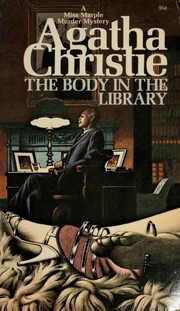
The Body in the Library
A strange girl found dead in a library pulls Miss Marple into lies about dance halls and film.
2,017-word summary · 9 min read
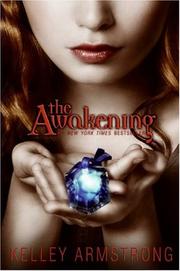
The Awakening
Chloe Saunders flees Lyle House with Derek, Simon and friends while her necromancy wakes fully and the Edison Group hunts them.
2,428-word summary · 11 min read
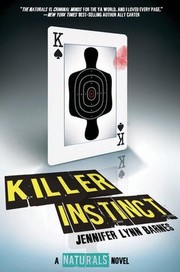
Killer Instinct
Teen profiler Cassie Hobbes rejoins the FBI Naturals to stop a copycat repeating Dean Redding father murders.
2,600-word summary · 12 min read

The Reckoning
Necromancer Chloe Saunders and her gifted friends raid Edison labs in the Darkest Powers finale, chasing rescue and freedom together as hidden powers break…
2,955-word summary · 13 min read
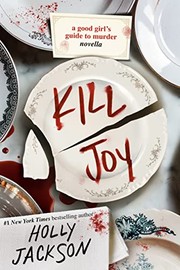
Kill Joy
Pip hosts a 1920s murder mystery party with her friends, solves the fake case, and feels a real scare that points toward A Good Girl's Guide to Murder.
2,537-word summary · 11 min read

Belladonna
Poison-immune orphan Signa Farrow hunts a gothic killer at Thorn Grove with Death as ally and suitor, while cousin Blythe fades and her ghost mother asks for…
2,868-word summary · 13 min read

Across the Universe
Frozen teen Amy wakes early on ship Godspeed and joins heir Elder to stop cryo murders and expose Eldest's drugged rule in this January 2011 Razorbill series…
2,430-word summary · 11 min read