
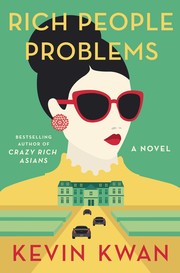
Rich People Problems
3,512-word summary 16 min read 397 pages in the book
- First published
- 2017
- Publisher
- Doubleday
- Pages
- 397
- ISBN
- 9780385542234
- Series
- Crazy Rich Asians (#3)
Reading options
What's inside (8 sections)
I came to Rich People Problems the way most people do, after hearing friends argue about the movies and the books for years and finally wanting to see how Kwan ends the whole thing. I had read the first two books on planes and in waiting rooms, laughing at the footnotes about clothes and houses, and I kept thinking of one cousin of mine who treats weddings like military campaigns. This last book felt like being invited to the biggest family event of the year where everyone is dressed perfectly and nobody is calm. Kevin Kwan published it in 2017 with Doubleday, and the edition cited here runs 397 pages. It closes the Crazy Rich Asians trilogy. What follows retells the full story, ending included, because these summaries are meant to save you from guessing.
The setup is simple and heavy at once. Shang Su Yi, the old matriarch of the Young family, is dying at Tyersall Park, the huge family estate in Singapore that has been the center of everything for three books. Doctors come and go. Servants keep the routines. Family members fly in from London, Hong Kong, Sydney, and California. Everyone says they are there for Su Yi. Almost everyone is also thinking about what happens to Tyersall Park after she passes. The house is not only a home. It is a symbol of who counts as family, who married well, who stayed close, who was forgiven. That question drives nearly every scene.
Su Yi herself spends much of the book in bed, drifting in and out of sleep, visited by priests, nurses, children, and grandchildren who all want a minute. Kwan treats her with more softness than in the earlier books. She remembers small things, asks for old foods, worries about prayers and proper rites. Around her, her children and their lawyers circle. The will has not been read. Rumors about the will fill every lunch. Some think the house will go to one branch. Some think it will be sold. Some think Su Yi will leave it to no single person to force the family to share it. The waiting makes polite people sharp.
Su Yi and Tyersall Park
Tyersall Park feels like a character here, and Kwan spends a lot of pages walking us through its halls, gardens, kitchens, and guard posts. Staff polish floors that few guests ever see. Old retainers remember who sat where at dinners forty years ago. Security men wave through cars with familiar plates and stop the rest. For readers new to the series, the point lands fast. This is old Singapore money, quieter than the new condo rich, tied to land that cannot be remade. Developers would pay a fortune for the plot. Family members know it. Outsiders know it. Su Yi knows everyone knows it, which is why she keeps her own counsel to the end.
Eleanor Young, Nick's mother, moves through this waiting period with her usual mix of pride and fear. In the first book she was the gatekeeper trying to block Nick's girlfriend Rachel. In the second she softened a little. Here she is older, still sharp, still worried about face, but also more aware that time is passing for her generation too. She fusses over doctors, menus, and seating plans. She calls friends for news about who has hired which lawyer. She wants Nick back in the fold, but she also wants to be seen as a loyal daughter in law to Su Yi. Her scenes with the older servants carry real feeling, because they show a woman who learned all the rules and now sees the rules shifting.
The middle generation as a whole hovers. Uncles and aunts arrive with gifts for Su Yi and questions for each other. Who paid for the new hospital wing. Who was seen at which club. Who is still welcome at Sunday lunch. Kwan loves these small signals, and he piles them high. A handbag is never only a handbag. A car is never only a car. A donation to the right charity at the right time tells the room where you stand on the will. If you enjoy social comedy, these chapters are the fun part. If you get tired of brand names, you will feel the drag early, because Kwan names labels, hotels, restaurants, and architects on almost every page.
One thread I liked is how the staff see everything. Cooks, drivers, nurses, and guards trade news faster than the family does. They know which cousin cried in the pantry. They know which lawyer stayed late. They know Su Yi asked for a certain soup on a certain day and what that might mean. Kwan gives them dry lines and tired patience. They have served this family for decades. They love Su Yi in a plain way that her grandchildren sometimes cannot manage through all their schooling and travel. When the book slows down for a kitchen scene or a night watch by her bed, the tone steadies and the satire rests.
The inheritance question sharpens as doctors warn that Su Yi has little time left. Nick, her favorite grandson in many ways, is called back. Other grandchildren make their own trips. Some bring children to be blessed. Some bring papers to be signed. Priests discuss rites. Friends from old church groups visit with food. Between visits, cousins compare notes in group chats and over drinks. Everyone claims to want peace. Everyone prepares for a fight. Kwan keeps the will itself hidden for most of the book, which lets the suspense carry pages that might otherwise sag under their own weight.
Nick and Rachel and wedding talk
Nick Young and Rachel Chu return as the heart of the series, and their story here is less about whether they belong together and more about what belonging costs. Nick has been cut off in spirit if not in law since choosing Rachel over family approval. Rachel, now more accepted but still watched, teaches and writes and tries to keep a clear head while everyone around her spends. Talk of a wedding follows them everywhere. Not only whether they will marry, but where, with whose blessing, in which church, with which guests, and what it will signal about Nick's place in the will. Even a simple dinner becomes a test.
Rachel's mother plays a larger part in the background, calling with advice that is loving and pointed. She wants Rachel happy. She also knows how these families keep score. Rachel listens, pushes back, then listens again. Kwan writes their phone calls with warmth. Rachel is no longer the wide eyed visitor from the first book. She can read a room in Singapore now. She knows when Eleanor is being kind and when Eleanor is managing her. She knows when a cousin's invite is friendly and when it is a way to pump her for news about Nick. That growth feels earned after three books.
Nick drifts between guilt and resolve. He loves Rachel. He loves his grandmother. He resents how money bends every talk into a deal. He meets old school friends who tease him for living smaller than he could. He visits Tyersall Park and remembers childhood summers, hiding in gardens, being scolded by aunts, being protected by Su Yi. Those memories hit harder now that the house may pass out of the family. Kwan lets Nick be quiet for long stretches, which suits him. When Nick does speak up, often late in a scene, he tends to say the plain thing no one else will say. Those moments give the book its spine.
A lot of their plot involves travel and waiting. They fly in, they wait for news, they attend lunches, they dodge reporters and distant relatives, they check on Su Yi, they step out for air. Kwan fills these gaps with comic set pieces. A bad flight in first class that is still treated as a crisis. A hotel suite war between cousins. A charity lunch where seating is warfare. I laughed more than once, and I also skimmed once or twice when the jokes ran on labels rather than people. That push and pull defines this section. The couple you root for are stuck in a house of noise, trying to plan a life while others plan seating charts.
By the middle of the book, their choice narrows. They cannot fix the whole family. They can decide what kind of marriage they want and which ties to keep. Rachel tells Nick she does not need Tyersall Park to feel married. Nick tells Rachel he does not want to lose his grandmother without making peace. They agree to stay close to Su Yi while keeping distance from the louder fights. It sounds simple. In this family, it takes constant work. Every aunt has an opinion. Every cousin has a camera. Every lunch has a witness. Their small acts of privacy, a walk, a shared meal away from the house, a short prayer together, land as victories.
Astrid, Michael and Charlie
Astrid Leong, Nick's cousin and the quiet star of the series for many readers, gets the most emotional plot. Her marriage to Michael, always strained by money and pride, is effectively over as the book opens. Michael resents being the less rich husband. Astrid resents being watched for every purchase. They share a son and a long history of missed chances to be honest. Lawyers and friends push them toward a clean split, but nothing is clean when both families talk. Astrid moves through Singapore like someone everyone recognizes and no one quite knows, beautiful, polite, tired.
Into that gap steps Charlie, the old love who never quite left her orbit. Readers of the earlier books will remember him as the steady man who understood Astrid before wealth made everything loud. Here he returns with his own wounds and his own money, offering not rescue but attention. He notices when Astrid is tired. He remembers small details about her son. He waits instead of pressing. Kwan writes their scenes with restraint, which stands out in a book that is often loud. A shared car ride. A short talk after an event. A text that says little and means a lot. You can feel Astrid weighing safety against hope.
Michael, to his credit, is not drawn as a cartoon villain in every scene. He is proud, hurt, and out of his depth. He lashes out about money because he has no other language for shame. He loves his son in flashes. He hates being pitied by Astrid's friends. Some of his moves late in the book are petty, involving lawyers and public digs, and Kwan does not excuse them. But the early chapters let you see why the marriage failed from both sides. Astrid hid purchases to keep peace. Michael read each hidden receipt as proof she thought him small. By the time they try to talk plainly, the habit of hiding is set.
Astrid's parents add pressure without meaning to. Her mother wants her daughter settled. Her father wants no scandal while Su Yi is ill. Friends take sides at lunches. Sales clerks who know Astrid by name watch what she buys and with whom. Kwan uses these small humiliations well. Astrid cannot buy socks without it becoming news. She cannot meet Charlie for coffee without photos. She handles it with grace that costs her sleep. Her late night talks with Rachel anchor this thread, because Rachel is one of the few people who does not want anything from Astrid except honesty.
The question for Astrid is never only which man she will choose. It is whether she will keep living as the perfect daughter of a rich house or start making choices that look messy from outside. Kwan lets her move slowly. She puts her son first. She meets lawyers. She prays. She visits Su Yi and listens more than she speaks. When she finally acts, it feels less like a romantic twist and more like a woman refusing to be managed. Readers who loved her in the earlier books will find her sadder here but clearer. Readers who found her too ideal will still find her a little too good to be true.
Edison and the cousins
If Astrid gives the book its ache, Edison Cheng and the wider cousin set give it its noise. Edison, the banker cousin from Hong Kong with strong opinions on everything, barges through chapters with schemes, suits, watches, and plans to profit from every shift in the family. He wants in on property deals tied to Tyersall Park. He wants face at every party. He wants his children placed in the right schools and photographed in the right clothes. Kwan writes him as both funny and exhausting, which is the point. Edison believes wealth is a game with clear winners. The book keeps proving him wrong while letting him talk.
The cousins as a group function like a Greek chorus in designer shoes. They run group chats, share photos of wills that no one has seen, rank each other's outfits at funerals and weddings, and trade rumors about who Su Yi blessed last. Some are kind underneath the polish. Some are not. Kwan moves among them fast, giving each a tic or a catchphrase. One tracks art prices. One tracks school admissions. One tracks hotel openings. Their parties fill the middle of the book with color and food and music, and they also show how inheritance talk poisons even fun. A birthday toast turns into a dig about houses. A christening lunch turns into a poll about lawyers.
Singapore itself shines in these chapters. Kwan loves the city and writes it street by street, mall by mall, club by club. Old shophouses sit near new towers. Hawker stalls sit in memory near private dining rooms. Drivers compare routes. Aunties compare temples. The cousins argue about which hotel has the best suites and which church has the best choir for a memorial. For readers who know Singapore, these details are a treat. For others, they can blur. I found myself slowing down to picture Tyersall Park's gates and gardens, then speeding up through lists of shops that felt pasted in to prove research.
There are also sharp comic turns involving tech money, mainland buyers, and foreign press. Reporters sniff around Su Yi's health. Bloggers post photos taken from far away. Family PR handlers try to keep things quiet and fail. Edison loves cameras. Eleanor hates them. Nick and Rachel try to avoid them. Astrid is followed by them without trying. Kwan uses this to poke at how old money meets new attention. Privacy was once assumed. Now every nurse could have a phone and every driver could have a cousin who blogs. The family that once controlled every story now chases it.
What saves these sprawling chapters is Kwan's ear for dialogue at tables. He can stage a lunch with eight cousins, three mothers, two lawyers, and one tired waiter, and keep every voice clear for ten pages. Jokes land. Insults land softer than they should because everyone smiles. Someone orders too much. Someone drinks too little. Someone leaves early and everyone notices. If you like comedy of manners, this is top shelf stuff. If you want plot to move, you may wish Kwan cut twenty pages of party talk to get back to Su Yi's room, where the real stakes wait.
Wills, letters and the last stretch
As Su Yi weakens, the book turns from comedy to vigil. Visits shorten. Prayers lengthen. The house quiets in a way that scares the cousins more than shouting did. Nick sits with his grandmother and remembers being a boy who was allowed past the rules. Eleanor sits and replays old quarrels she cannot fix now. Astrid brings her son for a blessing that takes only a minute and stays with her for chapters. Rachel watches and learns how this family grieves in public while hiding the sharp parts. Kwan handles these bedside scenes without jokes, and the change in tone works.
The will, when it comes, does not solve everything. I will keep the exact terms broad to avoid spoiling the mechanics for new readers, but the shape is true to Su Yi. She rewards loyalty over noise. She protects the house over profit. She leaves words for specific grandchildren that show she watched them more closely than they knew. Some relatives feel blessed. Some feel punished. Lawyers parse sentences while aunties parse silences. The reading itself is less dramatic than the weeks of waiting, which feels honest. Real wills rarely produce shouting in the room. They produce shouting later, at home, on phones.
Letters and private talks fill the gaps the will leaves. Su Yi has written or spoken messages that reach Nick, Astrid, and others in turn. Each note is short, practical, and touched with faith. She tells them to marry well in spirit, not only in name. She tells them to care for the house, the staff, and each other. She asks for prayers rather than flowers. These passages are the least satirical in the trilogy, and some readers may find them sweet where others find them staged. I found them moving in small doses, though Kwan repeats the lesson enough times that it starts to sound like a sermon.
The last act also resolves, or at least steadies, the romantic threads in general terms. Nick and Rachel choose each other without waiting for full approval, planning a wedding on their own terms while keeping respect for elders. Astrid moves toward a life not ruled by Michael, with room for Charlie if she wants it, but defined more by her care for her son and her own peace. Edison gets wins and losses that leave him loud but smaller than he hoped. Eleanor finds a late, partial peace with Rachel that feels truer than a full hug would. No one gets everything. Most get enough to go on.
Kwan closes with funerals and feasts, as suits this world. Rites are observed with care. Food is described with love. Guests fly out as fast as they flew in. Tyersall Park stands, changed but standing, and the family photos taken on its steps show tired smiles. The final pages lean into sentiment, with blessings and babies and plans for the future. After so much noise about money, the quiet at the end feels earned, even if Kwan cannot resist one last twist involving property and one last joke about who paid for what.
What works and what wears thin
What works best is Kwan's control of a huge cast across three books. He remembers who slighted whom at which dinner two books ago. He pays off small setups, like a servant's loyalty or a cousin's debt, in ways that reward faithful readers. His dialogue at family tables remains sharp, and his love for Singapore food, faith, and ritual gives the finale warmth the middle volumes sometimes lacked. When he focuses on Su Yi, Eleanor, Astrid, Rachel, and Nick in small rooms, the book sings. Those scenes have patience and heart.
What wears thin is sprawl. Too many cousins get too many pages. Too many parties repeat the same point about wealth as performance. The brand lists, funny in book one, now read like inventory. A dress is named, a bag is priced, a hotel suite is measured, and the story pauses while we admire the goods. Readers who enjoy that catalog will not mind. I grew tired of it by the middle, especially when a tense bedside chapter cut to five pages of shopping. The research shows, but the story sometimes waits outside the store.
The late twists also strain belief. Without giving specifics, a few reveals about wills, shares, and hidden help arrive fast and solve problems that felt harder for hundreds of pages. Kwan earns some of this through Su Yi's foresight, but other turns rely on characters acting kinder or dumber than before to let the plot land. Astrid's path stays mostly believable. Nick and Rachel's stays mostly steady. The cousin plots wobble. Edison in particular swings between threat and joke in ways that serve the scene more than the man.
Still, as an ending, this satisfies. It honors Su Yi without pretending she was simple. It lets Eleanor grow without erasing her past. It gives Astrid dignity. It lets Nick and Rachel marry in spirit if not in every legal detail the aunties want. It leaves Tyersall Park as both house and idea, too large for any one heir and too loved to sell without grief. If you read the trilogy for satire, you get a last big parade. If you read it for family, you get a farewell that respects tears. I closed the book thinking less about money and more about how hard it is for a large family to say goodbye in the right order, and that feels like what Kwan wanted all along.
FAQ
What is Rich People Problems about?
It is the 2017 Doubleday finale to the Crazy Rich Asians trilogy. As matriarch Su Yi fades at Tyersall Park, the family gathers and the fight over the estate begins.
Is Rich People Problems part of a series?
Yes, it is the third book after Crazy Rich Asians and China Rich Girlfriend. The Doubleday edition runs 397 pages.
Which characters return in this book?
Su Yi, Eleanor, Astrid, Rachel, Nick and Edison return. Astrid faces marriage trouble, while Nick and Rachel deal with wedding plans and family pressure.
Similar books
More from Crazy Rich Asians first, then related titles.
Crazy Rich Asians
Rachel Chu flies to Singapore with Nick Young and learns his family is not just rich but dynasty rich, with mothers, aunties, and weddings testing every bond.
2,117-word summary · 9 min read
China Rich Girlfriend
Rachel Chu meets her birth father and enters Shanghai high society while Nick, Astrid, and Eleanor face weddings, money, and old family claims.
2,861-word summary · 13 min read
Witches Abroad
Three Lancre witches fly to Genua to stop a fairy godmother from forcing a servant girl into a storybook marriage, and find a city arranged around a happy…
2,651-word summary · 12 min read
George's Marvellous Medicine
George stirs a brew of dozens of household chemicals and gives it to his grumpy grandmother, and the medicine works far better than anyone planned.
2,014-word summary · 9 min read
Hogfather
Death fills in for a missing Father Christmas, Susan Sto Helit hunts the Hogfather, and the twentieth Discworld novel turns Santa into a management problem.
2,871-word summary · 13 min read
Sourcery
A dying wizard hides his soul in a staff, his eighth son becomes a sourcerer strong enough to break the world, and Rincewind is sent to stop him with a sock.…
2,404-word summary · 11 min read

Men at Arms
The City Watch gets new recruits and a murder case when the Disc's only handgun turns up in Ankh-Morpork, in the fifteenth Discworld novel.
2,216-word summary · 10 min read
Redshirts
Ensigns realize they die to serve a bad TV show's narrative.
2,152-word summary · 10 min read
White Noise
Jack Gladney teaches Hitler studies, flees a chemical cloud with his family, and chases a drug for dread in DeLillo's funny and bleak 1985 novel of…
2,768-word summary · 12 min read
Vanity Fair
Becky Sharp schemes her way up Regency society while loyal Amelia waits, in Thackeray's witty novel without a hero.
2,698-word summary · 12 min read

Mostly Harmless
Arthur makes sandwiches on Lamuella while Ford steals a Guide Mk II that wipes Earths across realities.
2,059-word summary · 9 min read
Going Postal
A hanged con artist must revive Ankh-Morpork's dead Post Office and outwit a murderous rival in Pratchett's 33rd Discworld novel.
2,228-word summary · 10 min read

When in Rome
A burnt-out pop star hides out in small-town Kentucky and falls for the grumpy pie-shop owner hiding her.
2,495-word summary · 11 min read
This is Where I Leave You
A separated husband sits shiva for seven days with his siblings after his father's death.
2,818-word summary · 13 min read
The Starter Ex
A retired bad-girlfriend-for-hire takes one last job and falls for the mark.
2,092-word summary · 9 min read
Spy x Family, Vol. 1
Spy Twilight builds fake family with assassin wife and telepath child.
2,201-word summary · 10 min read

Our Ex's Wedding
A struggling wedding planner and a winery owner who share one heartbreaking ex must join forces to pull off that ex's big day.
2,200-word summary · 10 min read
One & Only
Matchmaker Cassia Park finds fated love for everyone but herself, until a 28-year-old fling and a new boss named Daniel Nam collide.
2,033-word summary · 9 min read
Lost Lambs
A coastal family fractures as an open marriage fails and three sisters spiral while the youngest traces a shipping magnate's plot.
2,471-word summary · 11 min read
The Light Fantastic
Rincewind and Twoflower fall off the world while wizards race a red star.
1,974-word summary · 9 min read
Practice Makes Perfect
A people pleaser takes dating lessons from a bodyguard learning to stay.
1,999-word summary · 9 min read
On the Way to the Wedding
Gregory chases the wrong friend while Lucy fights a forced engagement.
1,938-word summary · 9 min read
Nora Goes Off Script
A romance writer's house becomes a film set and the actor playing her ex stays.
1,982-word summary · 9 min read
Lamb
Christopher Moore gives Jesus a wisecracking best friend, Biff, who tells the missing years from age thirteen to thirty in a wild trip east full of jokes and…
2,928-word summary · 13 min read
The Corrections
An aging Midwestern couple tries to gather three troubled adult children for one last Christmas at home.
2,094-word summary · 9 min read
Equal Rites
A dying wizard passes his staff to a baby girl, and Granny Weatherwax escorts Esk to Unseen University in Pratchett's third Discworld book.
2,871-word summary · 13 min read
Guards! Guards!
A drunk captain, his last two guards, and an earnest recruit face a summoned dragon in Ankh-Morpork in Pratchett's funny eighth Discworld book.
2,307-word summary · 10 min read
Mort
Death hires apprentice Mort in this 1987 Discworld comedy, where a spared princess splits reality and duty bends for love, with no Rincewind.
2,386-word summary · 11 min read
Life, the Universe and Everything
Arthur in slippers must stop cricket robots from rebuilding the Wikkit Gate.
2,216-word summary · 10 min read
The Restaurant at the End of the Universe
Arthur Dent flees Vogons, dines at Milliways at the end of time, and strands on prehistoric Earth in Adams' sharp 1980 sequel.
2,749-word summary · 12 min read