
Reading options
What's inside (8 sections)
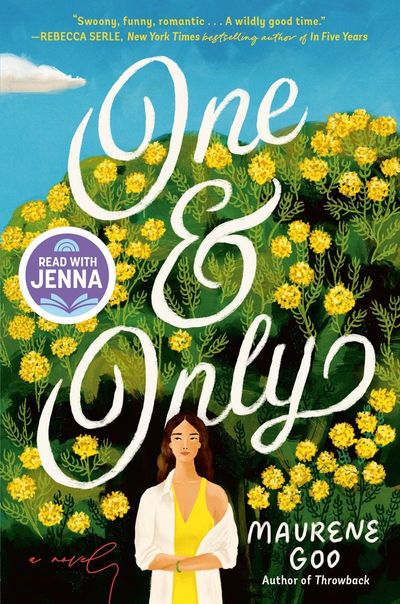
I came to this book as someone who knew Maurene Goo from her young adult novels and wondered what she would do with grown ups. One and Only is her adult debut, published by G. P. Putnam's Sons on February 3, 2026, at 368 pages. It was also picked for Read with Jenna, the book club slot that can turn a novel into a national conversation. That label sets expectations. I expected polish and charm. I did not expect how much of the book would be about grief and family pressure, or how seriously it would take the question underneath the comedy: what do you do when the fate you were promised does not show up?
The heroine is Cassia Park, called Cass. She is nearing forty and works in the family business, a matchmaking service called One and Only Matchmaking. The Parks have run it for generations, from Korea to Los Angeles. Their edge is real magic. The women of the family can look into a client's past lives and find the person's one true love, the fated. The business advertises a perfect guarantee, and for everyone except Cass, it holds. She has spent ten years searching for her own fated, a man named Daniel Nam, and he is nowhere to be found.
A family that sells certainty
The setup could have been pure whimsy. Magic matchmakers, past life readings, guaranteed soul mates. Goo certainly writes the fun of it. There are client stories with sharp comic timing, readings that go sideways, couples who argue with destiny. The Los Angeles setting helps. This is a sunny book about heavy things, full of traffic and family dinners and group chats, and the matchmaking office has the comfortable chaos of a real family firm.
But the book is clear early that the gift is also a burden. The Park women have carried this secret for centuries, mother to daughter, and it shapes every choice. Cass grew up inside a story about how love works. There is one person for you. The family can find him. Waiting is part of the process. That story gave her comfort for years. At nearly forty, it starts to feel like a room with no door. Everyone around her believes. She is trying to believe. The belief is getting expensive.
I liked how Goo writes the family. Cass's mother and the older women are not villains. They love her and they are certain, and their certainty is the problem. They keep telling her Daniel Nam is real and waiting, the way families repeat what they need to be true. There is love in every scene they share and pressure in every scene too. Readers with families that run on strong traditions will recognize the feeling. Nobody is cruel. Everyone is sure. Cass is the only one allowed to doubt, and she is running out of time to be wrong.
The past lives mechanic gets enough explanation to work without drowning the story. Park women see backward into what clients were before, and the pattern points forward to the fated match. The book does not over explain the rules, which I took as confidence. It cares more about what the gift costs. Seeing everyone's fate but your own is a particular kind of loneliness, and Goo writes it with a light touch that lands harder than a speech would.
Work scenes deserve a mention because they do so much quiet lifting. Cass is good at her job. Watching her guide nervous clients through readings shows a competent professional who believes in the service even as she doubts her own outcome. Those appointments also mirror her private questions back at her. A client asks whether to trust the reading or her own gut, and Cass gives advice she cannot take. The irony is never underlined. It just sits there, session after session, until Cass has to face it.
Ten years of Daniel Nam
Daniel Nam is the absence at the center of the book. For ten years he has been a name, a promise, a face Cass has never seen. Goo makes him feel real anyway, because she shows what waiting does to a person. Cass has organized a decade around a man who might walk in tomorrow. She has said no to other possibilities. She has explained herself at dinners. She has smiled through setup attempts and well meaning questions. The waiting has become part of her identity, and the book asks whether that identity still fits.
This is where the novel separates itself from standard romance setups. A lot of books in this space treat the destined lover as a prize at the end of a maze. Here the destined lover is a weight Cass carries through ordinary days. Work reminds her of him. Family reminds her of him. Birthdays remind her of him. Goo writes the approach of forty with honesty and humor. Cass is not desperate. She is tired of being a story that has not finished. There is a difference, and the book knows it.
I should note the comedy never fully leaves, even here. Cass narrates her own romantic history with a dry eye. She is funny about bad dates and worse advice. The humor is not armor exactly. It reads more like competence, the way a smart person talks about a sore subject. You laugh with her and then you notice what she just admitted.
Ellis, age twenty eight
On the eve of her fortieth birthday, Cass does something out of character. She has a fling with Ellis. He is twenty eight, handsome in a way the book describes as almost unreasonable, and completely outside the fate system. He is not Daniel Nam. He is not destined. He is fun, present, and interested, and for once Cass decides to want something just because she wants it.
Ellis could have been a caricature, the younger man as midlife prop. He is not. Goo gives him attention and humor and his own awkwardness. The age gap is on the page, discussed rather than ignored. Cass feels it. Her friends name it. Ellis himself is sometimes clueless about the references and pressures of her stage of life, and sometimes clearsighted in the way younger people can be about things older people have tangled up. The fling scenes have genuine heat and genuine comedy, often in the same paragraph. What surprised me is how tender they are. Cass keeps waiting to feel silly. Instead she feels awake.
The connection deepens faster than either of them planned. That is the point and the problem. Cass told herself this was temporary, a birthday gift to herself, no fate attached. But Ellis listens. He shows up. He remembers small things. The fling starts to feel like something with a shape, and Cass does not know what to do with a shape she did not order from the universe.
Then comes the turn the publisher description gives away, so I will discuss it plainly. Ellis introduces Cass to his boss. The boss is Daniel Nam.
The boss with the fated name
It is a great comic gut punch, and Goo stages it well. All the air leaves the scene. Cass has spent ten years looking for this name, and it walks in wearing a lanyard, attached to her fling's employer. The chapters around the reveal are the funniest in the book and the most uncomfortable. Cass tries to act normal. She fails in entertaining ways. Ellis notices something is off and misreads it. Daniel himself is polite and professional and completely unaware that his name has been living rent free in this woman's head for a decade.
What follows is the real engine of the novel. Cass now has both men in her life at once. Daniel, the fated, the answer to ten years of waiting, suddenly reachable. And Ellis, the choice, the unscripted thing, suddenly complicated by proximity to the answer. The book refuses to make this simple. Daniel is not a disappointment and not a dream. He is a person, with habits and limits and his own history. Ellis is not just a good time. He is someone who keeps choosing Cass without any magic telling him to.
Goo uses this triangle to ask what fate is actually for. If the family gift names Daniel, does Cass owe the name her life? If she feels more alive with Ellis, is that feeling data or noise? The book lets Cass argue both sides, sometimes within a single scene. Her mother and the family tradition pull one way. Her own days pull the other. I found this stretch thoughtful without getting heavy. The questions are big and the scenes stay small: a lunch, a reading, a late night call, a matchmaking appointment where Cass gives a client perfect certainty she cannot give herself.
The secret under the guarantee
Running beneath the romance is a family secret, and the publisher copy promises it will make Cass question everything. I will keep this vague to protect the read. What I can say is that the secret concerns how the guarantee works and what the family history actually contains. It lands in the late chapters and reframes scenes from much earlier. A few conversations with her mother read differently once you know. A few certainties look more like choices.
I thought this reveal was handled with care. It does not cancel the magic or turn the family into frauds. Instead it complicates the story Cass was raised inside. The guarantee is still real in the ways that matter. But it is also human, which means it is messier than advertised. Cass has to decide what to keep. The scenes where she works through this are quieter than the romantic comedy around them, and they give the book its weight. Fate, it turns out, was never the whole story. The Parks were telling a true story with the hard parts removed, the way families do.
The ending brings both threads together. Cass makes a choice about Daniel and Ellis that I will not spoil, except to say it felt consistent with the woman Goo built across 368 pages. The final chapters also reposition the business itself. One and Only Matchmaking continues, but Cass's place in it changes. The last scene is warm without being neat, which suited me. Not every thread ties off. The family is still the family.
What I thought, honestly
The strengths start with voice. Cass is excellent company, wry and self aware and kind in ways she undercuts. Goo writes Los Angeles Korean American family life with texture, food and language and obligation rendered without explanation dumps. The comedy lands. I laughed out loud several times, which I rarely do at books. And the central question has teeth. This is a romance that takes singleness at forty seriously, that understands waiting as its own experience rather than a gap between events.
Fair criticism belongs here too. The middle has a stretch where Cass hides the full situation from Ellis longer than feels right, and the misunderstandings pile up in the familiar way. Readers allergic to withheld information will fidget. Daniel as a character stays a little thin compared to Ellis, which may be intentional, fate as idea rather than man, but a few of his scenes feel functional. And the Read with Jenna sheen is real. This is a polished commercial novel. Readers who want raw edges may find it too smooth in spots.
Who should read it? Anyone who likes romantic comedy with an actual brain, readers interested in fate versus choice stories, and Goo's existing fans curious about her adult mode. It pairs naturally with books about family businesses and inherited gifts, and with romances that let the heroine be nearly forty without treating that as a problem to solve. Book clubs will find plenty to argue about, from the ethics of the guarantee to whether Cass makes the right call. At 368 pages it moves fast. I finished it in three days and spent the third evening thinking about which of my own certainties might be family stories with the hard parts removed.
FAQ
When was One & Only published and how long is it?
G. P. Putnam's Sons published it on February 3, 2026. The hardcover runs 368 pages and the ISBN is 9798217181162. It is Maurene Goo's adult debut.
Is One & Only a Read with Jenna pick?
Yes. It was chosen as a Read with Jenna Today Show book club pick, which the publisher prints on the cover.
How does the Park family matchmaking gift work?
Park women read clients' past lives to identify each person's fated match, which is why the family firm promises a perfect record.
Similar books
The Rules of Magic
Franny, Jet, and Vincent Owens test strict family rules and a love curse in 1960s Manhattan and Massachusetts in Alice Hoffman's warm prequel about love, loss,…
2,686-word summary · 12 min read

When in Rome
A burnt-out pop star hides out in small-town Kentucky and falls for the grumpy pie-shop owner hiding her.
2,495-word summary · 11 min read
The Starter Ex
A retired bad-girlfriend-for-hire takes one last job and falls for the mark.
2,092-word summary · 9 min read
Practical Magic
Orphaned sisters Sally and Gillian Owens flee magic and love, until Gillian returns with a dead boyfriend and Sally must face the family curse.
2,974-word summary · 13 min read
Our Ex's Wedding
A struggling wedding planner and a winery owner who share one heartbreaking ex must join forces to pull off that ex's big day.
2,200-word summary · 10 min read
Once and Again
Novak women can redo one moment; Lauren must decide whether to use hers.
2,330-word summary · 10 min read
Practice Makes Perfect
A people pleaser takes dating lessons from a bodyguard learning to stay.
1,999-word summary · 9 min read
On the Way to the Wedding
Gregory chases the wrong friend while Lucy fights a forced engagement.
1,938-word summary · 9 min read
Nora Goes Off Script
A romance writer's house becomes a film set and the actor playing her ex stays.
1,982-word summary · 9 min read
China Rich Girlfriend
Rachel Chu meets her birth father and enters Shanghai high society while Nick, Astrid, and Eleanor face weddings, money, and old family claims.
2,861-word summary · 13 min read
Good in Bed
Dumped in print by her ex, reporter Cannie Shapiro faces pregnancy, family mess and a fresh start in Philadelphia.
2,713-word summary · 12 min read
The Rosie Project
Melbourne genetics professor Don Tillman launches the Wife Project to find a partner by questionnaire, then meets chaotic Rosie Jarman and agrees to help her…
2,780-word summary · 12 min read
Crazy Rich Asians
Rachel Chu flies to Singapore with Nick Young and learns his family is not just rich but dynasty rich, with mothers, aunties, and weddings testing every bond.
2,117-word summary · 9 min read

What Happened to Goodbye
Mclean has reinvented herself in four towns since her parents divorced. In Lakeview she uses her real name, and for the first time staying put becomes a choice.
2,796-word summary · 12 min read

The Japanese Lover
A Polish refugee and the son of a Japanese gardener fall in love in San Francisco in 1939, then keep the affair secret for nearly seventy years.
2,286-word summary · 10 min read

The Shadow Sister
Star D'Apliese steps out of her sister's shadow and follows a bookshop clue into the Edwardian life of Flora MacNichol, a woman who gave up love for duty.
2,260-word summary · 10 min read

River Marked
Mercy and Adam's honeymoon on the Columbia River turns into a fight with an ancient river devil, and Mercy finally learns the truth about her father.
2,008-word summary · 9 min read

Magic Burns
A magic flare hits Atlanta, and mercenary Kate Daniels must recover stolen maps, find a missing witch, and keep a teenage girl alive while Celtic gods try to…
2,021-word summary · 9 min read
Blood Bonds
Oleander is chained in a Resistance camp, and her five Bonds have to find her before Silas Davies finishes what he started in this third Bonds that Tie book.
2,018-word summary · 9 min read
Witches Abroad
Three Lancre witches fly to Genua to stop a fairy godmother from forcing a servant girl into a storybook marriage, and find a city arranged around a happy…
2,651-word summary · 12 min read

The Siren
Saved from a shipwreck in 1930, Kahlen becomes a siren who sings men to their deaths for the Ocean, until a boy in a college library makes her want a life she…
2,369-word summary · 11 min read
Shopaholic and Sister
Becky Brandon returns from a ten-month honeymoon to meet the half-sister she always wanted, then discovers that Jess is thrifty, prickly, and nothing like the…
2,591-word summary · 12 min read
Ricochet
Lily Calloway tries to stay celibate for ninety days while Loren is in rehab, leaning on Rose, Connor, and Ryke as therapy forces her to face her childhood.
2,575-word summary · 11 min read
Under Locke
Iris Taylor moves to Austin broke and wary, takes a front-desk job at a tattoo shop, and spends the book learning that Dex Locke’s blunt cruelty and unexpected…
2,591-word summary · 12 min read

Sam's Letters to Jennifer
A grieving journalist reads her grandmother's letters and finds a decades-long love affair that changes how she sees her family.
2,310-word summary · 10 min read
Act Your Age, Eve Brown
Eve Brown crashes into a Lake District bed and breakfast, breaks the owner's arm, and talks her way into his kitchen. A grumpy-sunshine romance about work,…
2,474-word summary · 11 min read
The Rumor
Two Nantucket best friends, Madeline and Grace, watch a summer of small indiscretions get retold into gossip that reshapes both their households.
2,017-word summary · 9 min read
George's Marvellous Medicine
George stirs a brew of dozens of household chemicals and gives it to his grumpy grandmother, and the medicine works far better than anyone planned.
2,014-word summary · 9 min read

Two by Two
Sparks's twentieth novel turns from first love to a marriage breaking up: Russell Green loses his wife and his job, then rebuilds his life around his…
2,192-word summary · 10 min read
Between Sisters
Estranged sisters Meghann and Claire reunite in Washington when Claire announces a rushed wedding, then face their mother's desertion and a medical crisis.
2,467-word summary · 11 min read