
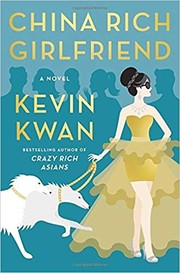
China Rich Girlfriend
2,861-word summary 13 min read 400 pages in the book
- First published
- 2015
- Publisher
- Doubleday
- Pages
- 400
- ISBN
- 9780385539081
- Series
- Crazy Rich Asians (#2)
Reading options
What's inside (8 sections)
I picked up China Rich Girlfriend because the first book left me curious about Rachel Chu. Crazy Rich Asians ended with love winning but family still fuming, and I wanted to know what a wedding actually costs when one side owns half of Singapore. Kevin Kwan published it in 2015 with Doubleday. The summary follows the 400-page Doubleday first edition with ISBN 9780385539081. This is book two in the Crazy Rich Asians series, and it moves the action from Singapore to Shanghai while keeping Singapore aunties firmly in charge of the gossip.
The hook is simple. Rachel is engaged to Nick Young. She has a flawless Asscher cut diamond from JAR, a dress she loves, and a fiance willing to walk away from money to marry her. What she does not have is a father to walk her down the aisle. Her mother Kerry raised her alone in California, and the story about her dead father always felt thin. That absence sits at the center of this book. Everything else, the jets, the shopping in Paris, the car wrecks in London, spins around Rachel learning who her birth father is and what that means for Nick, for Eleanor, and for a very powerful family in China.
Kwan opens far from California. That choice tells you what kind of sequel this is. Bigger map, higher stakes, same family politics.
A California wedding after Singapore
Rachel and Nick plan to marry in California. After the battles in Singapore, that sounds calm. No Tyersall Park seating chart. No Colin Khoo scale production. Just friends from New York, Kerry Chu, and Nick's few loyal cousins.
It is not calm.
Eleanor Young is not invited. Nick has cut ties with much of his family after his grandmother Shang Su Yi opposed the match. Eleanor, who spent book one investigating Rachel, now spends her days shut out of her only son's life. That hurts her in a way pride cannot cover. She still calls Singapore contacts daily. She still tracks flights and guest lists through friends.
The wedding rehearsal gets gatecrashed in the most Eleanor way possible. She arrives by helicopter. I laughed when I read it because it is absurd and completely in character. She does not come only to cause a scene. She comes with news. While looking into a young Chinese man who looks startlingly like Rachel, she hired investigators and followed the thread to Bao Gaoliang, a billionaire businessman and high ranking political figure in China. Rachel's resemblance to Carlton Bao, Gaoliang's son, first caught Eleanor's eye in photos. The resemblance was too strong to ignore.
Rachel forgives the intrusion faster than Nick does. You can see why. Eleanor hands her the one thing she always wanted, a living father and an explanation for her own face. Gaoliang even attends the wedding. For a few chapters, there is real warmth. Nick watches his mother with suspicion. Why reverse course now, he asks in effect. Is this love or strategy. Eleanor insists she wants peace. Both things can be true, and Kwan lets that tension sit without resolving it too neatly.
The wedding itself goes off without disaster. That surprised me. I expected a ruined cake or a missing ring. Instead the trouble waits until after, when Gaoliang invites the couple to honeymoon in Shanghai and meet Rachel's new extended family. Rachel says yes. She wants time with her father. Nick wants to support her. They fly into a world where the Youngs, rich as they are, look restrained.
Carlton Bao crashes in
You meet Carlton Bao before you like him. He is twenty three, supposed to be finishing a master's dissertation at Cambridge, and instead he is running up a huge bar tab across London nightspots, wrecking a brand new Ferrari, and destroying property. The opening crisis meeting says it all. Eddie Cheng, the family banker cousin who loves importance, is pulled from a comfortable seat and sent to sort the mess. Carlton is in surgery after crashing his Ferrari into a Jimmy Choo boutique. He was in the driver seat with airbags, so he comes out better than his passengers, but the legal and political risk is large because his father's position makes any scandal dangerous during a sensitive leadership change in Beijing.
Carlton is Rachel's paternal half brother. Same eyes, same smile, same stubborn line in arguments. Eleanor noticed it. Strangers notice it in Shanghai. At first he wants nothing to do with Rachel. His mother Bao Shaoyen has taught him to see Rachel as a threat. His father Gaoliang stalls any meeting for more than a week, puts Rachel and Nick in a fancy hotel, and avoids direct contact. Carlton is told to stay away.
He does not stay away.
Carlton seeks Rachel out anyway, partly from curiosity and partly from rebellion. Their early scenes together are some of my favorites in the book. He is rude, funny, hungover, oddly protective once he decides she is real. He shows Rachel Shanghai from the inside, clubs, late night food stalls, apartments with views that make no sense, race tracks and garages. He introduces her to his circle. He also warns her, in his careless way, that his parents are fighting about her visit.
There is a reckless hobby underneath the jokes. Carlton drag races exotic cars through world capitals with rich friends. It is not presented as cool. It reads as self harm with money. When Richie Yang, another suitor in Colette's orbit, challenges him to a race, Rachel talks him out of it. That conversation matters more than the racing plot. Rachel speaks to him as a sister, not as a moral judge, and Carlton listens for once. He starts physiotherapy in Singapore later in the book after his injuries, and Eleanor helps arrange details. That small kindness, Eleanor helping Shaoyen with doctors and schedules, shows how alliances shift when health is involved.
Carlton is irresponsible for much of the book. He is also the clearest proof of the book's point about new wealth without guardrails. Old Singapore money hides its spending. Carlton's crowd posts it.
Colette Bing and the Shanghai scene
Colette Bing steals every chapter she walks into. She is a famous fashion blogger with millions of followers, daughter of Jack Bing, one of the richest men in China depending on which ranking you trust. She is Carlton's on again off again girlfriend, though girlfriend barely covers it. She manages him, dresses him, scolds him, shows up unannounced with a plan.
Her style is the point. Where Astrid Leong in book one wore couture with quiet confidence, Colette wears fashion as performance. Custom looks, head to toe runway samples, jewels lent for an evening, hair and makeup teams on call. She hosts a dinner at her father's private estate so Rachel can finally talk with Gaoliang. The house feels like a hotel and a museum at once. Staff appear from nowhere. Art that belongs in auctions hangs in hallways. Later she takes Rachel and Nick and Carlton to Paris by private jet just to look at new collections. One of her suitors, Richie Yang, follows and throws an elaborate party as cover for a proposal. Colette turns him down. She wants Carlton, even when Carlton is a mess.
The details Kwan piles on are endless. A gift room with more than one hundred Hermes bags set aside for every doctor, nurse, and therapist who helped Carlton after the crash. Shopping trips where assistants carry sizes into dressing rooms before Rachel can ask. Church in a penthouse. Auction houses where mainland buyers pay wild sums to bring heritage pieces home. Eleanor, watching all this, delivers the book's central line in spirit. These people are not everyday rich with a few hundred million. They are China rich. Singapore old money whispers about money. Shanghai new money announces it.
Colette is fun to read and exhausting to admire. That is intentional. She is generous with Rachel in Paris, lending clothes, explaining designers, pulling her into photos with paparazzi chasing them. Then she turns controlling. She expects Rachel to intercede with Carlton when he stops speaking to her. When Rachel will not play messenger, Colette curses her in a heated public argument. The friendship snaps. Carlton ends things with Colette permanently after that.
I found that arc believable. Colette loves being adored and confuses attention with loyalty. Kitty Pong, the former soap actress from book one now clawing toward Hong Kong high society, watches Colette with a mix of envy and recognition. Kitty is trying to learn rules Colette never had to learn. Their paths cross in ways that set up later books, especially when Kitty's connection to Jack Bing comes out and humiliates Colette. Kwan uses both women to show two routes for outsiders. Study the system like Kitty, or buy the system like Colette. Neither route looks restful.
Fair warning if fashion bores you. Long stretches here read like magazine spreads with dialogue. I enjoyed most of it because the clothes reveal character, but a few Paris scenes run long.
Astrid and Charlie, Michael on the edge
Astrid Leong Teo was the quiet heart of book one. In book two her marriage breaks in slow motion.
Her husband Michael Teo is now a newly minted tech billionaire after his startup succeeds. Money was supposed to ease their strain. It sharpens it. Michael grows cold, then detached, then angry. He argues with Astrid about their son Cassian and discipline. He pressures her to act as the perfect corporate spouse for events. He cares more about image than family dinners. Astrid, known across Singapore as a goddess for her taste, finds no pleasure in the new house or the new valuation. She misses time with her close friend and former fiance Charlie Wu.
Charlie still loves her. He is married to Isabel, and that marriage is thin, but he cannot step back. Years earlier he secretly engineered Michael's success by overpaying for Michael's company through back channels, hoping wealth would stabilize Astrid's marriage and make her happy. Astrid only learns this later. At the time she experiences it as emails and texts growing warmer, more playful, more nostalgic. They discuss old songs, old jokes, custody schedules, school runs. Nothing physical at first. Just the pull of someone who always understood her without coaching.
Michael suspects his father in law is behind the buyout. He is wrong about the source and right that something is hidden. When he accuses Astrid of an affair with Charlie and threatens harm, Astrid decides to leave him and take Cassian. The scene where she finally walks is handled without melodrama. She packs practical things. She calls the right people. She protects her son.
I admired how Kwan kept Astrid trying before quitting. She does not flee at the first cold shoulder. She suggests counseling in effect, adjusts schedules, defends Michael to friends longer than he deserves. That patience makes her final choice land harder. Charlie and Astrid do form a new bond by the end, though Kwan leaves their future tangled with divorces and daughters and family disapproval. Readers who want a clean reunion will need the next book.
Michael is hard to pity and hard to dismiss. His insecurity reads true. A self made man married into a family that names buildings will always feel measured. Success did not fix that. It gave him a bigger stage to feel small on. Kwan could have made him a simple villain. Instead he is a sad case of wealth arriving without ease.
Eleanor, Su Yi, and the shadow of Tyersall Park
Eleanor Young drives much of the plot even when she is off page. Shut out of Nick's wedding plans, she reinvents herself as Rachel's unlikely ally. She tracks the Bao family, hires help, learns Mandarin phrases she previously brushed off, and studies mainland customs with the same focus she once used to block Rachel. Her motive is mixed. She loves her son. She also understands that if Rachel is a Bao daughter, opposing the marriage looks foolish and cruel. Accepting Rachel as family restores Eleanor's standing with Nick and with Shang Su Yi's circle.
Su Yi herself remains the distant sun in this book. She is Nick's grandmother, mistress of Tyersall Park, the 64 acre estate in the heart of Singapore that everyone assumes Nick will one day inherit. She opposed Nick marrying Rachel in book one, and that rift still holds. Nick has not reconciled with her. Eleanor wants him back in favor before any final decisions about the estate are made. Eddie Cheng wants a share and schemes openly. Oliver T'sien, the cousin who knows every will and trust in town, hovers with useful facts.
No will is read here. That comes later in the series. But the expectation of a will shapes behavior now. Philip Young, Nick's father, holds his father's old objects and his mother's respect. His sisters Felicity, Alexandra, Victoria, and Catherine each watch Tyersall Park with different plans. Servants who have worked there for decades, housekeepers, chefs, gardeners, drivers, security men, are named with care in later documents, and Kwan plants that loyalty early. You feel the house as a living thing, full of staff who love Su Yi more steadily than her children sometimes do.
Eleanor's growth is real but limited. She helps Bao Shaoyen during Carlton's recovery. She apologizes in actions more than speeches. Yet she still maneuvers. She still withholds full truths when a partial truth serves better. I liked that Kwan did not turn her into a soft grandmother overnight. She remains formidable, just pointed in a new direction.
If you loved the mahjong showdown in book one, this book offers no single equal. Power moves through banquets, hospital visits, and seating plans instead. It is quieter and, in places, slower.
Poison, family, and what wears thin
The thriller thread arrives late. Rachel collapses during a spa retreat and is rushed to hospital. Nick finds a note warning that she was poisoned and telling her never to enter mainland China again. For several chapters everyone assumes Bao Shaoyen ordered it to protect her husband's political ambitions. Shaoyen fears that acknowledging an illegitimate daughter will ruin Gaoliang's chance at higher office and stain the family name during a delicate leadership transition. She has motive, means, and a cold manner that invites suspicion.
The investigation points elsewhere. It was Roxanne Ma, Colette's loyal personal assistant, who poisoned Rachel. Roxanne was given to Colette as an eighteenth birthday present by her father, raised inside that household system, and taught that protecting Colette means removing problems. She believed that scaring Rachel out of China would calm Carlton's fights with his parents and thus calm Colette. It was a bizarre, loyal, criminal miscalculation. Shaoyen, once cleared of that crime, finally welcomes Rachel into Gaoliang's home. That late acceptance feels earned because Shaoyen had reasons beyond snobbery. Politics, face, a son in trouble, a husband under scrutiny.
Rachel and Nick end the book in a steadier place with her newfound family. Carlton is kinder. Gaoliang is present, if constrained. Shaoyen is civil, if watchful. It is not a fairy tale reunion. It reads like a truce with affection growing at the edges.
So where does the book sag. The middle bulges with brand names, car models, hotel suites, and footnotes explaining each one. Book one used footnotes to teach Singlish and old money codes. Here the notes sometimes read like shopping guides. I skimmed a few. Kitty's Hong Kong makeover with a social fixer is funny but takes pages that could have stayed with Astrid. Eddie's banking maneuvers around the Bao crisis are detailed to a point that will please finance readers and tire others. And if you need tidy morals, you will not find them. Kwan loves his characters but rarely judges them. The satire stays soft when it could bite.
Still, I closed the book fond of these people. Rachel holds her center without turning saintly. Nick supports her without sulking about lost inheritance. Astrid chooses safety for her son over status. Eleanor learns a new language of care late in life. Even Carlton, Ferrari wrecker and dropout, shows flashes of brotherly grace. The wealth on display is wild, often distasteful, always specific. Private jets, gift rooms, Paris fittings, Shanghai estates that dwarf Tyersall Park in shine if not in history. Under it all is a plain story about wanting parents to show up. Rachel wanted a father at her wedding. Carlton wanted parents who see him sober. Astrid wanted a husband who sees her at all. Money cannot buy that attention, though it can rent very nice rooms while you wait.
Read this if you liked the first book's mix of romance, comedy, and family strategy and you want more China chapters. Skip it if you want a tight mystery or a sharp takedown of billionaires. Kwan is an insider with a camera, not a prosecutor with a case. The next book turns back to Singapore and to Su Yi's health, and the questions about Tyersall Park left humming here grow louder there.
FAQ
When was China Rich Girlfriend published?
It was first published in 2015 by Doubleday. The summary follows the 400-page first edition with ISBN 9780385539081.
Who are Carlton Bao and Colette Bing?
Carlton is Rachel's 23-year-old half brother known for crashing his Ferrari in London. Colette is his fashion blogger girlfriend, daughter of billionaire Jack Bing, famous for couture and lavish entertaining.
Is it part of a series?
Yes. It is Crazy Rich Asians book two, after Crazy Rich Asians and before Rich People Problems.
Similar books
More from Crazy Rich Asians first, then related titles.
Crazy Rich Asians
Rachel Chu flies to Singapore with Nick Young and learns his family is not just rich but dynasty rich, with mothers, aunties, and weddings testing every bond.
2,117-word summary · 9 min read
Rich People Problems
Su Yi's failing health sparks a fight over Tyersall Park as Nick, Rachel, Astrid and Eleanor face weddings, wills and old grudges in Kwan's 2017 trilogy finale.
3,512-word summary · 16 min read

When in Rome
A burnt-out pop star hides out in small-town Kentucky and falls for the grumpy pie-shop owner hiding her.
2,495-word summary · 11 min read
The Starter Ex
A retired bad-girlfriend-for-hire takes one last job and falls for the mark.
2,092-word summary · 9 min read

Our Ex's Wedding
A struggling wedding planner and a winery owner who share one heartbreaking ex must join forces to pull off that ex's big day.
2,200-word summary · 10 min read

One & Only
Matchmaker Cassia Park finds fated love for everyone but herself, until a 28-year-old fling and a new boss named Daniel Nam collide.
2,033-word summary · 9 min read
Practice Makes Perfect
A people pleaser takes dating lessons from a bodyguard learning to stay.
1,999-word summary · 9 min read
On the Way to the Wedding
Gregory chases the wrong friend while Lucy fights a forced engagement.
1,938-word summary · 9 min read
Nora Goes Off Script
A romance writer's house becomes a film set and the actor playing her ex stays.
1,982-word summary · 9 min read
Good in Bed
Dumped in print by her ex, reporter Cannie Shapiro faces pregnancy, family mess and a fresh start in Philadelphia.
2,713-word summary · 12 min read
The Rosie Project
Melbourne genetics professor Don Tillman launches the Wife Project to find a partner by questionnaire, then meets chaotic Rosie Jarman and agrees to help her…
2,780-word summary · 12 min read

What Happened to Goodbye
Mclean has reinvented herself in four towns since her parents divorced. In Lakeview she uses her real name, and for the first time staying put becomes a choice.
2,796-word summary · 12 min read

The Japanese Lover
A Polish refugee and the son of a Japanese gardener fall in love in San Francisco in 1939, then keep the affair secret for nearly seventy years.
2,286-word summary · 10 min read

The Shadow Sister
Star D'Apliese steps out of her sister's shadow and follows a bookshop clue into the Edwardian life of Flora MacNichol, a woman who gave up love for duty.
2,260-word summary · 10 min read
Witches Abroad
Three Lancre witches fly to Genua to stop a fairy godmother from forcing a servant girl into a storybook marriage, and find a city arranged around a happy…
2,651-word summary · 12 min read
Shopaholic and Sister
Becky Brandon returns from a ten-month honeymoon to meet the half-sister she always wanted, then discovers that Jess is thrifty, prickly, and nothing like the…
2,591-word summary · 12 min read
Ricochet
Lily Calloway tries to stay celibate for ninety days while Loren is in rehab, leaning on Rose, Connor, and Ryke as therapy forces her to face her childhood.
2,575-word summary · 11 min read
Under Locke
Iris Taylor moves to Austin broke and wary, takes a front-desk job at a tattoo shop, and spends the book learning that Dex Locke’s blunt cruelty and unexpected…
2,591-word summary · 12 min read

Sam's Letters to Jennifer
A grieving journalist reads her grandmother's letters and finds a decades-long love affair that changes how she sees her family.
2,310-word summary · 10 min read

Act Your Age, Eve Brown
Eve Brown crashes into a Lake District bed and breakfast, breaks the owner's arm, and talks her way into his kitchen. A grumpy-sunshine romance about work,…
2,474-word summary · 11 min read
The Rumor
Two Nantucket best friends, Madeline and Grace, watch a summer of small indiscretions get retold into gossip that reshapes both their households.
2,017-word summary · 9 min read
George's Marvellous Medicine
George stirs a brew of dozens of household chemicals and gives it to his grumpy grandmother, and the medicine works far better than anyone planned.
2,014-word summary · 9 min read
Two by Two
Sparks's twentieth novel turns from first love to a marriage breaking up: Russell Green loses his wife and his job, then rebuilds his life around his…
2,192-word summary · 10 min read
Between Sisters
Estranged sisters Meghann and Claire reunite in Washington when Claire announces a rushed wedding, then face their mother's desertion and a medical crisis.
2,467-word summary · 11 min read
Hogfather
Death fills in for a missing Father Christmas, Susan Sto Helit hunts the Hogfather, and the twentieth Discworld novel turns Santa into a management problem.
2,871-word summary · 13 min read

At First Sight
Jeremy and Lexie are married and expecting a baby when anonymous emails tell him the child may not be his.
2,317-word summary · 10 min read

2 States: The Story of My Marriage
A Punjabi boy from Delhi and a Tamil Brahmin girl from Chennai meet at IIM Ahmedabad, and turn a love marriage into a campaign to convince two families.
2,634-word summary · 12 min read
Where We Belong
Marian's orderly New York life cracks when the daughter she gave up for adoption arrives, and the search for the father forces her to tell the truth.
2,056-word summary · 9 min read
What the Wind Knows
Annie scatters her grandfather's ashes on Lough Gill and is pulled into 1921 Ireland, where she becomes the missing Anne Gallagher and falls for Dr. Thomas…
2,056-word summary · 9 min read
This Is How You Lose Her
Yunior cycles through love affairs and betrayals in nine linked stories, tracing the damage he does and the family history behind it.
2,195-word summary · 10 min read