
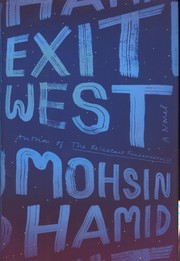
Exit West
2,704-word summary 12 min read 240 pages in the book
- First published
- 2017
- Publisher
- Riverhead Books
- Pages
- 240
- ISBN
- 9780735212176
Reading options
What's inside (8 sections)
I picked up Exit West because a friend pressed it on me with the classic line about finishing it in a weekend. She was right. Mohsin Hamid published it with Riverhead Books in 2017, a 240 page hardcover with ISBN 9780735212176, and I read it in two sittings with a day in between that I spent thinking about doors. Every doorway in my apartment looked slightly suspicious. That is the effect this short novel wants to have. It takes the long, brutal fact of migration and makes it strange and close at once, through a love story between two young people and a device that should feel like a trick but somehow does not.
The setup is simple on the surface. Saeed and Nadia meet in an unnamed city that is swelling with refugees and sliding toward civil war. They fall for each other. The war closes in. Then they hear rumors about doors, dark rectangles appearing in ordinary rooms, that can carry people to far places for a price. They step through one. What follows is less a travelogue than a sped up life together and apart, across a Greek island, London, and finally California. It was shortlisted for the Booker Prize, and you can see why. The sentences are calm and steady while the events are anything but.
One note before the walkthrough. This is a summary, so plot points are coming, including the ending. If you want to meet the doors fresh, read the book first. It is short, and the first fifty pages are worth meeting without a map.
Meeting in a city about to break
Saeed and Nadia meet in an evening class, the kind of adult education course people take half for the certificate and half to get out of the house. Saeed is gentle and observant, living with his parents, prayerful in a quiet daily way. Nadia is independent to the bone. She lives alone, rides a motorcycle, wears long black robes that read at first like piety and turn out to be something else, a kind of armor and privacy she chose for herself. Her family is nearby and distant at the same time. She left their apartment to live on her own terms, which took nerve in their neighborhood.
Their courtship has the texture of real early dating under pressure. Long talks in cafes. Text messages reread too many times. A first visit to her flat that feels enormous to both of them. Saeed brings food from his mother. Nadia offers mushrooms one afternoon, and the scene that follows is funny and tender, two people getting high and giggling while the city outside keeps its low hum of trouble. Hamid lets them be sensual without making a show of it. You learn how Nadia takes her coffee and how Saeed defers to his parents, and those small facts matter later when everything larger starts to crack.
The city cracks slowly, then fast. At first the violence is elsewhere, on the news, in neighborhoods you do not visit. Then checkpoints appear on familiar streets. Militants take over parts of town. The internet cuts out. Curfews empty the roads. Work dries up. Saeed's office keeps shorter hours. Nadia's insurance firm does the same. They move in together mostly for safety, into her flat, and then into his parents' apartment when her area gets too exposed. The scenes in the parents' flat are some of the warmest in the book. His mother cooks. His father reads and listens to the radio. Everybody pretends the shelling is farther than it is.
Then Saeed's mother is killed by a stray bullet, sudden and senseless, while going about an ordinary errand. I will not dress that up. It happens the way such deaths happen, without meaning and without warning. The father grieves in a contained, formal way that made me put the book down for a minute. He will not leave the city afterward. He says he is too old, that his wife is buried here, that someone should stay. Saeed begs. Nadia tries. He refuses with love. That refusal shapes everything after, because Saeed leaves carrying guilt the way you carry an extra bag, and he never quite sets it down.
The doors appear
The doors enter as rumor before they enter as fact. People whisper about them the way people whisper about smugglers and bribes. A door in a dentist's office. A door in a shack on the edge of town. Guards find the working ones and charge for passage, and the price is steep, and the stories about what happens inside are frightening. Total darkness. A feeling of being squeezed. Some people who go through do not come out, or come out changed. Nobody can explain the mechanics, and Hamid never tries. That refusal is the whole gamble of the book.
I worried this would feel cheap, a fantasy shortcut past the boats and fences that define real refugee journeys. Plenty of reviewers raised exactly that objection, and it is worth sitting with. But in practice the doors work because Hamid treats them with the same flat realism as everything else. A door is just a door, dark and ordinary, until someone steps through. The mystery is never solved, so your attention stays where Hamid wants it, on what leaving costs and what arriving demands.
Between chapters about Saeed and Nadia, short interludes show doors opening everywhere else. An old man wakes in Sydney to find strangers from somewhere else in his house. A family steps out in Tokyo. A window in another city shows a view that should not exist. These glimpses are brief, sometimes only a page or two, and they do the quiet work of telling you this belongs to the whole planet, more than one couple's story. Some readers find them distracting. I found them eerie in the best way, like hearing other tables' conversations in a restaurant and realizing everyone is talking about the same storm.
When Nadia and Saeed finally decide to go, the scene is handled with impressive restraint. They pay. They stand before an ordinary door in an ordinary room. They hold hands. The passage itself is described as darkness and pressure, over quickly. Then light, and a beach, and the shock of elsewhere. If I remember the order right, the first elsewhere is the Greek island of Mykonos, crowded with refugees and ringed by soldiers and cameras. No long goodbye to home. No last look back that the movies would insist on. Just through, and gone.
Mykonos and London
Mykonos is tents and fences and waiting. Hamid sketches it fast. Food lines. Phones held up for signal. Men with clipboards. Saeed and Nadia sleep rough among many others, and the closeness that the war forced on them starts to change shape. Nadia adapts quickly, making contacts, learning which line moves fastest. Saeed hangs back, quieter, thinking about his father. There is a small, painful moment where he tries to find news of home on a borrowed phone and gets nothing useful. I recognized that gesture. Checking the same dead feed twice as if the second look might fix it.
From the island they move through another door to London, and the book's middle settles there for a good stretch. They end up in an empty mansion, one of many grand houses occupied by migrants, guarded in loose shifts, organized by nationality and language into wary cooperation. Nigerians on one floor, others elsewhere, everyone negotiating bathrooms and cooking rotas and rumors about eviction. Nadia finds work of a sort and starts to build a small circle. Saeed drifts toward the local mosque community and the comfort of familiar practice. The two of them are still together, still sharing a room and a bed, but you can feel the distance entering like weather through a cracked window.
London outside the mansion turns hostile in stages. Drones overhead. Police cordons. Politicians talking about sanitation and security on television while young men with shaved heads march with flags. Hamid shows the nativist backlash without turning it into a cartoon. Some neighbors bring food. Others stare. A deal is eventually offered, work and housing in exchange for labor, and the mansion empties in waves. Through all of it, Nadia grows bolder and Saeed grows more inward, and neither is wrong. She sheds coverings she no longer needs and takes shifts that scare him. He prays and volunteers and seeks counsel from an older preacher whose daughter will matter later. Their fights are small and sad, about money and noise and who left the room without saying where they were going. The love is still there. It just stops being the organizing fact of their days.
This London section is where the book is most likely to lose you or keep you. It runs long relative to the island chapters, and the politics stay deliberately sketchy. Which faction controls the cordon, what law authorizes the clearance, how the work scheme actually functions, Hamid leaves all of that blurry. If you want the machinery of a dystopia explained, you will be annoyed. I was annoyed for about ten pages, then decided the blur was the point. The characters do not understand the machinery either. They live inside other people's decisions and try to keep their small space clean and fed.
Marin and growing apart
The last major movement takes them through another door to the San Francisco Bay Area, to the town of Marin, where a new settlement of modular and plywood housing spreads across hillsides. By now their migration has a rhythm. Arrive. Queue. Claim a patch. Work. Wait. Nadia ends up cooking and working with food crews, and she falls in with a woman, a cook, with whom she forms a bond that is clearly more than friendship and not yet whatever it will become. Saeed falls in with the preacher from London days, or one like him, and with the preacher's daughter, and the pull of belonging to something structured and certain grows strong in him.
Hamid handles the breakup, because that is what it is, with unusual kindness. There is no single betrayal, no slammed door. They talk. They admit that the war made them one unit and peace, or something like peace, is making them two people. Saeed marries the preacher's daughter, as I recall, and finds steadiness in family and faith. Nadia moves in with the cook and builds a life organized around work and chosen company. They stay in touch the way old friends do, messages on birthdays, news passed through mutuals. Nobody is the villain. That will frustrate readers who want passion to conquer circumstance. The book's answer is that circumstance is part of passion, and when circumstance changes, people change too.
Years pass in a few pages, which gives the closing section a fable-like speed. Marin grows into something like a real town. The housing firms up. Gardens appear. Saeed and Nadia age. Then, half a lifetime after they first stepped through that door, they meet again back in their birth city, or arrange to meet there, older and settled into separate lives. The scene is short. Tea, perhaps. A walk. An acknowledgment of what they were to each other. I found it moving without quite knowing why, which is a strange sentence to write but an honest one. There is grief in it but not bitterness. Two people who survived the same flood and built on different banks, waving across the water.
What works and what wears thin
The strongest thing here is the voice. Hamid writes in a calm, rolling style, long sentences that keep unspooling, piling clauses with commas and ands until ordinary moments feel tidal. It should get monotonous across 240 pages and somehow does not, at least not for me. The steadiness becomes a kind of mercy. Terrible things are described plainly, without flinching and without relish, and tender things get the same treatment. A meal. A shower. A phone call that connects. These land harder because the sentences refuse to spike.
The couple at the center also earns its keep. Nadia could easily have been a symbol, the unveiled rebel, and Saeed the pious foil, but both keep surprising. Nadia's toughness has fear under it. She locks doors twice. She misses her family more than she admits. Saeed's gentleness has a stubborn edge. He will not abandon his father, will not abandon prayer, will not pretend the doors are normal just because everyone uses them. Their intimacy feels lived in, right down to the way they irritate each other over nothing.
Now the other side, stated fairly. The doors really do let Hamid skip the middle passage, the boats, the deserts, the camps that stretch for years, and that choice has a cost. A reader who knows those journeys firsthand may find the book weightless at exactly the moments it wants to be grave. Hamid knows this, I think, and the interludes are his answer, but an answer is not the same as a reckoning. The London politics staying blurry will bother some people more than it bothered me, and I cannot call that a misreading. If you come wanting a systemic account of borders and backlash, this is the wrong shelf.
Length cuts both ways too. At 240 pages the novel moves fast, which suits people who bounce off doorstop epics, but several threads stay thin. The cook Nadia loves deserved more scenes. The preacher's daughter, who becomes central to Saeed's later life, arrives with little preparation. Saeed's drift toward stricter faith and Nadia's drift away from any faith could have carried a full chapter of honest argument, and instead they mostly carry glances and silences. Glances work in a love story. They do less work as an account of belief. Readers who want that argument staged will feel shortchanged.
One more honest complaint. The interlude chapters, which I praised above, do break the momentum. Just as you settle into Saeed and Nadia's rhythm, the book cuts away to strangers for three pages. The first two times this happens it feels electric. The fourth time it can feel like an interruption, and I caught myself skimming one of the later vignettes to get back to Marin. Your mileage will vary. Book clubs tend to split on this, half calling the vignettes the soul of the novel, half calling them speed bumps.
Who should read it
Read it if you want a short, humane entry into fiction about migration that centers feeling over policy. It suits book clubs, since the doors give everyone something to argue about, and it suits readers who liked the fable-like compression of Hamid's earlier work, particularly The Reluctant Fundamentalist, though this is a warmer book than that one. Content is moderate. There is war violence, including a parent's sudden death, some sexual content handled without explicit detail, and brief drug use. Older teens and up will be fine, and the short length makes it assignable.
The facts to file are simple. First published in March 2017. Riverhead Books in the United States, Hamish Hamilton in Britain. The Riverhead hardcover runs 240 pages with ISBN 9780735212176. Author Mohsin Hamid, born 1971, known before this for The Reluctant Fundamentalist and after it for steady essay and fiction work from posts in Lahore, London, and New York. No series. Tags that fit are migration, refugees, magical realism, love story, and war.
I closed it thinking about my friend's promise that I would finish it in a weekend. She was right about the speed and wrong about the leaving. The pages go fast. The doors stay with you. I still catch myself looking at the dark rectangle of an open bedroom door at night and feeling, for half a second, that stepping through might mean beach air and a different alphabet. Then the kettle clicks, or the phone buzzes, and I am where I am. That half second is the book's gift. It makes elsewhere feel close without pretending the passage is painless. For a novel you can read in two sittings, that is a lot to carry into the kitchen with you.
FAQ
When was Exit West published?
Riverhead Books published it in March 2017. The hardcover runs 240 pages with ISBN 9780735212176.
Is Exit West part of a series?
No. It is a standalone novel by Mohsin Hamid, though its themes connect with his earlier book The Reluctant Fundamentalist.
How do the magic doors work?
Hamid never explains the mechanism. The doors are dark, guarded, and costly, and stepping through means sudden arrival elsewhere.
Similar books
A Long Walk to Water
Two eleven-year-olds in southern Sudan, twenty-three years apart: a Dinka boy fleeing war and a Nuer girl walking hours for water, until their stories meet at…
2,217-word summary · 10 min read

The Tiger's Wife
A young doctor in a war-scarred Balkan country chases the stories her grandfather left behind, including a deathless man and a deaf girl who loved an escaped…
2,232-word summary · 10 min read

The Island of Missing Trees
A talking fig links 1970s Cyprus lovers Kostas and Defne with their grieving London daughter Ada years later.
3,172-word summary · 14 min read

The Beekeeper of Aleppo
A beekeeper guides his blind wife from Aleppo through camps toward Britain.
1,992-word summary · 9 min read

The Zookeeper's Wife: A War Story
The directors of the Warsaw Zoo hid roughly three hundred Jews in empty cages and outbuildings after the German invasion, while Jan worked for the resistance.
2,065-word summary · 9 min read

The Orphan's Tale
A Dutch teenager rescues a Jewish baby from a death train and joins a German circus, where a Jewish aerialist teaches her to fly.
2,943-word summary · 13 min read

The Blinding Knife
Kip trains to join the Blackguard while the Prism hides his true identity, loses his colors, and fights a war against a rogue drafter who wants to birth a god.
2,049-word summary · 9 min read
The Unmaking of June Farrow
A woman in a North Carolina flower-farming family walks through a red door into 1951, where she must solve her mother's disappearance and decide whether to…
2,701-word summary · 12 min read

Sophie's Choice
A young Southern writer in 1947 Brooklyn befriends a brilliant, unstable couple and slowly learns the story of the Polish Catholic woman at the center of their…
2,798-word summary · 12 min read
Dance Dance Dance
A divorced Tokyo writer returns to a Sapporo hotel that has been rebuilt, then follows a woman who may be a ghost and a teenage girl through a mystery about…
2,407-word summary · 11 min read

The Girl with Seven Names: A North Korean Defector's Story
Hyeonseo Lee crossed the frozen Yalu River at seventeen, spent years hidden in China, escaped to South Korea, and later returned to rescue her family.
2,404-word summary · 11 min read
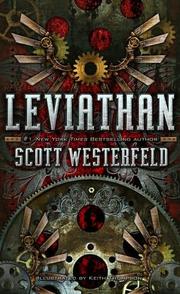
Leviathan
In an alternate 1914, a prince on the run and a girl disguised as a soldier meet aboard a living airship.
2,406-word summary · 11 min read
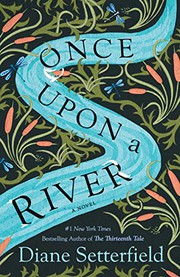
Once Upon a River
A wounded man stumbles into a riverside inn carrying what appears to be a drowned child who is not quite dead, and the story braids the guesses of everyone who…
2,173-word summary · 10 min read

Consider Phlebas
The first Culture novel follows a spy for the opposing side, a man hired to hunt a fugitive through a war between an anarchist post-scarcity utopia and a…
2,350-word summary · 10 min read
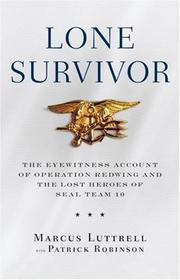
Lone Survivor: The Eyewitness Account of Operation Redwing and the Lost Heroes of SEAL Team 10
Marcus Luttrell's account of the 2005 SEAL mission in Afghanistan that killed three of his team and left him alone.
2,144-word summary · 10 min read

Bury My Heart at Wounded Knee: An Indian History of the American West
Dee Brown's 1970 retelling of the American West from the point of view of the people it destroyed.
2,233-word summary · 10 min read

The Silence of the Girls
Briseis, queen of Lyrnessus, is captured by Achilles and narrates the Trojan War from inside the Greek camp, where women are prizes and survival is its own…
2,098-word summary · 9 min read
The Last of the Mohicans
During the French and Indian War, Hawkeye and two Mohican warriors try to save two British sisters from a Huron chief whose revenge will end the Mohican line.
2,017-word summary · 9 min read
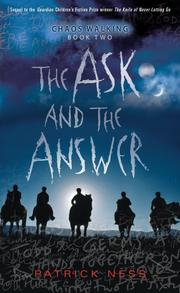
The Ask and the Answer
Todd and Viola are separated in occupied Haven, where the Mayor's Ask tortures suspects and the Answer plants bombs in the name of freedom.
2,265-word summary · 10 min read

Doctor Zhivago
A doctor and poet lives through revolution, war, and love in Pasternak's novel of private life under the pressure of Russian history.
2,213-word summary · 10 min read

Best Served Cold
Left for dead by the duke she served, mercenary general Monza Murcatto recruits a broken crew and works through a list of seven men who owe her a debt of blood.
2,108-word summary · 9 min read

The Memory Police
On an unnamed island, ordinary things keep vanishing from memory, and a novelist hides her editor from the police who make sure the vanished stay forgotten.
2,440-word summary · 11 min read

The Battle for Skandia
Will and Evanlyn are still hiding in the Skandian mountains when Halt and Horace arrive with word of a Temujai invasion that could roll on to Araluen next.
2,248-word summary · 10 min read

Exodus
Leon Uris's sweeping 1958 novel follows Jewish refugees, Haganah fighters, and Holocaust survivors from Cyprus to the founding of Israel and the 1948 war.
2,529-word summary · 11 min read
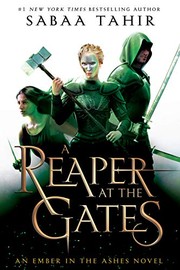
A Reaper at the Gates
The Martial capital falls to an army of ghosts, Elias becomes the Soul Catcher, and Laia and Helene pay brutal prices as the Nightbringer moves to free the…
1,991-word summary · 9 min read

The Last Kingdom
Kidnapped by Danish raiders as a boy and raised in their halls, Uhtred of Bebbanburg must choose what he is when the fight for England begins.
1,997-word summary · 9 min read

The Keeper of Happy Endings
Barbara Davis's 2021 standalone braids a Paris dressmaker's wartime losses with a grieving Boston artist who unlocks her family's secrets through an old row…
2,437-word summary · 11 min read

Garden Spells
Two sisters reunite in their family home in Bascom, North Carolina, where an apple tree shows anyone who eats from it the biggest event of their life.
2,030-word summary · 9 min read

A Long Petal of the Sea
A pregnant widow and her brother-in-law marry for passage on a ship of Spanish exiles bound for Chile, then spend decades building and losing homes together.
2,016-word summary · 9 min read
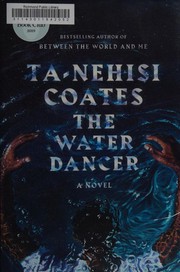
The Water Dancer
An enslaved man with a strange power for travel fights to free himself and rescue those he loves.
2,910-word summary · 13 min read