
Reading options
What's inside (9 sections)
I picked up The Guest List after a friend said it was the kind of book you finish in two sittings and then want to talk about. Published in 2020 by William Morrow, it runs about 320 pages and promises a glossy wedding on a wild Irish island that ends with a body. That setup sounded familiar. What pulled me in was the way Foley tells it through several strained voices at once, all stuck together while a storm cuts off the boats. I read it fast, mostly late at night, and I kept changing my mind about who was in danger and who was dangerous.
A wedding on Cormorant Island
Jules Keegan wants everything exact. She runs a glossy magazine, she plans like she edits, and her wedding to Will Slater is meant to show a clean, bright life. Will is handsome in the way television makes men handsome. He hosts a survival show where he smiles through cold water and hunger and acts like risk is fun. Guests know him from the screen and like him before they meet him. Jules loves that polish. She also loves that he seems steady after her own messy family past.
The site is Cormorant Island, a scrap of rock off the Irish coast, reached by boat and ringed by cliffs. There is one big house, staff cottages and a damp chapel. No signal holds. The planner chose it because it photographs well and feels private. Locals still speak of wrecks. Staff set candles while wind rattles glass. Luxury sits thin over stone that does not care.
The storm is not background. It builds through the day of the wedding, bending trees and slapping rain against glass. The boats stop running. The lights flicker. The marquee groans. Guests drink to stay warm and to stay polite. By night the island is closed. No one can leave. That trap matters because Foley wants old anger with no exit. When the murder happens after the reception, in the dark and the wet, it feels earned by weather as much as by motive.
Jules moves through these early scenes with a tight smile. She fixes flowers, checks the cake, smooths her dress, and tries not to snap at Olivia, her younger half sister and bridesmaid. Will moves through them shaking hands and clapping shoulders, at ease in a crowd. From outside they look right. From inside, through the other voices, small wrong notes start to sound. A look that lasts too long. A toast that feels forced. A guest who drinks too much too early.
Hannah and Charlie watch from the edge
Hannah and Charlie did not expect to be at a wedding like this. They live a plain, tired life on the mainland compared with Jules and Will. Charlie is old school friends with Will, or claims that link, and Hannah comes along because wives do. She brings mom guilt and work fatigue with her. Their kids stay home. Hannah feels out of place among models and television people in expensive coats. She notices who eats, who avoids whom, who laughs too loud.
Hannah becomes my anchor. She is observant without being cruel. She sees Jules trying to hold the day and feels for her. She sees Charlie slipping into schoolboy mode around Will, eager to please. Marriage strain sits in her chapters. She loves Charlie but tires of his need to be liked by men like Will.
Charlie narrates too, and his sections add shame. He remembers school where Will shone and others orbited. He wants the weekend to prove he belongs. He drinks and misses signals from Hannah because he watches Will. His friendship with Will is uneven. Through Charlie we learn how charm keeps people loyal long after it stops being kind.
Their room is cold. Hannah walks the cliff path and looks at the sea breaking white on rock. She senses several guests share a past going back years. When power cuts, she thinks of safety and distance to water. That practical fear makes the later violence feel close.
Olivia the bridesmaid who dreads the day
Olivia is Jules half sister, much younger, asked to be bridesmaid more from duty than closeness. She arrives sad and nervous, in a dress she hates, with no partner and little money. She barely knows these polished guests. She spends a lot of time trying not to cry. At first she reads as a shy girl overwhelmed by a big event. Slowly her chapters show something heavier.
Olivia knew Will before Jules did. Not as a friend. When Olivia was fifteen and at school, Will was older, confident, already skilled at getting attention. What happened between them left her hurt and confused for years. She did not tell Jules at first because she felt shame and because she feared ruining her sisters happiness. She also feared no one would believe her against a man everyone likes. Her dread grows as the wedding nears because standing beside them at the altar means smiling while the past stands beside her too.
Her scenes with Jules are painful. Jules is busy, focused on plans and photos, and reads Olivia's mood as sulking. Olivia bites back or goes quiet. Under friction there is love. The tension is a girl holding a secret that would break the day and a bride who cannot see past the schedule.
Olivia also watches Will. He is friendly to her in public, the easy brother in law to be, but his eyes warn her to stay quiet. In one short, cold exchange he makes clear he remembers and expects silence. Olivia drinks to get through the speeches. She steps outside for air. She thinks about leaving the island even though no boat will come. Her fear gives the middle of the book its ache. While others worry about canapes and music, Olivia worries about standing in photos next to a man who harmed her and being told to smile.
Johnno the best man with a debt
Johnno is Will's best man and oldest friend, and he looks wrong in a suit. He is big, rough, kind in awkward bursts, and clearly uncomfortable giving a speech. He works with his hands. He does not belong on magazine pages. Will chose him partly because old friendship looks good and partly because Johnno never says no. Johnno loves Will the way Charlie does, but with more history and more hurt.
School ties Johnno to Will in ways that sting. At school Will was the star while Johnno took blame. There were games that went too far. Johnno tells himself those were jokes. He knows Will turns cold when crossed. He came hoping to do his duty and leave, but drink and guilt loosen him.
His best man speech is a small disaster that Foley stages well. He tries to be funny, he drinks for courage, he starts down a story that Will does not want told. Laughter thins. Will steps in smooth and saves it, clapping Johnno on the back a shade too hard. Guests laugh with relief. Johnno sits down sweating. That moment shows the whole pattern. Will rescues and controls in one move. Johnno shrinks and stays loyal.
Later, outside in the rain, Johnno talks more plainly than he has in years. Loyalty has cost him. He thinks of a boy from school who did not survive that culture. He starts to see that keeping Will's secrets harmed people with less power. His arc is a slow man deciding he will not carry another lie off the island.
Aoife and the staff who know the island
Aoife runs the wedding on the island, or seems to. She is calm, local, used to wind and difficult guests. She checks generators, moves tables away from leaks, tells staff to keep paths lit. Her chapters feel different from the guests. She knows which doors stick, which cliffs flood, where to find blankets. She also knows more about the party than a planner should. She watches Will with a flat, tired attention that does not match her professional smile.
Through Aoife the island stops being scenery. She respects the sea because she grew up with it. She does not trust mainland glamour. Her staff try hard while the chef worries and servers gossip. Aoife keeps them moving while her mind stays elsewhere.
Her link to Johnno becomes clear in careful steps. She has watched Will shape her son since they were boys. She saw bruises explained as sport. That history sits behind her polite nods. She is a woman out of patience, in charge of keys and timing on a night when lights fail.
Aoife also sees Jules clearly. She respects work, and Jules works hard to hold the event. In a brief moment Aoife helps fix her hair and says the wind will pass. It will not pass.
The reception the storm and the killing
The ceremony itself is short and windswept. Guests huddle in the chapel while rain hits the roof. Jules walks in to music half lost to weather. Vows are said loudly to beat the wind. Photos are rushed. Then everyone crowds into the marquee for drinks and dinner. Speeches run long. Wine flows. Music plays. Outside the tent walls shake.
Foley cuts fast here among voices. Jules feels relief that the formal part worked and panic that Olivia looks ill. Will works the room, telling stories, touching arms, soaking praise. Hannah tries to keep Charlie from drinking too much and fails. Charlie laughs too hard at Will's jokes about school. Olivia stares at her plate and then drinks too fast. Johnno sits stiff through dinner, then slips out for air. Aoife moves behind scenes, checking lights, sending staff to fetch candles when the generator coughs.
Small breaks turn into cracks. A bridesmaid argues with a boyfriend. A guest repeats a rumor about Will and a girl from years back. Someone mentions a boy who died at school and the table goes quiet. Will smooths it with a joke about boys being boys. Hannah feels sick at that line. Olivia leaves the tent. Johnno follows because he cannot sit still. The wind tears at the canvas. Power fails, returns, fails again. In the dark people laugh nervously and keep drinking.
The murder comes late, offstage at first. A scream, running feet, rain and torchlight. A body is found near the water and rock, or half sheltered by stone, blood thinned by rain. Foley holds the name for a beat and then gives it. Panic spreads through the soaked guests. Phones show no signal. The staff lock doors. Jules stands in her dress, wet to the knees, shouting for order that will not come. Hannah holds Charlie's arm. Olivia shakes. Johnno stares. Aoife keeps her face still. The storm keeps pushing. No boat can come until morning.
What the night reveals and what I kept
The last stretch moves backward and forward to sort motive. Foley reveals more about school days, about the dare culture Will led and Johnno followed, about a boy who died and was mourned as an accident. She reveals more about Olivia and Will, in scenes that are plain and upsetting without being graphic for effect. She reveals that several guests knew parts and stayed quiet because Will was useful, funny, famous. Shame spreads wider than one man.
Jules faces the hardest turn. She built a life on taste and control, and she must see that the man she chose used charm as cover. Her love does not vanish in one scene. She bargains, she rages, she looks for excuses. Then she looks at Olivia and stops. Foley gives Jules a hard, clear choice in the rain and lets her make it. I liked that Jules is not written as a fool. She was lied to by someone skilled at lying, and once she sees, she acts. That keeps her dignity even as her wedding falls apart.
The killer reveal lands with sad logic rather than shock for its own sake. I will not spell the final blows step by step here because this book works best if you feel the trap close yourself. What matters is that the killing grows from protection and fury, not from a puzzle trick. Aoife, Olivia, Johnno and Jules all touch that end in different ways. One strikes, others fail to stop it or choose not to. When morning comes and the sea calms enough for boats, no one on the island is innocent in the small sense, even if law will sort guilt in a narrow sense.
My fair criticism is this. The middle sags a little under repeated misery. Hannah worries, Charlie drinks, Olivia cries, Johnno broods, Jules fusses. Taken alone each voice is strong. Together across many short chapters they can feel like loops until the storm tightens. I also guessed part of the school secret early because Foley plants it firmly. The book wants you to suspect Will, and Will is so smooth in public and so cold in private that little doubt remains. That costs some surprise.
Still, the setting carries it. The island, the chapel, the marquee in wind, the cliffs and cold sea, all feel present on every page. The class clash between glossy guests and local staff adds bite. The theme is not only who held the knife. It is who gets believed and why. Men like Will are believed because they smile well and bring money and fun. Girls like Olivia and women like Aoife are doubted because they are young, or tired, or local. Foley presses that point without speeches. She shows it in who laughs, who looks away, who pours another drink.
I closed the book thinking less about the twist than about Hannah on the cliff path and Jules in a wet dress trying to lead. The Guest List is not gentle. It is sad about friendship and fame and the excuses groups make. If you like closed circle mysteries where weather is a character and every toast hides a debt, this one will hold you. Read it for the island air and the slow squeeze, and forgive the soft middle where everyone circles the same pain.
FAQ
Who is getting married in The Guest List?
Jules Keegan, a magazine publisher, marries Will Slater, a television survival show star, on Cormorant Island off the Irish coast during a storm.
Who narrates The Guest List?
Foley rotates among Hannah, Charlie, Olivia, Johnno and Aoife, with Jules adding chapters, so the wedding is seen from inside and outside.
Is The Guest List a standalone murder mystery?
Yes. It was published in 2020 by William Morrow, runs about 320 pages, and is a closed circle whodunit in the Agatha Christie style.
Similar books
More like The Guest List →
We Were Liars
Cadence Sinclair returns to Beechwood Island after an accident she cannot recall, chasing summers with Johnny, Mirren and Gat toward the truth.
1,923-word summary · 9 min read

And Then There Were None
And Then There Were None retold: ten to Soldier Island, rhyme deaths, no one left to tell.
2,137-word summary · 9 min read

The Paris Apartment
Jess finds her brother missing in Paris where every neighbor hides something.
2,040-word summary · 9 min read
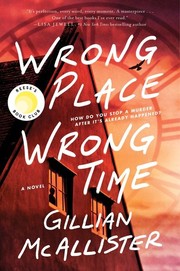
Wrong Place Wrong Time
Jen sees her son Todd kill a stranger, then wakes the day before, slipping back in time to stop the murder.
2,522-word summary · 11 min read

The Outsider
Coach Terry Maitland's DNA and witnesses point to an impossible murder, until Ralph Anderson and Holly Gibney trace it to El Cuco.
2,586-word summary · 11 min read

The Only One Left
Caregiver Kit tends mute Lenora Hope accused of 1929 family murders.
2,592-word summary · 12 min read