
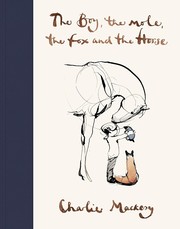
The Boy, the Mole, the Fox and the Horse
2,852-word summary 13 min read 128 pages in the book
- First published
- 2019
- Publisher
- Ebury Press
- Pages
- 128
- ISBN
- 9781529105100
Reading options
What's inside (8 sections)
- A short book I read standing up
- The boy who keeps asking and the mole who thinks of cake
- The fox who learned to keep quiet and the horse who waits
- What they actually talk about on the way
- Why the drawings do half the talking
- How to read it slowly, what the film adds, and what still bugs me
- Key takeaways
- FAQ
I met this book the way most people do. It was stacked on a table near the till in December, with a ribbon around one copy and a small sign calling it a perfect gift. I picked it up because the drawings caught my eye, then put it down again because I thought it would take four minutes to read and cost more than a paperback should. A friend bought it for me anyway that Christmas. I read it standing in the kitchen while the kettle boiled, and then I sat down and read it again more slowly.
First published in the United Kingdom on 10 October 2019 by Ebury Press, the hardcover runs 128 pages and carries ISBN 9781529105100. Those facts matter because this is often sold as a gift object, thick paper, lots of white space, one drawing and a few lines per spread. Charlie Mackesy wrote and drew it after years of sharing ink sketches online, and the printed book keeps that sketchbook feel. It is not a novel and not quite a picture book for small children only. It sits somewhere between fable, comfort reading, and art book.
This summary retells the walk at the heart of the book, introduces each of the four, lingers on what they say to each other, looks at how the art works, and ends with practical advice on reading it and honest notes on where it wears thin. If you want the short version before you decide, the whole thing can be read in under an hour, but it lands better if you give it a few sittings.
A short book I read standing up
I am usually wary of books that everyone quotes on mugs. When I first opened this one in the kitchen, steam on my glasses, I thought I knew what I would get. Sweet animals, sweet sayings, something to post online and forget. I turned the pages fast, smiled twice, and thought, well, that was nice. Then the kettle clicked off and I did not move. One drawing stayed with me, the boy and the small mole side by side in a wide field of snow, with almost nothing written at all. I went back to the start and read it again at the table.
What changed on the second pass was pace. The book is built to be read fast if you want, a line here, a pause there, turn, turn, done. But the white space asks you to stop. Mackesy leaves so much paper empty that you notice breathing, weather, distance. A page might hold only seven or eight words. You look at the line of a hill, the smudge of rain, the way the mole leans against the boy. You fill in the quiet yourself. I found myself putting the book down between spreads and looking out of the window, which is not my normal way with a book this slim.
I kept it by the bed for a week after that. I read two or three spreads a night, the way you might keep a poem taped to a fridge. Some nights it felt simple to the point of silliness. Other nights, tired from work, the same page felt steadying. That swing, between this is too slight and this is exactly what I needed, never quite left me. It is useful to admit that at the start, because much of what people love or dislike about this book lives in that swing.
The boy who keeps asking and the mole who thinks of cake
The boy starts alone in wild country. He does not say how he got there. He wears a striped top and oversized trousers rolled at the ankle, and he looks small against open fields and big skies. He is curious in the plain way children are curious before they learn to dress questions up. He wants to know where home is, what is good, what is bad, how to be brave. He asks what adults often stop asking because they fear sounding foolish. He gets lost often, in direction and in thought, and he says so out loud.
Then he meets the mole. The mole is small, dark-nosed, round-bellied, and almost entirely motivated by cake. He introduces himself with appetite first and manners second, and that appetite never really leaves him. If there is cake nearby, he wants it. If there is talk of cake, he brightens. If there is no cake, he talks about the memory of cake with great respect. It would be easy to call him comic relief and leave it there, but he is more than that. He is the first warmth the boy finds.
Their early friendship sets the tone for everything after. The boy asks large questions. The mole answers with short, practical cheer. Where is home. The mole does not know maps, but he knows company helps. What matters most. The mole thinks cake matters a great deal, and company matters more. The boy worries about being small and lost. The mole points out that everyone starts small, and that being lost together feels different from being lost alone. Asking plain questions is treated here as a strength, not a flaw.
I liked how physical their friendship is. They walk shoulder to shoulder, or rather shoulder to head, since the mole often rides or leans. They share food when there is food. They shelter close when the weather turns. The mole loves the boy without making a speech about it. He just stays near, keeps talking, keeps hoping for cake, and keeps the boy from feeling alone in wide country. For a book with so few words, that closeness comes through clearly in how Mackesy places them on the page, two small shapes against a lot of sky.
The fox who learned to keep quiet and the horse who waits
The fox enters in trouble. The group finds him caught in a wire snare, hurt and unable to free himself. The boy and the mole help him out, expecting thanks or talk, and get silence instead. The fox does not explain himself. He follows at a distance for a while, watchful, quick to vanish into grass or shadow. Life has taught him to be careful around others, including kind ones. He has been hurt by people before, and that memory sits close to the surface.
Mackesy handles this gently without spelling out a full backstory. We learn enough to grasp why the fox holds back. He was harmed by humans, left to manage alone, and grew used to relying on speed and quiet rather than trust. When he does start to stay near, it is not because someone gave him a lecture on friendship. It is because the boy kept being gentle without asking for anything back, and the mole kept offering food and chatter without minding the silence. Trust builds in small steps. The fox walks a little closer. He stays a little longer. One day he does not leave when he could.
Then there is the horse. He is large where the others are small, calm where they are restless, and he seems to have lived longer and seen more. He does not rush to fill pauses. He answers questions with short sentences that sound plain at first and stay with you later. He talks about courage as something quiet, about how everyone struggles with fear, about how asking for help takes strength rather than showing weakness. Courage here looks less like charging ahead and more like staying kind when you are afraid.
What I found moving is how the horse carries his own sadness without making it the center. He is wise, but he is not above need. He accepts kindness as well as giving it. He lets the small animals lean on him, literally at times, when snow comes or the path climbs. He waits when the boy needs to stop. He does not hurry the fox. If the boy is the question, and the mole is the appetite for life, and the fox is the wound, the horse is the steady presence that lets the other three be themselves. Once all four are together, the book settles into its true shape, four odd companions crossing open country through changing weather, talking as they go.
What they actually talk about on the way
There is not much plot in the usual sense. No villain to beat, no map with an X, no deadline. The four walk through fields, woods, riversides, and snow. They get hungry. They get cold. They get lost and found again. They watch sunrises and storms. Along the way they trade short exchanges about fear, kindness, hope, and friendship. A page might hold a single question and a single answer. The next spread might be only a drawing of rain with three small figures huddled together. The effect is less like chapters and more like notes from a long walk with friends.
The most shared exchange in the book is also the shortest. The boy asks what the others hope to become as they grow, and the answer comes back in one word.
What do you want to be when you grow up? Kind.
That page does a lot of work for the whole book. It names the value everything else circles. Being kind, in this book, is not presented as politeness or rule following. It is presented as an aim for a life, something to grow toward the way you might grow toward being a doctor or a farmer. It applies to how you treat strangers, how you treat friends, and how you treat yourself when you fail. I have seen that line on cards and posters so often that I expected to roll my eyes at it in context. I did not. Placed after pages of cold and hunger and fear, it reads less like a slogan and more like a decision.
Much of the rest of their talk circles the same fire from different sides. They speak often about fear and how common it is. The boy admits he is frightened. The mole admits he wants comfort. The fox shows without words how past hurt can make the present feel unsafe. The horse keeps pointing back to gentleness, to listening, to asking for help early rather than pretending you are fine. Home comes up again and again, not as an address but as a feeling of being with those who care for you. Success comes up too, and is reframed in plain terms. Doing well means loving well, noticing beauty, helping when you can, carrying on through hard weather.
The talk repeats. That is deliberate, and it will divide readers. Some will find the repetition soothing, the way a chorus in a song steadies you. Others will find it thin, the same point made again with a new drawing of a hill. I felt both at different times. On a good evening, a repeated line about help or hope felt like a hand on the shoulder. On a tired morning, I thought, yes, you said that ten pages ago. The book does not argue or prove. It reminds, and whether reminders nourish you depends on what you bring to them that day.
Why the drawings do half the talking
Mackesy draws with loose ink lines and soft wash, often leaving figures half finished, with stray marks and drips showing. Faces are a few strokes. Bodies are suggested rather than filled in. Backgrounds are mostly empty paper, with a wash for sky or water or snow, and a thin horizon to place the figures. You can see the hand in every page. It feels like a sketchbook that was allowed to stay a sketchbook, not tightened up for print.
That looseness does real work. Because the figures are simple, you project onto them. The boy could be any child, or your younger self. The animals are not cute in a polished film way. They look touched and real, fur suggested with three lines, weight shown in how they lean. When the weather turns in the book, you feel it fast. A grey wash becomes rain. A blank spread becomes snow and silence. A dark page with small figures becomes night and fear without needing many words at all. The empty space is part of the story, not a frame around it.
Text placement matters too. Words sit in handwriting among the drawings, sometimes above, sometimes to the side, sometimes trailing off. Short lines get a lot of air. You cannot skim the way you skim dense print, because there is nothing to skim. You look, you read eight words, you look again. Turning a page often feels like stepping into a new clearing. I learned to slow down and let each spread sit for a breath before moving on. Reading fast flattens the book. Reading slowly lets the drawings set the pace.
Color stays limited. Black ink, grey wash, touches of brown and gold, pale blue for cold. Nothing flashy. That restraint keeps the mood even when the talk turns toward hope. Joy here is not bright confetti. It is a shared sandwich, if cake is not at hand, or sun coming through cloud, or four shapes walking in a line with the smallest in the middle where it is warmest. Children notice the animals. Adults notice the space around them. Both are given room.
How to read it slowly, what the film adds, and what still bugs me
If you try this book, give it room. Do not read it only as information to finish. Read a few spreads, put it down, come back later. Read it aloud if you can, even to yourself, because the short lines change when heard. Keep it where you can see it, on a bedside table or near a chair by a window, rather than shelved spine out. It works well shared, one spread at a time with a child, a friend, a parent. Let the child talk about the cake. Let the adult talk about the fox. Both are in the book for a reason.
The animated short film helped many people find the book. Released for television and streaming in December 2022, the short follows the same four through the same kind of country, with music and voice and movement added. It won the BAFTA for Best British Short Animation in February 2023 and the Academy Award for Best Animated Short Film in March 2023. Those wins brought a new wave of viewers who then sought out the printed pages. The film keeps the ink look and the gentle pace, though it necessarily fills in gaps with sound and timing. If you watch first, the book will feel quieter and more open. If you read first, the film will feel like meeting old friends with new voices. Either order works.
Now for honest limits. First, repetition. The book returns to the same few ideas many times. Kindness, hope, fear, help, home, love. If you want argument that builds, evidence, surprise turns, you will not find them here. You will find restatement with new drawings. For some readers that is comfort. For others it feels slight, especially at gift book price for 128 pages with so much white space. I felt the price pinch myself. The paper and printing are lovely, but this is a costly object for the amount of text.
Second, thin story. Beyond the walk and the weather and small helps along the way, little happens that you can retell as plot. The fox is freed. The group forms. They keep going. They learn to lean on each other. If you need events to stay interested, you may drift. I drifted twice in the middle section where snow and talk blur together. What brought me back was not what happened next but a single drawing of the four asleep in a heap that made me smile despite myself.
Third, sweetness. Mackesy earns much of his warmth, but there are pages where the line between tender and sugary thins. Readers who prefer edge will find none here. There is sadness and fear, but no cruelty shown on the page, no hard choice with real cost. The wild country is safe in the way dreams are safe. That safety is the point for many, a place to rest. It is also fair to say it limits the book. It comforts more than it challenges.
Even with those limits, I keep my copy where I can reach it. I lend it with a warning. Do not expect a novel. Expect a walk with four companions who are still with you after you close the covers. The boy asking, the mole hungry, the fox watchful, the horse steady. Wild country, changing light, short talk that returns like a friend checking in. Some weeks I need that. Some weeks I do not. Knowing which week you are in is part of reading it well.
FAQ
When was The Boy, the Mole, the Fox and the Horse published?
Ebury Press first published it in the UK on 10 October 2019. The hardcover runs 128 pages and the ISBN is 9781529105100.
Is the book only for children?
No. Children enjoy the animals and drawings, but the notes on kindness and hope brought many adult readers, and it is often given as a gift.
Did the book get a film version?
Yes. A short animated film based on the book was released in 2022 and won both a BAFTA and the Academy Award for Best Animated Short Film in 2023.
Similar books
Cabin Fever
Greg Heffley gets snowed in with his family before Christmas while dodging blame for school property damage.
2,221-word summary · 10 min read
The Ugly Truth
Greg faces puberty, a school lock-in and Uncle Gary's wedding while Mom returns to college in Wimpy Kid book five.
2,766-word summary · 12 min read
Elevation
A Castle Rock man keeps losing weight without changing shape, and spends his strange condition helping his new neighbors.
2,984-word summary · 13 min read
The Rainbow Fish
A shining fish learns loneliness ends when scales are shared one by one.
2,045-word summary · 9 min read
Dog Days
Greg wastes summer perfectly through pools, dogs and dad fishing trips.
2,127-word summary · 9 min read
The Elegance of the Hedgehog
A Paris concierge hides her brilliant mind while a gifted girl plans her death, until a new tenant sees through them both.
2,248-word summary · 10 min read
A Little Princess
Rich Sara Crewe loses her father and fortune at boarding school, survives the attic on stories and kindness, and is rescued from next door.
2,867-word summary · 13 min read
Diary of a Wimpy Kid
Greg Heffley records middle school survival in his journal, dodging the Cheese Touch and Rowley's popularity.
1,912-word summary · 8 min read
The Orphan's Tale
A Dutch teenager rescues a Jewish baby from a death train and joins a German circus, where a Jewish aerialist teaches her to fly.
2,943-word summary · 13 min read
Anya's Ghost
A lonely Russian immigrant falls into a well, befriends the ghost trapped there, and discovers that the ghost's help comes with a dangerous price.
2,001-word summary · 9 min read
The Power of One
A boy in apartheid South Africa decides to become welterweight champion of the world, and the novel follows every mentor, fight, and loss that gets him there.
2,145-word summary · 10 min read

The Courage to Be Disliked: The Japanese Phenomenon That Shows You How to Change Your Life and Achieve Real Happiness
A philosopher and an angry young man argue over five nights about Adlerian psychology, trauma, approval, and the freedom to be disliked.
2,054-word summary · 9 min read
Rosencrantz and Guildenstern Are Dead
Stoppard's 1966 play retells Hamlet from the wings, where two minor courtiers wait, joke, and walk toward a death they cannot see.
2,021-word summary · 9 min read
Little Earthquakes
Four Philadelphia women meet during pregnancy and discover that new motherhood is nothing like the plan, while friendship becomes the thing that holds them…
1,997-word summary · 9 min read

Dumplin'
Willowdean Dickson enters her town's beauty pageant as a protest and discovers that confidence is harder to keep once she lets someone close.
1,922-word summary · 9 min read
Same Kind of Different as Me
An art dealer and a formerly homeless sharecropper tell the story of the friendship that began at a Fort Worth mission and the woman who insisted on it.
2,023-word summary · 9 min read
Hard Luck
Rowley has a girlfriend, so Greg turns to a Magic 8 Ball, a family Easter hunt and the school yearbook for answers.
2,586-word summary · 11 min read
Five Point Someone: What Not to Do at IIT
Three friends at IIT drift to a five-point GPA, mock the system, and break into a professor's office for an exam paper.
2,458-word summary · 11 min read
Wilder Girls
At a quarantined boarding school off Maine, three girls with strange mutations search for a missing friend and learn what the adults have hidden.
2,594-word summary · 12 min read
The Happiest Man on Earth
Eddie Jaku's memoir follows a Leipzig childhood, Buchenwald, Auschwitz, a death march, and the slow rebuilding of a life in Australia.
2,597-word summary · 12 min read

Foundation's Edge
Exiled councilman Golan Trevize hunts for the Second Foundation and the lost world of Earth, and finds a planet with one mind waiting to change the galaxy.
2,335-word summary · 10 min read

Fathers and Sons
Arkady brings the nihilist Bazarov home to his father's estate, and a generational argument turns into love, a duel, and an early death.
2,192-word summary · 10 min read
Clifford the Big Red Dog
Emily Elizabeth picks the smallest puppy in the litter, loves him as hard as she can, and wakes up to a dog the size of a house.
2,092-word summary · 9 min read

Heist Society
A teenage art thief gets expelled from boarding school, then has two weeks to steal five paintings back from a London museum and clear her father.
2,781-word summary · 12 min read
Bet Me
A sharp actuary agrees to dinner with a charming serial bettor, then spends the next month pretending the wager does not matter.
2,710-word summary · 12 min read
Frog and Toad Are Friends
Five short stories about a cheerful frog and a grumpy toad who need each other for waking up, swimming, and waiting for the mail.
1,969-word summary · 9 min read

Four Thousand Weeks: Time Management for Mortals
Oliver Burkeman turns the whole productivity project on its head, arguing that a human lifespan of roughly four thousand weeks is not a problem to optimize…
2,447-word summary · 11 min read

We Are Okay
Marin fled San Francisco after her grandfather vanished and stopped answering anyone. When Mabel visits her college dorm, she has to say what happened.
2,253-word summary · 10 min read

One to Watch
A plus-size fashion blogger takes the lead role on a reality dating show to prove she belongs on television, and finds she might want what the cameras offer.
2,478-word summary · 11 min read
Grip of the Shadow Plague
A plague turns Fablehaven's creatures of light into shadows while Kendra hunts an artifact in Arizona and Seth races to find the cause.
2,131-word summary · 9 min read