
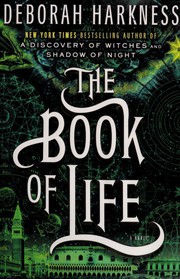
Reading options
What's inside (8 sections)
I picked up The Book of Life the way most readers did, which is to say impatiently. Shadow of Night had stranded Diana Bishop and Matthew Clairmont in Elizabethan London, surrounded by spies, alchemists, and Matthew's own violent father, and then the book simply stopped. This third volume, published in 2014 by Viking, is the payoff. Diana and Matthew come home to the present, Diana is pregnant with twins, and every enemy they have ever made is waiting for them.
Fair warning before we start: this was billed as the finale of the All Souls trilogy, and it reads like one. Harkness later returned to the world with Time's Convert and The Black Bird Oracle, but this book ties off the story that began when Diana called up a lost manuscript in the Bodleian Library. If you have not read the first two books, start there. This summary assumes you know who these people are.
Back to Sept-Tours
The book opens with the return. Diana and Matthew timewalk back from 1590s Prague and land in the present at Sept-Tours, the de Clermont family castle in the Auvergne. The homecoming is warm and strange at the same time. Matthew's mother Ysabeau is there. So are Marcus and Miriam, Matthew's vampire son and his research partner. Sarah Bishop, Diana's aunt, has come with Emily Mather. And there is a new arrival nobody quite knows what to do with: Jack, the traumatized boy they rescued from Elizabethan London, a child vampire with a terrible past and an uncertain future.
Diana is pregnant, and the pregnancy drives everything. No witch and vampire have ever had children together, at least not in living memory, and the twins growing inside her break the oldest law the creatures have. The Congregation, the council of witches, vampires, and daemons that governs creature life, forbids mating across species lines. Diana and Matthew have been living in open defiance of that covenant since the first book. Now there will be physical proof of it.
Matthew reacts the way Matthew always reacts, which is to worry at a professional level. He is a geneticist as well as a centuries old vampire, and he cannot stop studying his own wife. He fusses over her diet, her rest, her safety. Diana, who spent the previous book learning she is a weaver, one of the rare witches who can make new magic, finds his protectiveness suffocating. She has just survived Rudolf II's court and a miscarriage scare in the past. She does not want to be wrapped in wool now.
This tension between them is one of the honest pleasures of the book. They love each other enormously and they annoy each other constantly, and Harkness lets both things be true. Matthew's fear has a real root, too. He carries blood rage, the inherited vampire madness that destroyed his father Philippe's brother and nearly destroyed Matthew himself. If the twins inherit it, no castle walls will keep them safe.
A crowded castle
One thing to know going in: this is a long book with a large cast, and much of it happens around a dinner table. Sept-Tours fills up the way a family home does at a holiday, with people sleeping in odd rooms and arguing about food.
Ysabeau runs the household with an iron hand and a hunter's instincts. She never wanted a witch in the family and now she would kill for Diana without blinking. Sarah Bishop, grieving and prickly, practices her magic in a house full of vampires who make her nervous. Gallowglass, Matthew's giant blond nephew, appoints himself Diana's guard and comic relief in roughly equal measure. He is one of the best things in the book, funny on purpose for once, and his devotion to Diana has a sadness under it that Harkness never quite spells out.
Then there is Jack. The boy they brought out of the past cannot control his thirst, and his presence raises a question nobody wants to ask out loud: what do you do with a child vampire who might hurt someone? The scenes of Jack settling into the castle, drawing his pictures, attaching himself to Diana, are some of the most tender writing in the trilogy. They also set up stakes that pay off much later, so pay attention to the boy even when the main plot pulls away from him.
Meanwhile Marcus is falling apart in his own way. His relationship with Phoebe Taylor, the young human woman he loves, has reached the point where postponement is its own decision. Phoebe knows what Marcus is. She wants the life he is offering, which means leaving her human life behind. Their storyline runs alongside the main plot like a second, quieter book, and it matters more than it first appears.
If all of this sounds cozy, that is deliberate, and it is also the book's most argued over quality. Harkness spends real pages on meals, wine vintages, dogs, house repairs, and who sleeps where. Some readers adore it. Life at Sept-Tours feels lived in, and after two books of running, the characters have earned a rest. Other readers will want to skip ahead. I land somewhere in the middle. The domestic detail makes the family feel worth defending, which the ending needs. But there are stretches where you can feel the plot tapping its foot.
The book and the blood
Underneath the household bustle, two investigations grind forward. Diana is trying to recover Ashmole 782, the enchanted manuscript whose disappearance started all of this. Matthew is trying to understand creature genetics before his children are born.
Diana's problem is unusual. During her time in the past, she saw the missing pages of Ashmole 782. She absorbed them. Now, back in the present, she has to recall what she knows and decide what it means. The manuscript turns out to be about the origins of creatures themselves, witches, vampires, and daemons, and how they came to be separate peoples. Harkness has been building toward this reveal for three books, and the answer reframes everything Diana thought she knew about her own magic.
This is where Diana's weaving comes to the front. A weaver does not just cast spells. She makes new ones, knot by knot, and each knot has a meaning. Diana has been tying her spells since the second book, and here she works toward a knot no weaver has ever tied, a spell woven from the contents of Ashmole 782 itself. The magic scenes are the strongest set pieces in the novel. Harkness writes spellwork as physical labor, sweating and shaking and counting threads, and Diana's growing confidence feels earned because we watched her fail so often in book one.
Matthew's half of the research is colder and sadder. Working with Marcus and Miriam, he studies vampire blood and DNA, hunting the genetic basis of blood rage and the reason creatures of different kinds cannot have children. The science is speculative, and readers with actual genetics training may raise an eyebrow, but it works as story. Matthew is trying to solve his family the way he solves everything, in a laboratory, and the book understands that this is both his gift and his flaw. He wants a test result that says his children will be fine. What he gets instead is fragmentary, frightening, and incomplete.
The two threads meet in a hard truth. The creatures are dying out. Fewer witches are born with real power, vampires sire fewer children, daemons are restless and rootless. Whatever Ashmole 782 says about where creatures came from, it also points at where they are going. Diana and Matthew's twins are not just a personal miracle. They are evidence in an argument about the future of every creature alive.
The Congregation moves
No All Souls book can go long without the Congregation, and here the politics finally boil over. Knox, the witch who has hunted Diana since the Bodleian reading room, wants her dead and the book destroyed. Gerbert of Aurillac, the ancient vampire, wants Ashmole 782 for himself and has his own reasons for hating Matthew's family. Against them, Diana and Matthew start assembling allies: Agatha Wilson, the formidable daemon grandmother; Hamish Osborne, Matthew's oldest daemon friend, who sits on the Congregation himself; and a handful of others willing to say out loud that the old covenant is killing their peoples.
The political chapters are talky. There are meetings, letters, threats delivered over wine, and at least one confrontation that could have been half as long. But the underlying question is a good one, and Harkness takes it seriously. The covenant against inter species mating was written to keep the peace. After centuries, it has become a cage. Creatures are fading, and the law forbids exactly the unions that might save them. Diana keeps asking why a law that guarantees slow extinction deserves obedience, and nobody on the other side has a good answer.
Violence cuts through the talk more than once. Knox is not a debating opponent. He is a fanatic, and the book reminds you of that at the worst possible moments. Without spoiling the specifics, I will say that an attack on the Bishop family home in Madison lands like a punch, and the loss the family suffers there changes Sarah forever. Harkness is sometimes accused of writing a world without consequences. This is the book where she answers that charge.
Satu Järvinen, the Finnish witch who broke herself against Diana's power in the earlier books, drifts through these politics like a burned out weapon looking for a hand to hold her. Her scenes are brief and uneasy. I wished for more of her, and I suspect Harkness did too, but there was simply no room.
Benjamin
Every trilogy needs its monster, and this one finally names him. Benjamin Fuchs is Matthew's vampire son, sired centuries ago under circumstances Matthew can barely speak about, and he has spent his long life hating his father and experimenting on everyone else. Where Matthew studies genetics to save his family, Benjamin has been running his own breeding program, trying to force new creatures into existence through cruelty.
Benjamin is frightening in a way Knox never quite manages, because his evil is patient. He has laboratories, captives, and theories. He has been watching Diana since before she knew his name. And he is fascinated by her pregnancy, which is the most dreadful sentence I can write about this book without spoiling anything.
The chapters built around Benjamin are the fastest in the novel. Diana's weaving, Matthew's rage, and Benjamin's cold curiosity converge in a confrontation that Harkness stages with real brutality. Matthew has spent three books insisting he is a civilized man holding back an animal. Here the animal gets its say, and the book does not flinch from what that costs him. Diana, for her part, stops being anyone's protected treasure. The final working of her new spell is hers alone, done her way, and it settles the question of whether she is Matthew's equal. She is. She might be his better.
I will not detail the ending of this thread beyond saying that it is conclusive. Readers who felt the villains of the earlier books got away too easily will not feel that way here.
Birth and a new law
Everything in the trilogy points at the last hundred pages: the birth of the twins, the fate of Ashmole 782, and the vote that decides creature law.
The twins arrive first, a boy and a girl. They name them Philip and Rebecca, for family living and dead, and the birth scenes carry genuine weight because Harkness has spent so long making us fear for them. The babies are healthy. They are also, in the quiet way that matters most, themselves. Whatever the Congregation believes about what a witch vampire child must be, Philip and Rebecca refuse to be theories. They are infants, hungry and loud, and their parents weep over them like any parents.
Around them, the family rearranges itself. Marcus and Phoebe make their choice about her future, and it is the bravest decision any human character makes in these books. Sarah finds a way to keep going after Madison, with help from an unexpected quarter. Jack's story takes a turn that broke my heart a little, and it is clearly laying groundwork Harkness would pick up years later. Sophie and Nathaniel's baby Margaret, whose mixed heritage makes her almost as important as the twins, toddles through the final chapters as living proof that the old categories are finished.
The political ending is as satisfying as the personal one. Diana brings what she has learned from Ashmole 782 before the Congregation, and the old covenant, the law that made her love a crime, is rewritten. Creatures will be free to love whom they love. It is the only ending the story could have, and Harkness stages it with enough opposition that it feels won rather than granted.
So where does the book stumble? Length, mostly. At 561 pages in the Viking first edition, it carries subplots that could have been trimmed and dinner scenes that go on past their welcome. Diana worries about the same things repeatedly, Matthew broods on a loop, and readers who want plot in every chapter will get restless in the middle third. The science is hand wavy if you poke it. And Knox, for all his menace, ends up feeling smaller than the story around him.
But the things it does well, it does better than the previous books. Diana completes her growth from frightened scholar to a witch who makes her own magic. The family Harkness assembles is one I was genuinely sad to leave. And the central idea, that laws written from fear will strangle the people they claim to protect, gives the fantasy real weight. I closed it feeling the way you feel at the end of a long visit with people you love. Tired, a little relieved, and already missing them.
FAQ
When was The Book of Life published?
Viking published it on July 15, 2014, in a 561-page first edition with ISBN 9780670025596. It closed the All Souls trilogy.
Is it part of a series?
Yes, it is All Souls book three, after A Discovery of Witches and Shadow of Night. Harkness later added Time's Convert and The Black Bird Oracle.
Who are Diana and Matthew?
Diana Bishop is a historian from a witch family who learns she is a weaver. Matthew Clairmont is a centuries old vampire and geneticist.
Similar books
More from All Souls first, then related titles.
A Discovery of Witches
Historian Diana Bishop calls up a lost alchemical manuscript in Oxford's Bodleian Library and draws vampire geneticist Matthew Clairmont, plus every creature…
2,025-word summary · 9 min read
Shadow of Night
Diana and Matthew flee to Elizabethan London seeking Ashmole 782, magic training with Goody Alsop, and a reckoning with his violent past.
2,363-word summary · 11 min read

The Indigo Spell
Sydney Sage hunts an aging witch, learns forbidden magic, and finally admits she loves Adrian, while the Alchemist tattoo on her cheek may be controlling her.
2,604-word summary · 12 min read
Six Scorched Roses
A dying scholar bargains with a reclusive vampire for blood, and six roses turn a transaction into a slow, dangerous romance.
2,663-word summary · 12 min read
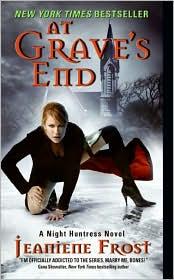
At Grave's End
Cat and Bones face Max, a zombie-raising ancient vampire, and a prophecy that ties their marriage to Patra's death in the third Night Huntress novel.
2,061-word summary · 9 min read
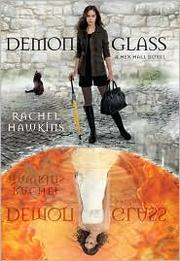
Demonglass
Sophie Mercer spends the summer at the Council's English estate, where two new demons, a suspicious host, and Archer's return complicate her plan to remove her…
2,771-word summary · 12 min read
Lover Unleashed
Paralyzed vampire warrior Payne and surgeon Manny Manello collide in an adult paranormal romance, as Xcor's Band of Bastards arrives in Caldwell for revenge.
2,374-word summary · 11 min read
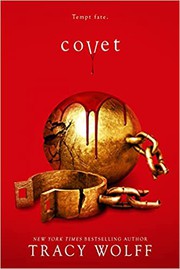
Deadlocked
A dead woman on Eric's lawn starts a murder investigation, a vampire queen wants Eric as her consort, and the fairies in Sookie's life close in.
2,885-word summary · 13 min read
Soulless
A soulless spinster in Victorian London nullifies supernaturals and solves disappearances.
2,362-word summary · 10 min read
One Foot in the Grave
Cat hunts vampires with Bones while her Sire plots from the grave.
2,200-word summary · 10 min read
A Soul of Ash and Blood
Casteel retells Poppy fall and rise while she sleeps under siege.
2,458-word summary · 11 min read
Lover Mine
Mute fighter John Matthew loves scarred Xhex as Lash and the war close in on Caldwell.
2,516-word summary · 11 min read
Lover Avenged
Half symphath Rehvenge hides behind ZeroSum and drugs while nurse Ehlena pulls him toward truth.
2,421-word summary · 11 min read
Kingdom of the Feared
Kerri Maniscalco's finale retold: Emilia's lost memories, her marriage to Wrath, and the fight for balance in the Underworld courts.
2,938-word summary · 13 min read

Vampire Knight, Vol. 1
Guardian Yuki protects Day students from secret vampire Night Class while Zero hates what he may become.
2,106-word summary · 9 min read
King of Battle and Blood
A bride sent to marry vampire king Adrian plans to kill him, fails, and must survive his court.
2,465-word summary · 11 min read
Heartless Hunter
A witch hiding as a socialite courts a witch hunter for secrets, while he courts her back on suspicion, in this romantic fantasy opener.
2,366-word summary · 11 min read
Dead Witch Walking
Witch and runner Rachel Morgan quits the agency with a death mark on her head and hunts an untouchable crime lord.
2,709-word summary · 12 min read
Dead Reckoning
Sookie confronts the firebombing of Merlotte's, Sandra Pelt's revenge, and a vampire power struggle while questioning her future with Eric.
2,391-word summary · 11 min read
Blood & Honey
Married witch Lou and hunter Reid flee church and coven while dark magic tempts Lou to save them.
2,280-word summary · 10 min read

Hex Hall
A witch who ruins prom with a love spell is sent to Hex Hall, where a vampire roommate and old family secrets wait.
2,991-word summary · 13 min read
Guilty Pleasures
Animator Anita hunts a vampire killer while Jean-Claude pulls her close.
2,136-word summary · 9 min read
Blue Bloods
At an elite Manhattan school, Schuyler Van Alen learns she is a forbidden half-vampire as someone starts killing her kind.
2,725-word summary · 12 min read
Burned
Zoey's soul hides in the Otherworld while Stark must die to fetch her and Stevie Rae burns secrets.
2,074-word summary · 9 min read
Kingdom of the Cursed
Emilia follows Wrath into Hell to break his curse and learn what Vittoria really chose.
2,564-word summary · 11 min read
Dead in the Family
Sookie shelters fairy kin and a telepathic boy while pack murder and Eric's vampire kin close in.
2,412-word summary · 11 min read
Lover Eternal
Cursed fighter Rhage must control his beast to protect Mary Luce as the Lessening Society closes in.
2,842-word summary · 13 min read
From Dead to Worse
Sookie mediates a Were war and vampire takeover while learning about her fairy blood.
2,533-word summary · 11 min read