
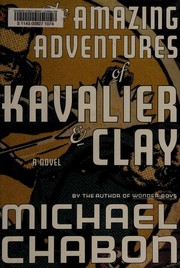
The Amazing Adventures of Kavalier and Clay
1,960-word summary 9 min read 639 pages in the book
- First published
- 2000
- Publisher
- Random House
- Pages
- 639
- ISBN
- 9780679450047
Reading options
What's inside (4 sections)
Comics about comics that never feels inside baseball. The Amazing Adventures of Kavalier and Clay by Michael Chabon was first published September 19, 2000 by Random House, a 639 page hardcover with ISBN 9780679450047. It won the 2001 Pulitzer Prize for Fiction. Joe Kavalier escapes Prague. Sammy Clay writes in Brooklyn. Together they create the Escapist. I read it across two weeks, a hundred pages at a time, because the sentences deserve savoring and the history deserves pauses.
Joe is the magician. Trained by a Prague master, smuggled out in a coffin with the Golem legend in his head, arriving in New York with grief and tricks. Sammy is the writer. Fast talking, gay and closeted in the forties, in love with heroes who punch Hitler when real fists cannot reach family. Their partnership starts at a party with a rooftop escape act and becomes Empire Comics overnight. The Escapist, blond and caped, fights Nazis on covers while Joe family waits for visas that never come.
What makes it more than nostalgia is how Chabon ties panels to powerlessness. Joe draws what he cannot do. Bomb Berlin mills. Free his brother from camps. Punch the Führer that America will not yet fight. Each issue sells because readers share the wish. When America enters the war, Joe enlists to do it for real and learns paper heroics were cleaner. That turn from ink to blood gives the book its weight. Fantasy helps. It does not save.
Empire Comics
The comics business chapters crackle with researched joy that never reads like homework. Printing presses. Distribution fights. Payment by page. Stan Lee cameos. Chabon, who loves the form, explains how ten cent books got made by kids in rooms with ashtrays. Joe draws. Sammy scripts. Rosa, an art student with a sharp eye, inks and critiques. Their boss, Shelly Anapol, sells with hustle that exploits and enables both. Contracts signed without lawyers. Characters stolen with handshakes. Money flows, then does not. Anyone in creative work will recognize the mix of thrill and theft. Make things. Get paid late. Argue about who owns dreams.
The Escapist stories inside the novel work as stories, not just summaries. Chabon writes full issues in miniature with covers described. The Escapist frees prisoners. Fights the Iron Chain. Loses sidekicks. Kids write letters that Joe answers in character. Those letters matter more than sales figures. A boy in Ohio feels less alone because a hero punches bullies bigger than his. Joe, who cannot save his brother, saves strangers on paper weekly. That exchange sustains him until it does not. When letters stop helping his guilt, he draws darker. The Escapist starts losing. Readers notice. Sales dip. Art tells truth before artists admit it.
Rosa Saks gets full personhood beyond muse, which saves the book from boys club nostalgia. She wants to be an artist, not just an inkers girlfriend. She critiques Joe anatomy. She leaves when Sammy cannot commit fully. She returns on her own terms with a child and a career. Her choices drive late plot more than any villain. Chabon gives her the book clearest eyes about comics as business. Fun matters. Credit matters more. Get it in writing. That advice, ignored by Joe and Sammy early, costs them the character they made. Creators, take note. Paper before pencils.
Sammy hidden life threads through with tenderness that 2000 mainstream fiction rarely gave gay characters in historical settings. He loves Tracy Bacon, an actor who loves him back as far as the era allows. Their beach weekends and coded letters ache with what cannot be said at work. When Sammy marries Rosa for cover and fatherhood, no one is fooled long, least of all Rosa, who deserves better than arrangement. Their eventual honesty, divorced but family, feels ahead of its time and true to it. Love takes forms the forties will not name. Chabon names the care without anachronism. Quiet. Steady. Real.
A fair note. The middle comics shop talk runs long with titles and print runs. Necessary for world building, but two distribution fights blur. I skimmed one paper shortage debate and missed nothing. The payoff, when ownership battles decide who controls the Escapist decades later, needs the setup. Still, tighter by forty pages would have helped momentum before Joe enlists.
War and after
Joe war years break the book open from colorful to gray in the best way. He joins the Navy hoping to fight, ends up in Antarctica building airstrips, and survives a crash that leaves him ghostlike. Chabon writes cold and hunger with reportorial chill. No heroics. Just work that breaks bodies for runways no one remembers. Joe returns to New York unable to draw heroes who win cleanly. His postwar comics turn dark. The Escapist tortures. Readers flinch. Sammy worries. That darkness is honest about what service does to storytellers. Ink remembers frostbite.
Back home, Sammy built a life with Rosa and their son Tommy while Joe was gone, thinking Joe dead after a false report. Joe return crashes that family like a wave. Awkward dinners. Shared custody of a character. Late night talks where apologies circle without landing. Chabon handles the triangle without villains. Rosa loves both men differently. Sammy loves Joe as brother and more. Joe loves them as the home he left to save another home that died anyway. No one is right to demand first place. Everyone is tired. That tiredness feels true to postwar America beyond comics.
The Golem thread pays off here beautifully and weirdly. The legend Joe carried from Prague, a clay man to protect Jews, followed him in a coffin that may have held a man instead of mud. Late, Joe finds the Golem in an attic and must decide what protectors are for after the protected died. He does not animate it for revenge. He lets it rest. That restraint shows growth paper heroics never taught. Some monsters should not be woken, even for justice. Grief needs burial, not golems. I sat quiet after that chapter. Fantasy used to refuse fantasy is rare and brave.
The final reunion decades later, with Joe and Sammy old men finishing the Escapist story only they can draw, lands softly on purpose. No lawsuit triumph. No movie deal fireworks, though offers come. Just two cousins at a table, pencils worn down, giving their hero an ending that admits limits. Escapists cannot save everyone. They can show a boy how to face a locked room. That is enough. Chabon closes with Tommy reading the pages and understanding his fathers, plural, for the first time. Inheritance as comics. Better than money.
What stays with me is Chabon argument about art and powerlessness. Draw what you cannot do to survive what you cannot change. Then, when you can act, act and let drawing change too. Joe needed both phases. So do we. Make things during helpless times. Do things when doors open. Do not confuse one for the other. That clarity, earned across 639 pages of panels and wars, is why the Pulitzer fits despite genre clothes. Literary means true here, not fancy. Ink, blood, and paper. All real.
Luna Park and the Empire offices deserve a last look as workplaces that shaped the art as much as war did. Bullpen tables with ash trays. Editors shouting over telephones. Artists paid by page racing deadlines that move. Chabon, who researched through interviews and archives, gets the economics exactly right for creative readers today. Advances that vanish into rent. Credits that vanish into house names. The Escapist belongs to the company on paper and to Joe and Sammy in every line that matters. That split still defines comics and games and film. Make peace with contracts by reading them first, the book whispers through Rosa. Get credit in writing before pencils move. Young creators should tattoo that page.
Read it if you love comics, history, or sentences that sing. Give it hundred page sittings, not binges. Skim paper shortages if you must, but do not skip rooftop escapes. Notice who holds pencils when decisions get made. By the last page you will want to draw something, even badly. I did, a crooked Escapist on a receipt. It will not save anyone. It helped me face a locked room of my own. That is the book working as intended. Keep the receipt. Date it. Heroes start as doodles in margins before they punch anyone on covers. Tommy, the son who reads the pages at the end, deserves a last note as the book true heir. Raised thinking one man is his father while loving another as uncle, he learns the whole tangled story through comics pages left for him. His understanding, quiet and complete, redeems years of adult evasion. Kids read what adults hide. Give them the pages eventually, with honesty about who drew what and why. Tommy gets that gift late but whole. He understands his fathers, plural, for the first time through panels. Inheritance as comics beats money. It teaches how to face locked rooms of his own coming years. The Luna Park and Empire offices deserve a fuller look as workplaces that shaped art as much as war did. Bullpen tables with ash trays. Editors shouting over telephones. Artists paid by page racing deadlines that move. Chabon, who researched through interviews and archives, gets the economics exactly right for creative readers today. Advances vanish into rent. Credits vanish into house names. The Escapist belongs to the company on paper and to Joe and Sammy in every line that matters. That split still defines comics and games and film. Make peace with contracts by reading them first, the book whispers through Rosa Saks. Get credit in writing before pencils move. Young creators should copy that page and pin it above desks. Paper before pencils. Always. Sam coming out late in life deserves a tender last note on timing that the book handles without anachronism. Decades of coded letters, a marriage of convenience that produced a beloved son, and finally honesty in an era that allows a little more air. His beach weekends with Tracy, remembered in fragments between office scenes, show love constrained to seasons. Chabon neither celebrates the closet nor judges Sam for surviving inside it. When Sam finally lives openly as an older man, it reads as exhale rather than triumph. Tommy accepts. Rosa already knew. Joe nods like someone who always saw. That quiet acceptance, spread across the final chapters, honors how change actually arrives. Not with parades first. With family dinners where no one flinches. Then parades later, if wanted. Tracy Bacon, Sam lover with a voice made for radio drama, deserves a last fond note. He loves Sam as far as the era allows, sharing beach weekends and coded letters. His patience with secrecy costs him openly. Yet he stays kind when exposure would be easier. That steadiness honors love under constraint without romanticizing the closet. Remember his laugh on the boardwalk. It carries.
Rosa Saks herself deserves center as more than muse, because she saves the book from boys club nostalgia. She wants to be an artist, not an inker girlfriend. She critiques Joe anatomy. She leaves when Sammy cannot commit fully. She returns on her own terms with a child and a career. Her choices drive late plot more than any villain scheme. Chabon gives her the book clearest eyes about business. Fun matters. Credit matters more. Get it in writing. That advice, ignored by Joe and Sammy early, costs them the character they made. Creators, take note. Love does not pay printers. Contracts do, or should. Keep the receipt. Date it. Heroes start as doodles in margins before they punch anyone on covers.
FAQ
When was Kavalier and Clay published?
Random House published it September 19, 2000. It runs 639 pages and the hardcover ISBN is 9780679450047. It won the 2001 Pulitzer Prize for Fiction.
Is it part of a series?
No. It stands alone, though Chabon nods to comics history across his work.
Similar books

Fathers and Sons
Arkady brings the nihilist Bazarov home to his father's estate, and a generational argument turns into love, a duel, and an early death.
2,192-word summary · 10 min read

Stones from the River
Trudi Montag is born a dwarf in a small German river town in 1915 and grows up to keep the town's library and its secrets, from the First World War to the…
2,818-word summary · 13 min read
Mother Night
Howard W. Campbell Jr., a Nazi propagandist and American spy, tells the story of his double life from an Israeli prison cell while waiting to be tried for war…
1,988-word summary · 9 min read
The Orphan Master's Son
Adam Johnson's Pulitzer-winning novel follows Pak Jun Do from a North Korean orphanage to a deadly identity swap, under a state whose loudspeakers never stop…
2,219-word summary · 10 min read

Brideshead Revisited
At Oxford Charles Ryder befriends Sebastian Flyte and falls into the Catholic Marchmain family, from Brideshead summers to Julia's affair and Lord Marchmain's…
2,353-word summary · 10 min read
Trust
Four rival accounts of one Wall Street fortune collide: a 1930s novel, a tycoon's memoir, a secretary's story, and a wife's diary.
2,217-word summary · 10 min read
The English Patient
In a ruined Italian villa in 1945, a burned man, a nurse, a thief, and a sapper trade pasts shaped by desert love and war.
2,006-word summary · 9 min read
Empire Falls
Grill manager Miles stays in dying Maine town for daughter while past pulls.
2,072-word summary · 9 min read

Daughter of Fortune
Eliza Sommers flees Chile for California gold rush San Francisco, disguised and searching for her lover, finding freedom with Tao Chi'en.
2,009-word summary · 9 min read
Brooklyn
Eilis Lacey leaves Enniscorthy for Brooklyn boarding house work, love with Tony, then a home death forces divided choice.
2,143-word summary · 10 min read

The Age of Innocence
Engaged New York lawyer Newland Archer falls for Ellen Olenska, his fiancee's cousin fleeing a bad marriage, and must choose between love and duty in 1870s old…
3,100-word summary · 14 min read
Blood Meridian
A teenage runaway joins a scalp hunting gang in 1849 Mexico under the strange Judge Holden. McCarthy writes brutal biblical prose about violence and power on…
3,524-word summary · 16 min read
Less
A novelist facing fifty runs from a wedding invite through world travel, and learns what his funny sad trip means.
2,458-word summary · 11 min read
A Visit from the Goon Squad
Thirteen linked stories about Bennie, Sasha, and time beating like a goon.
2,136-word summary · 9 min read
The Nickel Boys
Idealist Elwood and skeptic Turner endure Nickel reform school beatings, ledgers, and graves.
2,023-word summary · 9 min read
Demon Copperhead
Born in a Lee County trailer, Damon Fields survives foster care, football fame, and opioid addiction in Appalachia.
2,447-word summary · 11 min read
The Poisonwood Bible
A missionary drags his wife and four daughters to the Congo in 1959, and Africa remakes each of them.
2,227-word summary · 10 min read

Middlesex
Cal Stephanides traces three generations from Greece to Detroit to explain being intersex and becoming himself.
2,013-word summary · 9 min read

Girl with a Pearl Earring
A maid in Vermeer's Delft household is drawn into the painter's world and into his most famous canvas.
1,973-word summary · 9 min read
All the Light We Cannot See
Doerr's All the Light We Cannot See retold: blind Marie-Laure, Werner the radio boy, and Saint-Malo.
1,962-word summary · 9 min read

Violeta
A woman born in 1920 writes her life story to her grandson, from one pandemic to another, through wealth, ruin, passion, and dictatorship in South America.
2,555-word summary · 11 min read
The Zookeeper's Wife: A War Story
The directors of the Warsaw Zoo hid roughly three hundred Jews in empty cages and outbuildings after the German invasion, while Jan worked for the resistance.
2,065-word summary · 9 min read

The Orphan's Tale
A Dutch teenager rescues a Jewish baby from a death train and joins a German circus, where a Jewish aerialist teaches her to fly.
2,943-word summary · 13 min read

The Only Good Indians
Four Blackfeet men who killed a pregnant elk are hunted by her spirit a decade later, and the only person who can end the cycle is a teenage girl who was not…
2,010-word summary · 9 min read

The Japanese Lover
A Polish refugee and the son of a Japanese gardener fall in love in San Francisco in 1939, then keep the affair secret for nearly seventy years.
2,286-word summary · 10 min read

The Idiot
A Turkish-American freshman at Harvard falls in love through email with a Hungarian math student and spends a summer in Hungary trying to turn correspondence…
2,019-word summary · 9 min read

The Guest
Cast out of her wealthy boyfriend's Hamptons house, twenty-two-year-old Alex spends five days talking her way through other people's homes and accounts.
2,165-word summary · 10 min read

The Crying of Lot 49
A California woman named executor of her ex-lover's estate follows a muted post horn into a possible centuries-old postal conspiracy, and Pynchon refuses to…
2,003-word summary · 9 min read

Silas Marner
A falsely accused weaver hoards gold in Raveloe until a stolen hoard and an abandoned child remake his narrow life.
2,699-word summary · 12 min read

Revolutionary Road
A Connecticut couple who believe they are too good for the suburbs plan to move to Paris, and the plan slowly exposes everything they cannot say to each other.
2,085-word summary · 9 min read