
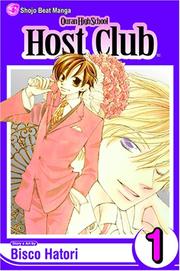
Ouran High School Host Club, Vol. 1
2,354-word summary 10 min read 184 pages in the book
- First published
- 2003
- Publisher
- Viz Media
- Pages
- 184
- ISBN
- 9781591169154
- Series
- Ouran High School Host Club (#1)
Reading options
What's inside (8 sections)
I found this one in a used bookstore with the spine cracked and a little sticker that said first volume. I had seen the anime clips years ago, the blond boy pointing at the camera and shouting about hosting, but I had never sat with the manga itself. The copy in my hands was the Viz Media edition, 184 pages, listed as volume 1 of Ouran High School Host Club, series order 1, original year 2003. I bought it for the cover, stayed for Haruhi, and finished it in two sittings on my couch with tea going cold.
What surprised me was how fast it sets its trap. Haruhi Fujioka is not looking for friends or romance. Haruhi is looking for a quiet place to study. That search leads to the Third Music Room, a vase, a debt, and six pretty boys who refuse to take no for an answer. I laughed more than I expected. I also winced once or twice, which we should talk about later.
If you know the background, it helps. The manga by Bisco Hatori first ran in the shojo magazine LaLa, from September 2002 to 2010. The collected Japanese volume 1 came out August 5, 2003 from Hakusensha. The English edition from Viz Media followed July 5, 2005, at 184 pages. So this is early 2000s shojo, with all the sparkle and silliness that implies, but with a sharper eye for class jokes than I remembered.
A quiet search for a study room goes wrong
Haruhi comes to Ouran Academy on scholarship. Ouran sits in Bunkyo, Tokyo, and it is the kind of private school where the library has a cafe inside and students arrive in limos. Haruhi does not come from that world. Haruhi lives with dad Ranka in a small apartment, wears a plain uniform, keeps hair cut short for ease, and wears glasses that hide large brown eyes. Grades got Haruhi in. Money did not.
On the first days, Haruhi notices the school is loud and crowded. Every hallway feels like a fashion show. Haruhi wants silence. A rumor about an unused music room sounds perfect. Haruhi pushes open the doors of the Third Music Room expecting empty chairs and dust.
Instead there is music, light, rose petals, and six boys posing around tables with girl guests. This is the Host Club, a school club where handsome boys pour tea and chat with girls who have too much free time. Haruhi freezes. Haruhi backs up. Haruhi knocks into a pedestal. A vase hits the floor and shatters.
The vase is valued at 8 million yen. In dollars at the time, roughly in the tens of thousands, an impossible sum for Haruhi. Tamaki Suoh, the blond president, declares Haruhi must repay it. Haruhi has no cash. Kyoya Ootori, the dark haired vice president with glasses and a notebook, calculates a plan. Haruhi will work as an errand boy for the club until the debt clears.
That mistake shapes the whole volume. Haruhi is read as a boy at first because of short hair, loose uniform, and flat manner. No one looks twice. The hosts put Haruhi in glasses without lenses and a blazer and send Haruhi to run chores, carry trays, clean cups. Haruhi accepts because there is no other way to pay. I liked this opening because Haruhi reacts like a real tired student. No screaming. Haruhi just sighs and asks how much interest they charge.
Soon the club figures out the truth. Haruhi is a girl. Tamaki sees a business chance. A girl passing as a boy host could draw fresh guests. He declares Haruhi a full member. Haruhi protests. Kyoya points at the debt figure. Haruhi stays.
It is a silly setup. It also tells you what kind of book this will be. Mistaken identity, money pressure, and a group that treats Haruhi as a project. Haruhi pushes back with dry lines while the boys swirl around. That contrast carries page after page.
Six hosts and one new errand boy
The club has a clear roster, and volume 1 spends a lot of time letting you learn faces.
Tamaki Suoh is president, half French and half Japanese, blond, violet eyed, dramatic in every gesture. He calls himself king. He points, he twirls, he drops to his knees when guests sigh. He means well and thinks poorly. He decides Haruhi needs protection and lessons in how to charm girls, even though his own flirting often misses.
Kyoya Ootori is vice president, cool and polite, always writing in his ledger. He comes from a powerful medical family and treats the club like a small firm. He tracks costs, guest counts, and debts. When Tamaki floats an idea, Kyoya prices it. I found him funnier than Tamaki because his humor is flat. He will smile while telling Haruhi the debt grew due to breakage fees.
Then there are the twins, Hikaru and Kaoru Hitachiin. They are first years, red brown hair, amber eyes, nearly identical except for part lines and small habits. They speak in tandem, lean on each other, and play up brotherly closeness for guests who like that story. With Haruhi they are teasing and curious. They poke at Haruhi to see what gets a rise. Under that, they seem a little lonely, used to being treated as a set.
Honey Haninozuka looks like a child and acts sweet, but he is a third year and a martial arts master. He carries a plush bunny called Usa-chan, eats cake, calls older boys by pet names, and kicks people through walls when pressed. Mori Morinozuka is his cousin and guard, tall, quiet, dark haired, always a half step behind Honey. Mori speaks little. He watches. When Honey laughs, Mori softens.
Haruhi slots in as the natural type. No act. Short answers. Blunt help. Guests find that fresh after so much posing.
Learning to pour tea for princesses
Once Haruhi is a member, the middle of the book becomes lessons. How to greet. How to pour. How to listen. How to make each guest feel chosen.
Tamaki takes charge of training and he is terrible at it. His lessons boil down to gaze softly and say sweet lines. Haruhi stares blankly.
One early bit has Haruhi serving tea and failing at small talk. Haruhi asks what school a guest attends, what she studies, whether she slept well. It sounds like a clinic intake. The guest laughs and says it feels real. Another bit has Haruhi carrying bags and fixing a loose button for a tired girl. No flourish. Haruhi just helps. The girl leaves pink cheeked.
The twins test Haruhi a lot. They ask Haruhi to tell them apart. Haruhi learns to look for voice pitch and habits rather than hair part. They invite Haruhi into their paired act, then get annoyed when Haruhi refuses to play along. Their teasing has an edge. They are used to shutting people out by staying inside their pair. Haruhi does not chase them. Haruhi leaves snacks and walks away. That seems to unsettle them more than any speech would.
Honey latches onto Haruhi fast. He likes that Haruhi does not treat him like a kid or a legend. Haruhi carries his cake plate without mocking him. Mori nods at Haruhi in thanks. Those small beats build trust. By the later pages, Honey drags Haruhi to taste tests and naps near Haruhi chair. Mori speaks a full sentence to Haruhi, which the others treat like a festival.
Kyoya watches all of it and writes. He tells Haruhi which guests return and which tables earn most. When Haruhi draws new guests, he subtracts a little.
Tamaki remains the storm center. He declares Haruhi his daughter in the club family tree, with himself as father. Haruhi rejects the label.
Rich kids, commoner coffee, and a plush bunny
The best running joke in volume 1 is class shock. Haruhi grew up counting coins. The hosts grew up with staff.
There is a famous bit about instant coffee. Haruhi offers the hosts the cheap coffee Haruhi drinks at home. They taste it and act moved, as if Haruhi shared rare beans. Haruhi stares. It is just store coffee. To them, anything common looks exotic. Later Haruhi brings commoner snacks from the store. Honey loves them. Tamaki writes tasting notes like a critic. Kyoya checks the price and blinks.
Another bit involves a supermarket versus a department store food hall. Haruhi explains sales and coupons. The hosts listen like Haruhi describes travel abroad. Mori asks a plain question about fish prices. Honey wants pudding from both places to compare. The twins pretend boredom, then eat two servings.
The book flips the joke too. Haruhi does not know high society rules. Haruhi missteps, then recovers by being direct.
Hunny bunny Usa-chan gets a lot of panel time. Honey hugs Usa-chan while kicking a rival across a hall in practice. Cute face, scary skill.
Shojo art that sells the joke
Hatori art in this volume is light and clean. Thin lines. Tall figures. Big eyes with clear highlights. Screen tone for blush and sparkle. When Tamaki hosts, roses crowd the panel and the background dissolves into white. When Kyoya schemes, his glasses glint and the panel goes dark behind him. When the twins conspire, their faces mirror and the frame tightens.
Haruhi design does a lot of work. With large glasses and messy short hair, Haruhi reads as a tired middle school boy. Without glasses, hair trimmed, eyes visible, Haruhi reads as a delicate first year host. Same face, new read. Hatori does not redraw Haruhi much. She changes framing and light. It is a neat trick. It also makes the mistaken identity plot feel less forced. People see what the club tells them to see.
Faces stretch for comedy. Tamaki wails with a long mouth. Honey puffs cheeks. Haruhi deadpans with flat eyes.
Backgrounds stay simple when jokes run fast. A blank panel with a single tea cup. A close face with speed lines. Then a wide shot of the club room to reset place. I liked the pacing. It reads quick. The Viz translation keeps honorifics light and jokes in plain American English, with notes where a pun needs help. At 184 pages, it moves. I finished half in one night without checking the clock.
For context, LaLa in this era ran many school romances with soft art. Hatori fits there, but her humor is broader.
Funny now, creaky in spots
I laughed a lot. I also paused at parts that have aged poorly. That mix is worth stating plainly if you pick this up now.
The class comedy still works. Jokes about wealth gaps land because Haruhi never bows to rich logic. Haruhi corrects waste and packs leftovers.
The reverse harem parody still works too. Volume 1 names each host type and then shows the seams. Tamaki forgets lines. Kyoya checks profit mid flirt. Honey falls asleep on a guest sofa. Mori leaves to carry Honey home. The twins break act to argue. Haruhi watches with a level stare. If you have read shojo where the cool boy always knows what to say, this book answers with boys who rehearse and still flub.
Gender play is trickier. On one hand, Haruhi passes as a boy with ease and seems at ease that way. Haruhi does not fuss over dresses or hair. Haruhi likes pants, short hair, plain speech. The club accepts Haruhi as one of the boys for work. Guests crush on boy Haruhi. That openness felt fresh for 2003 and still reads as kind to kids who do not fit strict roles.
On the other hand, jokes around Haruhi dad Ranka lean on old gags about cross dressing and queer panic. Ranka loves Haruhi fiercely and runs a small bar, but scenes play Ranka love of pretty clothes and interest in men as punchlines. Language in early translation can sound harsh to current ears. It is brief in volume 1, mostly in home scenes, but it stands out because the rest of the book is gentle.
The Zuka Club, an all girls school group that admires boyish girls, also appears in early material and gets coded in flat ways. They adore Haruhi in boy form and speak of pure love between girls, but the writing treats them as odd rivals rather than people. If you come to this volume fresh, those pages may feel thin and stagey next to the main club scenes that get more care.
Pacing is episodic. Debt intro, then hosting lessons, then guest spots, then home life, then a small contest or visit. No big arc closes in volume 1. The debt barely moves. Tamaki feelings for Haruhi are hints, not plot. The twins backstory is hinted. Honey and Mori pasts are hinted. If you need a full story with an end, you will need later volumes. This one sets chairs around a table and pours first cups.
Art limits show too. Crowd scenes can blur. Tamaki shouting can fill two pages with little new info.
Even with those gripes, I closed the book fond of the group. Haruhi mopping while Tamaki poses. Kyoya tapping his pen. Honey asleep on Mori shoulder with Usa-chan tucked under an arm. Twins sharing a straw to make guests squeal. It is a strange family built on a broken vase and a ledger. I want to see if Haruhi ever pays down that 8 million yen, or if the club finds new ways to keep Haruhi close.
If you try it, read the Viz Media 2005 English printing if you can find it. The paper is light, the tones hold, and the jokes read smooth. Remember the facts as you shelve it. Japanese volume 1 from Hakusensha in 2003, English from Viz in 2005, series Ouran High School Host Club volume 1, from LaLa years September 2002 to 2010. Haruhi search for quiet led to noise. I am glad it did, even when the noise shows its age.
FAQ
Is Ouran High School Host Club, Vol. 1 the start of the series?
Yes, it is volume 1 of Ouran High School Host Club by Bisco Hatori, first released in Japan in 2003 by Hakusensha and in English by Viz Media in 2005.
Why does Haruhi join the Host Club?
Haruhi breaks a vase valued at 8 million yen in the Third Music Room and must work off the debt after the hosts discover Haruhi is a girl mistaken for a boy.
Who are the Host Club members in Vol. 1?
President Tamaki Suoh, vice president Kyoya Ootori, Honey Haninozuka with Mori Morinozuka, twins Hikaru and Kaoru Hitachiin, plus newcomer Haruhi Fujioka.
Similar books
More from Ouran High School Host Club first, then related titles.

Shopaholic and Sister
Becky Brandon returns from a ten-month honeymoon to meet the half-sister she always wanted, then discovers that Jess is thrifty, prickly, and nothing like the…
2,591-word summary · 12 min read

Ten Big Ones
Stephanie witnesses a gang robbery dressed as a devil, and the Comstock Street Slayers put her on a list of people to kill.
2,062-word summary · 9 min read

Bridget Jones: The Edge of Reason
Bridget doubts Mark, takes a job with Daniel, and lands in trouble in Thailand.
2,198-word summary · 10 min read
Shopaholic Ties the Knot
Becky Bloomwood plans two weddings at once while debts pile up and Luke's mother interferes.
2,218-word summary · 10 min read

Playing for Keeps
Childhood neighbors Haley and Jason turn a long prank war into a fake relationship that turns real.
2,571-word summary · 11 min read

Hello Stranger
Portrait artist Sadie loses face recognition after brain surgery and must finish a contest piece while falling for two men.
2,210-word summary · 10 min read

Tangled
Told by a cocky businessman, a bet to win the new associate who rejects him turns into real pursuit, strict rules, a painful reveal and a wedding-level happy…
2,868-word summary · 13 min read

Vampire Knight, Vol. 1
Guardian Yuki protects Day students from secret vampire Night Class while Zero hates what he may become.
2,106-word summary · 9 min read

The Roommate
Uptight Clara shares a flat with porn star Josh and teams up to build ethical adult films for women.
2,362-word summary · 10 min read
The Proposal
Nik says no to a stadium proposal and rebounds with Carlos in flirty LA romance.
2,044-word summary · 9 min read

Shopaholic Takes Manhattan
Becky and Luke move to New York where shopping fame tempts her to ruin both.
2,025-word summary · 9 min read

Shopaholic and Baby
Pregnant Becky shops for the perfect nursery while Luke's ex becomes her obstetrician.
2,247-word summary · 10 min read

Seven Up
Stephanie hunts old mobster Eddie DeChooch, finds a body, a missing heart, and trouble from Morelli to Ranger.
2,798-word summary · 12 min read

My Not So Perfect Life
Katie chases London creative life while her perfect boss Demeter hides cracks, until a farm trip flips roles.
2,300-word summary · 10 min read

Hard Eight
Janet Evanovich's Hard Eight fully retold: a missing mother and child, Abruzzi's medal hunt, Valerie's rescue, and Ranger crossing a line.
2,961-word summary · 13 min read

When in Rome
A burnt-out pop star hides out in small-town Kentucky and falls for the grumpy pie-shop owner hiding her.
2,495-word summary · 11 min read

The Starter Ex
A retired bad-girlfriend-for-hire takes one last job and falls for the mark.
2,092-word summary · 9 min read
The Rosie Effect
Married in New York, Don Tillman turns Rosie's pregnancy into research and nearly loses her, until a crisis forces him to listen.
2,869-word summary · 13 min read

The Re-Do List
After a public breakup, Willow Lewis redoes her romantic firsts with her brother's best friend while dog-sitting in Des Moines.
2,390-word summary · 11 min read

The Night We Met
She picked the wrong ride home; now her best friend might be the right man.
1,981-word summary · 9 min read
Spy x Family, Vol. 1
Spy Twilight builds fake family with assassin wife and telepath child.
2,201-word summary · 10 min read

Our Ex's Wedding
A struggling wedding planner and a winery owner who share one heartbreaking ex must join forces to pull off that ex's big day.
2,200-word summary · 10 min read

One & Only
Matchmaker Cassia Park finds fated love for everyone but herself, until a 28-year-old fling and a new boss named Daniel Nam collide.
2,033-word summary · 9 min read
Just for the Cameras
A grumpy football star and a sunny flamingo keeper fake a romance for the cameras, then catch real feelings fast.
2,366-word summary · 11 min read

In Her Own League
Baseball's first female owner clashes with her manager until banter turns to heat.
2,076-word summary · 9 min read

How to Write a Love Story
A blocked author and her editor get two weeks to finish her late father's epic.
2,095-word summary · 9 min read

How to Kill a Guy in Ten Dates
A horror buff trapped at a speed-dating night with a killer uses slasher rules to survive to the last date.
2,226-word summary · 10 min read

Good Material
A struggling comic replays his breakup with Jen while sofa surfing, bombing gigs and missing the other half of the story.
2,500-word summary · 11 min read

Fundamentals of Being a Good Girl
Broke law grad Maddie takes a nanny job and falls for her boss, a single dad ecology professor, after a red hot bar hookup in Kansas.
2,171-word summary · 10 min read

Four to Score
Stephanie hunts waitress Maxine Nowicki through coded clues, firebombs, and counterfeit cash while living with Morelli in Trenton.
2,870-word summary · 13 min read