
Reading options
What's inside (8 sections)
A friend handed me this book with a warning that it was short. He meant it as a selling point, but I almost skipped it for that reason. I have been burned before by slim classics that turn out to be homework. This one was different. I read it in two sittings, then spent a week thinking about a hotel room with nothing in it.
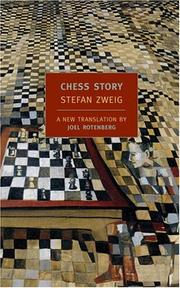
Chess Story was the last thing Stefan Zweig finished. He wrote it in exile in Brazil in 1941 and sent the manuscript off shortly before he and his wife took their lives in February 1942. The German original, called Schachnovelle, first appeared later that same year in Buenos Aires from Verlag Pigmalión. The first English version followed in 1944 under the title The Royal Game. The edition I read was the NYRB Classics paperback from 2005, translated by Joel Rotenberg, 104 pages. Knowing those dates changed how I read every page, because Zweig was writing about a Europe that had already closed around him.
The setup sounds almost like a joke. A big passenger ship sails from New York to Buenos Aires. On board is the world chess champion. A group of bored travelers pool their money to challenge him. A quiet stranger steps in and ruins the champion's easy win. That is the whole frame. What follows inside that frame is one of the bleakest accounts of solitary confinement I have ever read, paired with a portrait of a champion who barely seems human.
I did not expect to care about the chess. I play badly and rarely. You do not need to play well to follow this book. Zweig explains just enough of each position to make the tension clear, and most of the story happens away from the board.
A ship, a champion, and a bet
The narrator is an Austrian traveler, curious and a little pushy. He hears that Mirko Czentovic is on the passenger list and becomes fixated on seeing him in person. Czentovic is the reigning world champion, and his fame has spread even to people who never study the game.
Zweig gives Czentovic a past that explains his manner without excusing it. He grew up as the fatherless son of a poor boatman in a small Slavonic village on the Danube. He was slow at school and clumsy with his hands. A village priest noticed that the boy could stare at a chessboard for hours and never forget a position. From there the rise was fast and strange.
On the ship, Czentovic behaves exactly as you might fear. He eats alone. He refuses casual games. He will play only for a fee, and only at set times. The narrator tries small tricks to get near him, including playing chess loudly with his wife on deck. It works, in a roundabout way. A wealthy fellow passenger named McConnor takes the bait. McConnor is the kind of man who is used to buying outcomes. He offers to pay, and a consultation game is arranged. Several passengers will decide the moves together against the champion alone.
I found these early pages funny in a sour way. McConnor paces and boasts. The others whisper and second guess. Czentovic sits still, moves quickly, and lets them waste their energy. He does not need to insult them. His speed does it for him. The group loses the first game and immediately pays for another, as if money can fix embarrassment.
The second game starts the same way. The group argues over each reply. Czentovic answers with hardly a pause. Then, at the point where defeat looks certain, a man who has been watching from behind steps forward and murmurs a correction. He is polite and almost apologetic. He suggests a different line, one that avoids immediate loss. The group follows his advice and claws back to a draw.
That man is Dr. B. He is Austrian, middle aged, quiet, and clearly uncomfortable with attention. He says he has not touched a chessboard in many years. He says he has no interest in playing. And then, when pressed, he sits down and beats Czentovic in a solo game with a speed and certainty that shocks everyone on deck.
The stranger who sees the board
What makes Dr. B. so odd is not that he wins. It is how he wins. Czentovic plays like a machine built for defense. He waits, he holds, he lets the other man tire. Dr. B. plays fast and talks little. He sees whole branches of play at once. Afterward his hands shake. He does not celebrate. He looks embarrassed, almost frightened by what he just did.
The passengers want more. McConnor especially wants a formal revenge match. Dr. B. refuses at first. He says chess is impossible for him now. He says it connects to a period of his life he does not want to revisit. The narrator, sensing a larger story, invites him for a private talk. To his credit, the narrator does not push for another game right away. He asks about the past.
Dr. B. agrees to explain, but only to the narrator, and only once. He does not present himself as a hero. He presents himself as a man who was broken by a particular method and then patched together just enough to function. He warns that his memory of that time is sharp in some places and cloudy in others. I believed him. The account that follows has the uneven texture of something remembered under strain, clear on small physical details and vague on dates.
We learn that Dr. B. had been a lawyer in Vienna. His firm handled money and property for monasteries and for old noble families who wanted to keep assets out of Nazi hands after the annexation of Austria. He was not a political organizer. He was a keeper of papers and secrets. That was enough. The Gestapo arrested him soon after he tried to protect his clients. They did not send him to a camp. They had a different plan for him.
What the Gestapo did instead of beating him
This section was the hardest to read, and it has stayed with me longest. Dr. B. was placed alone in a room in the Hotel Metropole, which the secret police used as a headquarters in Vienna. The room had a bed, a wash basin, a chair, and a window that looked onto a blank wall. There was nothing to read. There was nothing to write with. There was no clock. A guard brought food without speaking.
Day after day, nothing happened. Then, without warning, he would be called for questioning. The interrogators would ask about accounts and passwords and transfers. They already knew a lot. They wanted him to fill the gaps. They would press, threaten, and then send him back to the empty room to wait. The waiting was the method. Without any new input, his mind began to feed on itself.
Zweig is careful here. He does not describe beatings at length. The damage comes from removal. No letters. No voices. No work. Dr. B. tries to reconstruct his old cases from memory. He recites laws to himself. He invents small routines to mark the hours. After a while even those routines wear thin.
I have read other prison memoirs where people survive by tapping on walls. Dr. B. has no wall to tap through and no living thing to watch. His room is sealed.
After months of this, chance breaks the pattern. While waiting outside an interrogation office, Dr. B. sees a coat hanging on a hook. There is a bulge in the pocket. He understands in a flash that it might hold a book. He steals it with shaking hands and hides it under his clothes. Back in his cell he discovers his prize. It is not a novel. It is not a prayer book. It is a collection of master games, more than a hundred and fifty of them, printed in small type with move after move.
For most people that book would be useless. For Dr. B., who had learned the moves as a boy and played casually, it becomes a rope.
Learning chess to stay sane
At first Dr. B. simply replays the printed games. He has no board and no pieces. He uses the squares of his blanket as a grid. He tears small bits from a sheet to mark positions, then hides them. He works through each game slowly, move by move, until he can follow the logic without losing the thread.
He studies famous encounters, including the hard fought meeting between Alexander Alekhine and Efim Bogoljubow at Pistyan in 1922. Because he cannot set up the wood pieces, he has to hold everything in his head. That effort, painful at the start, becomes a kind of shelter.
I am not a strong player, so I appreciated that Zweig does not drown you in notation. He names a few turning points, enough to feel real, then pulls back to the human effect.
After he has worked through the whole volume, a new hunger starts. He knows every game by heart. Repeating them no longer stretches him. So he begins to play against himself. He invents fresh positions and tries to beat his own plans. He plays White with one part of his attention and Black with the other. He tries to forget what he intended as White when he replies as Black. He paces his small cell while he does it, walking the same line back and forth until the floor seems worn by thought.
This is where the book shifts from survival story to something stranger. Dr. B. is no longer passing time. He is training his mind to split. The blanket board disappears. He plays blind, entirely in memory, game after game, for hours that bleed into night.
Zweig had read about minds under pressure, and it shows. He does not present this as a healthy trick. He presents it as a bargain. Dr. B. trades the pain of emptiness for the fever of constant play.
Playing yourself until you split
The middle of Dr. B.'s account is frantic, and I had to slow down to follow it. He stops distinguishing cleanly between the two sides he commands. He wants both selves to win, which means one self must always lose. He shouts moves under his breath. He wakes with strings of squares in his mouth.
He loses track of which game belongs to which day. He starts new games before finishing old ones. At last his body gives out in a violent episode. He injures himself during a confused outburst and ends up in a hospital bed with his mind still moving pieces behind his eyes.
A doctor there takes pity on him. The doctor sees a man worn to the bone by isolation and understands that a return to the cell will finish him. He writes a report that keeps Dr. B. out of the Gestapo's hands. Through luck and paperwork, Dr. B. is released and later manages to leave the country. Before he lets him go, the doctor gives plain advice. Stay away from chess. Do not test yourself. The part of your mind that saved you will attack you if you feed it again.
Dr. B. obeys for years. He builds a quieter life. He avoids clubs and columns and puzzles. When he boards the ship to Buenos Aires, he has kept that promise. That is why his intervention in the consultation game costs him so much. He tells the narrator that he acted on impulse, almost against his will, when he saw the group about to throw away a drawn position. The old patterns woke at once, complete and loud.
I found this section convincing because Zweig allows gaps. Dr. B. admits he cannot date every phase. He admits he may have mixed the order of some games. That hesitation made him more real to me than a polished timeline would have. Trauma rarely files itself neatly.
There is a fair question to raise here. The idea of a mind splitting into two chess selves sounds neat on paper and a little too tidy in practice. If you have lived with intrusive loops, the description may ring true. If you have not, it may feel stretched.
The last game and why it still hurts
Against his own judgment, Dr. B. lets the passengers talk him into a formal match with Czentovic. He sets one condition. He will play only a single game. He wants to prove to himself that his skill was real and not a fever dream from the cell. He also wants to close the chapter. One game, then no more.
The game itself is electric. Czentovic settles into his usual slow defense, moving with heavy calm. Dr. B. answers quickly, seeing far ahead, and builds pressure with each exchange. The onlookers fall silent. Even McConnor stops commenting. Dr. B. wins with room to spare, and for a moment he looks light and young. The champion is stunned. He asks for another game on the spot to repair his standing.
Here Zweig shows his grasp of petty cruelty. Czentovic is not a deep thinker, but he is a sharp observer of tempo. He has noticed that Dr. B. moves fast and hates to wait. So in the second game Czentovic slows down on purpose. Each pause lands on Dr. B. like a weight.
Dr. B. begins to slide. He answers too fast, trying to force the pace. He stands and walks the way he walked in confinement. At last Dr. B. announces a move that makes no sense on the board in front of them. He has mixed the two levels.
The narrator steps in and reminds him of the doctor's warning and of his own promise. That breaks the spell. Dr. B. stares at the pieces as if waking up, resigns the unfinished game, and leaves the room. Czentovic, left behind, points out that he was building a solid attack.
I closed the book feeling wrung out rather than satisfied, and I mean that as praise. Zweig does not give you a tidy moral about art saving people. Chess saves Dr. B. from emptiness and then nearly destroys him by excess.
If the book has weak spots, they are worth naming. The frame narrator is thin, mostly a pair of eyes and a question. McConnor is drawn broadly, the loud man with money who treats people as wagers. The long middle passages on blind play may drag if you do not care for the game.
Still, the core holds. Zweig wrote about power without showing a battlefield. He simply leaves a man alone with nothing and waits for the silence to do the work. Against that, a stolen book of games becomes both medicine and poison.
For a book finished in 1942, in the shadow of catastrophe, that restraint feels deliberate. Zweig does not lecture about regimes at length. He shows two minds shaped by pressure and lets the ship sail on toward a port that will not solve either man's problems.
If you pick it up, read it slowly in the middle even though it is short. Let the cell scenes breathe. Notice how little Zweig needs to make isolation physical, a blanket grid, a stolen volume, a walk of a few steps repeated until thought replaces space.
I will keep my copy near the shelf where I put books I lend out. It is brief enough to press on a friend, sharp enough to prompt a long talk afterward, and sad enough that I needed a walk before I started anything else. For a novella of about a hundred pages in the cited translation, it leaves a long echo.
FAQ
When was Chess Story first published?
The German original Schachnovelle appeared in 1942 in Buenos Aires from Verlag Pigmalión, after Zweig's death. The first English version followed in 1944 as The Royal Game.
Do I need to know chess to follow the book?
No. Zweig gives enough board detail to follow the tension, and most of the novella focuses on isolation, memory, and the cost of blind play.
Is Dr. B. based on a real person?
He is fictional, but his hotel confinement reflects Nazi isolation methods in Vienna after the annexation. Zweig uses him to show how enforced emptiness can fracture a mind.
Similar books
Mother Night
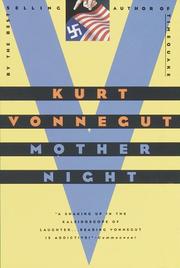
Howard W. Campbell Jr., a Nazi propagandist and American spy, tells the story of his double life from an Israeli prison cell while waiting to be tried for war…
1,988-word summary · 9 min read
Through the Looking-Glass
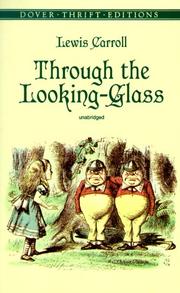
Alice steps through the mirror into a chessboard world of talking flowers, twins, Humpty Dumpty and quarrelsome queens.
2,610-word summary · 12 min read
Breakfast at Tiffany's
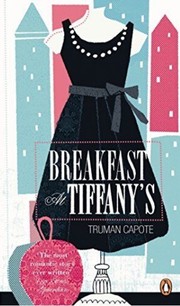
A writer recalls his 1943 neighbor Holly Golightly, wild and kind, in a Manhattan brownstone, plus three short stories from Capote's 1958 collection.
2,215-word summary · 10 min read
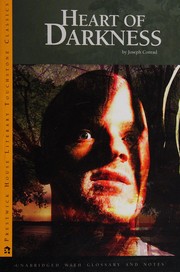
Heart of Darkness
Marlow pilots a steamer up the Congo for a trading company and seeks Kurtz, the brilliant agent who stopped sending ivory and started sending reports no one…
2,315-word summary · 10 min read
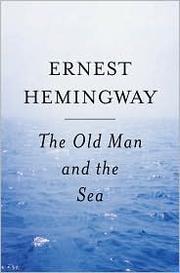
The Old Man and the Sea
Off Cuba, old Santiago rows out after 84 empty days, hooks a great marlin, and holds on for three days alone.
2,593-word summary · 12 min read
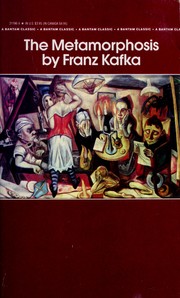
The Metamorphosis
Gregor Samsa wakes as an insect, cannot go to work, and watches his family shift from shock to cold relief.
2,295-word summary · 10 min read
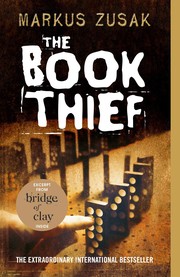
The Book Thief
Markus Zusak's The Book Thief retold: Liesel in Molching, Hans and Rosa, Max in the basement, and Death as narrator.
2,560-word summary · 11 min read
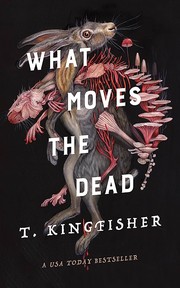
What Moves the Dead
Alex Easton arrives at the Usher house to find Madeline dying, the tarn full of fungus, and the local hares refusing to stay dead.
2,586-word summary · 11 min read
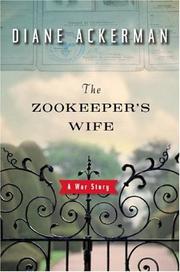
The Zookeeper's Wife: A War Story
The directors of the Warsaw Zoo hid roughly three hundred Jews in empty cages and outbuildings after the German invasion, while Jan worked for the resistance.
2,065-word summary · 9 min read
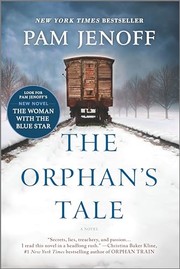
The Orphan's Tale
A Dutch teenager rescues a Jewish baby from a death train and joins a German circus, where a Jewish aerialist teaches her to fly.
2,943-word summary · 13 min read

The Long Winter
Dakota Territory, 1880: seven months of blizzards cut a town off from the railroad, and a family survives on twisted hay, ground wheat, and a dangerous wheat…
2,210-word summary · 10 min read

The Japanese Lover
A Polish refugee and the son of a Japanese gardener fall in love in San Francisco in 1939, then keep the affair secret for nearly seventy years.
2,286-word summary · 10 min read
The Crying of Lot 49
A California woman named executor of her ex-lover's estate follows a muted post horn into a possible centuries-old postal conspiracy, and Pynchon refuses to…
2,003-word summary · 9 min read
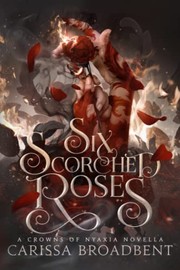
Six Scorched Roses
A dying scholar bargains with a reclusive vampire for blood, and six roses turn a transaction into a slow, dangerous romance.
2,663-word summary · 12 min read
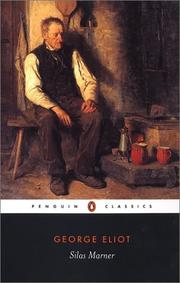
Silas Marner
A falsely accused weaver hoards gold in Raveloe until a stolen hoard and an abandoned child remake his narrow life.
2,699-word summary · 12 min read

Revolutionary Road
A Connecticut couple who believe they are too good for the suburbs plan to move to Paris, and the plan slowly exposes everything they cannot say to each other.
2,085-word summary · 9 min read
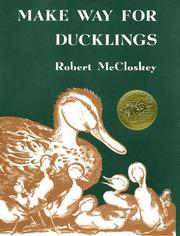
Make Way for Ducklings
A pair of mallards raise eight ducklings on the Charles River and lead them across Boston to the Public Garden, with a little help from a friendly policeman.
2,044-word summary · 9 min read
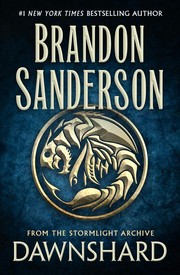
Dawnshard
Rysn sails toward forbidden Akinah to save her dying larkin and finds a Dawnshard guarded by the Sleepless.
3,229-word summary · 14 min read

This Winter
On one difficult Christmas Day, Tori, Charlie, and Oliver Spring try to hold their family together while Charlie's eating disorder makes every tradition a test.
2,034-word summary · 9 min read
The Only Woman in the Room
A novel about Hedy Lamarr's escape from an arms-dealer husband, her Hollywood career, and the frequency-hopping patent the Navy ignored.
2,067-word summary · 9 min read

The Lost Sisters
Taryn Duarte writes a letter to her twin, Jude, explaining how she fell for Locke and why she stayed silent while he used them both.
1,914-word summary · 9 min read
Rosencrantz and Guildenstern Are Dead
Stoppard's 1966 play retells Hamlet from the wings, where two minor courtiers wait, joke, and walk toward a death they cannot see.
2,021-word summary · 9 min read

Memories of My Melancholy Whores
A ninety-year-old journalist pays for a night with a teenage girl, cannot go through with it, and discovers love for the first time in García Márquez's late…
2,101-word summary · 9 min read

Little Town on the Prairie
In the spring after the Long Winter, fifteen-year-old Laura sews shirts, studies for a teaching certificate, and helps send her blind sister Mary to college.
2,071-word summary · 9 min read
Amelia Bedelia
A literal-minded housekeeper follows her employer's list to disastrous and funny effect in the 1963 picture book that made wordplay a children's staple.
2,038-word summary · 9 min read

Howards End
Forster's 1910 novel follows two families, a house in Hertfordshire, and a burned note, asking whether money and feeling can ever be connected.
2,187-word summary · 10 min read
The Mitten
Jan Brett retells a Ukrainian folktale about a boy, a lost white mitten, and the woodland animals that crowd inside until a bear sneezes.
2,609-word summary · 12 min read
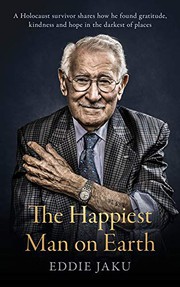
The Happiest Man on Earth
Eddie Jaku's memoir follows a Leipzig childhood, Buchenwald, Auschwitz, a death march, and the slow rebuilding of a life in Australia.
2,597-word summary · 12 min read
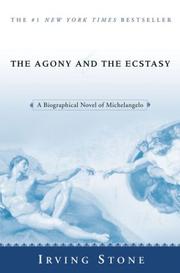
The Agony and the Ecstasy
Irving Stone turns Michelangelo's seventy years of carving, painting, and arguing with popes into a novel about the cost of making something that outlives you.
2,260-word summary · 10 min read

Sophie's Choice
A young Southern writer in 1947 Brooklyn befriends a brilliant, unstable couple and slowly learns the story of the Polish Catholic woman at the center of their…
2,798-word summary · 12 min read