
This Is How You Lose the Time War
2,393-word summary 11 min read 208 pages in the book
- First published
- 2019
- Publisher
- Saga Press
- Pages
- 208
- ISBN
- 9781534431003
Reading options
What's inside (8 sections)
I picked this one up because a friend left it on my kitchen table and said it would take an evening. It is short, just over two hundred pages in the Saga Press edition from 2019, and the cover looked like science fiction I usually bounce off. Two authors sharing one novella also made me wary. Co written books can feel patched together. This one did not. I read the first twenty pages standing up while pasta boiled over, then sat down and finished it in two sittings. What hooked me was not the time war itself. It was the voice in the letters.
The premise is simple enough to state and strange enough to keep unfolding. Far in the future, two powers fight for the shape of history. They pull at time the way you might pull at loose threads, trying to make the braid fall their way. Red works for the Commandant, for a version of humanity that leans on machines, calculation, and control. Blue works for Garden, a vast intelligence that grows through living things, soil and seed and gut. Both are agents, raised and shaped to slip into past moments, nudge an election or a battle or a marriage, then climb back upthread to see which future holds. They are very good at what they do. Then they start writing to each other.
Two futures pulling at the braid
The book treats time as braided strands rather than a single line. Small changes ripple upward. Kill the right clerk at the right hour and a city votes another way three hundred years later. Save a child from fever and a dynasty lasts two generations longer. Red and Blue live inside that logic. They do not sit in a control room. They go downthread, into the mud and noise of a given year, do the job, and leave.
Red is all edge and speed. She augments herself, reads odds, runs probabilities while bleeding. She likes efficiency and dislikes waste. Blue is slower in a good way. She reads weather and hunger and kinship. She can coax a garden out of rubble and a rumor out of a market. Early chapters alternate between their missions, and you learn the war by watching them work. One strand involves a city that rises and falls more than once, a version of Atlantis that keeps drowning and being rebuilt while both sides bet on which harbor law will stick. Another involves steppe riders and grain stores, where a delayed caravan matters more than a battle. Another touches London during the bombing in World War II, where a shelter warden with a list decides who gets a bunk.
What makes the setup stick is that neither future is presented as home. Red respects the Commandant but fears her. Blue loves Garden but feels owned by it. Both futures want everything. The Commandant wants a clean, managed braid where surprise is priced out. Garden wants a lush, tangled braid where everything connects and adapts. The book does not pause to lecture about politics. It shows you two workers who believe in the cause because they were made inside it, and who start to notice the cost.
I liked that the authors keep the mechanics light. You get words like braid, thread, strand, upthread and downthread, and that is mostly enough. You do not get diagrams or rules for paradox. The focus stays on character and on the small human detail that tips a strand.
Burn before reading
The heart of the book is the correspondence. After one mission, Blue leaves Red a letter. It ends with the line Burn before reading, which becomes a dare and a promise. Red answers. Then Blue answers back. The letters are hidden inside the work itself, which is why this novella rewards attention.
They tuck messages into places only the other would think to look. A ring pattern in a cut tree that spells out script when you know the code. A scattering of seeds that grows into letters when sprouted in order. Words coaxed out of ice cores, out of the guts of a hunted animal, out of lava as it cools. One letter arrives as tea leaves read in a cup. Another rides in the flight path of birds that Blue nudges into formation. Red, who starts out more literal, learns to play. She writes in the bones of a fish, in smoke that holds shape for half a second, in the timing of gunfire that sounds random unless you count.
The tone of the letters shifts as trust builds. Early ones are taunts. You missed me by an hour. Your strand will not hold. Then they turn curious. What does food taste like where you were raised. Do you sleep. Are you allowed to keep anything. Then they turn tender in a way that still sounds like them, prickly and funny rather than soft. Blue teases Red about her love of straight lines. Red teases Blue about leaving roots everywhere she goes.
I found myself rereading letters to catch the hidden second message. A casual insult might carry coordinates. A love line might carry a warning. The authors, alternating voices chapter by chapter, keep Red sounding like Red and Blue sounding like Blue even as they start to borrow each other's phrasing. That borrowing is the point. You can watch their language cross pollinate. A Garden metaphor shows up in a Commandant report. A Commandant counting habit shows up in a Garden song.
Missions that turn into meetings
For a short book, a lot of history flashes past. The braid hops from ancient harbors to medieval courts to modern cities. In one strand, Red poses as a junior officer attached to a supply column and poisons horses to slow an advance by three days, which is enough to change who signs a treaty. In another, Blue spends years as a weaver's apprentice, teaching a pattern that carries a song about sharing water. The missions matter, but what matters more is that Red and Blue keep finding each other inside them.
There is a long middle stretch where they almost meet in person and miss. Red leaves food. Blue leaves a coat. Red fixes a snare Blue set for someone else. The war requires them to ruin each other's work, and they do, but they start to do it gently. Red will wreck Blue's strand in a way that leaves Blue an exit. Blue will spoil Red's count in a way that reads as accident. Their superiors notice improved results on both sides and praise them, which is darkly funny. The war is feeding on their rivalry while their rivalry is turning into something else.
The Seeker enters here. The Seeker is a Commandant auditor of sorts, a hunter sent to find leaks and faults in Red's record. Garden has its own version of scrutiny, less a single person than a slow pressure, a sense that Blue is being watched through leaves and water. Both women start to hide the letters inside larger failures. A botched mission is a good envelope. If you are supposed to lose a strand, no one looks closely at how you lost it.
One scene I kept thinking about takes place in a city under siege where both agents are embedded on opposite sides of the same wall. Red runs messages for the attackers. Blue tends the wounded inside. They pass one letter through the body of a dead crow left on the parapet, and the letter talks about hunger in plain terms while also giving away troop movements that are already out of date. It is spycraft and care at once. The war continues around them. People starve. The braid moves. Their kindness does not stop the siege. It only proves they can still choose a small mercy inside it.
The Seeker closes in
About two thirds through, the risk sharpens. The Commandant calls Red in for review. These scenes are cold in a way the rest of the book is not. White rooms. Questions that are not questions. Red, who can lie to anyone downthread, finds it hard to lie upthread where every twitch is logged. The Commandant does not ask about love directly. She asks about inefficiency. Why did this strand take four visits. Why did you spare this node when removal was cleaner. Red answers with numbers, and the numbers almost hold.
Blue faces a different kind of trial. Garden does not interrogate. It withholds. Blue finds fewer doors open, fewer safehouses grown in advance. A contact who should have been planted is missing. A song she needs to know the words to will not come. She understands she is being tested by absence. Has she been loyal in her growth. Has she spread Garden's pattern without deviation. Her letters to Red get shorter and more coded. She starts writing as if each one might be the last, which gives those pages a tight, held breath feel.
The Seeker does its work by following style rather than substance. It does not need to find a letter. It needs to find a change in Red. Why is this precise killer pausing over gardens. Why is she keeping a seed in a kit built for blades. There is a chase through several strands where Red tries to outrun an audit by staying downthread longer than is safe, hopping from a fishing boat to a mountain monastery to a spaceport cafeteria. It is one of the few action stretches, and it works because Red is tired and still counting exits while admitting she is scared.
Blue takes the bigger gamble. To protect Red, she lets Garden think she is dead in one strand while she hides in another. It involves blood and a swapped body and a burned field, and the book does not soften how much it costs her. She loses a version of her life she had tended for years. Friends in that strand will remember her as gone. That loss sits with her. Love here is not free. It is paid for in other people's grief.
Choosing each other without ending the war
I will not lay out every turn of the final forty pages beat by beat, because part of the pleasure is feeling the trap close and then seeing the side door. What matters is the choice. Red is offered a way back into favor if she delivers Blue. Blue is offered a way back into Garden if she cuts Red off and lets the war take its course. Both refuse in their own way. Red fakes evidence. Blue plants a false trail. They use the skills the war taught them against the war itself.
The last letters drop the games. Red writes plainly about what she wants, which for her is startling. She wants mornings that are not briefings. She wants to keep a letter without burning it. Blue writes about soil and circuits and how a person might live with both. They arrange to meet outside the usual braid, in a place the book describes as a gap, a still point where neither Commandant nor Garden reaches easily. It is not a victory that ends the conflict. The war goes on. The braid still shakes with every tug. They have only carved out a small clearing where they can stand together for a while.
Some readers may want a larger rebellion, a strike that topples both powers. That is not this book. The scale stays intimate. One Red. One Blue. A decision to keep writing. The final image, which I will leave vague, involves a garden that should not grow where it grows and a piece of tech that should not run and does. It earns its warmth because the book never pretends love fixes history. People still died in the strands they tugged. The braid still favors the ruthless in many places. What changes is that two people who were built to be weapons decide to be correspondents first, lovers second, soldiers a distant third.
The novella won the Hugo Award for Best Novella in 2020 and the Nebula Award for Best Novella for 2019, and you can feel why. It does a lot with little. It trusts the reader to hold two voices and many centuries without a map.
What sings and what strains
The prose is the main reason to read and, at times, the main obstacle. El Mohtar and Gladstone write rich, image heavy sentences. When it works, it is lovely. A description of Blue eating blackberries in a strand where she is supposed to be fasting tells you more about defection than any speech could. When it does not work, it clogs. I had to reread three passages to parse who poisoned whom and in which century.
Plot is thin by design, and that will bother some readers. If you want a time war with battles and clear stakes, this will feel slight. The war is background. The letters are foreground. The Seeker provides tension but not a full thriller arc. One thwarted assassination is sketched so quickly that I flipped back to check if I had missed a page.
That said, the book rewards a second pass. On reread, early taunts contain warnings I missed. A joke about burning reads differently once you know what fire costs them. A throwaway line about seeds contains the location of a later meeting. I do not often reread, but I reread the letters section straight through and liked them more the second time. Short books that grow on revisit earn their keep.
Who should pick it up. Readers who like epistolary stories, slow romances built out of wit, and science fiction that cares more about voice than hardware. Readers who want hard rules for time travel or large cast politics should look elsewhere. At 208 pages, the risk is small and the payoff, if the style clicks, is outsized. I came for an evening's distraction and stayed for the way two people learned to write themselves out of the futures that made them. That feels honest to how change often happens, not as a trumpet blast but as a kept letter you were told to burn.
FAQ
Who wrote This Is How You Lose the Time War and when was it published?
Amal El-Mohtar and Max Gladstone published it with Saga Press in 2019. It runs 208 pages, ISBN 9781534431003, and won the Hugo and Nebula awards for novella.
What are Red and Blue fighting for?
Red works for the Commandant, a machine and calculation future. Blue works for Garden, a living and growing intelligence. Both tug at braided time to favor their side.
Do Red and Blue end the war?
No. The war continues. They use their tradecraft to fake trails and meet in a gap outside the usual braid for a time.
Similar books
More like This Is How You Lose the Time War →
One Last Stop
August, 23 and newly moved to New York, meets Jane, stuck on the Q train since the 1970s, and fights to free her while falling for her.
2,394-word summary · 11 min read

Shadow of Night
Diana and Matthew flee to Elizabethan London seeking Ashmole 782, magic training with Goody Alsop, and a reckoning with his violent past.
2,363-word summary · 11 min read

Sea of Tranquility
Edwin in 1912, Olive in 2203, and Gaspery in 2401 hear the same impossible sound and chase an anomaly across time.
2,236-word summary · 10 min read
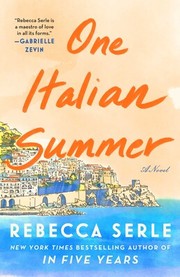
One Italian Summer
Grieving Katy meets her mother Carol at 30 in Positano and learns to see her as a young woman with wishes of her own.
2,399-word summary · 11 min read

Kindred
Dana pulled from 1976 to slave Maryland must save Rufus who owns her kin.
2,244-word summary · 10 min read

Every Day
A wakes in a new teen body daily until falling for Rhiannon breaks rules.
2,215-word summary · 10 min read