
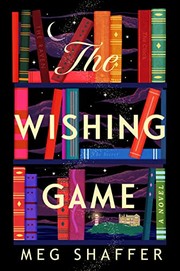
The Wishing Game
2,533-word summary 11 min read 304 pages in the book
- First published
- 2023
- Publisher
- Ballantine Books
- Pages
- 304
- ISBN
- 9780593598832
Reading options
What's inside (8 sections)
I picked this one up because a coworker kept leaving it in the break room with the cover facing out, and after the third time I got curious. The Wishing Game was published in 2023 by Ballantine Books, and the hardcover runs 304 pages. It is Meg Shaffer's debut novel. It became a national bestseller fast, which made me a little wary. This one pleased me, though not always in the ways I expected.
The premise is easy to pitch. A reclusive children's author comes back after years of silence with a new book and a contest on his private island. A young woman who loves his books gets invited. The prize could fix her life. That sounds light. The actual story is heavier, about neglect and adoption and guilt, with a romance tucked inside. I read most of it in two sittings, then sat on the ending for a day.
Lucy Hart is twenty six and works as a teacher's aide in Maine. Her childhood was thin on affection. Her parents were checked out and often cruel by omission, and her older sister Angie was sick a lot as a kid and got most of the attention that was available. Lucy spent stretches living with her grandparents. She learned early to find company in books, especially the Clock Island series by Jack Masterson.
Those books matter here. In Shaffer's world, Jack Masterson wrote a beloved children's series about Clock Island, a round island laid out like a clock face where each hour marks a different place. For Lucy, they were the place she went when home felt unsafe. At thirteen she actually ran away and tried to get to the real Clock Island, the private island off the coast of Maine where Masterson lives. She was not the only kid who tried that.
In the present, Lucy is attached to a seven year old named Christopher Lamb. His parents died from drug overdoses, and he was the one who found them in bed. He stopped speaking for a while after. Phones terrify him because his mother's phone was ringing when he found them. When the social worker asked if there was anyone he wanted to stay with, he named Lucy. She took him in temporarily and read Clock Island books aloud to him. That reading coaxed his first words after the deaths.
Now Christopher lives in foster care, with foster parents who are busy with small babies and do not have much left for him. Lucy wants to foster or adopt him herself. She goes to see his social worker, Mrs. Acosta, and gets a kind but firm no. Lucy does not earn enough. Her apartment is not suitable for a child. She has no wider circle of help nearby. Acosta tells her it takes a village to raise a child, and Lucy does not have one yet.
This is the part that felt most real to me.
Lucy refuses a better paying job because it would take time away from Christopher after school. She refuses to ask Angie for money because they are estranged. Shaffer does not make Acosta a villain, which I appreciated. The system wants square footage and savings and backup contacts. Lucy has love and time and a kid who trusts her.
Money is the knot. Love alone will not rent a two bedroom.
Jack Masterson Comes Back
Jack Masterson has not published in six years. He lives on Clock Island with Hugo Reese, the illustrator of the Clock Island books. Hugo is younger, gruff, and stuck. He wants to leave the island, but he feels tied to Jack. Jack helped him years ago after Hugo's brother died, took care of practical needs for Hugo's family, gave him work and shelter. Hugo repays that with loyalty that has curdled into restlessness.
Jack drinks a lot. He has stopped writing. Then Jack puts a riddle out in public, the kind that sounds like it fell out of one of his books. Lucy hears it and knows the answer right away, because Jack told her the answer years ago during that childhood runaway visit.
Shortly after, invitations go out. Four people are invited to Clock Island to compete for a new Jack Masterson book. One copy exists. The winner gets the rights, which means the winner could sell it or publish it and likely never worry about money again. If nobody reaches ten points through the contests, the rights go to the publisher by default.
Lucy is one of the four. The others are also adults who once ran to the island as kids. One is a younger man named Dustin who treats the whole thing like a hustle. A wealthy book buyer circles the contest too, willing to pay the winner quietly to keep the only copy private forever.
The island itself is half setting, half character. It really is shaped round, with paths and buildings placed to match the books. Hugo drew many of those scenes, so walking around with him is like walking inside his sketchbooks. Lucy remembers having a crush on him from that first childhood visit.
I liked this setup more than I expected to. It reads like a reunion of people who all loved the same stories for lonely reasons. Jack calls himself the Mastermind and acts playful about it, but you can tell early that he is planning something beyond points. He watches how they treat each other. It is manipulative, but it comes from a tired kind of care rather than cruelty.
Points, Riddles, And Temptations
The middle of the book is the contest. Challenges echo the Clock Island adventures. Riddles that need memory of the books. Team tasks that force rivals to cooperate. Small tests of honesty that look minor and turn out to matter. First to ten points wins.
Lucy starts well because she knows the books cold. She knows them the way you know stories you lived inside as a kid.
Two early temptations define her for me.
First, the collector finds her and offers a large private sum if she wins and hands over the book to stay out of print. Lucy says no. The book should belong to readers, especially kids like Christopher who need it. She could use the money more than almost anyone there, which makes the no mean something.
Second, Dustin asks her to cheat with him. She says no again. He keeps pushing elsewhere and eventually gets tossed out for breaking rules.
Hugo and Lucy circle each other through all this. He is prickly at first, protective of Jack. She is prickly back, tired of being treated as fragile. They bond in small ways. He shows her sketches. She tells him how kids in her classroom react to his illustrations. One scene I liked has them talking about how children hold books, spines cracked and pages soft, versus how collectors hold them, gloves and distance.
The pacing here is uneven. Some challenges zip by. Others get a lot of setup and then resolve quickly. Shaffer keeps most solutions tied to memory and heart rather than logic you can work out. That fits the theme but makes the competition feel less tense than the cover copy promises.
I also want to flag that the stakes soften as you go. Early on it feels like winner takes all. Later it becomes clear Jack intends to help more than one person. That lowers suspense but raises warmth.
Why Jack Stopped Writing
The sad core of the book arrives in pieces. Years before the contest, a young girl named Amber wrote to Jack about sexual abuse by her father. Jack tried to get authorities involved and failed to break through. Amber decided to come to the island herself to be safe with him, and she died trying to get there.
Jack never recovered. He blames himself for not doing more, for being a distant hero in books but a limited man in life. He stopped writing because the stories felt like lies. How could he promise kids that wishes come true and bravery gets rewarded when he could not protect one real child who asked for help?
Hugo knows all this. He stays because someone has to keep Jack fed and upright, and because he owes Jack for old kindness. But staying has cost him years. His art narrowed to island work.
I thought Shaffer handled this thread with care. She does not turn Amber into a mystery to be solved. There is just a man who did some right things too late and has to live inside that. He made calls. He kept records. The system did not move fast enough. Then a child took a risk she should not have had to take.
This backstory reframes the contest. Jack picks people who once came to him as lonely kids and gives them a second chance at a wish, trying to atone in the only way he knows. It is a little godlike, and the book knows it. Hugo calls him on it more than once. The Mastermind nickname starts to sound less cute once you see the guilt underneath.
If you need to know before you read, the abuse is discussed, not shown in graphic detail. The focus stays on letters, adult failure to intervene, grief, and aftermath. Still, it is a hard section. I put the book down for an evening after it landed and came back the next morning.
Sisters And Phone Calls
One contest task asks each player to face a deep fear. For Lucy, that means her sister Angie.
Their history is painful in an ordinary way, which made it hit harder for me than the island magic. Angie was ill often as a child and needed constant care. Lucy felt unseen and was once told by Angie that she was never wanted. Lucy spent a lot of time with her grandparents and learned to expect little.
Angie arrives on the island at Jack's invitation, and their talks are awkward and raw. Angie says growing up sick left her insecure too, afraid love could be withdrawn if she got well. She suggests their parents needed a sick child to feel needed themselves.
They do not fix everything in one talk. They start. There is an apology that feels incomplete in a human way, then a second conversation that goes better. I liked that Shaffer let it take two tries.
The other fear thread is Christopher and phones. Lucy needs to reach him for part of the final contest, but he will not pick up. Jack has been working with him gently from a distance. Small steps. Listening to a recorded story. Holding a silent phone. Hearing a familiar voice through a speaker while Lucy reads.
I found this moving, though I worried the book was using a child's trauma as a puzzle piece. It skirts that line. What saves it is that Christopher's progress is not presented as happening for Lucy's points. When Lucy finally needs to call, she hesitates. She does not want to scare him to win. That hesitation tells you who she is.
There is also a quiet theme here about what makes a parent. Lucy believes love is the whole job. Acosta and Angie push back in different ways. Love matters, but so do steadiness, money, backup, sleep, room to grow. Lucy is not unfit. She is unready on paper. The book respects both truths.
The Last Contest And The Ending
I will keep the final mechanics loose, since half the fun is watching how Jack twists the rules. The last challenge needs an answer Lucy cannot get without Christopher. She calls. His help comes a beat too late in strict points terms. The rights go to the publisher because no one hits ten in time.
Jack planned for this. He finds other ways to grant wishes. For Lucy, he offers a home on the island, space for her and Christopher to live as a family, a role that lets her stay close to the stories while building stability. It is the sidekick wish she made as a thirteen year old, reshaped into adult form. A place. A village. Backup.
Hugo gets freedom in the bargain. If Lucy and Christopher settle near Jack, Hugo can come and go without fear that the old man will fall apart alone. He and Lucy admit what has been building.
I have mixed feelings about how neat this is. I teared up at Christopher getting a calm home and Lucy getting backup. Still, the competition framing loses bite. If Jack was going to provide anyway, why the points race? The answer is emotional, not logical. He needed to watch them choose. As a reader who likes tight plots, I wanted more consequence for losing. As a reader who likes comfort, I was happy to be soothed.
The romance worked for me in parts and rushed in others. Hugo and Lucy have good banter and shared values around kids and books. The turn from wary allies to committed partners happens fast once the contest ends. I would have liked one more quiet chapter of them doing ordinary things to trust the future the book promises.
What holds strongest is the portrait of reading itself. Shaffer writes well about how children use stories. As shelter. Lucy mouthing Clock Island lines under stress. Christopher tracing Hugo's drawings. A classroom going still when a riddle appears. If you were a bookish lonely kid, you will recognize yourself here.
What wobbles is repetition. The book circles the same beats. Lucy doubts, Hugo gruffs, Jack hints, another riddle, another talk about wishes. Around page two hundred I felt the rhythm a bit too clearly.
Content notes are worth stating plainly. Expect childhood neglect, parental overdose and death, a child finding bodies, foster care strain, grief, anxiety around phones, and discussion of child sexual abuse and institutional failure. There is drinking, some language, and romantic tension rather than explicit scenes. I would hand this to older teens with a heads up about the Amber chapters and Christopher's backstory.
I closed it thinking about villages. Lucy starts with almost no backup and ends with a strange, kind one. That is sentimental, yes. I did not mind. After a stretch of colder books, I was glad to read one that believes wishes can be practical things like bedrooms and phone calls and people who stay.
A Few Practical Notes Before You Go
Come for the island contest and stay for the adoption story. The riddles are charming but simple. The emotional work around Lucy, Christopher, Angie, and Jack is the real plot.
You do not need homework. This was her debut and it stands alone. The Clock Island series is made up for the novel. If you love stories about books, you will feel seen. If you prefer puzzles you can solve ahead of the characters, it may feel soft.
Bring patience for the middle and tolerance for sweetness at the end. I was moved enough to forgive the tidy bow. Sometimes you want a story to leave a light on. This one does.
FAQ
When was The Wishing Game published?
Ballantine Books published it on May 30, 2023. The hardcover runs 304 pages and the ISBN cited here is 9780593598832.
Is The Wishing Game part of a series?
No. It is a standalone debut novel. The Clock Island books by Jack Masterson are fictional stories inside the novel, not a real series you need to read first.
Does The Wishing Game cover difficult topics?
It deals with childhood neglect, parental drug overdose and death, grief, and a past case of child sexual abuse discussed through letters and guilt. The tone stays warm, but those chapters are heavy.
Similar books
The Bookshop on the Corner
A Birmingham librarian loses her job, buys a van, and moves to the Scottish Highlands to run a mobile bookshop. Warm and bookish, with uneven pacing.
2,557-word summary · 11 min read
Where We Belong
Marian's orderly New York life cracks when the daughter she gave up for adoption arrives, and the search for the father forces her to tell the truth.
2,056-word summary · 9 min read
Wait for It
A twenty-nine-year-old hairstylist raising her two nephews meets her new neighbor, a former Navy man mid-divorce, in Zapata's slow-burn romance about trust and…
2,154-word summary · 10 min read
The Little Paris Bookshop
A Paris bookseller who prescribes novels as medicine finally opens a twenty one year old letter from his lost love and sails south through France to find her.
2,050-word summary · 9 min read
The Bookish Life of Nina Hill
Bookstore Nina gains a family and pub-quiz love in Los Angeles.
2,399-word summary · 11 min read
The Bromance Book Club
A Nashville pitcher joins a secret romance book club to save his marriage after his wife Thea asks for divorce. He trades pride for listening, chores, and…
2,932-word summary · 13 min read
Consider Me
An NHL star pursues a teacher who keeps turning him down, and must earn trust through family, friends, and steady proof.
2,926-word summary · 13 min read
The Very Secret Society of Irregular Witches
A lonely witch tutors three young witches at a hidden house and falls for their prickly librarian.
2,812-word summary · 12 min read
The Starless Sea
A graduate student finds a book that retells his childhood and follows its clues to an underground Harbor of stories.
2,582-word summary · 11 min read
One Last Stop
August, 23 and newly moved to New York, meets Jane, stuck on the Q train since the 1970s, and fights to free her while falling for her.
2,394-word summary · 11 min read
Legends & Lattes
Retired orc Viv opens a coffee shop in Thune with Tandri and Cal, trading her sword and Scalvert Stone luck for espresso and found family.
2,188-word summary · 10 min read
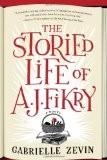
The Storied Life of A.J. Fikry
A widowed bookseller on Alice Island adopts abandoned toddler Maya, rebuilds Island Books, and finds love with sales rep Amelia before illness closes in.
2,972-word summary · 13 min read
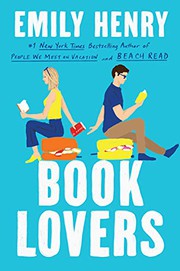
Book Lovers
Sharp literary agent Nora Stephens gets dragged to small-town Sunshine Falls with her sister and keeps colliding with brooding editor Charlie Lastra.
1,952-word summary · 9 min read

What Happened to Goodbye
Mclean has reinvented herself in four towns since her parents divorced. In Lakeview she uses her real name, and for the first time staying put becomes a choice.
2,796-word summary · 12 min read
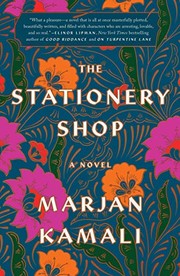
The Stationery Shop
Two teenagers fall in love in a Tehran stationery shop in 1953, are separated by the coup and a family deception, and meet again sixty years later.
2,024-word summary · 9 min read

The Japanese Lover
A Polish refugee and the son of a Japanese gardener fall in love in San Francisco in 1939, then keep the affair secret for nearly seventy years.
2,286-word summary · 10 min read

Size 12 Is Not Fat
Former teen pop star Heather Wells investigates two dorm elevator deaths while juggling her ex, her crush, and a size-12 wardrobe.
2,805-word summary · 12 min read
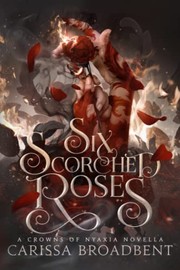
Six Scorched Roses
A dying scholar bargains with a reclusive vampire for blood, and six roses turn a transaction into a slow, dangerous romance.
2,663-word summary · 12 min read

Inkdeath
The final Inkworld novel sends Mo into the land of the dead, leaves Meggie choosing between two boys, and ends the Adderhead's immortality with three written…
2,062-word summary · 9 min read

Her Soul to Take
A paranormal vlogger in a cult-run town summons a bound demon, and the only way to survive the god beneath the mine is to give him her soul.
2,089-word summary · 9 min read
First Grave on the Right
Charley Davidson is a private investigator in Albuquerque and the grim reaper. When three murdered lawyers come back as ghosts, her two jobs collide.
2,770-word summary · 12 min read
Austenland
A New York graphic designer obsessed with Mr. Darcy inherits a trip to a Jane Austen theme park, where the fantasy of Regency romance collides with the men…
2,030-word summary · 9 min read

Anatomy: A Love Story
In 1817 Edinburgh, a noblewoman who wants to be a surgeon disguises herself to study anatomy and falls for the grave robber who supplies her with bodies.
2,031-word summary · 9 min read
Alone With You in the Ether
Two people in Chicago agree to six conversations, and the experiment becomes a love affair that is also a study of bipolar disorder, obsession, and the shape…
2,713-word summary · 12 min read

Vow of Thieves
Kazi and Jase return to Tor's Watch to find it occupied, and their marriage is tested by captivity, betrayal, and a war for the town of Hell's Mouth.
2,059-word summary · 9 min read

The Shadow Sister
Star D'Apliese steps out of her sister's shadow and follows a bookshop clue into the Edwardian life of Flora MacNichol, a woman who gave up love for duty.
2,260-word summary · 10 min read
The Lost Sisters
Taryn Duarte writes a letter to her twin, Jude, explaining how she fell for Locke and why she stayed silent while he used them both.
1,914-word summary · 9 min read

River Marked
Mercy and Adam's honeymoon on the Columbia River turns into a fight with an ancient river devil, and Mercy finally learns the truth about her father.
2,008-word summary · 9 min read

Magic Burns
A magic flare hits Atlanta, and mercenary Kate Daniels must recover stolen maps, find a missing witch, and keep a teenage girl alive while Celtic gods try to…
2,021-word summary · 9 min read

Dumplin'
Willowdean Dickson enters her town's beauty pageant as a protest and discovers that confidence is harder to keep once she lets someone close.
1,922-word summary · 9 min read