
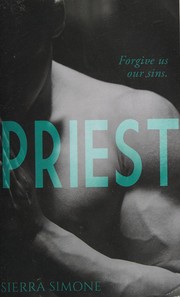
Priest
2,958-word summary 13 min read 354 pages in the book
- First published
- 2015
- Publisher
- Sierra Simone
- Pages
- 354
- ISBN
- 9781732172234
- Series
- Priest (#1)
Reading options
What's inside (8 sections)
I did not plan to read Priest for a long time because the premise made me uncomfortable in a way I could not quite name. A Catholic priest falling for a parishioner sounded like it would either be preachy or gross, and I was not in the mood for either. Then two friends kept bringing it up in completely different ways. One said it was the only romance that ever made her think seriously about confession. The other said she hated the hero for a hundred pages and then could not stop thinking about him. That split stuck with me, so I borrowed the paperback and told myself I would quit after fifty pages if it felt cheap. I did not quit.
This is Sierra Simone's 2015 novel, the first book in the Priest series, self published under her own name. The edition most people run into now is the 2015 paperback, listed at 354 pages in the Google Books record, though you will see slightly different pagination depending on the printing. Open Library ties the same ISBN to a 388 page pagination, which tells you how many times this book has been reprinted since it first caught on. It opens with Tyler Anselm Bell, twenty nine, announcing that he broke his vow of celibacy on the altar of his own church six months earlier. He calls the whole book his confession. That framing matters because everything after it is him trying to explain how a man who actually believed in his vows ended up breaking them.
A quick flag before the plot, since it matters for this book more than most. This is an adult erotic romance with a lot of frank talk about sex and a power imbalance built into the setup. He is her priest. She seeks him out for spiritual counsel at first. If that dynamic is going to bother you no matter how it is handled, trust that instinct and skip it. I am going to focus here on the story and the faith questions rather than the bedroom scenes, because the plot is what kept me reading after the shock of the setup wore off.
Why I finally picked it up
My shelf has a weird gap where religious romance should be. I grew up around people who took church seriously, and most novels I tried either mocked belief or treated it like set dressing. Someone at a used bookstore told me Priest was different, that Simone used to work as a librarian and writes about Catholic practice like someone who has actually sat through Mass when she did not want to be there. That sounded worth checking.
I also liked that it is short enough to test. At around three hundred fifty pages it does not ask for a month of your life. I read most of it over three evenings, with a lot of stopping and starting in the middle because I needed to think. Some chapters pulled me straight through. Others made me put the book face down on the couch and stare at the ceiling. That stop and start rhythm ended up matching the story itself, which swings between tenderness and self reproach.
What surprised me first was the voice. Tyler narrates much of the book, and he does not sound like a romance hero doing a priest costume. He sounds tired, dry, guilty, and sometimes funny in a bleak way. He knows Latin and parish politics and how to get through a funeral when he barely knew the person. He also knows he is in trouble long before he admits it out loud. I believed him as a working priest in a small parish, not just as a love interest. That made the later choices hurt more, which I think is the point.
Father Tyler Bell and the confession that starts everything
Tyler Anselm Bell is twenty nine when the book opens, already ordained, already assigned, already good at the job in the ways parishioners notice. He visits the sick. He remembers names. He tries to mean his prayers. The backstory comes out in pieces. He comes from a wealthy, difficult family, the Bells, and his brothers Sean and Aiden hover at the edges of this book before they get their own stories later in Sinner and Saint. Tyler chose the priesthood after loss and guilt that he has never fully sorted out, and part of him liked the clarity of the rules. No dating. No marriage. No divided loyalty. Just God and the parish.
Then Poppy Danforth shows up in his confessional.
Poppy is younger than Tyler, sharp tongued, restless, carrying a lot she does not say plainly at first. She tells him she has been having impure thoughts about a priest, meaning him, and dares him to react. It is flirtation and a test at once. She wants to see if he will flinch, scold her, hide behind the screen, or listen. Tyler does listen, which is both his strength and his problem. He tells himself he can handle it with pastoral distance. He cannot.
Simone stretches this opening without rushing to scandal. There are Masses and parish suppers and awkward hallway conversations. Tyler tries to refer Poppy elsewhere for counsel. He prays more. He runs. He tells himself attraction is normal and acting on it is not. Poppy keeps coming back, sometimes playful, sometimes raw, and Tyler starts looking forward to seeing her in a way that frightens him. The confession booth, which should be the safest room in the church, becomes the place where he is least honest with himself.
One detail I appreciated is how ordinary the temptation looks at first. It is not thunder and lightning. It is Tyler noticing what Poppy wears to Sunday service. It is lingering too long after a meeting. It is replaying her voice while he tries to write a homily. Anyone who has tried to keep a hard promise knows that stage, where nothing has happened yet and everything already feels compromised. Simone writes that stage well, with a lot of small parish textures. Collection counting. A broken air conditioner. An old woman who wants a longer blessing. Those bits kept the story grounded when it could have floated off into melodrama.
Poppy Danforth and what she is actually asking for
It would be easy to read Poppy as just a seductress, and the book sometimes lets Tyler see her that way when he is trying to excuse himself. That reading misses most of who she is. Poppy comes to church because she is grieving and furious and looking for a place to put both. Without spoiling every reveal, she has lived through family rupture, a painful romantic history, and a sense that respectable people have already decided what kind of woman she is. She is used to being wanted and not being known. Tyler, at least early on, actually listens to her, and that attention matters more to her than the flirting.
Their conversations outside confession carry a lot of the book. Poppy asks blunt questions about God, forgiveness, why prayer feels empty, whether someone like her is allowed to want something clean. Tyler gives real answers when he is not panicking, and you can see why she trusts him. He does not talk down to her. He does not turn her past into a sermon illustration. He treats her like a person with a mind. For someone who has been handled a lot and heard a little, that feels huge.
Poppy also pushes. She pursues Tyler openly after a point, and the book does not pretend she is passive. She shows up. She says what she wants. She calls out his hiding. I had mixed feelings here, and I think Simone wants that. On one hand Poppy has agency and knows her own mind. On the other hand she is asking a man bound by vows to break them, in his own church, while still coming to him for spiritual help. The book lets both things be true. She is hurt and brave and sometimes selfish. Tyler is kind and principled and sometimes self deceiving. Neither of them is just a victim.
Her backstory unfolds slowly, through arguments and late night talks rather than one big speech. There was damage in her family life and in a prior relationship that left her wary of needing anyone. Church becomes, strangely, the one place where she feels she can be angry out loud. I found those scenes stronger than the romantic ones. When Poppy talks about feeling marked by her past, or about wanting confession to work even though she doubts it, she sounds like a real person trying to borrow someone else's faith for a while to see if it fits.
The middle: vows, guilt, and parish life closing in
The middle third is where the affair actually begins, and I will keep this vague on purpose. Tyler and Poppy cross lines they both said they would not cross, first in small ways and then in ways they cannot undo. Simone does not write this as a happy rebellion. Tyler feels sick afterward. He still says Mass. He still hears confessions. He starts to dread the altar because he knows what he did there. That dread becomes almost a character in the book.
What kept me engaged was not suspense about whether they would get caught, though that question hangs over everything. It was watching Tyler try to hold two full lives at once. By day he baptizes babies and counsels couples and deals with his bishop and fellow priests. By night he replays Poppy and tells God he will stop tomorrow. He tries bargaining, fasting from seeing her, throwing himself into parish work, confessing in general terms without naming the core sin. None of it steadies him. If you have ever broken a promise to yourself repeatedly, that cycle will feel painfully familiar even if your promise had nothing to do with celibacy.
Parish life closes in believably. People notice when a priest is distracted. An older priest warns him without quite accusing him. A parishioner gossips. His brothers call and needle him, especially Sean, who has his own messy relationship with faith and pleasure and will later anchor Sinner. Tyler starts to snap at people he normally treats gently, then hates himself for it. The book is good on that kind of moral tiredness, where you are not a monster but you are not the man you claim to be either, and the gap exhausts you.
Poppy, meanwhile, starts to want more than stolen hours. She wants to be chosen in daylight. She asks, in different ways, whether Tyler would ever leave the priesthood, and Tyler hears the question as both love and threat. He tells her the priesthood is not a job he can quit lightly. It is an identity, a vow before God, a response to grief that shaped his twenties. He also knows he is using that language partly as a shield. Simone lets him be self aware enough to admit that, which saved him from becoming insufferable for me. He says, more than once, that he knows how his excuses sound.
There is a stretch here where the pacing sags a little. Scenes of longing and guilt start to repeat. Tyler resolves to end things, Poppy cries or challenges him, they fall back together, he repents, repeat. I understood why Simone did it, because that loop is honest to how affairs and compulsions work, but around the two hundred page mark I wanted someone to force a decision. The book does eventually force one, through a mix of near exposure and Tyler's own conscience, but I skimmed a few pages in that loop. Readers who like slow burn tension may enjoy it more than I did.
Faith on the page, not just romance around it
The reason Priest outlasted its scandal for so many readers, I think, is that it takes Catholic belief seriously instead of using it as forbidden flavor. Tyler talks about the Eucharist, celibacy, obedience, and prayer like they matter. He has reasons for his vows beyond fear. He believes priesthood lets him love many people without possessing anyone, and after his family's mess that idea gave him peace. When he breaks celibacy, he does not just break a rule. He breaks the logic that held his adult life together.
Simone includes a lot of concrete practice. Morning prayer. The Liturgy of the Hours. Preparation for Mass. The physical feel of the confessional, wood and shadow and the small screen. Tyler's homilies, even the ones he phones in while distracted, show a man who knows Scripture and likes teaching it. I am not Catholic, and some of this was new to me, but it never felt like a lecture. It felt like watching someone work. That workaday holiness made Tyler's failure feel specific rather than abstract. He was not giving up an idea. He was giving up a daily rhythm he loved.
Poppy's side of faith interested me more as the book went on. She starts skeptical, almost mocking, then finds herself praying when she does not mean to. There is a scene where she stays after Mass just to sit in the quiet, not to see Tyler, and I believed it completely. She wants absolution but does not trust that it can hold. Tyler wants to offer it but knows he has lost standing to do so. That knot, where the person who needs grace cannot receive it from the person she trusts because he compromised himself, is the strongest theological image in the book. It has nothing to do with heat and everything to do with shame.
I should say the book does not resolve faith neatly. Tyler questions whether celibacy is sustainable or right, whether desire itself is sinful, whether God could work through a love the Church calls illicit. Poppy questions whether forgiveness requires a priest at all. Simone does not hand down answers. She lets Tyler stay Catholic in his bones even while he disobeys, which some readers will find moving and others will find frustrating. I found it honest. People rarely change cosmology overnight. They act, feel guilty, reinterpret a little, act again, and only later figure out what they actually believe.
What frustrated me and who should skip this
I want to be plain about the problems because the good parts made me wish the whole thing was stronger. The biggest issue for me is consent and power, and the book knows it but does not fully answer it. Tyler is Poppy's priest. Even when she pursues him, he holds authority, secrecy, and spiritual trust. Simone has Tyler name that imbalance, and to her credit she does not let him off with a quick apology. Still, there are moments where the story frames his struggle as the main pain while Poppy deals with the fallout in fewer pages. I wanted more of Poppy alone, with friends or family, outside Tyler's gaze, so her choice would feel weighed rather than swept.
The writing can also tip into repetition. Tyler's guilt monologues circle the same images of altar, collar, hands. A few arguments between him and Poppy use the same beats. Fight, separation, prayer, relapse. I get that cycles are the subject, but tighter editing in the middle would have helped. The brothers' banter, funny at first, sometimes lands like setup for the next books instead of living in this one. Sean is vivid, but every scene with him reminded me I was being sold Sinner, which pulled me out of Tyler's crisis.
And the explicit content will be too much for many readers, even those fine with erotic romance in general. The taboo here involves a sacred space and a sacrament. A scene on the altar will be a hard stop for some people on religious grounds, and I respect that completely. The book also includes past trauma, grief, parental neglect, substance use around the edges, and frank language about sex. None of it felt gratuitous to me in intent, but volume alone makes this an adults only book. If you need closed door romance, this is the opposite.
So who might still try it. Readers who like forbidden romance with real stakes, not just a rule that evaporates. Readers curious about faith under pressure who can tolerate irreverence alongside reverence. Readers who do not mind an imperfect hero who does wrong and knows it. I would not give it to someone looking for cozy parish life, or to anyone currently wrestling with church hurt who needs gentleness first. I would also not start here if you need Poppy to be purely likable. She is prickly and makes choices that hurt people. That prickliness is part of why I remembered her.
I finished Priest unsure whether to admire Tyler or shake him, which feels right for a book subtitled as a confession. He does move toward honesty by the end, facing what his double life cost and deciding he cannot keep serving as a priest while living a lie. Whether that decision leads to laicization, to a future with Poppy, or to more loss, I will leave for new readers, except to say the closing chapters choose love without pretending the cost disappears. A short follow up, Midnight Mass, picks up their story, and his brothers' books widen the family picture. I closed the cover thinking less about the scandal than about a line Tyler repeats in different forms. He wanted to be good. He learned being good was harder and stranger than following rules. That question stayed with me longer than any single scene.
FAQ
What is Priest about?
It follows twenty-nine-year-old Catholic priest Tyler Bell and parishioner Poppy Danforth, from a charged confession into an affair that threatens his vows and parish life. It is book one of the Priest series and works as a complete story.
When was Priest published?
It was first published in 2015 as a self-published edition under Sierra Simone. The widely cited paperback carries ISBN 9781732172234 and is listed at 354 pages in the Google Books record.
Is Priest appropriate for younger or closed-door romance readers?
No. It is adult erotic romance with explicit scenes, a priest and parishioner power imbalance, and scenes in sacred spaces. It also touches on grief, past trauma, and church hurt.
Similar books
More from Priest first, then related titles.

Gabriel's Inferno
A Dante professor and his student face a shared past, faith, and whether remorse can rebuild trust.
2,263-word summary · 10 min read
Reminders of Him
Kenna returns after prison to meet the daughter she lost, facing the family that blames her.
2,168-word summary · 10 min read

What Happened to Goodbye
Mclean has reinvented herself in four towns since her parents divorced. In Lakeview she uses her real name, and for the first time staying put becomes a choice.
2,796-word summary · 12 min read

Size 12 Is Not Fat
Former teen pop star Heather Wells investigates two dorm elevator deaths while juggling her ex, her crush, and a size-12 wardrobe.
2,805-word summary · 12 min read
Alone With You in the Ether
Two people in Chicago agree to six conversations, and the experiment becomes a love affair that is also a study of bipolar disorder, obsession, and the shape…
2,713-word summary · 12 min read

Dumplin'
Willowdean Dickson enters her town's beauty pageant as a protest and discovers that confidence is harder to keep once she lets someone close.
1,922-word summary · 9 min read
Shopaholic and Sister
Becky Brandon returns from a ten-month honeymoon to meet the half-sister she always wanted, then discovers that Jess is thrifty, prickly, and nothing like the…
2,591-word summary · 12 min read

Sam's Letters to Jennifer
A grieving journalist reads her grandmother's letters and finds a decades-long love affair that changes how she sees her family.
2,310-word summary · 10 min read

Mr. Maybe
Libby Mason wants a rich husband, but the wealthy man who proposes is dull and the broke writer she cannot forget is not offering forever.
2,322-word summary · 10 min read

I Kissed Shara Wheeler
Shara Wheeler kisses her rival Chloe Green at prom and disappears, leaving a scavenger hunt that forces Chloe to rethink everything she knew about her.
2,083-word summary · 9 min read

Amy & Roger's Epic Detour
Amy Curry has not driven since the crash that killed her father. With Roger at the wheel and a box of maps between them, a cross-country trip becomes a slow…
3,034-word summary · 13 min read
One to Watch
A plus-size fashion blogger takes the lead role on a reality dating show to prove she belongs on television, and finds she might want what the cameras offer.
2,478-word summary · 11 min read
Between Sisters
Estranged sisters Meghann and Claire reunite in Washington when Claire announces a rushed wedding, then face their mother's desertion and a medical crisis.
2,467-word summary · 11 min read
Eligible
Austen's Bennet sisters move to modern Cincinnati, where marriage is a reality show and the house is losing its value.
2,293-word summary · 10 min read

Big Swiss
A transcriptionist for a sex coach falls for one of his clients, the tall Swiss gynecologist she calls Big Swiss, in a funny novel about work and secrets.
2,523-word summary · 11 min read
Wedding Night
Lottie marries an old flame days after a breakup, then flies to a Greek island while her sister quietly works to sabotage the honeymoon. A farce about memory,…
2,213-word summary · 10 min read
See Me
A law student with a violent past falls for a prosecutor whose old case returns as a stalker, in a romance with a thriller at its center.
2,007-word summary · 9 min read
Marriage for One
Rose marries a cold lawyer to save her coffee shop, then discovers the arrangement was never only business.
2,032-word summary · 9 min read
Dash & Lily's Book of Dares
Two lonely New York teenagers trade dares in a red notebook left at the Strand, falling for each other on the page before they meet.
2,228-word summary · 10 min read
A Voice in the Wind
A young Christian slave in Rome serves a spoiled patrician daughter and catches the eye of her brother, while a captured German gladiator fights for freedom.
2,322-word summary · 10 min read
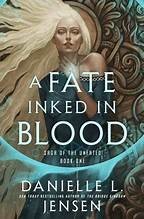
A Fate Inked in Blood
In Norse-inspired Skaland, a fish gutter hiding a goddess's blood is claimed by a jarl, bound by oath, and guarded by the son she cannot want.
1,971-word summary · 9 min read
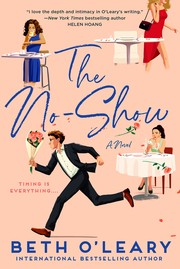
The No-Show
Three women are stood up on Valentine's Day by the same man, but the timeline is not what it seems. O'Leary's warmest book with a knife in it.
2,127-word summary · 9 min read
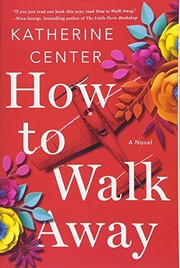
How to Walk Away
Margaret Jacobsen has the job, the fiance, and the future mapped out, until a small-plane crash on Valentine's Day takes almost all of it in one afternoon.
2,012-word summary · 9 min read
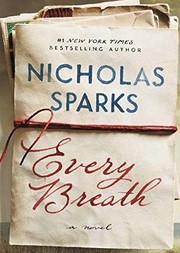
Every Breath
Two strangers share one week at Sunset Beach in 1990, part for duty, and reunite decades later at the mailbox that started it all.
2,357-word summary · 10 min read
Dial A for Aunties
A wedding photographer accidentally kills her blind date, and her mother and three aunties help her hide the body during the biggest wedding of their careers.
2,076-word summary · 9 min read
True Colors
Three Grey sisters split over love and duty after their father judges them.
2,596-word summary · 12 min read
The Identicals
Twin sisters swap Nantucket and Martha Vineyard lives for a summer.
2,556-word summary · 11 min read
The Bookish Life of Nina Hill
Bookstore Nina gains a family and pub-quiz love in Los Angeles.
2,399-word summary · 11 min read
Every Last Word
A girl with OCD finds poetry and friends who know her secrets.
2,434-word summary · 11 min read

Collided
Sophie bets she can resist playboy Liam, then pit walls fall.
2,219-word summary · 10 min read