
Crooked Kingdom
1,949-word summary 9 min read 546 pages in the book
- First published
- 2016
- Publisher
- Henry Holt and Co.
- Pages
- 546
- ISBN
- 9781627792134
- Series
- Six of Crows (#2)
Reading options
What's inside (10 sections)
I finished Six of Crows desperate for the sequel, and Crooked Kingdom paid off everything. Leigh Bardugo published it with Henry Holt and Co. on September 27, 2016, a 546 page hardcover that closes the Six of Crows duology. Kaz Brekker and his crew pulled off the impossible Ice Court heist. Their employer, Jan Van Eck, double-crossed them, captured Inej, and refused payment. Now the crows are broke, hunted, and furious in Ketterdam. What follows is revenge plotted with heist-movie precision across 546 pages. No mourners. No funerals gets answered here. The answer costs plenty.
The setup inverts the first book brilliantly. Instead of one impossible job for money, the crew must survive enemies on every side while engineering Van Eck's ruin. Van Eck holds Inej hostage to force Kaz's compliance. Pekka Rollins, Kaz's oldest enemy, circles with his own schemes. The merchant Council auctions Kuwei Yul-Bo, the jurda parem hostage, to foreign powers. Nina suffers parem withdrawal that may kill her. Matthias faces execution as a drüskelle defector. Jesper's gambling debts explode. Wylan's father disowns and hunts him. Every crow starts broken. The book's job is breaking their enemies worse.
Bardugo rotates viewpoints across all six crows plus occasional others, and the rotation is the novel's engine. Each chapter ends on hooks. Each character holds part of the plan. Readers assemble the con alongside its victims. Kaz narrates strategy in retrospect, revealing preparations chapters after they mattered. The pleasure is watching marks, and readers, realize they were played. Heist fiction lives on dramatic irony. This book supplies it in bulk.
Kaz versus Van Eck
The central duel deserves extended attention because it is personal in ways heists rarely are. Van Eck is not just a mark. He represents everything Kaz hates, respectable cruelty, merchant power, the system that made an orphan of him. Their conflict plays across auctions, exchanges, and negotiations where both cheat constantly. Kaz's plans within plans recall the first book but cut deeper. He is not stealing for money now. He is destroying for Inej. Love as motive changes his methods. Risks he would never take for cash he takes for her without blinking.
Inej's captivity gives the book its emotional stakes. Chained on Van Eck's ship, she endures with spider's patience, gathering intelligence, waiting for Kaz. Her chapters, fewer but vital, show captivity's psychology. She refuses despair by planning. Her faith, her Saints, her resolve to survive free, all sustain her. When rescue comes, it comes through her own agency as much as Kaz's schemes. She picks locks. She signals. She fights. The damsel framing never sticks because Inej was never a damsel. Her rescue is collaboration, not delivery.
The auction sequence is the novel's centerpiece. Kuwei Yul-Bo sold to nations while crews maneuver in disguise, planting evidence, rigging bids, turning enemies against each other. Bardugo stages it with clockwork precision. Every faction gets played. The pages turn themselves. The auction's aftermath, chaos weaponized, sets up the finale's street war. Ketterdam itself becomes a battleground. Barrel gangs choose sides. Explosions reshape alleys. The city Bardugo built across two books pays off as setting and stakes both.
Nina, Matthias, Jesper, Wylan
The romances resolve with varying pain. Nina and Matthias carry the book's heaviest arc. Her parem addiction, contracted saving him, ravages her body and Grisha power. His devotion never wavers, but nations demand his return. Fjerdan justice wants a traitor. Kerch wants a weapon. Their chapters ache with impossible choices. The resolution, when it comes, is bittersweet in the extreme. Bardugo refuses easy happiness for them. What they get is realer. Love tested by chemistry and country both. Some readers wept for days. Justifiably.
Jesper and Wylan's arc provides warmth amid darkness. Jesper's gambling addiction and Grisha secret, his father's disappointment, his self-destruction disguised as charm, all surface under pressure. Wylan's genius with chemistry and his trauma under his father's abuse drive the plot's cleverest schemes. Their romance deepens from banter to devotion believably. Wylan's confrontation with Van Eck, rejecting his father's name and money both, is quietly devastating. Choosing identity over inheritance. The book honors it fully.
Kaz and Inej's almost-romance remains the duology's beating heart. His touch aversion, rooted in childhood trauma, makes every near-contact significant. Her patience, rooted in faith and fury both, never wavers. Their scenes together crackle with unspoken feeling. The almost-kiss moments frustrate deliciously. Bardugo understands that restraint out-eroticizes explicitness. What they cannot do matters more than what they can. The finale gives them something, not everything. Restraint to the end. Fans debate whether it suffices. The ambiguity is deliberate and perfect.
The finale's costs
The street war climax delivers spectacle with substance. Each crow's skills matter. Jesper's shooting. Wylan's demolitions. Nina's ravaged power. Matthias's strength. Inej's knives. Kaz's mind directing all. The battle choreography stays legible despite scale. More importantly, victories cost. Characters die, including one whose loss leveled fandoms. Bardugo kills with purpose, not shock. The death serves theme and plot both. No mourners, no funerals gets tested literally. Mourning happens anyway. Funerals too.
The economic warfare underneath satisfies uniquely. Kaz destroys Van Eck not just physically but financially, reputationally, totally. Sugar futures manipulated. Reputations ruined. Empires of commerce toppled by a seventeen-year-old with a cane. The merchant city's values turned against its masters. That revenge fits Ketterdam perfectly. Money is the true magic here. Kaz wields it better than Grisha wield elements. The finale proves brains beat capital when brains have nothing to lose.
The closing chapters distribute endings with care. Couples formalize or part. Fortunes settle. Inej gets her ship, the Wraith's freedom literalized. Kaz gets the Crow Club and something like peace. The final image, crows dispersing to separate futures, honors both unity and growth. Found family need not stay together to stay family. The duology closes complete. The Grishaverse continues elsewhere. These six rest, mostly, earned.
Ketterdam as a character
The city deserves extended appreciation because Bardugo built fantasy's best criminal capital. Canals and crowns. Barrel gangs and merchant princes. Ghettos and exchanges. Ketterdam operates with clockwork logic. Money moves everything. Respect is currency. Violence is overhead. The setting enables every plot mechanically. cons need marks. Marks need money. Money concentrates here. The city is not backdrop but engine. Remove Ketterdam and no story functions.
The Barrel's sociology convinces through detail. Gang territories mapped. Dime lions? Actually gambling dens, brothels, and theaters layered. Pekka Rollins's empire versus Per Haskell's remnants. Kaz navigating between powers. Bardugo's criminal worldbuilding rivals any epic fantasy's kingdoms. Laws unwritten but absolute. Debts collected brutally. Loyalty bought cheaply. Readers learn the Barrel's rules alongside the marks. Education through immersion. By the finale, the city feels home. Its fall would wound. Its survival satisfies.
The merchant Council's corruption mirrors real oligarchy sharply. Respectable men commissioning atrocities. Profit laundered through philanthropy. Van Eck embodies the type perfectly. Civilized monster in tailored suits. Bardugo's critique lands because it parallels our world. Corporations commissioning harm. Wealth insulating guilt. Ketterdam's merchants are not fantasy. They are finance with different costumes. That recognition gives the fantasy bite. Escapism with teeth.
Parem and its prices
Jurda parem deserves analysis as the duology's darkest invention. A drug amplifying Grisha power while destroying users, it literalizes addiction's bargain. Power now. Life later, maybe. Nina's arc embodies the cost. Her parem use saves Matthias and ravages her. Withdrawal chapters horrify authentically. Shakes. Cravings. Power flickering. Bardugo researched addiction's reality and translated it to fantasy faithfully. The metaphor serves users rather than exploiting them. Pain described to honor, not thrill.
The parem plot drives geopolitics plausibly. Nations want weapons. Merchants want profits. Grisha want freedom from fear. Every faction's interest in the drug makes sense. The auction centers global appetites in one room. Bardugo's macro plotting matches her micro cons. Systems collide through characters. Kuwei Yul-Bo, the hostage scientist's son, humanizes abstraction. A boy, not a formula. Saving him matters beyond strategy. The personal anchors the political throughout.
Nina's recovery arc spans the book with brutal honesty. Healing is slow, partial, nonlinear. Power changed permanently. Body altered irreversibly. She grieves her old self while building new capacities. That process mirrors real addiction recovery faithfully. Never the same. Always becoming. Matthias's support helps without curing. Love accompanies healing. It does not cause it. That distinction matters enormously. Bardugo respects recovery's autonomy. Nina heals herself. Others witness. The boundary holds beautifully.
Wylan's chemistry and Jesper's aim
Wylan deserves spotlight as the plot's secret weapon. Dismissed as merchant's spare, abused into diffidence, he proves the crew's most creative mind. Demolitions designed. Forgery perfected. Music as code. His chemistry knowledge turns battles. Bardugo gives the quiet boy the loudest explosions. That irony delights. Strength wears many faces. Wylan's is smudged with chemicals and shining. His confrontation with Van Eck, refusing name and money, defines integrity. Worth is not inheritance. He proves it with dynamite and dignity both.
Jesper's sharpshooting provides the duology's most cinematic action. Impossible shots under pressure. Grisha power hidden behind lead. His gambling addiction complicates heroics usefully. Wins fund losses. Luck deserts strategically. Bardugo writes addiction without romanticizing. The cravings cost the crew really. Jesper's arc from liability to reliability runs through acknowledgment, not willpower. He admits. He amends. He relapses and recovers. That honesty about cycles respects sufferers. Recovery is not linear. Neither is Jesper.
Their partnership balances the duology's romances uniquely. No tortured restraint like Kaz and Inej. No doom like Nina and Matthias. Just two young men figuring love amid chaos. Banter masking devotion. Teasing hiding terror. Their scenes breathe between heavier arcs. That lightness is structural genius. Darkness needs relief. Jesper and Wylan provide it without trivializing stakes. Laughs amid war. Love amid loss. The tonal balance holds because they hold each other. Sweetness as strategy. It works.
Inej's ship and Kaz's cane
The closing images deserve final attention for symbolic perfection. Inej sailing free aboard her own ship literalizes the Wraith's liberation. From menaced spider to captain of seas. Her journey from Suli slavery through Barrel survival to open water completes the duology's most satisfying arc. Freedom earned through suffering and skill both. The ship is hers by purchase and right. No one gave it. She took her life back piece by piece. Sails rising. Wraith flying. Magnificent.
Kaz keeping his cane and his Crow Club signals different completion. He remains Ketterdam's bastard, choosing the Barrel over escape. Power rooted rather than fled. His cane, once shame, becomes signature. Limp as identity embraced. The book refuses to heal him physically while healing him emotionally. That distinction matters enormously. Disability is not damage to fix. Trauma is not weakness to hide. Kaz stands crooked and unbroken. The kingdom he keeps is himself. Rule wisely, Brekker. The crows are watching. So are we.
What works and what drags
What works is plotting and people. The cons dazzle. The characters deepen. Ketterdam lives. The romances satisfy variously. At 546 pages it never sags. Bardugo writes heists better than anyone in YA, and the sequel surpasses its predecessor in emotional stakes if not novelty.
What drags is complexity and darkness. New readers cannot start here. The plot demands total recall of book one. The body count hurts. Nina's suffering disturbs. Kaz's ruthlessness alienates some. And the middle sags slightly under scheme-stacking. Too many cons blur. Patience required.
Still, Crooked Kingdom is the rare sequel that fulfills its predecessor's promise. Read Six of Crows first, then this, ideally back to back. Kaz's crew earned their legend across two books. Ketterdam stands because they stood together. No mourners. No funerals. Just crows, flying free at last, carrying everything they stole, including readers' hearts.
FAQ
When was Crooked Kingdom published?
Henry Holt and Co. published it on September 27, 2016. The hardcover first edition runs 546 pages and the ISBN is 9781627792134.
Who are the main players?
Kaz, Inej, Jesper, Nina, Matthias, and Wylan, the six crows, facing Van Eck, Pekka Rollins, and the jurda parem conspiracy.
Is it part of a series?
Yes. It closes the Six of Crows duology as book two, after Six of Crows.
Similar books
More like Crooked Kingdom →More from Six of Crows first, then related titles.
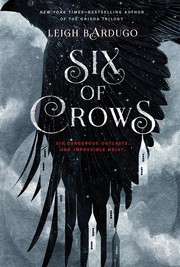
Six of Crows
Kaz Brekker gathers five outcasts in Ketterdam for an impossible heist to steal jurda parem, a drug that makes Grisha power deadly.
2,292-word summary · 10 min read

Shadow and Bone
Orphan Alina Starkov learns she is a Sun Summoner who may destroy the Shadow Fold, if the Darkling lets her.
2,284-word summary · 10 min read

Ruin and Rising
Hiding in the White Cathedral, a weakened Alina hunts the firebird while the Darkling holds Ravka and the Fold widens.
2,775-word summary · 12 min read

Siege and Storm
Alina hunts a second amplifier with Mal while the Darkling returns and Sturmhond offers a cunning alliance.
2,122-word summary · 9 min read

The Raven Boys
Blue Sargent joins four Aglionby boys hunting a Welsh king on a Virginia ley line.
2,537-word summary · 11 min read

The Blood of Olympus
Seven demigods stop Gaia waking while Reyna brings Athena statue.
2,196-word summary · 10 min read