

This Time Tomorrow
2,818-word summary 13 min read 320 pages in the book
- First published
- 2022
- Publisher
- Riverhead Books
- Pages
- 320
- ISBN
- 9780525539001
Reading options
What's inside (8 sections)
I picked up This Time Tomorrow because a friend told me she called her dad right after she finished it. I expected a light time travel romance set in New York. What I found was quieter and sadder, in a way that stayed with me. Emma Straub published it with Riverhead Books in 2022, a 320 page novel about a daughter who gets extra hours with her father when he was young. It is funny in places and painful in others. Alice is not trying to save the world. She is trying to understand one parent before she loses him.
Alice Stern is almost forty. She works in the admissions office at the Upper West Side private school she once attended as a girl. She lives in the same apartment she moved into in her mid twenties. Her days have a fixed shape. Work, subway, groceries, visits to her father in the hospital, drinks with her best friend. She dates a man named Matt who is steady and kind and wants a clear future. Her best friend Sam has known her since school and is busy with her own adult changes. Nothing is terrible. Nothing feels quite right either.
Her father Leonard is seventy three and very ill. He raised Alice mostly on his own after her parents split when she was six. He is a working writer, known for a time travel novel that found loyal readers and later helped keep the family afloat when television people came calling. Alice grew up around drafts, paperbacks, late meals, and friends of his from downtown writing life. She grew up in Pomander Walk, that small gated lane on the Upper West Side with tiny houses close together, where neighbors know each others business. Now she sits by his hospital bed and watches him sleep. She thinks about all the questions she never asked while there was time.
The setup will feel familiar to anyone who has sat with a sick parent. You count pills. You learn nurse names. You answer texts from friends with half truths. You keep going to work because work gives the day a shape. Alice does that. She meets with parents who want a spot for their child at the school. She hears about the son of a former classmate applying. That name pulls her back. Tommy Joffey. He was close to her in high school until her sixteenth birthday party, when he slept with another girl that night and the friendship cracked. She has carried that small hurt for decades, the way you carry a school memory that should have faded but did not.
Matt proposes. It should be happy news. Alice says no in the way people do when they know the answer before the question is done. She breaks up with him soon after. She is not cruel about it. She is honest that she does not want the life he pictures. That night she has dinner with Sam, drinks too much at a low key bar, takes a cab to her fathers house, and falls asleep in the small guardhouse on his property. She wakes in the morning to noise and light that feel wrong. Her body feels wrong too. She is sixteen again. The date is her sixteenth birthday in 1996.
Waking up sixteen in 1996
Straub handles the arrival without a manual. No machine hums. No stranger explains the rules. Alice simply opens her eyes in her childhood room in Pomander Walk and hears her young father moving around the house. He is forty something, vital, funny, smoking when he thinks she will not notice, making coffee, answering the phone with energy. She looks in the mirror and sees a teenager. She panics, then tests things. She touches the walls. She walks to school. She sees Sam as a teen, loud and loyal and full of plans. Telling Sam the truth is one of the first real choices Alice makes back there, and Sam believes her faster than you would expect.
I liked how physical this section feels. The phone has a cord. Nobody has a cell to check. Teachers use chalk. Alice has to remember locker combinations and how to act around boys she once knew. She keeps making mistakes. That clumsiness makes the pages move.
The day she has landed on matters. It is the birthday party day that shaped her memory of Tommy and Sam and herself. She watches Tommy more clearly than she did at sixteen. She watches Sam try to hold the group together. She visits more than once. She finds she can return to that same day again, each trip starting after a late night in the present when she sleeps at her fathers place. Each return gives her another chance to try something different.
There is no science talk here, which may annoy some readers. Alice does not build a theory. She asks few big questions at first. She just acts. That choice keeps the book warm, but it also means the middle needs patience. If you want tight time mechanics, you will fidget. If you can accept a soft premise, the emotional logic holds.
Leonard at forty and Alice at sixteen
The heart of the book is not Tommy or school. It is Leonard. In the present he is frail and mostly silent. In 1996 he is talkative, ambitious, tired from parenting alone, proud of his book, worried about money, smoking too much, staying up late to revise. Alice gets to see him as a man her own present age, not as Dad in capital letters. She sits at the kitchen table while he cooks. She reads pages he leaves out. She asks about his writing life, his friends, his marriage that ended, his fears about raising a girl alone in the city.
Those scenes are the best in the novel. Leonard is charming without being perfect. He forgets to buy milk. He loves Alice with a focus that feels real. He also loves being a writer in New York in the nineties, with readings and late talk about editors. Alice, who grew up inside that life, now sees the cost. He worked odd hours. He stayed home when he wanted to go out. She wants to tell him she turned out fine. She cannot say it in a way he would believe.
She tries small rescues. She hides his cigarettes. She tells him to see a doctor sooner. She urges him to walk more, to sleep, to cut back on drink. He laughs, promises, slips. Anyone who has tried to change a parent will recognize the pattern. Love makes you bossy. Habit makes him dodge. Straub writes those exchanges with humor. Alice sounds like a parent to her own parent, and Leonard teases her for it. Under the jokes there is grief. She knows what his lungs and heart will face decades later. He hears a lecture from a teenager and cannot know why her voice shakes.
She also learns things she did not expect. Leonard knows more about her sudden absences than she thinks. He watches her closely. Fathers notice. That attention builds toward the reveal that gives the second half its weight. He is a man with his own secret trips and his own regrets, far more than the sweet young dad of the early pages.
Fixing the past with Sam and Tommy
Alice starts with a list, even if she never writes it down. Fix Tommy night. Be braver with Sam. Pick a better path for college and work. Do not settle in love. Keep her father healthy. It is a very human plan. If you gave most people one day back at sixteen, they would try the same mix of romance repair and health nagging.
Tommy gets much of her early energy. In the present, Alice remembers him as the boy who hurt her. In the past, she sees a kid who was confused and careless rather than cruel. She talks to him longer. Straub does not turn this into a grand love story. Tommy is kind, but he is still a teenager with limited range. That flatness after the thrill is the point. Some long regrets shrink when you touch them again.
Sam is the better relationship on the page. Teen Sam is fierce, funny, and already good at seeing through Alice. Adult Sam in the present is busy and a little distant, the way close friends get when life fills up. In 1996, Alice tells Sam everything and Sam helps her test the limits. They compare notes. They argue about whether to study or sneak out. They cover for each other with parents and teachers. Their scenes have the ease of long friendship. When Alice tries to push Sam toward a different choice, Sam pushes back. That pushback matters. It reminds Alice that other people have their own will, even in her private time loop.
At one point Alice, Sam, and Tommy go to a big science fiction and fantasy convention at a New York hotel to find answers. Leonard is there as a guest speaker, respected by fans who love his time book. Alice hopes writers and editors who think about time for a living can tell her how to control her jumps. The convention scenes are fun and a little sad. Fans debate rules with total confidence. Authors smile and dodge. Nobody has a real answer. Alice walks the halls in a borrowed badge and realizes she wants her father more than a theory. She wants to ask him directly, which means admitting what she is doing.
This stretch has some lag. The hotel trip takes pages. The debates about paradoxes go in circles. A few school scenes repeat the same lesson: Alice tries a change, the day bends a little, then snaps back toward its shape. Straub means that repetition to show how hard change is. Still, readers who like plot may wish she cut one school lunch and one party prep scene to get to Leonard sooner.
What time travel will not do
The turn comes when Leonard tells Alice his own story. He has traveled too. His trips always go back to the same day: the day Alice was born. He does not use it to get rich or to fix his career. He goes to sit with that early joy again, to hold the new baby, to feel the start of their life together. He tells Alice, in his own words, that life holds its shape. You can press on it, but it presses back. Small things shift. Big things stay close to their track.
That idea steadies the book. Alice can get Tommy to be kinder that night, but she cannot rewrite who she is. She can hide cigarettes, but she cannot erase decades of smoke and stress. She can warn, but warnings fade once she leaves the day. The past lets her visit. It does not let her move in and redecorate.
I found this both comforting and hard. Comforting because it removes the pressure to perfect every choice. Hard because Alice must still watch her father age in the present. Knowledge does not save him. Love does not cure him. Straub keeps the hospital scenes plain. Machines beep. Alice holds a hand. She talks even when she is not sure he hears. She deals with paperwork and tired nurses and her own guilt about work missed. There is no miracle turn where youth in the past equals health in the present.
The adult romance thread lands in this light too. Matt was never wrong. He wanted marriage and a shared plan. Alice wanted something she could not name yet. Breaking up was fair, though lonely. Sam cannot be kept exactly as she was at sixteen either. Friends grow in different directions. Jobs change. Bodies change. Alice works in admissions, good with nervous parents and bright kids, but she knows she stayed partly because the school felt like home. Seeing that clearly helps her decide what to keep and what to release.
If the book has a flaw, it sits here. Straub keeps the rules soft on purpose, to keep focus on feeling. That works until Alice needs a reason to stop jumping. The reason she finds is emotional, not logical, which fits the theme but can feel thin if you wanted a firmer push. A sceptical reader may ask why she cannot try one more trip, one more warning, one more doctor visit. The answer is that she learns to stop. Some readers will accept that. Others will want a stronger latch on the door.
The criticism I would share with a friend
Let me be direct about what drags, because the book is good enough to deserve a clear view.
The middle repeats. Alice returns to the same birthday with a new tweak, and several returns teach the same lesson about limits. Two or three cycles would make the point. Straub gives more. School hallways, party snacks, dress choices, seating plans. The details are well observed, but the shape is familiar by the third pass. I skimmed a little during one party setup and did not feel lost.
Alice can be slow to ask the obvious. She spends many pages avoiding a straight talk with Leonard about what is happening, even after clues pile up that he might understand. The delay creates scenes, but it also tests belief. A forty year old who works with teenagers for a living would likely corner her father sooner. Straub needs her to wait for story reasons. You can feel the hand there.
The premise oversells romance and undersells grief in the jacket copy. Readers who come for a love story with Matt or Tommy may feel shorted. Matt gets few scenes. Tommy gets more, but he remains a memory more than a partner. The true love story is parent and child. That is a strength if you know it going in. It can feel like a trick if you did not.
Who should skip it? If you need hard rules for time travel, with maps and costs and clear stakes, this will frustrate you. If you dislike New York novels where apartments, schools, book parties, and subway rides fill many pages, you may tire. If you are early in grief and need distance, the hospital passages may hit too close. They are tender, but they do not look away.
What works outweighs that for me. The father and daughter bond feels lived in. Sam feels like a real friend, not a helper. The nineties details serve memory rather than showing off. The prose stays clear and warm. Straub writes dialogue that sounds like people who love each other and still miss the mark. She lets Alice be wrong without making her foolish. That balance is harder than it looks.
Letting the day end
Near the close, Alice stops trying to win the past. She starts trying to be present for what remains. She sits with Leonard in the hospital without rehearsing speeches. She answers Sam honestly about fear. She does her admissions work with more care, seeing nervous families rather than files. She walks Pomander Walk and notices what changed and what held. She cooks a simple meal. She sleeps.
The final trips matter because she chooses them differently. She does not go back to fix Tommy or to lecture about cigarettes. She goes to spend ordinary time. She eats breakfast with her young father. She listens to him talk about a chapter. She watches him with his friends. She lets herself be sixteen with him for an hour without an agenda. Those pages are quiet. They ask little and give much.
Straub ends on a bittersweet note that stays open. I will not spoil the exact last images beyond this: Alice returns to her adult life with loss intact and attention sharpened. She understands that extra days do not remove goodbye. They teach how to say it with more care. The lesson sounds simple. Living it is not.
If you read it, tell me who you thought about while you read. I thought about my father and about the questions I ask too late. I also thought about Sam, because everyone needs one friend who will believe an impossible story and still tell you when you are being stubborn. Alice is stubborn in love. The book lets her keep that fire while learning when to set it down.
Pick this up when you want a New York story with heart, a soft time premise, and a father daughter bond at the center. Read it slowly in the middle even when the cycles repeat. The payoff is not a twist. It is a clearer view of the people you already have, and a wish to call them before the night ends.
FAQ
When was This Time Tomorrow published?
Riverhead Books published it in 2022. The first US hardcover runs 320 pages and the ISBN is 9780525539001.
Who are the main characters?
Alice Stern, her father Leonard Stern, her best friend Sam, her boyfriend Matt, and her high school classmate Tommy Joffey.
Is This Time Tomorrow part of a series?
No. It stands alone. Alice and Leonard do not return in another novel, though Straub revisits family themes elsewhere.
Similar books

Tales from the Café
Four more visitors to a Tokyo café travel through time under strict rules, each hoping to say the thing they could not say before.
2,242-word summary · 10 min read
Summer Island
A radio advice host hides a scandal, and the estranged daughter hired to write about it agrees to care for her at the family's island house.
2,325-word summary · 10 min read
The Rumor
Two Nantucket best friends, Madeline and Grace, watch a summer of small indiscretions get retold into gossip that reshapes both their households.
2,017-word summary · 9 min read

The Girls in the Garden
Clare moves her daughters to a gated London garden where the community feels safe; at the midsummer party, twelve-year-old Pip finds her sister bleeding in the…
1,973-word summary · 9 min read

The Chosen
A shattered pair of glasses in a 1944 Brooklyn softball game starts a friendship between a Hasidic boy and his Orthodox neighbor, and their fathers pull them…
2,443-word summary · 11 min read
Where We Belong
Marian's orderly New York life cracks when the daughter she gave up for adoption arrives, and the search for the father forces her to tell the truth.
2,056-word summary · 9 min read

What the Wind Knows
Annie scatters her grandfather's ashes on Lough Gill and is pulled into 1921 Ireland, where she becomes the missing Anne Gallagher and falls for Dr. Thomas…
2,056-word summary · 9 min read
The Overdue Life of Amy Byler
A burned-out school librarian gets a summer to herself when her estranged husband returns, and discovers that being a mother does not have to mean losing…
2,055-word summary · 9 min read
In an Instant
After a family camper crashes down a snowy mountain, sixteen-year-old Finn watches from the afterlife as survivors make impossible choices and try to live with…
2,130-word summary · 9 min read

The Tenth Circle
After Trixie accuses Jason of rape and he dies off a bridge, parents Daniel and Laura hide guilt and grace in Alaska flight.
2,164-word summary · 10 min read

Handle with Care
Parents of brittle bone daughter Willow sue best friend OB for wrongful birth, splitting marriage and friendships.
2,231-word summary · 10 min read
All We Ever Wanted
A Nashville photo of a drunk boy over a passed out girl splits three families along money and race lines.
2,278-word summary · 10 min read

Once and Again
Novak women can redo one moment; Lauren must decide whether to use hers.
2,330-word summary · 10 min read
The Nest
Four adult Plumb siblings wait on a shared trust in New York until brother Leo drains it after a drunk driving crash, forcing each to face debt, school bills,…
2,854-word summary · 13 min read

The Fiery Cross
Jamie musters militia for Tryon while Brianna and Roger wed on the Ridge, ending at Alamance with a hanging that steals Rogers voice.
2,719-word summary · 12 min read
Still Me
Lou spends a year in New York working for the Gopniks, torn between Josh, distant Sam, and the life she wants.
2,939-word summary · 13 min read
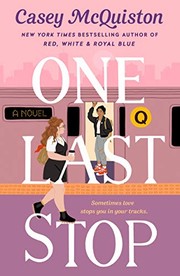
One Last Stop
August, 23 and newly moved to New York, meets Jane, stuck on the Q train since the 1970s, and fights to free her while falling for her.
2,394-word summary · 11 min read

Drums of Autumn
Brianna crosses stones to save parents, finding love, assault fallout, and a home to build.
2,003-word summary · 9 min read
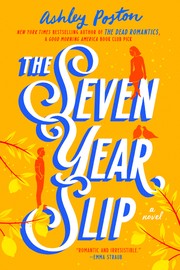
The Seven Year Slip
A grieving publicist inherits a time slipping Manhattan apartment and falls for a chef living seven years in the past.
2,601-word summary · 12 min read
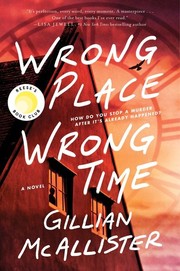
Wrong Place Wrong Time
Jen sees her son Todd kill a stranger, then wakes the day before, slipping back in time to stop the murder.
2,522-word summary · 11 min read
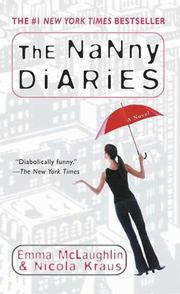
The Nanny Diaries
NYU student Nan nannies four-year-old Grayer X on Park Avenue, caught between a demanding Mrs. X, an absent Mr. X, and a lonely child who needs her more than…
2,233-word summary · 10 min read
Nineteen Minutes
Sterling High student Peter Haddon commits a school shooting and lawyer Jordan McAfee defends him while Josie Cormier hides truth.
2,267-word summary · 10 min read

Extremely Loud and Incredibly Close
Nine year old Oskar searches New York for a lock matching his father's key after 9/11.
2,999-word summary · 13 min read

Before the Coffee Gets Cold
In a Tokyo cafe where guests can revisit the past until their coffee cools, four visitors seek words left unsaid with lovers and kin.
2,233-word summary · 10 min read

What Happened to Goodbye
Mclean has reinvented herself in four towns since her parents divorced. In Lakeview she uses her real name, and for the first time staying put becomes a choice.
2,796-word summary · 12 min read

The Long Winter
Dakota Territory, 1880: seven months of blizzards cut a town off from the railroad, and a family survives on twisted hay, ground wheat, and a dangerous wheat…
2,210-word summary · 10 min read

The Japanese Lover
A Polish refugee and the son of a Japanese gardener fall in love in San Francisco in 1939, then keep the affair secret for nearly seventy years.
2,286-word summary · 10 min read

The Guest
Cast out of her wealthy boyfriend's Hamptons house, twenty-two-year-old Alex spends five days talking her way through other people's homes and accounts.
2,165-word summary · 10 min read

Ship of Magic
A sentient ship wakes when her captain dies, and the family that owns her starts to come apart over who gets to sail her.
2,026-word summary · 9 min read
Make Way for Ducklings
A pair of mallards raise eight ducklings on the Charles River and lead them across Boston to the Public Garden, with a little help from a friendly policeman.
2,044-word summary · 9 min read