
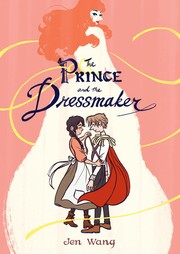
The Prince and the Dressmaker
2,582-word summary 11 min read
- First published
- 2018
- Publisher
- First Second
- ISBN
- 9781626723634
Reading options
What's inside (8 sections)
I picked up this book because the cover stopped me in a shop. A prince in a huge red gown, a girl with a measuring tape, both grinning like they were sharing a secret. I expected something light and sweet, a fairy tale with pretty clothes. What I got was warmer and sadder than that, and also funnier. I read it in one sitting, then flipped back through just to look at the dresses again.
The story is set in a soft, storybook version of Paris, all gas lamps and ballrooms and ateliers. Prince Sebastian is sixteen and heir to the throne of Belgium. His parents are arranging his life in the usual royal way. Military school talk, meetings with generals, and most pressingly, a wife. They invite young women from good families to stay at the palace so he can choose a bride. Sebastian smiles through it. At night he puts on a dress and feels like himself.
That is the engine of the whole book. Sebastian loves beautiful gowns, petticoats, heels, wigs, makeup. In private he becomes Lady Crystallia, a striking woman who turns heads in Paris. Only his valet knows at first. His parents do not. Society does not. The fear of being caught sits under every glittering scene, and Jen Wang never lets you forget it even when the dresses are at their most joyful.
The Prince Who Wanted Dresses
Sebastian is not written as a puzzle to solve. From the first pages he knows what he loves. He sketches ideas, he studies fabric, he lights up when a skirt moves right. What he does not know is how to live with that love in public.
At home he is Prince Sebastian, polite and a little stiff. His father, the king, wants a soldier son. His mother, the queen, wants a settled son. They bring potential brides to the palace, including Princess Sophia, and watch him dance and make small talk. He is kind to these girls. He is not cruel or stuck up. He is just acting a part, and you can see how tired it makes him.
Lady Crystallia is the other part. When Sebastian dresses as Crystallia, his posture changes. Wang draws him taller, bolder, chin up. Crystallia goes to fashion shows and ballrooms and gets written about in papers as the mysterious beauty of Paris. People guess who she might be. No one guesses the truth because no one is looking for a prince in a corset.
I liked that Wang does not turn this into a simple before and after. Sebastian is not unhappy as a boy and happy as a girl. He is both people, and both feel real to him. Sometimes he wants to wear a suit and be taken seriously as a future king. Sometimes he wants the rustle and weight of a ball gown. The pain comes from having to hide one half of himself, not from the clothes themselves.
There is a nice touch in how little he knows about fashion construction at the start. He has taste and longing, but he needs someone who can sew. That need brings him to Frances, and the book really starts.
Frances, the Seamstress With Big Plans
Frances is nineteen, working in a dull dress shop where her talent is wasted on hems and alterations. She wants to make bold, original things. She keeps a sketchbook full of ideas that are too wild for her boss. When Sebastian hires her in secret to be his personal dressmaker, it feels like both of them get rescued.
Their working relationship is my favorite part of the book. He describes what he dreams of wearing. She figures out how to build it. She drapes, pins, rips seams, stays up late. He stands on a stool and spins while she laughs. It feels like friendship and art school and first job all mixed together.
Frances lives in a small room above the bustle of Paris. She is not rich. This job pays well, but it comes with a condition. Secrecy. She cannot tell anyone whose dresses she is making. She cannot sign her work. For a young designer who wants a name, that hurts.
Wang gives Frances a clear voice. She is blunt, funny, tired sometimes, ambitious always. She pushes Sebastian to be brave. She also pushes herself. At one point she gets a chance to work for a famous Paris couturier, and you feel how tempting that is. Steady work, public credit, a real future. Staying with Sebastian means hiding in a palace sewing room and lying to everyone she meets.
Their friendship grows in that closed room. They eat snacks on the floor. They argue about sleeves. They fall into an easy trust that neither of them has elsewhere. It never turns into a standard romance between them, which I was glad about. It stays a creative partnership and a deep platonic bond. The romance in the book lives elsewhere, and Frances gets her own separate thread about what she wants from life and love.
If I have a criticism here, it is that Frances sometimes forgives Sebastian a little fast when he messes up. He cancels plans, he pulls her into risky public outings, he asks her to keep secrets that cost her work. She gets angry, rightly, and then the story hurries them back together because the next ball is coming. I wished for one more quiet scene where they talked about money and credit. Still, her ambition never disappears. The book respects that she wants fame for her work, plus the joy of helping a friend.
Lady Crystallia Takes Paris
The middle of the book is a run of Paris nights. Balls, opera boxes, shop openings, carriage rides. Crystallia appears in a new Frances original each time, and each appearance is bigger than the last.
There is a silver dress with a huge skirt that looks like moonlight. There is a red gown with trailing sleeves. There is a peacock look with layered feathers and beads. Frances builds corsets, bustles, overskirts, lace collars. Wang draws the construction too, pins in a hem, chalk marks, a half finished bodice on a form. As someone who cannot sew a button straight, I loved those details.
Paris itself feels alive in these chapters. Crowds gather outside events to see what Crystallia will wear. Newspaper writers call her the toast of the season. Young women copy her hair. Older women whisper about her morals. Sebastian drinks it in. For a few hours he does not have to think about drills or marriage interviews. He can just be admired for exactly what he loves.
But every outing raises the stakes. A photographer wants a portrait. A young lord gets too curious. A rival designer starts asking who makes these extraordinary clothes. Frances has to hide in alleys and servants stairs while Crystallia takes the applause. The fun scenes have a sharp edge. You start to dread the knock on the door.
One night at a big ball goes especially well and especially badly. Crystallia is the center of attention. She dances, she charms, she outshines everyone. Then a small accident with a hem and a too curious follower nearly exposes her. The escape that follows is tense and a little slapstick, running through kitchens and gardens in heels. It captures the book perfectly. Joy and panic in the same breath.
Wang is good on the small social rules of this world. Who bows to whom. How a prince must greet guests. How a young woman alone at a ball is watched. By flipping Sebastian between those two sets of rules, she shows how much performance is expected from everyone. The girls brought to marry him are performing too. The generals are performing. Frances performs humility in the workroom while bursting with ideas inside.
Friends, Parents, and the Fear of Being Found Out
What keeps the story from being just dresses and dances is the circle around the two leads.
Sebastian has a complicated home life. His father loves him but understands duty better than feelings. His mother is warmer but frightened of scandal. They are not villains. They are royals in a world where image keeps the family safe. When they talk about marriage, it comes from fear as much as snobbery. They think they are protecting him and the country. That makes their lack of understanding hurt more.
Frances has her own family pressure. Her parents want her secure. Her former boss wants her obedient. Her new friends in the fashion world want gossip. She starts dating a boy who likes her drawings, and for a while that gives her a place where she does not have to lie. Even then she cannot tell him the full truth about her secret client. Lies stack up.
Then there is Princess Sophia. She arrives as one of the marriage candidates and could have been a joke. Instead she becomes one of the best people in the book. She is smart, observant, funny about palace life. She notices Sebastian is distracted. She notices Crystallia looks familiar. Her scenes with Sebastian are gentle. They both know a marriage between them would be convenient and empty, and they both deserve more than that.
Friendship is where Wang is most honest. Sebastian and Frances hurt each other without meaning to. He treats her work as his private treasure when she needs it to be public. She pushes him to come out before he is ready because she is tired of hiding for him. They separate for a stretch, and the book lets that separation ache. No villain causes it. Fear and ambition and youth cause it.
I will admit some of the side characters are thin. A jealous couturier, a snooping reporter type, a couple of palace staff, they pop in to move the plot and pop out. That is fine in a fairy tale paced story, but when the book wants a scene to feel dangerous, it sometimes leans on a stranger appearing at just the wrong moment. Once or twice I rolled my eyes at the timing. The core four carry the feeling, the rest carry the plot.
How Jen Wang Draws It All
The art deserves its own discussion because it does half the storytelling.
Wang works in soft, rounded lines with watercolor style coloring. Faces are expressive without being fussy. A raised eyebrow, a tired slump, a huge grin, you read them instantly. Sebastian as himself has tousled hair and often a slightly worried mouth. As Crystallia he has sharp eyeliner, high color in the cheeks, long neck, confident hands on hips. It is the same person, drawn with different joy.
The fashion is the star. Each gown has a clear silhouette. Big bell skirts, tight bodices, leg of mutton sleeves, bows the size of dinner plates, trains that pool on stairs. Wang shows fabric weight. Satin shines, velvet absorbs light, tulle floats. She uses patterns sparingly so pages never look busy. A ballroom crowd might be pale gray suits and pastel dresses so Crystallia in emerald or scarlet pops forward.
Paneling is simple and clear. Mostly neat grids, with occasional full page twirls when a dress needs room. Movement is excellent. Skirts flare when Crystallia spins. Ribbons trail. Frances with pins in her mouth, kneeling to mark a hem, feels real to anyone who has altered clothes on a living person.
Color carries mood. Daytime palace scenes are cool blues and creams, orderly and a little cold. Workroom scenes are warm yellows and browns, cluttered and safe. Night scenes go deep blue and purple with gold lamps, romantic and risky. When Sebastian is afraid of being seen, backgrounds go darker and faces get closer. When he is happy in a dress, the page opens up with air around him.
If you love clothes, you will linger. If you do not care about clothes, the expressions and body language still tell you everything. My only small gripe is that some ballroom pages have so many background faces that I had to look twice to find Frances hiding by a curtain. That is probably intentional, hiding in plain sight, but twice I lost the thread of where she was standing.
Wang also writes like an animator. She lets silent sequences run. Sewing montages, dressing montages, a dance with no words, just feet and hems and hands. Those wordless stretches keep the dialogue from getting preachy. When characters do talk about identity and acceptance, the words land harder because they are rare.
The Reveal and What Acceptance Looks Like
Toward the end the secret cannot hold. Too many people have seen too much. Frances wants credit for her work. Sebastian is exhausted from lying. His parents are pressing for an engagement. Reporters are circling. Something has to give.
I will not lay out every beat, since this is a story best read fresh, but the broad shape will feel familiar to anyone who loves fairy tales. There is a public appearance where the risk is highest. There is a moment when Sebastian steps out as himself in a dress he chose, not as a disguise but as a statement. There is frightened silence, then laughter of the cruel kind, then a few voices that do not laugh.
What I appreciated is that Wang does not give everyone instant understanding. The king reacts with anger and shame first. Courtiers mock. Headlines are mean. Frances faces her own fallout at work for lying. Change does not arrive in one speech. It arrives in small choices afterward. Who stands next to whom. Who apologizes. Who comes back to the workroom the next day.
Sophia gets a lovely payoff here. Without spoiling her exact move, she uses her position to protect Sebastian when she could easily expose him. It reframes her from rival to ally and gives the palace scenes a kindness they needed. Sebastian parents also get room to grow. His mother in particular has a quiet scene where listening replaces planning. It is brief, but it stayed with me.
The ending is hopeful rather than perfect. Sebastian does not fix his country laws or end prejudice in Paris. He gets something smaller and more believable. A family that is trying. A friend who stays. A public self that matches the private one more often. Frances gets something too. A name on her work, a shop of her own in progress, a future where she does not have to hide to create.
Some readers may find that too neat. A cruel newspaper cycle does not vanish because one prince wears heels well. A few characters forgive too quickly in the last twenty pages. I felt that tug as well. I wanted one more hard conversation between Sebastian and his father about duty and manhood and what a king can be. The book gestures at that talk more than it stages it.
Still, the final image works because it returns to craft. Needle, thread, sketch, body. Two young people who love making beautiful things deciding to keep making them in the open. I closed the book feeling fond of them.
If you are new to graphic novels, this is an easy entry point. The reading order is clear, the text is never crowded, the chapters move fast. If you sew or draw or perform, you will see your own late nights in Frances workroom.
FAQ
Who is Lady Crystallia in The Prince and the Dressmaker?
She is the secret public persona of Prince Sebastian, dressed in gowns made by Frances. She charms Paris ballrooms while only a few trusted people know the truth.
When was The Prince and the Dressmaker published and is it part of a series?
The First Second edition was published in 2018. It is a standalone graphic novel, not part of a series, and it is often shelved for readers ten and up.
Do Sebastian and Frances end up together romantically?
No. They stay close friends and creative partners. Romance in the book develops elsewhere while Frances focuses on getting credit and building her own name as a designer.
Similar books
Heartstopper: Volume Five
Nick and Charlie face exams and university distance while holding on.
2,057-word summary · 9 min read
Heartstopper: Volume Four
Nick and Charlie face eating disorders, coming out, and first love in Oseman's tender fourth volume.
2,393-word summary · 11 min read
Heartstopper: Volume Three
Nick and Charlie test honesty on a Paris trip while friends face exams, outings, and eating-disorder strain.
2,355-word summary · 10 min read
Heartstopper: Volume Two
Nick and Charlie test dating in Heartstopper Volume Two: coming out to family, a Paris trip, and Tao's doubts.
2,212-word summary · 10 min read

Heartstopper: Volume One
Charlie and Nick go from rugby mates to something tender and true.
1,940-word summary · 9 min read

I Kissed Shara Wheeler
Shara Wheeler kisses her rival Chloe Green at prom and disappears, leaving a scavenger hunt that forces Chloe to rethink everything she knew about her.
2,083-word summary · 9 min read
The First to Die at the End
On the night Death-Cast launches, a boy with a bad heart meets a model with everything ahead of him, and one of them gets the call.
2,908-word summary · 13 min read
Last Night at the Telegraph Club
The 2021 National Book Award winner follows Lily Hu, a Chinese American teenager in 1954 San Francisco, as she falls for Kath and learns what it costs to be…
2,336-word summary · 10 min read

Big Swiss
A transcriptionist for a sex coach falls for one of his clients, the tall Swiss gynecologist she calls Big Swiss, in a funny novel about work and secrets.
2,523-word summary · 11 min read

Delilah Green Doesn't Care
Delilah returns to Bright Falls to photograph her stepsister's wedding and falls for Claire, a bookstore owner and single mother, while a cruel bet threatens…
2,315-word summary · 10 min read
Cemetery Boys
A trans brujo in East Los Angeles summons the ghost of a boy who refuses to move on, and together they uncover a murder hidden beneath Día de los Muertos.
1,997-word summary · 9 min read

Aristotle and Dante Dive into the Waters of the World
Ari and Dante return for senior year in El Paso, navigating first love, AIDS, family grief, and the cost of being openly gay in 1987 Texas.
2,188-word summary · 10 min read
Captive Prince
Betrayed by his half-brother and sold to the enemy kingdom as a pleasure slave, Prince Damianos must survive in the court of Vere without revealing who he…
2,063-word summary · 9 min read
Wayward Son
Simon and Baz road trip America after the war to decide what normal means.
2,505-word summary · 11 min read
Loveless
Georgia starts university sure she wants love, then learns she is aro-ace.
2,539-word summary · 11 min read
Queen of Air and Darkness
Emma and Julian face the Cohort, Thule, and the parabatai curse in Cassandra Clare's 880-page Dark Artifices finale of love, Faerie bargains, battle, weddings,…
2,653-word summary · 12 min read
Isla and the Happily Ever After
Shy Isla Martin finally dates longtime crush Josh Wasserstein after a Manhattan summer and senior year at SOAP Paris, then learns love needs honesty to last.
2,293-word summary · 10 min read

Blankets
Craig Thompson recalls sharing a bed with brother Phil, falling for Raina at church camp, losing his faith, and keeping art through Michigan winters.
2,586-word summary · 11 min read
The Gentleman's Guide to Vice and Virtue
Bisexual heir Monty flees across Europe with his crush Percy and sister Felicity after stealing a dangerous box.
2,724-word summary · 12 min read

Our Ex's Wedding
A struggling wedding planner and a winery owner who share one heartbreaking ex must join forces to pull off that ex's big day.
2,200-word summary · 10 min read
Nick and Charlie: A Heartstopper Novella
Nick is off to university and Charlie is staying behind. One last summer to decide if first love can survive distance.
2,329-word summary · 10 min read
Lore Olympus: Volume One
Sheltered Persephone meets lonely Hades at an Olympus party, and gossip, old trauma, and new power test their slow bond.
2,283-word summary · 10 min read
What If It's Us
Two teens meet by chance at a New York post office and try to turn missed connection into first love.
2,033-word summary · 9 min read
Nimona
N.D. Stevenson's Nimona retold: Ballister Blackheart, his shapeshifting sidekick, the Institute's lies, and why the 2015 book still hits hard.
3,495-word summary · 16 min read
Giovanni's Room
An American in Paris stalls between his fiancee in Spain and an Italian bartender who loves him. Baldwin's brief tragedy still stings.
2,264-word summary · 10 min read
Fun Home: A Family Tragicomic
Alison Bechdel's graphic memoir about her father, their shared secrets, and the funeral home they called Fun Home in rural Pennsylvania.
2,755-word summary · 12 min read
This Is How You Lose the Time War
Rival time agents Red and Blue trade secret letters across history, and falling in love could get them killed by their own sides.
2,393-word summary · 11 min read
The Phantom of the Opera
A masked Erik haunts the Paris Opera, coaching Christine Daae while rivaling Raoul for her. Chandelier crash, cellar lake, and unmasking follow.
2,307-word summary · 10 min read
One Last Stop
August, 23 and newly moved to New York, meets Jane, stuck on the Q train since the 1970s, and fights to free her while falling for her.
2,394-word summary · 11 min read
Every Day
A wakes in a new teen body daily until falling for Rhiannon breaks rules.
2,215-word summary · 10 min read